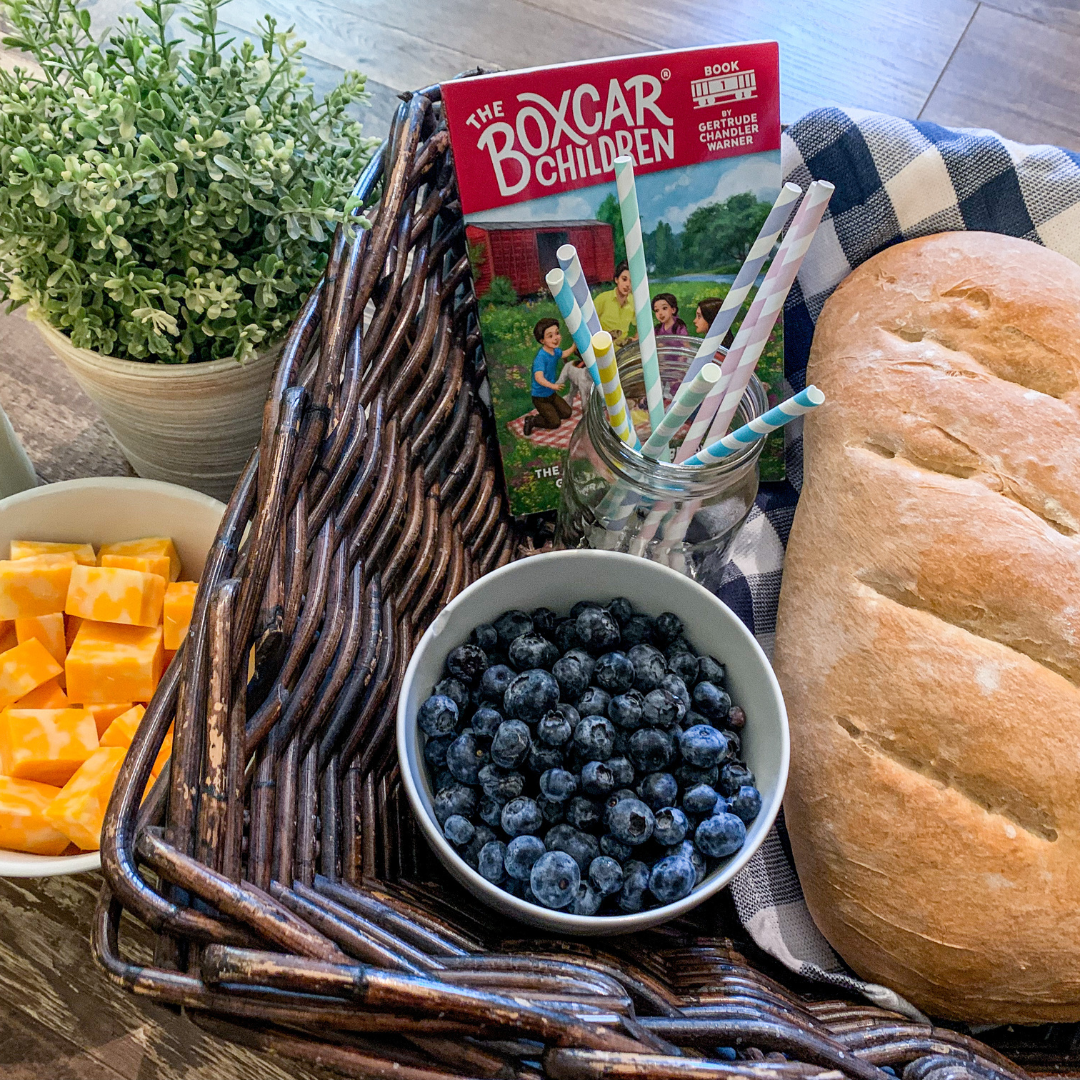
The Boxcar Children is an adorable, classic novel to add to your homeschool routine. This novel unit will provide you with optional activities, crafts, and library topics to enrich the novel topics and themes.
This post contains affiliate links. If you follow one of my links I earn a small commission at no extra cost to you. Thank you for supporting my blog!
Experience it in the Home
The focus for this unit is “Experience it in the home…” The unit is designed so that you can add simple discussions, recipes, meals, and outdoor play to your day-to-day life while reading this book. These are related to the events in each chapter and provide a way for you to live out the book and experience it as a family…simply and easily.
Experience it Across Multiple Subjects
There are also additional activities that you can choose to add on as you please. This would be for you to “Experience it across multiple subjects…” This may include crafts, science experiments, math activities or writing. These are all optional and can be completed at ANY time. (We know deep down the memory of a book never leaves us…save these for when it best suits your family)
Organized by Chapter
The novel unit is broken down by each chapter. Every chapter guide includes the following:
Summary
Discussion Questions
Crafts/Activities/Discussions
Library topics to add optional books to your study
Super Flexible
Everything is OPTIONAL! No required book list. No required supplies. This unit is so flexible. Pick and choose what works for your family. Most importantly have fun with it. Learn together from the character experiences. Enjoy digging deeper into a novel.
You can read more about the Read Aloud Experience in this post where I explain our very first one that our family completed for The Secret Garden. To download the free units, click the links below:
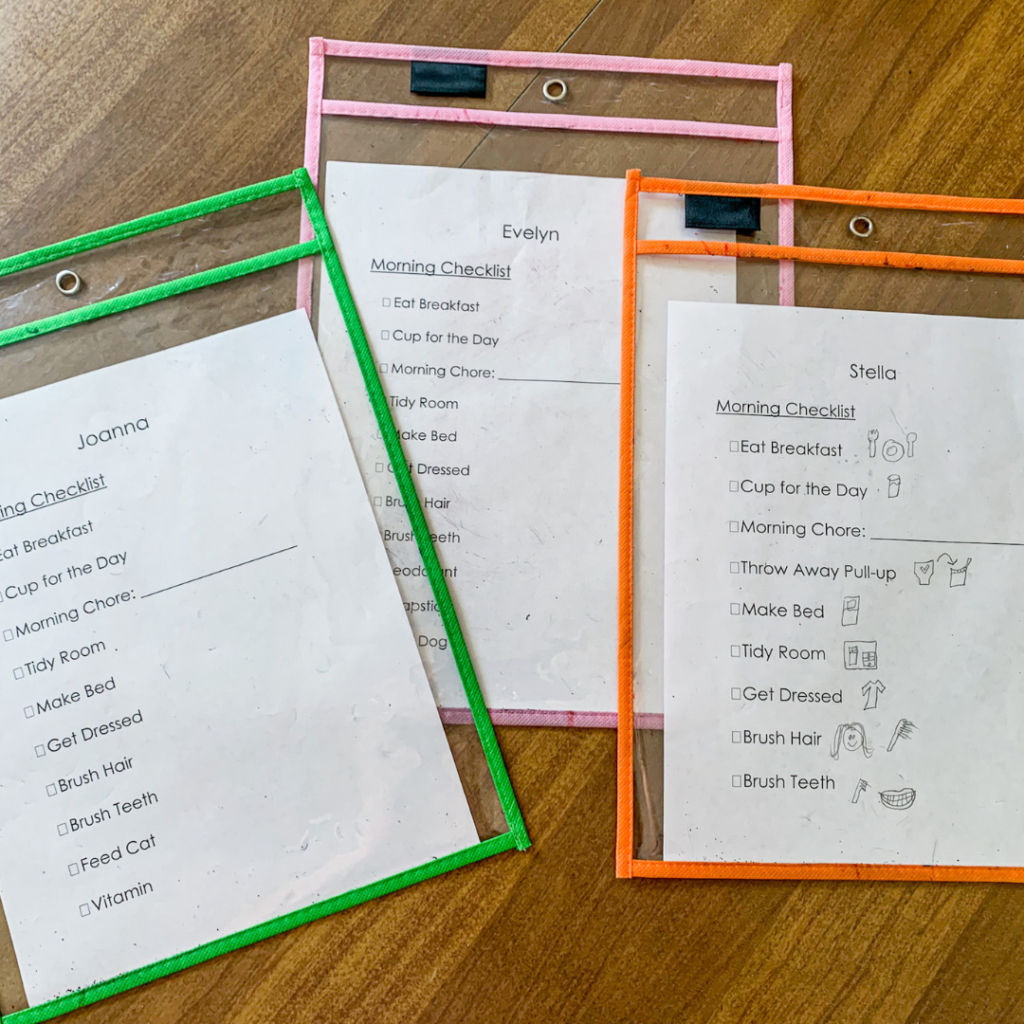
Our morning checklist is the tried and true practice that has stuck around over the years. As homeschool moms, we are always adjusting routines and curriculum to better fit our needs, and although we have adjusted our checklist at times – the rules of it have stayed the same. It has been such a help for our mornings!
This post contains affiliate links. If you follow one of my links I earn a small commission at no extra cost to you. Thank you for supporting my blog!
How it Started
I first thought of the idea a couple years ago when I was listening to a podcast from Durenda Wilson. Unfortunately, I can’t remember what the episode was, but she talked about how important it was for her main living spaces to be clean and clear before she started her homeschool day. At the time, I could feel the weight of the mess in my own home and new this strategy could be helpful.
She also talked about the fact that the key to doing this is to not take it on alone! Get the kids involved. Set up routines and chores so that the whole family is working together and the pressure is not on mom alone.
The Constant Questions
The other problem I was running into was the questions I had to keep asking every single day. “Did you brush your hair? Did you brush your teeth? Is your room picked up?” Times that by four for each of my children, while I was trying to cook and clean breakfast – I was exhausted doing it!
This really drove me to teach them how to be more responsible about getting ready and how to help me in the house more.
The Morning Checklist
Enter the morning checklist.
I thought carefully about the things I wanted the kids to do to get ready and added that to the list. I also followed the advice of Durenda Wilson and set a goal to have our main living space clean before we started. This means we would work together to get the kitchen and living room picked up each morning.
It’s tempting to put a large list of things on the checklist, because wouldn’t that be the most helpful? However, I found it best for us to smart very small and eventually work our way towards a good quality list.
Breakfast
One thing I wanted to do was put items on their that will be easy to accomplish. For example, “eat breakfast” is on the list. I plan to feed them every day, so I know for sure they will be able to check that off with ease. I want them to feel successful and not defeated as soon as they start.
At breakfast my kids make a “cup for the day“. This is the cup to be used for the whole day. It stays on the table (or the counter) for them to use as needed. I implemented this cup idea because every time my kids were thirsty, they’d just grab another cup.
Some of the fault was on me too – I’d see a cup and put it in the dishwasher. The cycle of always needing a cup continued. So our “cup of the day” rule helps with that.
Getting Ready for the Day
To avoid all of the questions I was having to ask, I added to the list our daily tasks for getting ready. This includes “get dressed“, “brush your hair“, “brush your teeth“.
Now, this doesn’t mean I never have to question them. I have some kids that are really good about the checklist and others that need reminders. However, it’s better than managing all four by myself. No matter what they’re learning to be more responsible.
Morning Chore
The last piece of the checklist was the chore to help me prepare our home for the day. Remember my focus was the kitchen and the living room. So, I chose two jobs that my older two girls would alternate each week.
One would unload the dishwasher for me and the other would pick up the living room. So, their checklist states, “morning chore: __________________” and I write one of those jobs each week. It’s super easy to manage and they help me remember who’s doing what.
Now, at the time we started this my third daughter was only two. She was just learning about chores, but I wanted her to be a part of our family clean-up team. So, I gave the her job of picking up couch pillows. She’s done that same job every day for the last couple years. She’s almost four now and she’s probably ready to do something more, so I’ll be thinking of that soon I’m sure.
Our First Checklist
Did you catch all of the items on the list? I will list it out for you so you can see how simple and small we started. It was so helpful to do it in this way because the kids could accomplish the list, and I didn’t feel pressure of making them do all kinds of tasks in the morning.
Eat Breakfast
Cup for the Day
Morning Chore: ________________
Get Dressed
Brush Hair
Brush Teeth
Adjust the List for Each Child
I do adjust the list for each child as needed. For example, I drew pictures on my preschooler’s list because she can’t read it. They aren’t fancy. I just took my pencil and made a quick drawing.
Some tasks may need to be done by one child but not the others. We started my youngest daughter’s list with “throw away pull-up” on there, and she took care of that on her own every morning.
I’m also able to write things on the list if I want something temporary. For example, if my child has to take medication or if their lips are really chapped, I might add “medicine” or “chapstick” with a wet erase marker. Then we can erase it the next week.
Storing and Displaying
We keep our lists in a dry erase pocket. I’ve learned that the best place for them to be displayed is somewhere near me so I can help make sure everyone is on track. For our home this is the utility room door near where I’m cleaning up in the kitchen in the morning. This makes it easy for me to check on the kids as they finish their items.
The dry erase pocket has been so nice. They erase really well, and if I want to write anything temporary for a few days I just use wet erase markers.
Adding Items When We are Ready
As we have gotten used to our checklists, it’s been easier to add more items to it. For example, The girls’ lists now say “tidy room” and “make bed“. I don’t require a perfectly made bed. I just ask them to pull up their blankets and make it look nice.
This would’ve been great to have from the beginning, but at the time it was overwhelming. Once we had mastered our first list, it felt easier to add more. I also feel like this is a big reason why it’s been so successful – starting small.
Final Thoughts
Things come and go with our homeschool, but this is one thing that has consistently worked for us the last couple years. It makes my mornings easier, and everyone knows what’s expected of them.
When we take breaks from our homeschool routine, we usually skip the checklist and have more relaxed mornings. However, it’s the perfect thing to bring back into our morning a week or two before we start up again to kick everyone back in gear for school.
One new thing I did before we started after Christmas this year was I asked the girls if there was anything they’d like me to add? It wasn’t much, but those one or two items they added really gave them ownership of the list and got them excited for routine again. (If you’re curious what they added, one was “deodorant”, another was “vitamin”, and I think one was “feed cat”…which we don’t really have. It’s a barn cat that all the neighbors feed, but my daughter wanted ownership of that. I gave it to her! She loves it!)
Although we’ve done this for a while, we still have our not-so-good days when it comes to getting it done. We’ve had phases where I had to set timers to motivate them. I also have a couple that need lots and lots of reminders, at times. It’s not a perfect system, but it’s one that has been so beneficial to us.
Last thing – I really try to do the same things for myself to set the example. I used to not make my bed, but once I asked them to, I realized I really needed to do it too! I’ve even said things like, “I’m going to do my checklist” when I get ready. I don’t really have one, but they get it! We all have our responsibilities in the home.
What would you add to the list? Do you use something similar? If you try this out let me know how it works for you! Comment here or find me on Instagram @simply.learning.together
Get ready for a list of preschool fun in the kitchen! These simple activities can provide a variety of learning experiences for your little one.
The inspiration for this really started a few weeks back when I could really sense that my almost-four-year old was eager to start learning more. I previously told myself I wasn’t going to start anything formal this year, because I wanted her to just be a kid and PLAY and have fun and pretend with her sisters! However, I was really feeling a push to work with her a bit because I knew she was excited for it.
Of course, I immediately began thinking of what kind of work she could do, but wasn’t sure how I’d fit in the time to sit down with her while also keeping my 2 year old happy. And then it hit me, “Jaimie – stop taking this so seriously, and just PLAY with her!”
So that’s what we did. I was so inspired that I spent all last week coming up with fun things for us to do in the kitchen together, her favorite place to be with me. Some of these activities include the option of different learning manipulatives, but others are just kitchen tools. We had such a blast, and you know what? It was perfect! The best part – when my two year old was with us, he joined in as well! That’s a win-win!
This post contains affiliate links. If you follow one of my links I earn a small commission at no extra cost to you. Thank you for supporting my blog!
Why Kitchen Tools?
I don’t know what it is about my kitchen tools, but my kids are always taking them and playing with them. Is that just in my house? They pretend and do who-knows-what with them, and unfortunately I lose a few.
What is so intriguing about the kitchen stuff? Maybe there’s something about it that makes them feel “big” or just like mom. It’s just the perfect, simple hands-on fun that requires no prep!
Take it from an experienced mother that is missing tools on a regular basis. (ha!) Set some rules and boundaries. We eventually had to do this, and they are pretty good about asking permission and caring for my kitchen stuff now. OR! If you don’t want them using your things, head to the dollar store. Make a kitchen tub full of utensils that you can pull out and play with at any time! (Here’s an inexpensive set from Amazon – but maybe take out the cheese grater and can opener for safety reasons!)
Mixing and Scooping
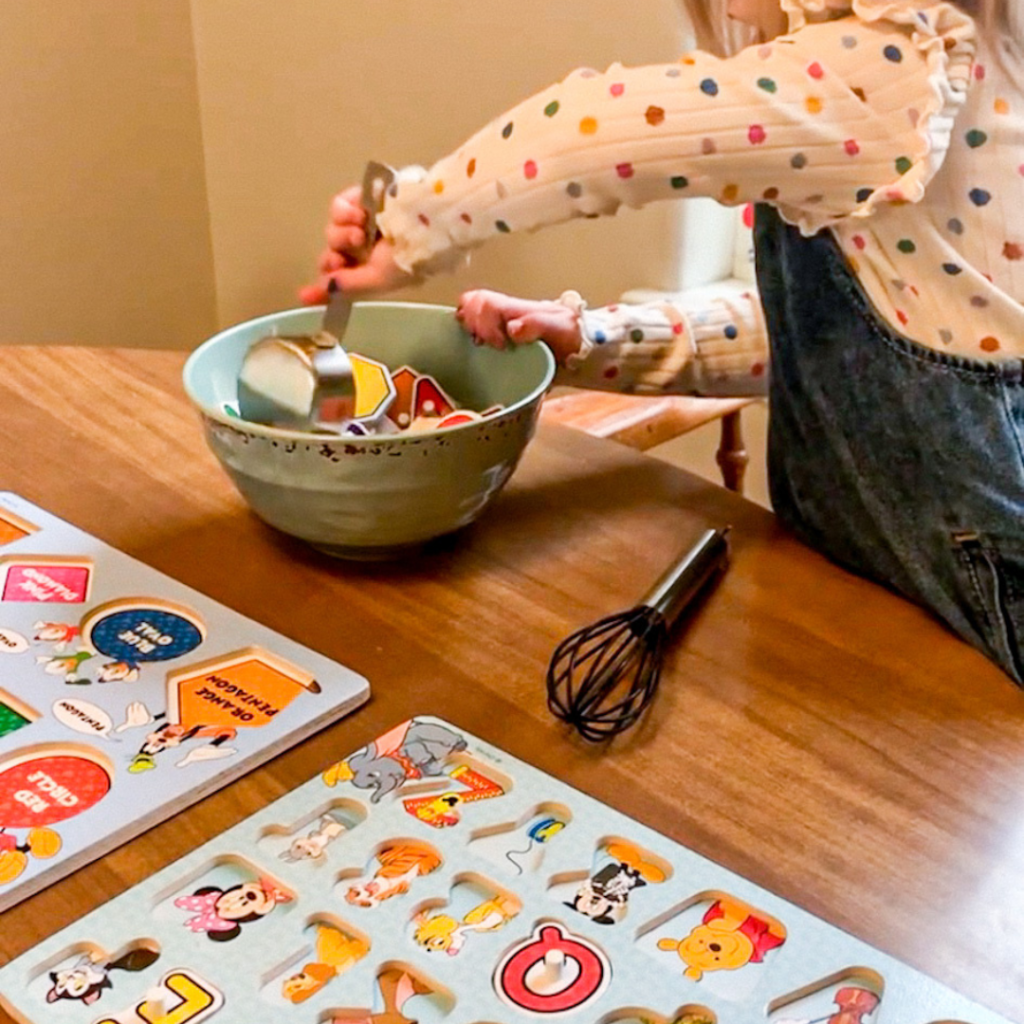
For this activity we used a mixing bowl, puzzle pieces, a whisk, and a measuring cup. Place all of the puzzle pieces in the bowl. Encourage your child to mix the pieces around with the whisk. Next, scoop a piece (or more!) out of the bowl. Talk about what it is – are you doing letters? numbers? colors? maybe animals? Ask questions about what was chosen. Then, place it in the correct spot in the puzzle.
We used two puzzles. One was shapes and the other was letters. If she drew a shape we talked about the name of the shape and it’s color. If she drew a letter, she identified it and we practiced the sound and gave some examples of words that start with that sound.
This was so fun, and she played until all the pieces were out!
Sorting
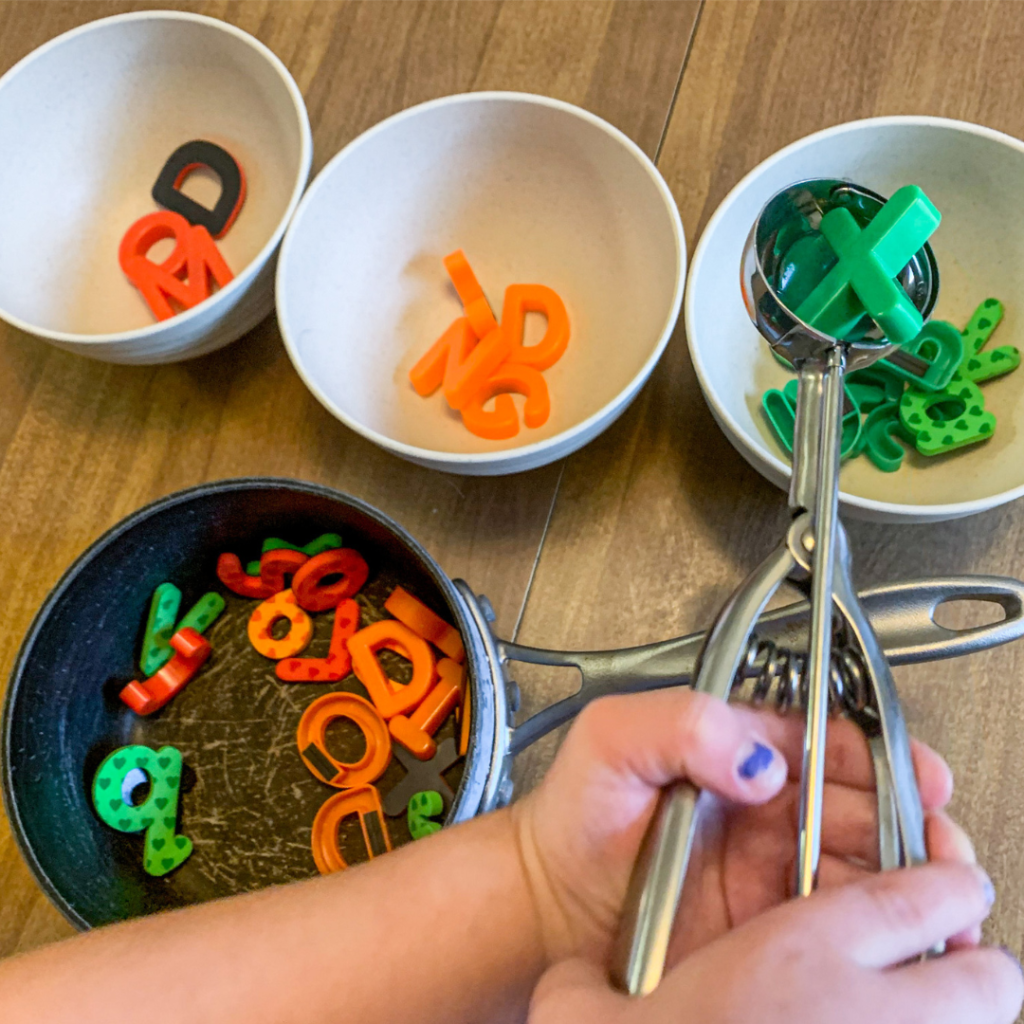
One morning I placed three identical bowls on the table and gathered up my magnetic alphabet letters. I picked three colors and set the rest aside. We mixed the three colors of letters in a cooking pot and used a cookie scoop to scoop them out and sort them into a bowl.
A cookie scoop! Something so simple, but it was such a hit. She did it over and over and loved popping the letter out by squeezing the scoop. I placed one letter of each color in the bowl when we started so she would know which color went to which bowl. We would talk about the letters she scooped. Sometimes we’d say the sounds. It was so fun!
My two year old saw the action and wanted in, so I just gave him a bowl of letters and the cookie scoop to explore. The cookie scoop now in his hands, my daughter begged to continue playing, so she settled for an ice cream scoop instead and had just as much fun.
I’m not sure why, but using real tools in the kitchen is a blast to them!
You don’t have to use letters. Craft poms would be great or if you have counting bears, that would work also. You could honestly take a sheet of paper, cut it into squares and crumble the squares in a ball. Don’t make this complicated. Use what you have! Here’s a fun idea! Write a color or shape on that crumbled paper and have your kiddo open it up and then sort it! I may do this again and try that!
Pretend Restaurant
Ok, so this one was a little silly, but we had a ball! You’re going to have to get in there and pretend right along with them. They’ll love it!
So we pretended to be at a restaurant while in our kitchen. My preschooler was the waitress/cook (I was her helper) and she seated her siblings at the kitchen table.
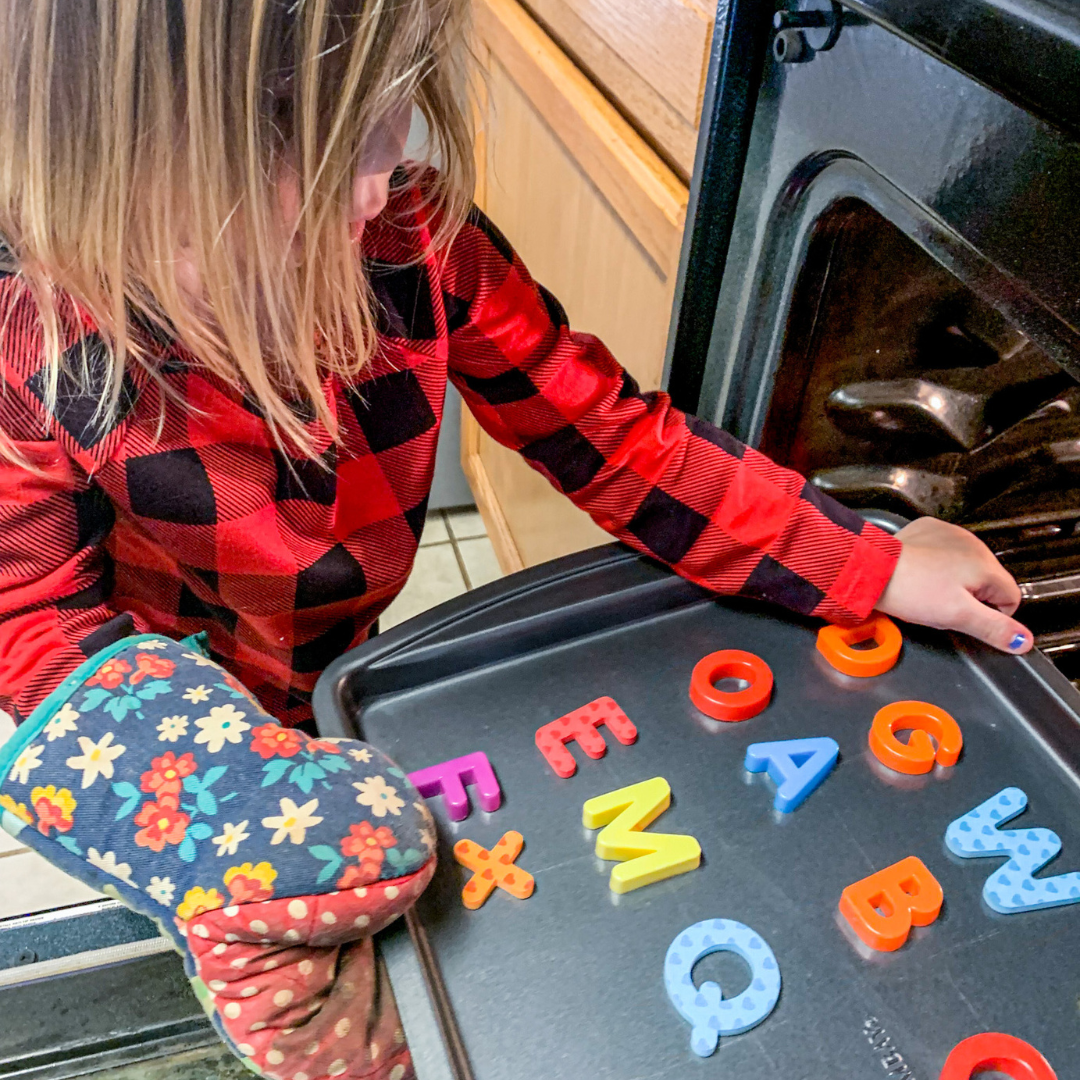
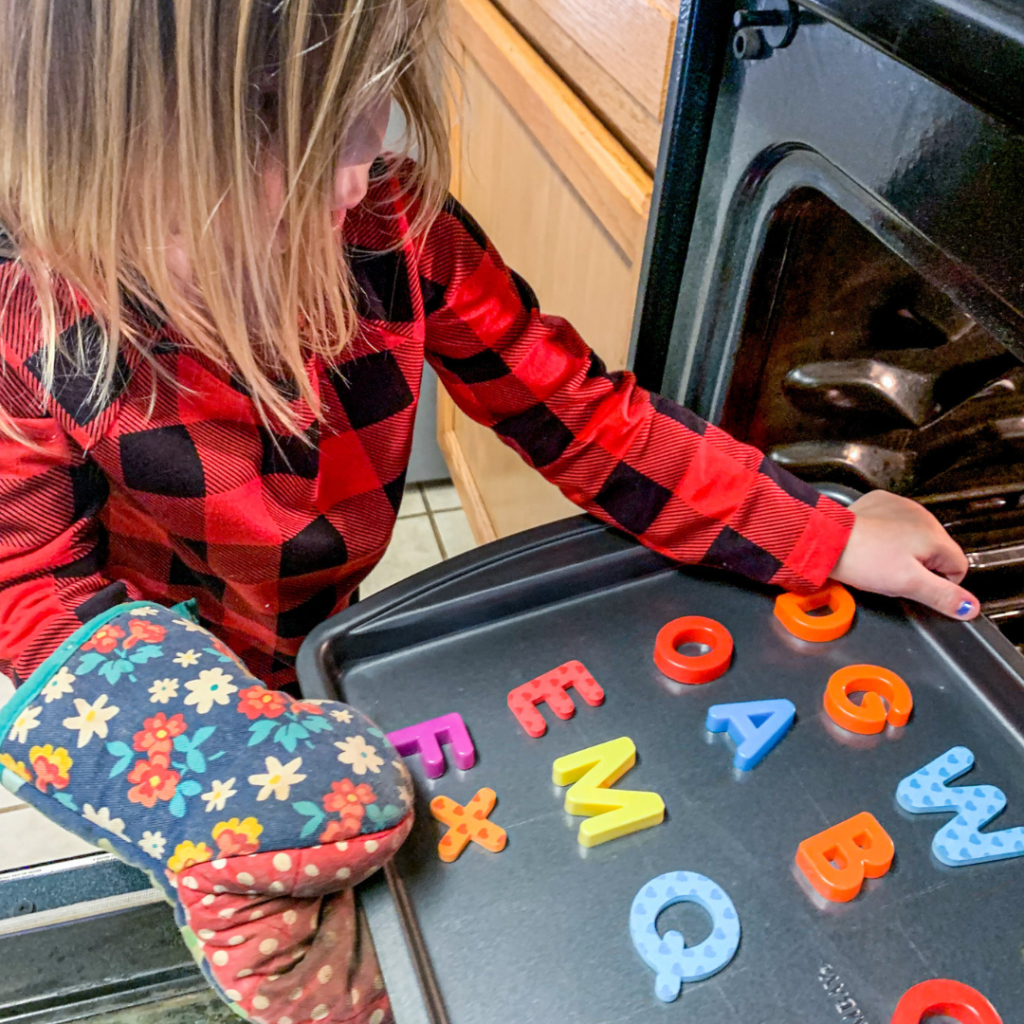
I prepped very quickly. First I had a big pot of colored blocks on the stove with a big spoon. Second, I had a baking sheet with the magnetic letters (A-Z) stuck to the sheet in a random order. I put that baking sheet in the oven – seriously! It makes the pretend play so real!
Do we need to have a safety talk? Please please please make sure your kitchen stove and oven are off. Also, be clear to your children that they can’t be touched or open without your permission in the future. OK, let’s keep going.
I told my big girls they could choose one thing – blocks or letters, and their order could be something like this…
“I’d like 4 blue blocks please.”
“Yes, I’d like an E and an X”
My preschooler was in heaven. She took one order at a time and then went to “her kitchen” and prepared them on a paper plate.
Once she got the hang of it, I encouraged her siblings to challenge her without frustrating her. So, maybe 2 red blocks and 4 green blocks. Or, an “A” and 1 blue block. We went back and forth ordering, and I’ll tell you what – guess who else wanted to play?! Her big sisters!
Want to know how I changed it for them? I made a quick menu of 6 CVC words for my first grader. She gave the menu to her siblings and they ordered a word. My daughter wrote it down, went to the oven, and made the word from the letters on the baking sheet and sent it to them. So fun!
My third grader (Yes, even she wanted in on it!) is fun to challenge. I gave her a pencil and paper and started ordering lots of things. She quickly wrote it down and then organized it on a plate. We had a good time making her work hard 😉
Sink Play
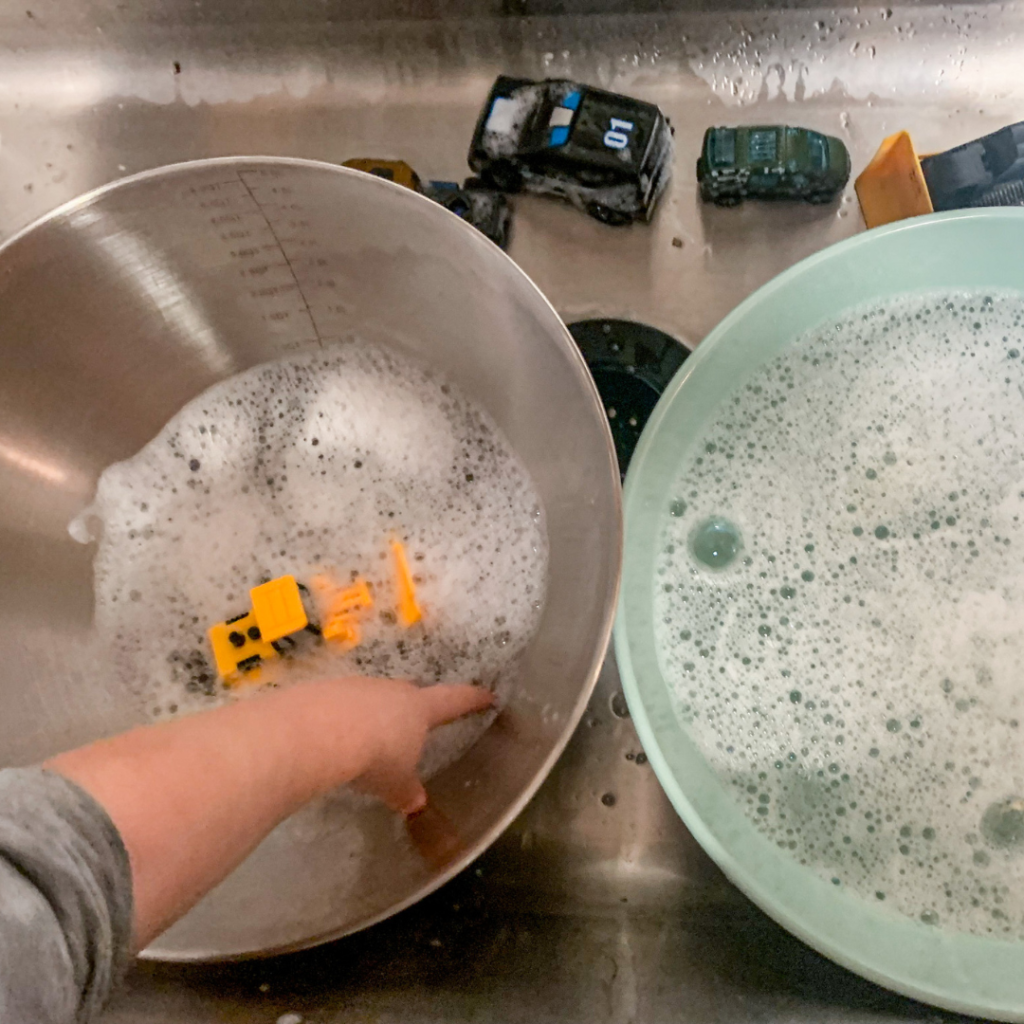
This is the one thing that will keep my toddler (2yo) busy for a long time, and my almost-four-year old loves it just as much. I have a big, wide sink, and I put two large mixing bowls inside of it. I put soapy water in one and water in the other.
Collect toys around your house that you don’t mind getting wet. Most recently we’ve done cars or dinosaurs. Do you have those floating bath letters? That would be fun, as well!
I place a good, sturdy chair in front of the sink for them to stand on and show my them how to wash the toys and rinse them off. I also make sure to give them a spot to set them to dry.
Their clothes may get a little wet and you might get some extra water around your sink, but the mess is worth it. This is a winner! It’s important to stick around nearby as some of the splashing can get slippery, so a hand towel on-the-ready would be a good practice.
Kitchen Tongs and an Egg Carton
I always have empty egg cartons handy. They’re great for paint because you can just throw them away, but one morning we used them to sort blocks.
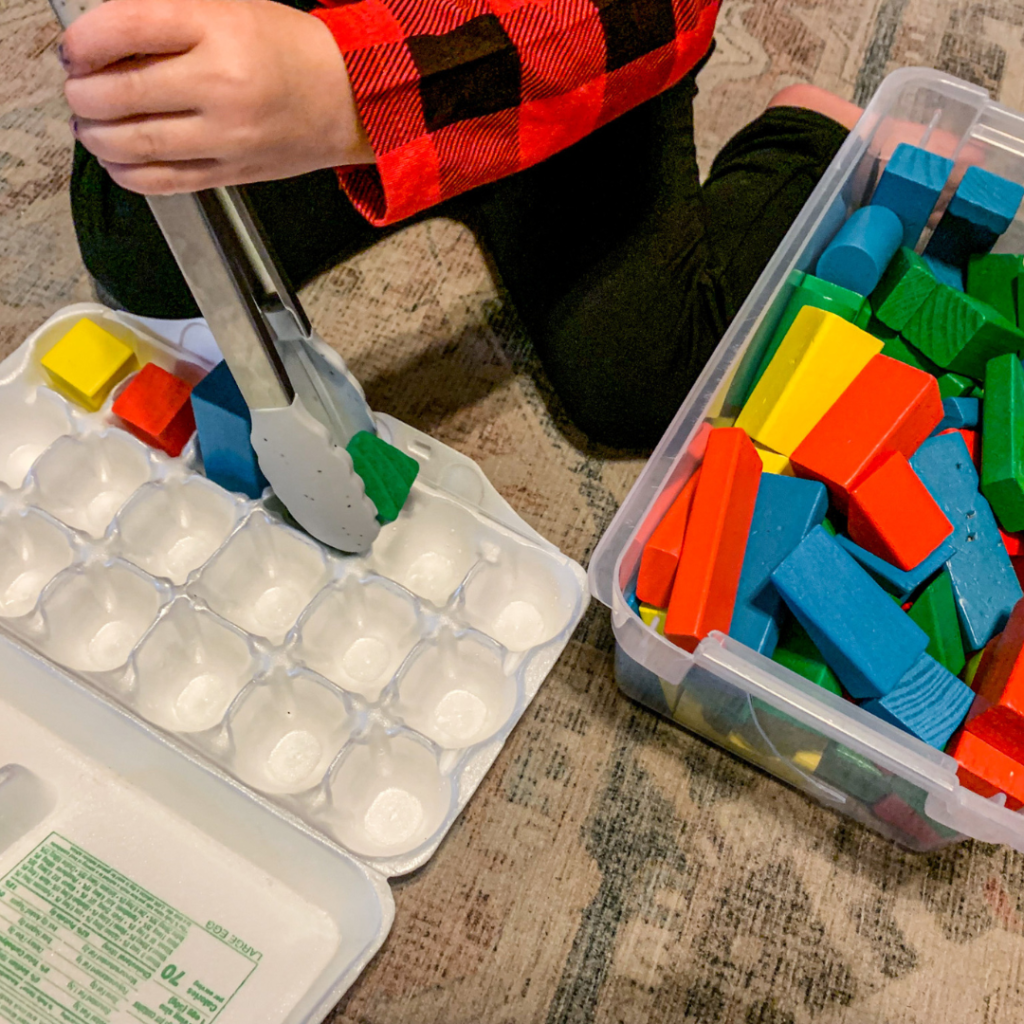
I gave my daughter our bucket of colored blocks and a pair of kitchen tongs and showed her how to grab a block and put it in the egg carton. It’s so simple, but once again, so entertaining for little ones. My two year old joined her and they moved blocks from one place to the other while I got ready for the day.
Once she filled the carton we tried filling it with only one color. Then we tried one row red, one row, green, and one row blue. You could also do patterns or finding the same shape.
Just like some of these other activities, the colored blocks isn’t a must. Try unifix cubes or counting bears or Legos. All you need is something small enough to fit in the egg spot.
Flipping Pancakes
I found this idea online a few years ago, and it is the cutest! I did it with my older girls when they were little, and I was so excited to do it again.
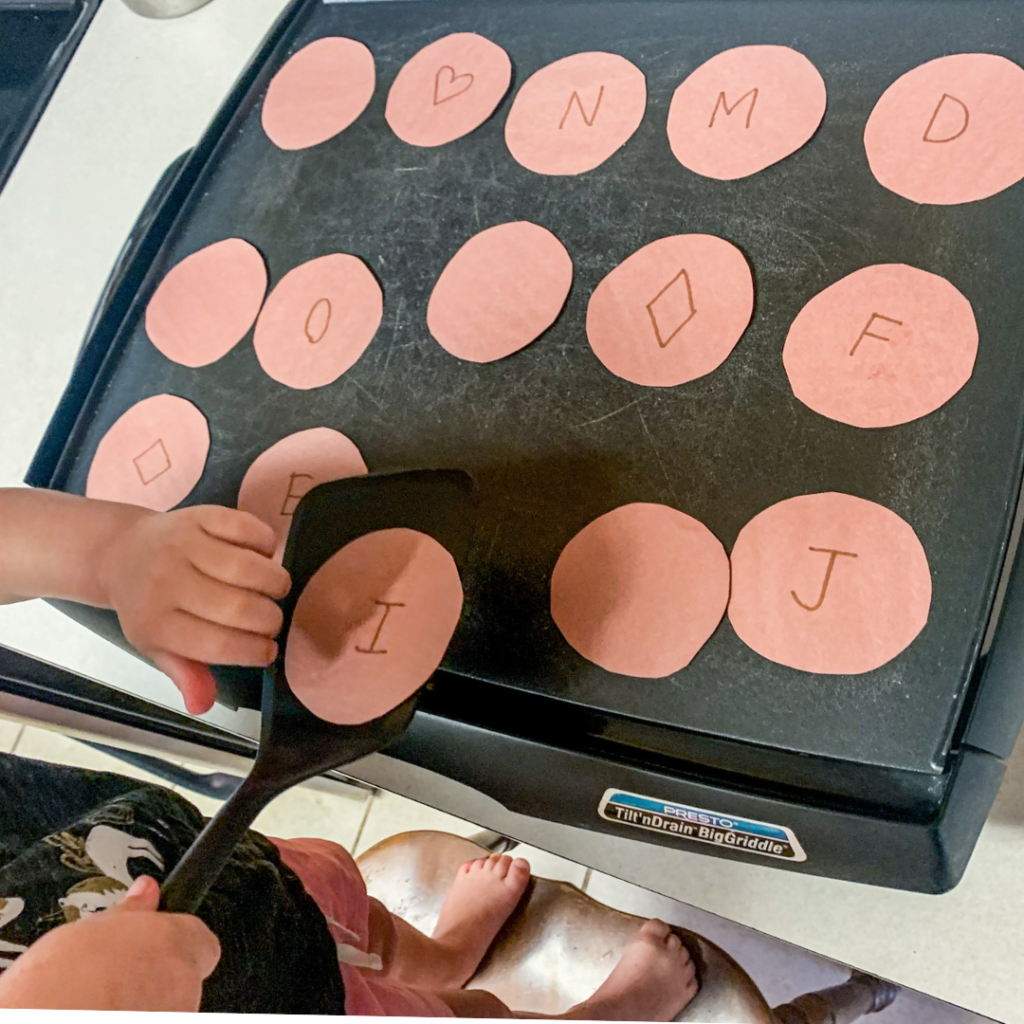
First, I used a cup to trace a few circles on a brown colored sheet of paper. Then, I stacked about 3 sheets behind it so I could cut them all together to make lots of circles! Now, you have pancakes.
Write whatever you want on the circles. To be honest, all three of my girls begged to do this when I got it out, so I changed it up for each child.
For my preschooler, I wrote a letter on each brown circle. On the back of a few of them I drew a shape. (This was a little surprise for her) I spread the pancakes out on our griddle and got her all set up with a chair so she could reach. I called out a letter and she flipped the pancake with a spatula. I told her some of them have a surprise shape on the back, and she thought that was the best!
You can change up the surprise – make it a sticker or a stamp. She loved flipping them to find out. I think she played three or four times before I finally had to stop her so her older sisters could try.
Setting it up for the older ones was simple. I just put some of their math problems from the lesson of the day and wrote the answer on the other side. (Then of course we skipped that part in the workbook! The game took it’s place)
Float or Sink
This demonstration is very simple. I use a clear container, but you could also just fill up your sink. Fill the container with water and go around your house finding items to put in the water. Before you put an item in the water, make a prediction. Will the item float or sink?
This has to do with density. If an item is more dense than water, it will sink. If it is less dense it will float. You could talk about what density is, but that may be over their head. Take it as far as you want though. You never know how much they’re soaking in!
Pouring Water
This is one you definitely want to do when you have some space in your day. It can end up quite messy, but it’s only water so it won’t hurt!
I usually lay a couple of towels on the kitchen floor (or outside) and gather a variety of bowls, scoops, spoons, and cups. Next, I’ll fill one or two of the items with water. I show my child how to pour back and forth between bowls and cups, and then let them be!
There will be spills! But it’s just water. There are times when I just let them be on their own to explore and play but you could definitely be more intentional about it as well. For example, pouring 1/4 cup of water into one cup four times to demonstrate what 1/4 means. We like to play a game where I say something like, “How many of this cup do you think it will take to fill that bowl to the top?” We make predictions and test it out.
When you’re done and the towel is soaking wet, just use it to mop your floor up a bit! 😉
Playing is Learning
I had so much fun with my littles (and bigs!) in the kitchen this week. It’s crazy to me how much you can learn just by playing with a few letters or blocks. The best part – basically no prepping! (The pancake one took maybe 3 minutes to get ready) It was so easy to just grab this stuff in my kitchen and go!
Let me know if you try any of these out! Leave a comment or tag me on Instagram @simply.learning.together I love hearing from you guys!
The holidays have come and gone, and I have mixed feelings about starting up our homeschool again. First, I’m anxious to get back into our groove. I’m just craving the routine that provides a peace of mind for me and everyone else in my home. Second, I’m having a hard time letting go of the slow, easy-going days we spent together in December. I’ll miss that, and I’m so thankful for the time we spent doing it.
So, here I am knowing I need to plan and really kick things into gear. The day before we started school my husband and I decided to move our homeschool room (again!), so that was an unexpected but exciting change. Now, it’s a matter of figuring out how I want our days to play out and what my goals are.
This post contains affiliate links. If you follow one of my links I earn a small commission at no extra cost to you. Thank you for supporting my blog!
Morning Time/Morning Basket
We did a Christmas study for or morning time in December, and I loved it so much I purchased another curriculum from the same creator. We had such great conversations, and I learned so much with the kids that I was eager to do more like it.
We are going to try Foundations of the Bible by Driven by Grace. If you aren’t familiar with it, she created the program to go along with the Classical Conversations cycles. Now, we are no longer in CC, but the content is great for anyone! I’m so excited to get started.
I’m curious to see how we will work through it, since we are not bound to a week-by-week schedule through CC. We can move through it as quick or slow as we like, so I can keep you posted on how that goes for us. She lists many other sources to learn from (books, movies, children’s bibles) so I imagine I may look into that as well.
For our other Morning basket items, we will continue with our poetry book. (“Poems to Learn by Heart” by Caroline Kennedy) It’s not my favorite, but we all do really enjoy hearing what our poem of the day is. I really want to find something like we read last year, Sing a Song of Seasons. That book is so beautiful and we loved it! For now, we will stick with what we have.
Most days I throw in something related to our unit studies during our morning time. This is a picture book most of the time, and that has really been a great addition, so we will continue to do that. This is all based on what we find at our library.
Math/ Language Arts Curriculum Changes
I shared all of our curriculum choices for the year in a YouTube video, and we have made some changes here and there throughout the first half of our school year.
My third grader is now using Christian Light Education for math, and we love it! (We stopped Horizons math after 3 years of using it) Read more about that journey in my blog post.
She continues to use Learning Language Arts through Literature, but I’ve also added in a grammar practice workbook to help review different skills. It’s not spectacular, but it’s accomplishing what I want. Every once in a while I take a step away from the workbooks and do something different – like a lesson related to our current unit or something random, like diagramming, because I think it’s fun to spice things up here and there!
My first grader continues to use Christian Light Education for math. She worked hard to complete the Foundations A program from Logic of English, so we will be starting the Foundations B after the holidays (Read about Foundations A here) I’ve also purchased the handwriting book from Logic of English, Rhythm of Handwriting. I don’t think we will do this every day, but I noticed she was ready to start writing more, so we are going to try it.
History/Science
Looking back it’s so interesting to see how my teaching style has changed and adjusted this last year. For a brief background, we were in Classical Conversations for two years prior to this one, so this was my first time in a while to do my own History and Science choices.
I had an idea of what I wanted at the beginning, and we loved it, but as we have done more and more unit studies I am really discovering what I love doing and reading for our units.
If you haven’t seen any of our unit studies, check out a few of the ones below:
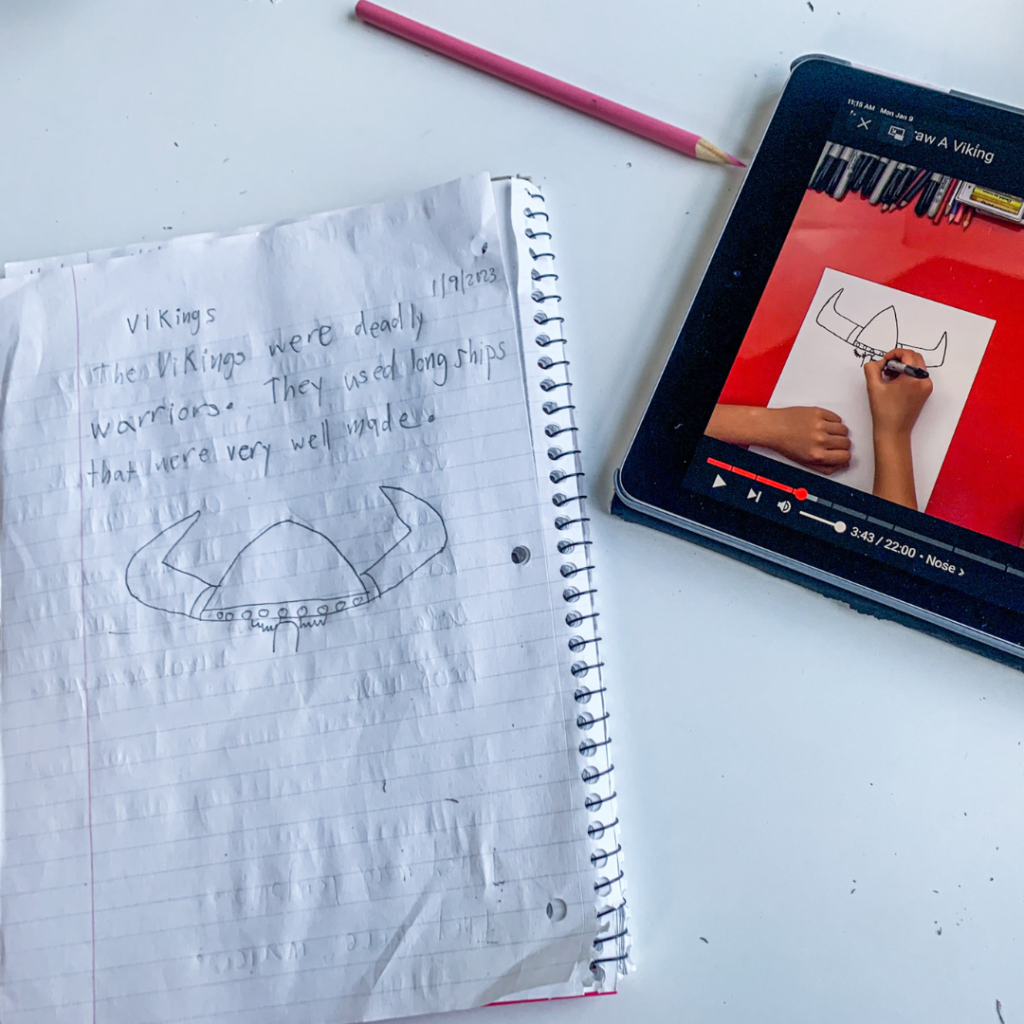
I am loving the unit study model for us, so we will kick off the year with a Vikings unit that I’m really looking forward to and I’m thinking the Middle Ages after that. Looking ahead into the spring, I have an idea of a couple more history units I may want to do, but I’m open to making changes as needed.
For science, I’m still deciding. Our first one won’t be until March, and we will be studying CHICKENS! We are planning to add more chicks to our flock, and I’m super pumped to get the kids more involved now that this is my second time around. Last year was our first time raising chicks and it was quite the learning experience.
So, technically I only have a loose plan until the start of April, and as we get closer I’ll plan more. I just don’t like to plan too far ahead because we change! Our interests change, our schedules change, the weather changes. I like to get closer to the Spring before I plan through the end of the year. I have possibilities in my head that I’ll be praying about but my final decision will come later.
Daily Routine
I’m not going to lie, after being out of routine for so long I really have to think about how we ended before break…Our schedule is not based off the time. It’s more of a loose rhythm. However, our routine changes with the seasons we are in whether that’s the ACTUAL season (winter to spring) or a season in our family (birthdays, napping schedules, health). Below is what has worked for us lately.
Wake-up
Breakfast
Morning Checklist/Chores
Independent Work
Morning Time
Outside
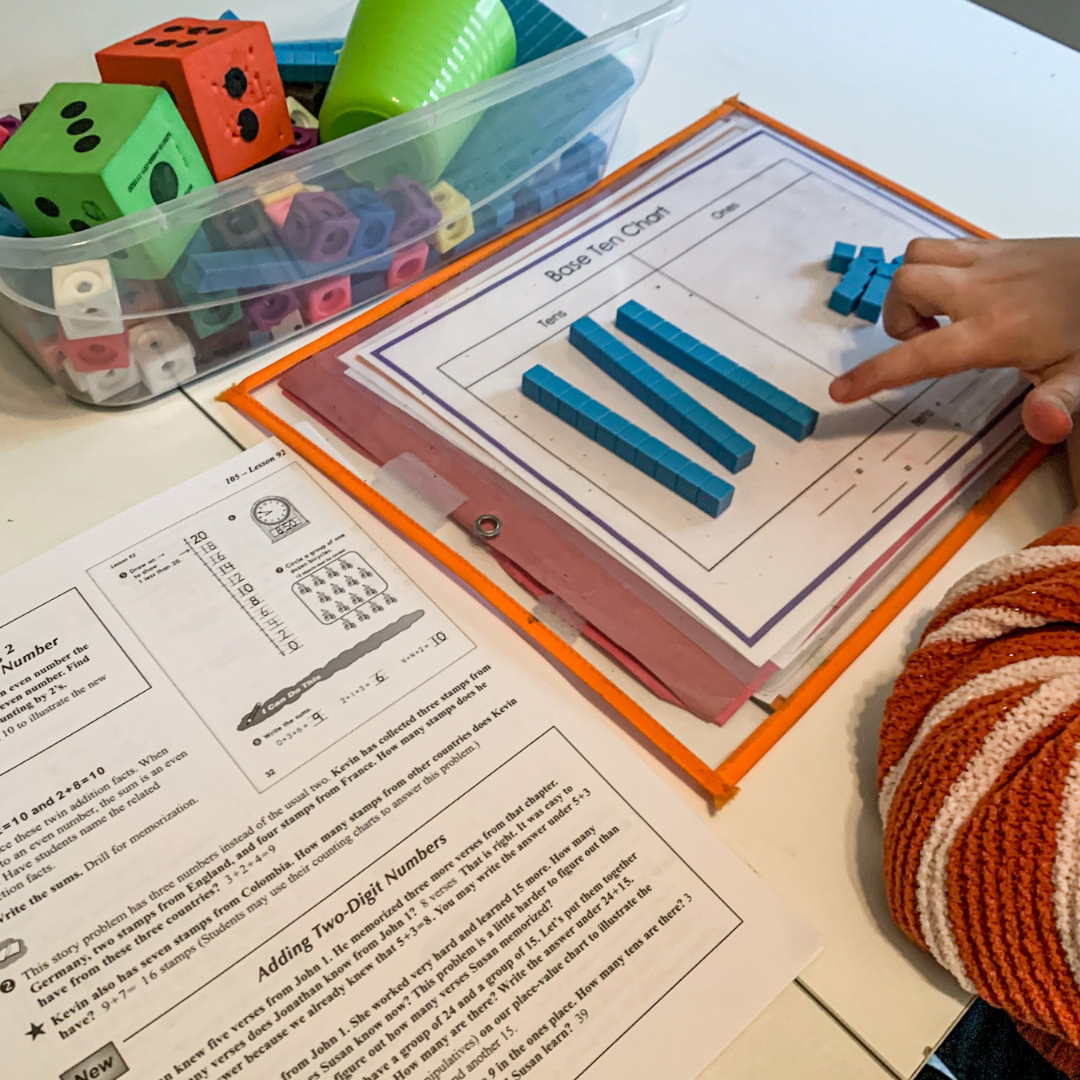
Math
Language Arts
Lunch
Catch-up/Extra Activity
We school four days a week and meet with a nature/adventure group on Fridays, and we plan to continue with that through the end of the year.
Slow Start
My plan is not to jump into everything at once. Honestly, after Christmas my brain just wasn’t quite ready to get into full swing with a unit study and all the planning that goes with that.
For the last few days I’ve been more strict about my kids’ chores and morning checklist so that we can get that situated before we start. (I’m hoping to get a post soon about our checklist.) Over Christmas break that kind of just washed away – which is fine! – but we know everything runs better when we all work together to take care of our home, and that’s an easy thing for me to work back in before we start.
Then, we will have a slow first week completing only our Morning Time, Math, and Language Arts. This will also be a great opportunity for me to get a feel for how our rhythm is working and if I need to make any changes.
My goal is to make a trip to the library at some point during our first week back so that we can collect the books for our upcoming Vikings unit which we will begin the following week.
Happy New Year!
Have you started planning ahead? Do you have any new goals? I’m not a resolution kind of girl, but I do love setting some new goals!
I have a few, and one of them is to write more blog posts! I have loved sharing more of our homeschool with you guys this last month, and I’m hoping to continue that through the start of this year.
I’m so happy you are following along with us and I wish you a happy new year! May 2023 be filled with beautiful memories with your family!
I’ve had the best time sharing our homeschool highlights with my email list this month. So much so that I’ve decided to make them into a blog post.
So, if you receive my emails, you’ve probably read through these already. Although it’s a year away, you can pin this page for ideas for next year, if you’re interested.
If you like what you see and you’re not on the email list, be sure to scroll down and sign up! I love chatting with you guys and I love sharing about our homeschool with you. I’m so glad you’re following along with us.
This post contains affiliate links. If you follow one of my links I earn a small commission at no extra cost to you. Thank you for supporting my blog!
Here’s what we are….
Imagine each section starting with this statement. We are diving in to multiple senses here, and I’ll be sharing what we are eating, hearing, doing, thinking, watching, and reading!
READING
1 – We started a new Christmas read aloud, “The Christmas Pig”. It’s written by J.K. Rowling, the author of the Harry Potter series, so I am very interested to read through it!
2 – I recently picked up an oldie yet a goodie to read this season. The book, “Women of Christmas” is one I read with an amazing group of women at a bible study. I enjoyed it so much a couple years ago, and it has been the perfect, easy read for me during my morning devotion time this year. This book is written by Liz Curtis Higgs and focuses on the stories of Mary, Elizabeth, and Anna pertaining to the Christmas story. She goes verse by verse and I love how she incorporates different versions, as well. It’s definitely a book I can see myself reading again and again!
DOING
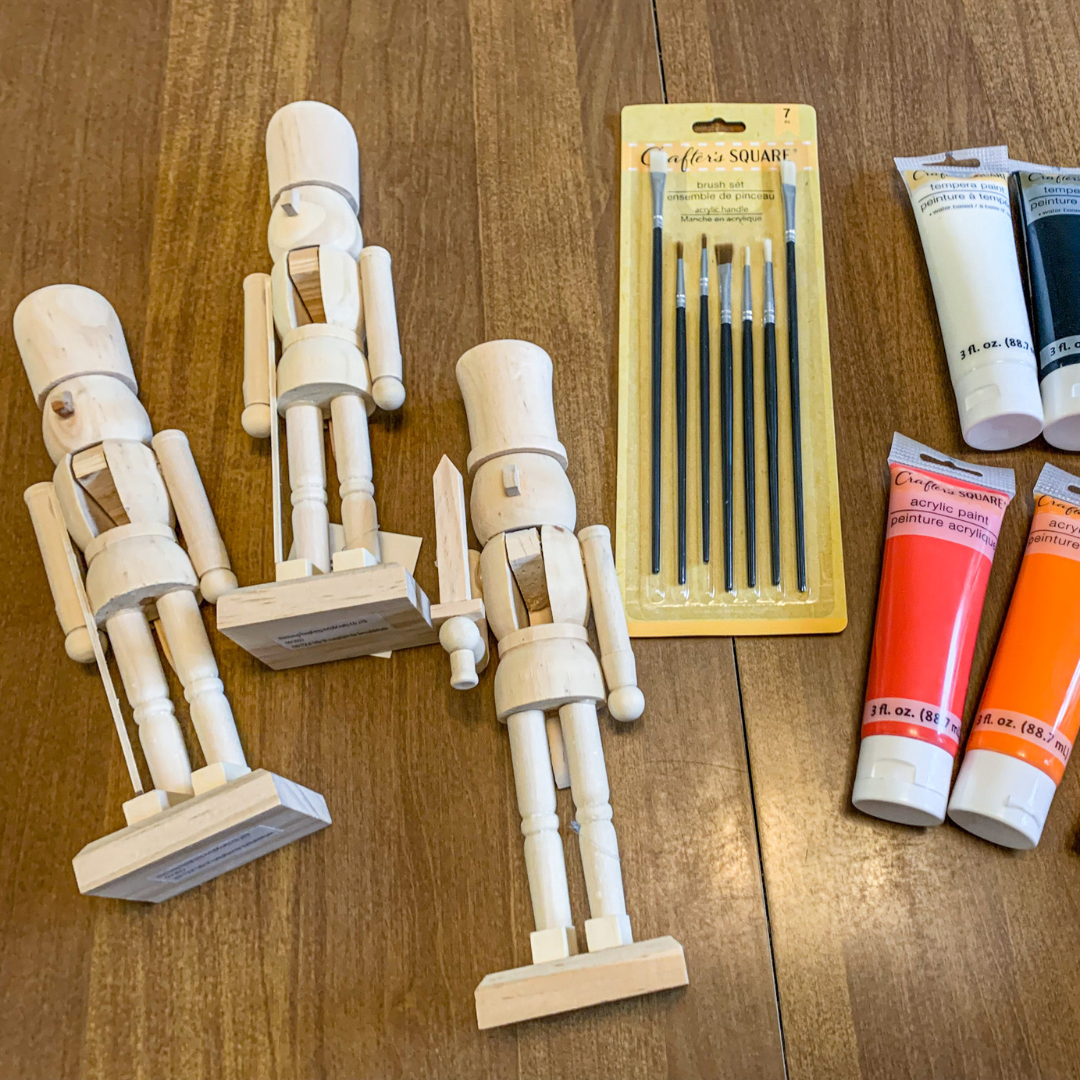
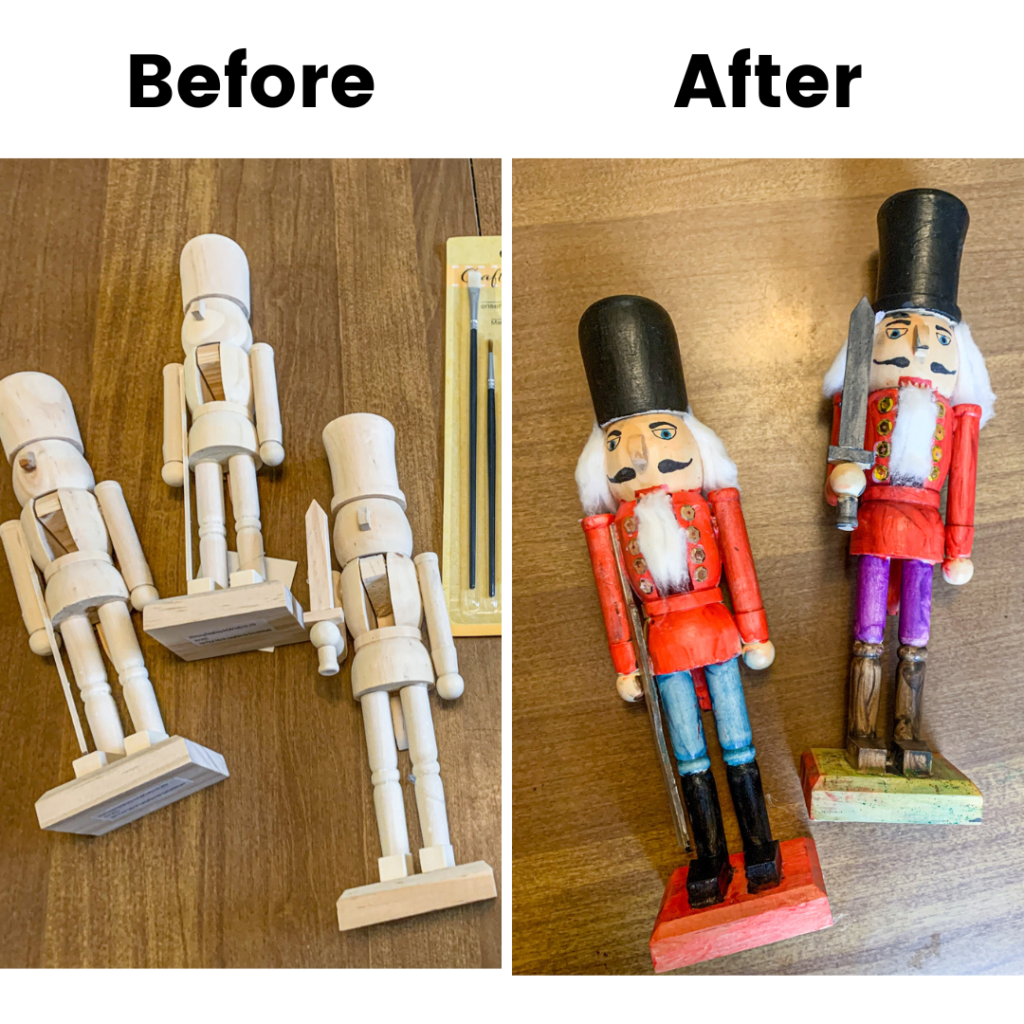
1- I went to the Dollar Tree last week and bought plain, wooden nutcrackers for $3. They were unpainted and perfect for a fun craft. The girls and I have been working on painting them the last few days to gift to some people. They are turning out so cute. I love handmade gifts like this and the fact that they were only $3 a piece is even better!
I did see the same type of nutcrackers on Amazon. You can purchase a few of them for a pretty great price. Check it out here. I will say that the Amazon ones seem a little smaller than the ones I found at Dollar Tree.
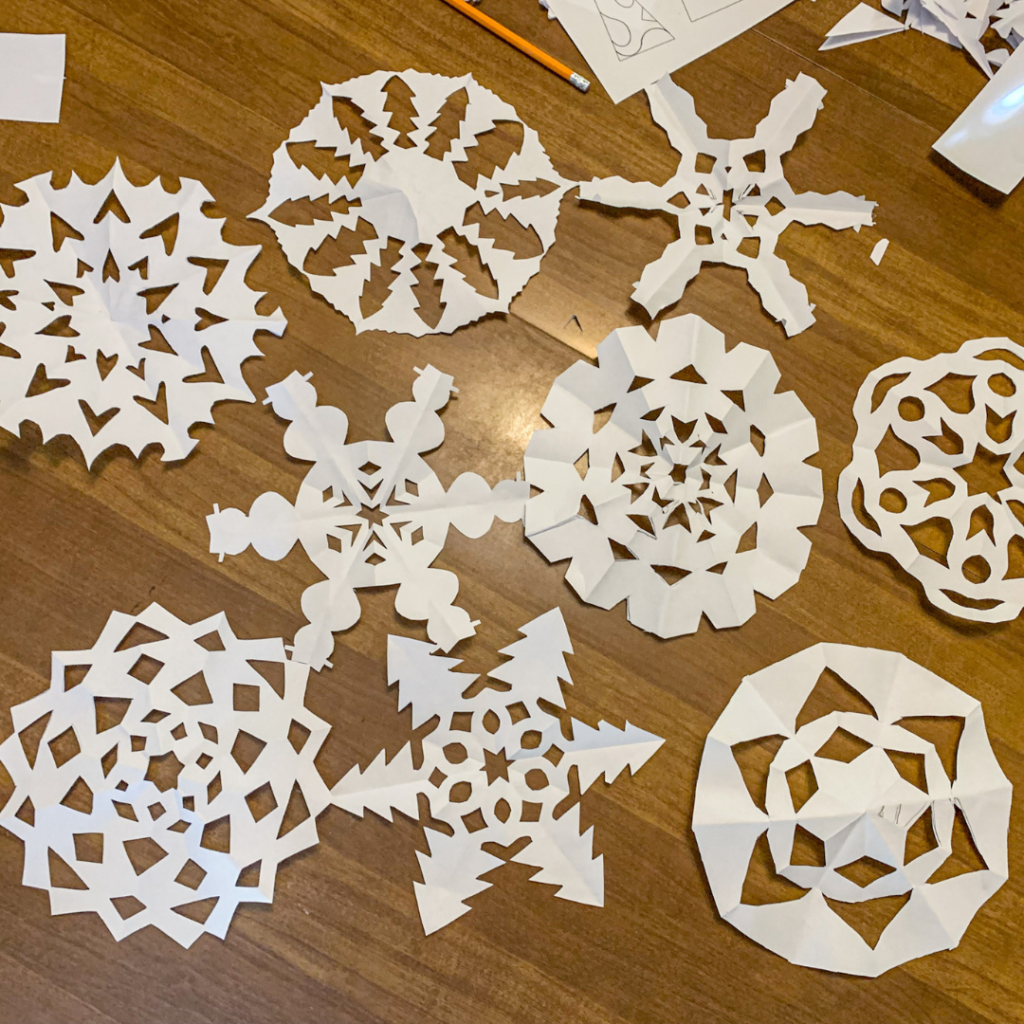
2 – Each afternoon when my youngest goes down for a nap I try to choose one thing to do with my girls to celebrate the season. Sometimes it’s as simple as read a book together or color a picture. Other times it’s more elaborate and messy, like painting! Our favorite activity from this past week was making paper snowflakes. What a simple craft that brings so much joy and fun! I’ll link for you the site where I found some templates that helped us with the designs. For the last couple years we have made these and we tape a string to them and hang them on the ceiling above our kitchen table. It’s our own little Winter Wonderland in Texas.
2 – This week was all about the puppy chow (or muddy buddies some may call it)! We made three different batches. One we enjoyed for ourselves, but the others were to share with loved ones. I’ll link the recipe I found. I really like to keep puppy chow simple. I don’t like adding in extra things. I will say that I may have changed the 1/2 cup of peanut butter to a “heaping” 1/2 cup and the other change was that I like to use a different cereal for my puppy chow. Have you heard of Crispix? It’s half corn, half rice. It’s a little crunchier and more airy than the Rice Chex, and I like it better! Give it a try if you’ve never had it. We love it!
HEARING
1 – Last weekend, I was with some friends and the topic of the Proverbs 31 woman was brought up. I’m familiar with it, but there was something in my heart that wanted to dig deeper. I felt like I knew it but didn’t KNOW it…if you get what I mean. Anyway, it’s been on my heart a lot this last week as I’ve studied it and prayed about it.
Well, not too long after that, I came across a podcast related to the same topic by an author that I really love. She opens up the podcast describing Proverbs 31 as the chapter that both “encourages and discourages women…” She does an awesome job diving in to each verse and talking about it with today’s world in mind. It really gave me a sense of peace about the chapter, and I hope it can do the same for you.
2 – I’m far from planning ahead for homeschool in January. I want to get through Christmas first, but I did listen to a great podcast from Read Aloud Revival that talked about simplifying our curriculum choices. It was very encouraging and helpful. She even asked, “If you could only keep five things for your homeschool, what would it be?” That’s a big question! Could you answer? I thought about it for a while, and I think I have a good list. I know I’ll be keeping her tips in mind as I plan after the holiday break.
WATCHING
1 – One day last week called for a picnic lunch and a movie. The kids watched “Superbook: The First Christmas”. If you’re not familiar with the series, I highly recommend it. Two kids and a goofy robot travel back in time to experience bible stories together. We saw the episode on the Prime app, but I believe the Superbook YouTube channel has full episodes as well.
2 – I’m so excited to share this one! Have you ever read, “The Christmas Miracle of Jonathan Toomey”? It’s a beautiful Christmas story that is loved by many! We added it to our home library last year, but this year I discovered there’s a movie! We watched it last week, and it’s awesome! It’s just as sweet and wholesome as the story. There’s definitely some differences but the main part of the story is there and it really was so well done! If you’re bored of the usual Christmas movies or if you need something simple this week as you eagerly await Christmas – read the book and watch the movie! It’s so good. Oh! And the best part is it’s FREE on the Prime app right now.
THINKING
1 – This holiday season I cut out some of the extra subjects in order to keep this season flexible. I’ll be honest, we are a little over two weeks into the month and my feet are dragging each morning to complete our work. So, I’ve decided to wrap up our math and language arts units at the beginning of this week and leave the rest of December for some Christmas fun with my kids.
I hope to read more books, bake a little, and create some simple crafts. However, if I wake up and feel it necessary to just rest, I’ll do that too. What I’m really thinking is – I’m ready for the break. So we are taking it early! (Just a few days!) And I’m not sad about it. I’m really looking forward to making memories with the kids the next couple weeks.
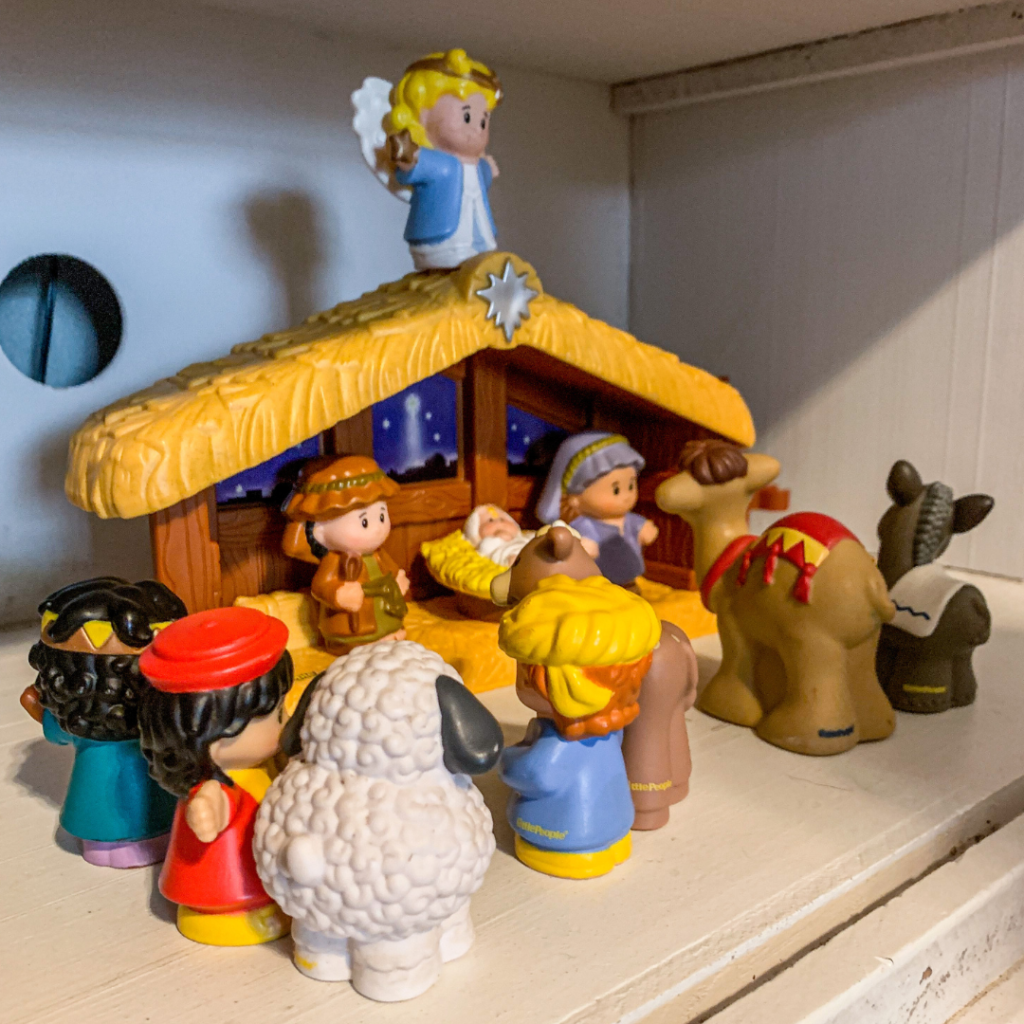
2 – The other day I asked my 3-year-old to pick up all the nativity pieces off the floor and set them up in their spot. A couple hours later, I walked past her set up and I was looking at the backs of the majority of the pieces. (see photo) The wise men and the stable animals were facing the “wrong direction”. I was used to seeing them all set out nicely to the side so you can see all their faces, and then it hit me. They’re looking at the baby Jesus. Isn’t that just like this busy season? We’re trying to line everything up perfectly and check all of our to-dos to make sure everything is just right. In this moment, I’m stopped in my tracks as I learn a lesson from my little one. The goal is to look at baby Jesus. That’s the real message of the season. Although I may fail at times, it was just the message I needed in that moment.
Rejoice in the birth of our Lord and Savior. May the blessings of Christ be upon you and your loved ones this season and into the New Year.
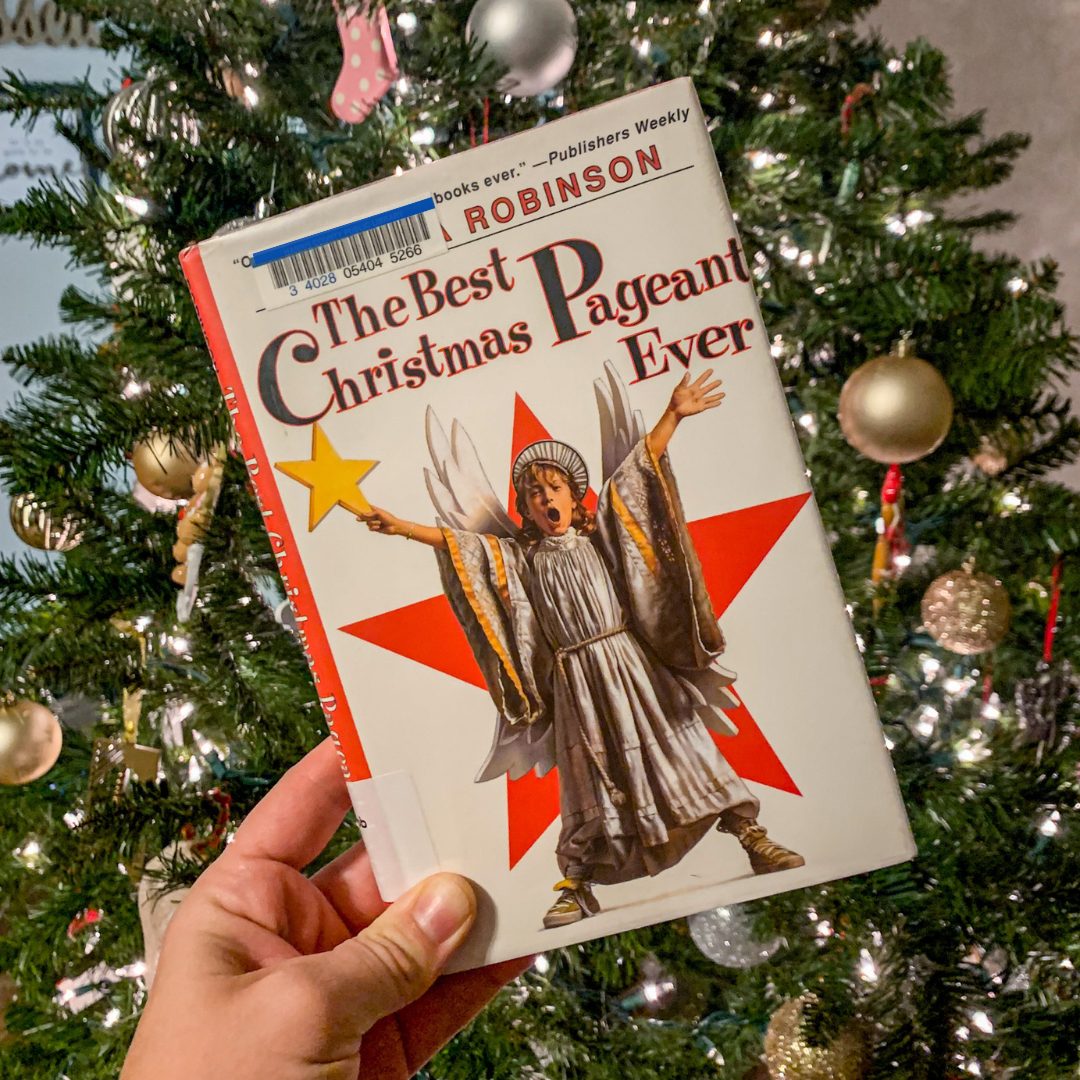
One of our Christmas read alouds this year was “The Best Christmas Pageant Ever” by Barbara Robinson. I chose the book because it was on the Read Aloud Revival holiday booklist and because I had heard great things about it from others.
A friend reached out to me before I read it, and gave me a heads up that there were some inappropriate parts in the story for little ears to hear. I was so thankful for this message, because she was right. There are definitely some parts in the book that may be worth editing or skipping, and I plan to share them with you here.
This post contains affiliate links. If you follow one of my links I earn a small commission at no extra cost to you. Thank you for supporting my blog!
Pointing Out the Bad
Let me just start by saying that this book was so precious. If you’re wondering if it’s a good book to read for Christmas, my vote is YES! My kids looked forward to it every night, and I even teared up at the end!
Now, with that in mind, you’ll have to make note that I’m about to point out the not-so-great things in the book. It’s the focus of this post – to warn you of some of the things that might be bad for little ears. But please don’t mistake that for this being a bad book. Of course, use your discretion to pick what’s best for your family, but please do not interpret my post as a negative review. We adored this story.
I would read it again in a heartbeat!
Age Group
My girls and I read every night before bed. Their ages are 8, 6, and 3. So, you can see that a variety of ages will enjoy this. I will say that my older two caught on a bit more, but you better believe their youngest sister was giggling along with them at times.
I truly feel this book would be great for even older kids as well. If you have middle school kids, they’d probably get a kick out of this too. It’s one the whole family can enjoy together.
The Herdmans
The book is about a group of siblings called the Herdmans. They’re naughty, and I mean really naughty. They are terrible to other kids, parents, and pretty much all authorities. They are mean, destroy property, smoke cigars, and set a terrible example. The thing is — they make this story! Their behavior and actions is what really drives this book home in the end, so you have to get past the bad to get to the good.
What I love about reading aloud with my kids is that it provides us with a safe environment to talk about these things together. What do we think of the behavior? What would you do in that situation? How should we act towards others? Is this the right thing to do? We had lots of these discussions with this book, and they were very meaningful.
Bullying
I’m not going to cover each chapter, but I will tell you that chapter one is a doozy when it comes to bullying. The author does a great job setting up the characters and pointing to the fact that – the Herman’s are rude to all! There is a character in particular that this chapter focuses on, Imogene Herdman. There is an entire section about her sneaking around to find out everyone’s body weight and then using it against them later.
The only time this got really uncomfortable for me is when the book started using words like “the fat kids” and then had an entire paragraph about what fat camp was. I try to teach my kids not to use the word “fat” and it was thrown around quite casually in this chapter. Once again…I’m not mad about it. I love being able to talk to them about these things in the safety of our home. This is just a heads up for you. The word “fat” comes up multiple times in this chapter.
The first chapter also brings up “cooties”, so that was a new term for some of my kids. Needless to say the author does an amazing job making these kids sound straight up awful!
Language
We just finished this book, and I really can’t remember any curse words. In my opinion, those are easy to edit quickly or skip over, but I don’t recall them even coming up.
I will point out that a couple of the Herdmans shout, “Oh my God!” during their rehearsals. The point of this is the rest of the children are in shock that someone would use God’s name in vain in the church.
I chose to say “Oh my gosh” instead and the whole thing went right over my kids’ heads. I want to say it happens 2-3 times.
The only other part that sticks out in my head is when a preacher says at the end of chapter 6, “Mrs. Wendelken says all they do is talk about sex and underwear.”
I didn’t see that one coming, but I just skipped over sex and said “underwear”, not because it’s a bad word, but because I wasn’t about to have a discussion about sex right before bedtime. We’d be talking for hours! I just made the quick decision to skip it and move on.
The Nativity
I don’t want to give away too much in the story, but I think it’s also important to point out that the Herdmans are not aware of the Christmas story. They are very curious and want to make sense of it all. They throw around jokes and make up crazy scenarios about what might have happened. I personally don’t think it’s a bad thing. Just know that you are going to come across some things that add a sort of silliness to the nativity.
Do you ever use Common Sense Media? I looked this book up to see what it had to say, and it made the point like this, “Parents need to know that this is a unique and entertaining spin on an age-old tale. Some parents may want to exercise discretion: Not everyone will want their children exposed to the antics of the main characters or will appreciate the liberties the story takes with what some people may consider sacred ground.”
…But it’s SOO CUTE!
I really hate saying all this. It makes the book sound terrible, but I promise you it’s absolutely adorable. The end of the book was so meaningful and it brought me to tears. I don’t want to spoil it for you.
Here’s the thing – the book is only 7 chapters and just 90 pages. If you are considering it for your family, but you aren’t sure how you’ll feel, pre-read it. You could probably do it in one sitting! It’s that quick (and entertaining!) Find it in your library so you can do this for free, and decide whether or not you want to share it with your kids.
We loved it! I don’t regret it one bit. I love the discussions we had. I love the giggles we shared, but I can’t spoil the beautiful message that is displayed at the end. Even if you read this on your own and decided to wait on it a few years to share with your kids, I truly feel your time wouldn’t be wasted.
Christmas is about the birth of Jesus, and this author has a fun, unique way of pointing this out to us, even if it makes us slightly uncomfortable for a bit. Jesus came for all, and this story proves just that!
This is my second child I’ve taught to read, but my approach has been completely different from my first. This year we used Logic of English Foundations A to teach reading, and I’ll be sharing how it worked for us.
This is not a sponsored post. I chose Logic of English on my own and plan to share my honest opinion about it with you.
This post contains affiliate links. If you follow one of my links I earn a small commission at no extra cost to you. Thank you for supporting my blog!
Why Logic of English?
I was actually pretty stubborn about teaching reading. I did not use a reading curriculum with my first daughter, and I was certain I could follow the same path with my second daughter. Alas, I have learned that each of my children is unique and their gifts of learning vary greatly! What works for one does not always work for the other.
The summer before my daughter’s first grade year, I decided to purchase an inexpensive reading workbook to complete casually throughout the summer. As we did it together, the thought came to my mind that it was so nice to have directions to follow each time we worked instead of coming up with my own activity like I was used to.
This was my realization that a reading program would be helpful for the both of us, and I had to let go of my stubbornness. Unfortunately, these programs can get pretty costly!
Years ago, I heard great things about 100 Easy Lessons, purchased it, and didn’t really like it. I wish I would have because it costs a lot less! So, I wanted to choose between the two price-y ones I heard the most about – Logic of English and All About Reading.
Here’s Some of the Reasons I chose Logic of English:
Low prep for each lesson
Handwriting included (manuscript/cursive)
I can easily re-use it with other children (minus the student workbook)
Doodling Dragons Picture Book (my daughter would love this)
Not grade-level focused, moves at the pace of my child
Activities included are simple and follow my style of teaching
Tactile Handwriting Cards and activities for multi-sensory learning
Items Included
The Foundations A set comes with a handful of items that I will discuss in this post. To see my unboxing of this set, check out my YouTube video for a detailed look at each item.
Lessons and Assessments
Foundations A includes 40 lessons and 8 Assessments (A-H). Each lesson and assessment comes with a script for the parent to follow. With each lesson there is anywhere between 1-4 workbook pages for the student to complete. Each workbook page is very short and can be a simple as pointing at a picture.
One of the things I love about each lesson is that there are so may activities to pick from. I feel like at first this was a little overwhelming. As I get with every new curriculum, I felt like I had to do everything. After a while, I got used to the set up and was able to pick and choose things based on our own needs and schedule.
The assessments were actually the most fun! Isn’t that interesting? You assess your child using games and hands on activities, and we looked forward to each one. The assessments also made it easy for me to see what she understood and what needed more work.
Handwriting
Every lesson includes handwriting practice. Strokes and lowercase letters are introduced and there is space to practice in the student workbook. My child is not a fan of writing, and the amount of handwriting practice was perfect for her. It’s very minimal. For example, the workbook may say to write the letter a few times on your favorite line. So it’s not rigorous by any means.
The Tactile Cards that go along with the handwriting lesson are so fun. We didn’t use them every time, but my daughter loved them! It’s almost like a sandpaper feeling and it really helps learn the letters using multiple senses.
We chose to use the manuscript version. (You have the option to choose manuscript or cursive) I was happy with this choice, but I will say that the handwriting that is taught is very unique. It’s slanted and curvy, which is excellent in preparation for cursive, but it matches nothing else that we have. This would be my only negative thought about the handwriting (more on this later).
I’ve heard of many parents that skip the handwriting all together, but learning the strokes and using the tactile cards was so helpful to my daughter that I decided to stick with it. They do offer a handwriting book separately, and now that she is more confident in writing, I may add that in as practice.
Spelling
Spelling is introduced in lesson 21 and continues with each lesson after that. The lesson comes with 3-5 words that follow what you’ve been practicing, so it really sets the student up for success. I will say that once spelling was introduced the lessons felt really long. We ended up splitting them up into two sometimes three days.
Games and Activities
I love the variety of games so much. It matches my teaching style, and I think that’s why we enjoyed it. Every game option they give you uses the cards that comes with the set. So you’re never having to cut a bunch of things or laminate or find a list of supplies.
To give you an example you might practice your phonograms by hiding the cards around the room and having a scavenger hunt. Or you might lay the cards on the table and slap the correct one. They’re all just really fun and easy to do.
And there are so many!! The Teacher’s Manual provides you with a variety of games to pick from for each lesson. When you finish an assessment, there’s a whole page of ideas on how to practice different skills using the games. It’s so helpful!
Readers
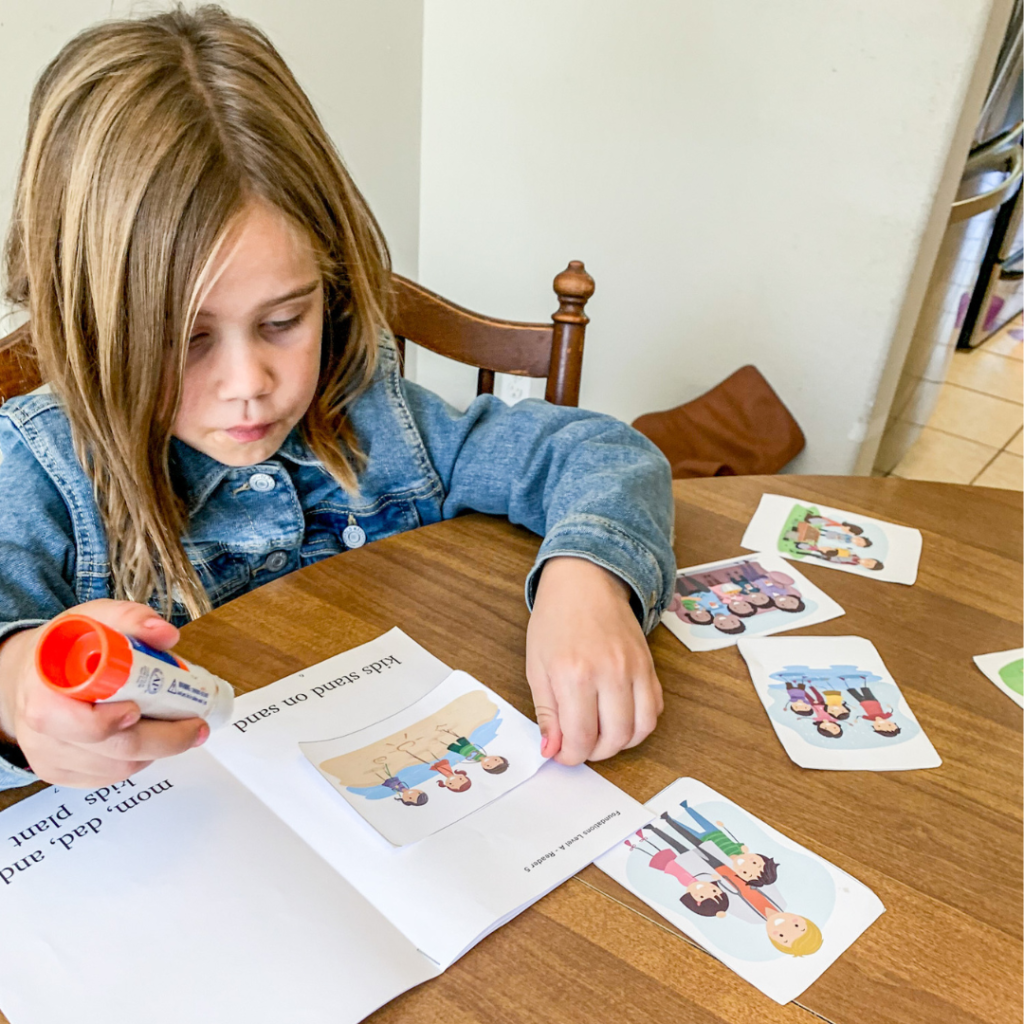
The readers are created by the students! This is the cutest thing to me. I believe there are 6 total and each one comes with a set of pictures and then a group of blank pages with the words to read. Your child reads the words and matches the pictures to each page.
There’s cutting and pasting and matching. This makes the reading so fun! Not only is the process of putting it together unique, but the pictures are so silly. We really got a kick out of these!
Doodling Dragons
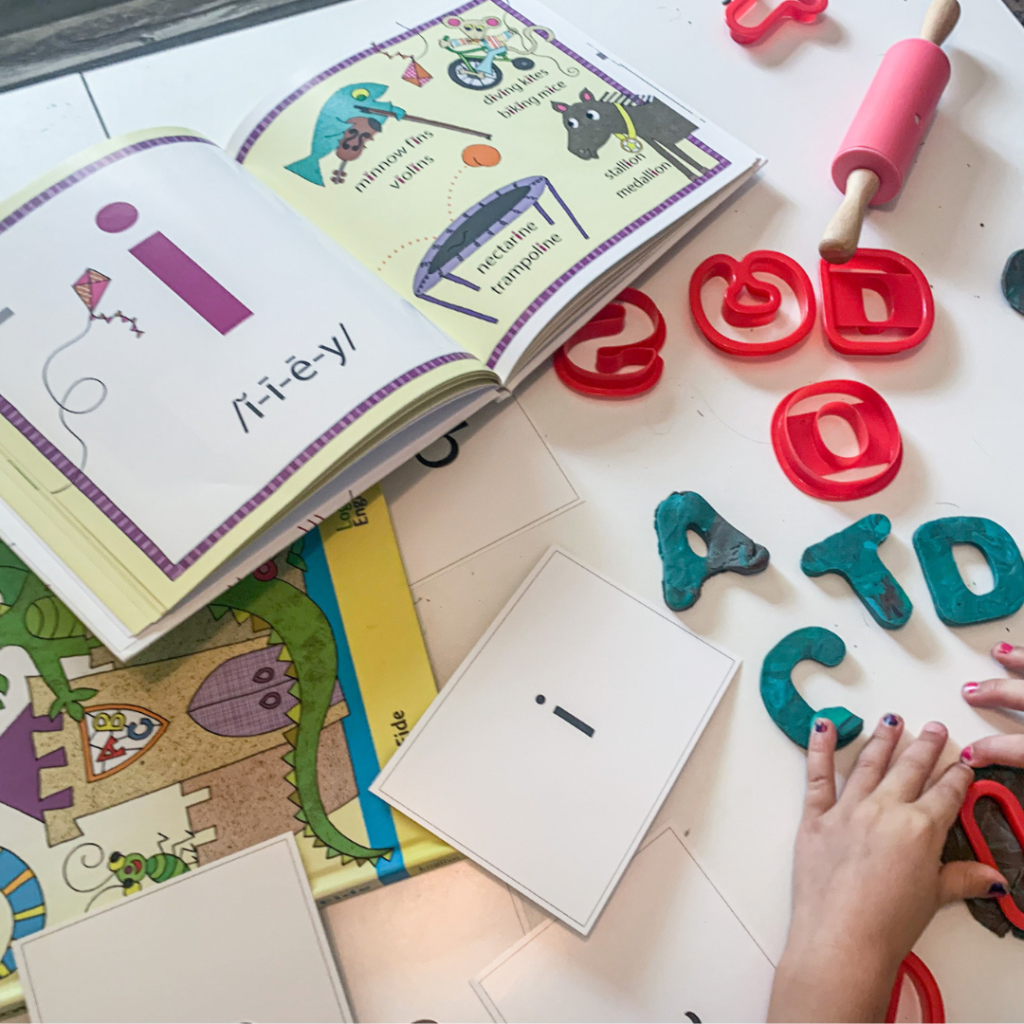
This picture book has a page for each phonogram. There are silly pictures and rhymes that use all the sounds of the phonograms. It’s very cute, and my daughter loved looking at each page. On YouTube, there are songs that go along with each page as well. These were wonderful, but we usually forgot to listen to them. I believe you can purchase a CD, so if you have a CD player or like listening to things like that in the car, it may be worth the purchase.
Sometimes I think that if we would listen to them in the car, my younger kids would catch on and begin learning them as well.
The Not-So-Great Things
Can you tell we loved this? I could go on and on about how easy it was to use and how much my daughter enjoyed lessons. My complaints are so minimal, but I’ll share in order to give a thorough review.
LONG LESSONS – This was an easy fix, but it also could vary with the child. We simply split the lessons up into a couple days. The book encourages you to do this as well, but if you feel bound to a lesson number and completing one a day, that will get tougher as you work further into the book.
LOTS OF PIECES – When I received the box for the set, I was immediately overwhelmed by all of the cards and pieces that come with it. There’s a lot! So, finding a way to organize it all was key. I went with a plastic container that allowed me to keep the cards in their own box but still altogether. It’s been great!
HANDWRITING – I mentioned this earlier, but the handwriting is unique. It really doesn’t match any other writing in other books we do. So, it’s something you’ll have to decide if you want to do or not. We stuck with it, and I just plan to get their handwriting book at some point to practice.
SO MUCH TO DO – This really isn’t a bad thing, but I will say that there are so many options of things to do, and it would be very difficult to do it all. So, it’s important to look through and pick what’s best. For example, with every letter the child learns, the book provides ways to “celebrate” the letter. We never did this. The ideas were so cute, but ultimately it didn’t fit in the schedule of our family.
COST – A program like this doesn’t come cheap. It’s one of the reasons I hesitated to get it in the first place. It’s also tough because set A is only 40 lessons, and although it took us until Thanksgiving to finish (we started in July), it’s kind of a bummer to already have to spend another $100 to keep going. My hope is that the cost will eventually even out when I am able to use it for my next two kids, as well. All I will have to purchase in the future is the student workbook.
Other Random Things I Love
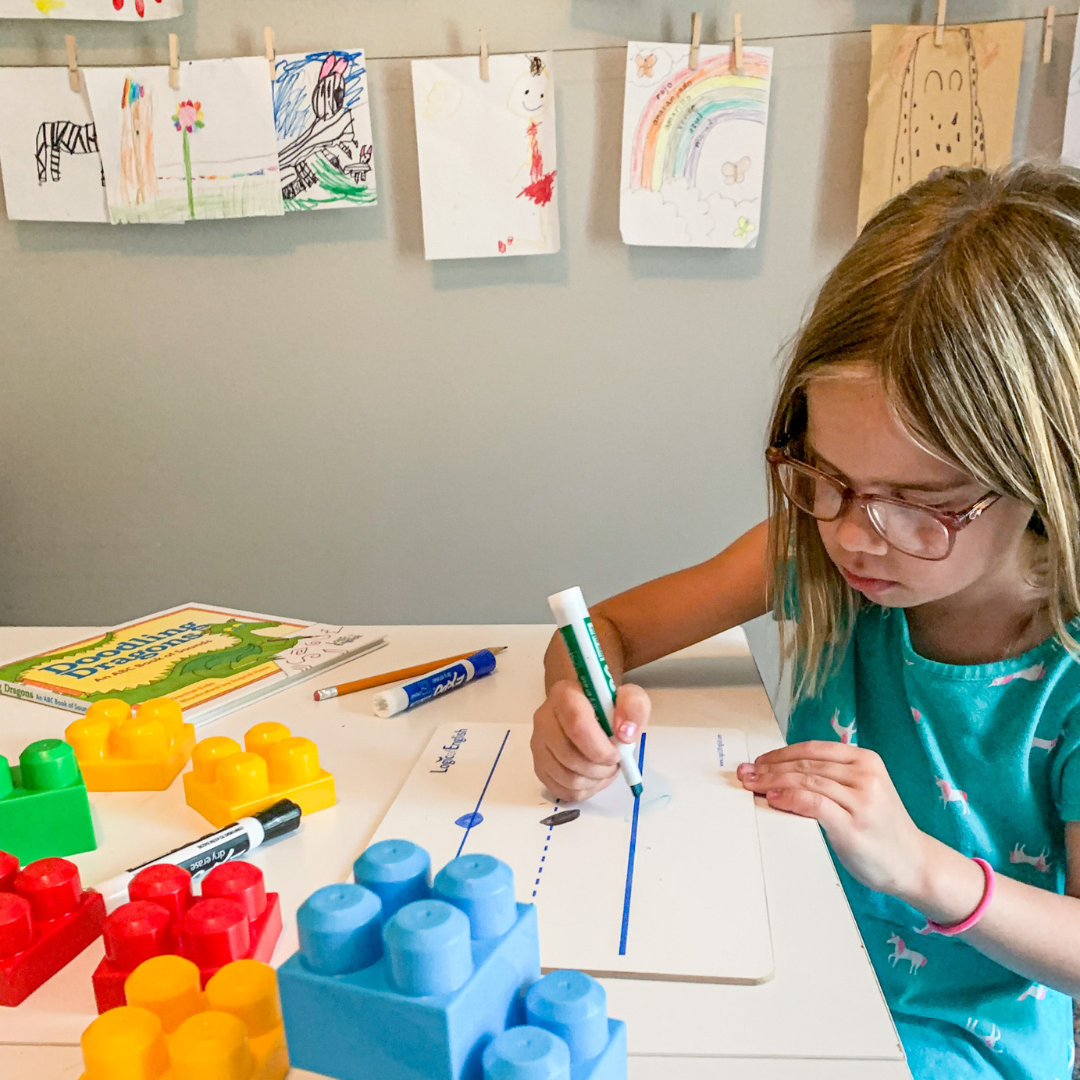
WHITEBOARD: The miniature whiteboard that comes with the set got used every day. It was so helpful and I love that it had a giant set of handwriting lines and then smaller ones on the opposite side.
MOMMY IS LEARNING: I’ve learned so much with this program. I never knew every sound of every letter. I learned about voiced and unvoiced sounds. We’ve learned things about consonants and vowels that I had no idea about. I love learning alongside my kids!
TEACHER’S MANUAL: The Teacher’s Manual is bound in a hardcover. Almost every spiral book I have ends up coming apart in some way, and this one has no spiral. It makes me happy knowing it will last through the years!
Final Thoughts
My daughter’s attitude about reading has changed so much since we started this. Her and I were both frustrated the year before this, and using Logic of English has given us so much joy. I can specifically remember a lesson where we giggled and had fun, and when I told her she could get up to leave she ran up and hugged me! I just melted – so thankful for the progress we were making and continue to make to this day.
It took me a while to finally bite the bullet and pick a reading program, but once I did I felt so much less pressure when it came to teaching reading. It gave me confidence each day knowing a plan was in place, and it built up my daughter’s confidence each step of the way.
This year I made an unexpected switch in our math curriculum. For the longest time, I was nervous to pick something new from what we started with in our homeschool. There’s something intimidating about picking a math curriculum…I’m not sure why! Well, I am – math matters and it builds on itself. You can’t just jump from one to another and not expect some bumps.
I want to share with you in this post what led me to make the switch, the transitional parts of switching and how we are liking the new program.
This post contains affiliate links. If you follow one of my links I earn a small commission at no extra cost to you. Thank you for supporting my blog!
Horizons K
We started with Horizons math when my oldest daughter was in kindergarten. It worked great. We had no problems, and I was happy with it. When my second daughter entered kindergarten, I went with the same plan. Horizons was not a great fit for her, but I spent a LOT of energy and time and stress trying to make it work.
If you’re interested in hearing more about this experience, check out my YouTube video where I talk in detail about why I dropped Horizons for my second daughter.
Sometime right before spring, I made the switch to Christian Light Education (CLE) for her, and it was like a breath of fresh air. We actually started with the Math 1, because the Horizons K book had pushed her so far ahead of their K level. We worked through the first unit and then paused for a summer break. I was confident it was the right curriculum to continue with at the start of first grade for her.
Horizons 3
That next school year, when my oldest daughter entered third grade, I bought the Horizons set as a habit. This meant I would have one child using Christian Light and one using Horizons. We had used Horizons every year for her since kinder. It was working, so why change it? I was tempted to, but I decided not to think too hard about it and stick with it.
The more I became familiar with how CLE was working, the more I realized the gaps in our Horizons program with my oldest daughter. She struggled with word problems and memorizing her math facts, and CLE focused on both of those things so well!
Then, we started to get to parts of a lesson in the Horizons 3 book where I had no idea what the student book was instructing her to do. I’d pull out the teacher book as a reference and the directions would say something like “discuss estimation”…OK – but how? What should we discuss? Can you be more specific? Check out my YouTube video for an example of this. It’s actually quite shocking!
Now, I taught math in the classroom, so I know about estimation, but what exactly were they wanting? There were no tricks, strategies, or examples. It just said to discuss it. So, I taught her what I know…turns out it was too much! Once we got started in the student workbook, I had to back track. I felt so misguided by the teacher guide.
Then, there would be directions in the student workbook that would be so unclear- it was impossible to figure out what to do unless you pulled out the teacher book for the explanation. That doesn’t make sense to me. A student should be able to read the instructions and work.
At this point I was so frustrated each day when I pulled out the book. Comparing it to CLE in my head constantly, I felt like it wasn’t as good.
Testing out Christian Light Math for 3rd Grade
One thing I love about Christian Light is their curriculum is broken up into little units. You can purchase just one of them for about $5, and it’s the perfect way for me to try out their program. So that’s exactly what I did.
I picked the unit that would best fit my third grader, and we started there. If we hated it, we could always go back to Horizons. Well, spoiler alert, we LOVED it – and haven’t looked back! Let me tell you why.
Designed for the Student
Each lesson in Christian Light starts with a new skill. The skill is explained and demonstrated in the student workbook with pictures and examples. This is such a great way to start independent learning. My daughter attempts to do the new skill on her own, and we look over it together when she finishes the lesson. Everything she needs to complete the lesson is in her book.
I use the teacher guide to check her work daily, but honestly, that’s it! It does provide me with a flashcard schedule as well as a quick tip or suggestion to help with the new skill. Other than that, the student is learning to become more independent!
Mental Math Strategies
CLE is so good about teaching mental math strategies! I’m not the best mental math student, and I love that it actually forces my daughter to compute problems mentally. Horizons wasn’t good about doing this at all. It’s possible it was in the teacher book somewhere, but let’s be honest, that thing was so unfriendly and hard to look at.
My daughter has started to realize this as well. She gets so excited about all the things she can do in her head now, thanks to the mental strategies the book has taught her.
Daily Checklist
At the start of a lesson there is a daily checklist for the student to practice certain skills. Skip-counting, math facts, and speed drills are on the list which makes for a great routine in practicing these things daily. We have learned how to adjust the checklist to best fit our needs (in other words, sometimes we skip it), but I have seen so much benefit in regular practice.
My daughter’s fact memorization has improved so much and she’s being challenged to count out loud in ways that she hadn’t before. For example, counting by 4s forward AND backward. When we first started this, it was like a foreign language, but with the help of a hundred chart and routine practice she’s really caught on well. What a great way to form number sense!
Story Problems/ Word Problems
The first time we came across a story problem in level 3, the student book walked my daughter through every step. It told her what information to look for and how to choose the operation she would use. It provided her with a space to work out her problem as well as a line to write her answer. This was just what she needed!
She actually told me that the word problems in CLE were so much easier. I had to point out to her that they were exactly the same! This new book just broke it down so much nicer, making it easier to understand.
Learning Gaps Between the Two Programs
There were definitely some things we had to “catch up” on, but it was easy for us to do. For example, some of the geography (rays, lines, angles) was not covered in what we completed for Horizons, but it was easy enough to teach her quickly. Plus, Christian Light encourages the use of a reference chart, and those items are on there as well to remind her, if needed.
We’ve also had to brush up on math facts. In the third grade level they are practicing multiplication, but it’s so important that the addition and subtraction facts are solid too. So we’ve really been focusing on those flashcards first. She still gets lots of multiplication practice in her book, but I don’t plan to get her the multiplication cards until she gets through the addition/subtraction set.
Some Final Thoughts
When we were working with Horizons, I felt like we were just doing worksheets every day…which we were! Now, I did know this going into each year. If I wanted “more”, I had to come up with it on my own. For a while, that worked, but once I was homeschooling more than one child that became difficult.
After switching to Christian Light, it feels like my daughter is actually learning something and improving daily. She’s still just working in the book, but it’s enjoyable and meaningful. The units are themed and the mix of flashcards and drills and counting and using a reference chart…all of those routine skills put together feel fresh and not monotonous. She enjoys doing the work and the spiral review format keeps everything fresh in her brain.
Horizons is also a spiral review, but there were SO MANY problems to do. We were skipping half of the sections each day. We have enjoyed that CLE only asks for a few problems in each section.
I’ve heard people say before that the lessons in CLE are long, but we have found a way to make it work for us. On days we need to move quickly, we skip the checklist at the beginning. If we get to one of the review sections and I know my daughter knows it well, we skip it. Most days we aren’t doing every single thing in the lesson.
I’m So Happy We Made the Switch
After using Horizons for three years, it really felt tough to make a switch, but I’m so glad we did. The transition was smooth and the benefits I’ve seen have far outweighed the time spent in adjusting to a new program.
If you’d like to see more about Christian Light, check out the curriculum look through on my YouTube channel.
When we get to the holidays, our schedules tend to fill up. I know in our homeschool, I’m ready to wind down as we prepare to celebrate. I’m always looking for something super easy, and the solution for us has been books! This Thanksgiving I invite you to simplify your routine and try this out.
Below is a list of four books. Each book is absolutely wonderful on it’s own, but sometimes it’s fun to add a little something extra. With each book, I have described a simple activity to go along with it.
Choose one of these, two of these, or do them all. That’s it! No worksheets, no schedule, just read the books with your kiddos. If you want to add in the activity, go for it! We have loved using picture books to study this Thanksgiving, and I hope it can do the same for you and your family too!
This post contains affiliate links. If you follow one of my links I earn a small commission at no extra cost to you. Thank you for supporting my blog!
This book is cute and kid-friendly. We read it each year in our house and the story covers a little bit of everything about the Pilgrims. It starts with why they left to what happened when they got there. It describes how the Native Americans helped them and ends with a feast at the end. It’s a very simple, and easy-to-understand story.
ACTIVITY: Thanksgiving Story Trail Mix
This trail mix recipe can be downloaded for free! It’s the cutest thing and it’s so fun to do along with this book. For example, one part of the recipe says to add marshmallows because the Pilgrims had to survive a long winter. When you get to the page in the story that talks about that, pause to add your marshmallows. It really is a perfect pairing! (We do this one every year – it’s a blast!)
This is a newer book and it is so, so wonderful. The book is beautifully illustrated and the story is told from the perspective of the three sisters – corn, beans, and squash.
ACTIVITY: The Three Sisters Craft
This craft was inspired by another blog, but we added our own twist. The supplies you’ll need are construction paper, pipe cleaners, yellow pom poms, hot glue, and beans. (TIP – if you want to simplify this even more take out the pipe cleaners, beans, and hot glue and just use markers to draw it on)
As a side note, the process of growing the three sisters is so incredibly interesting to me. If you are not familiar with it, read more about it here.
You’ll need to cut out the shapes, and it may help to do it in advance. See the photo above for a visual of these items. For each craft you’ll need a corn stalk, 3-4 pieces of corn, 3-4 green husks, and squash leaves.
Glue all of the paper pieces to your background paper. Next, take your pipe cleaners and wrap it around a marker. This will give it the twirl-y look. We used two per craft. Glue the pipe cleaners onto the stalk (this is the vine for the beans). Finally, glue the beans and the yellow pom poms to finish.
This book is really special as it follows the journey of the PIlgrims through the perspective of three young children. The illustrations are so beautiful, but the book does an amazing job teaching the reader that the voyage was not all fun and games. The book also provides factual information through pictures, maps, and extra pages at the end. I can’t wait to add this one to our personal library.
ACTIVITY: Interactive Mayflower
I found this craft from another blog, but I want to share how we changed it up to fit our family. First, we used watercolor to paint the ocean. I let the kids decide how they wanted to do the sky (colored pencils, more watercolors…).
Next, I prepared the pieces for the ship. This was easy to cut out right before we started. Each child needed 1 brown ship, 2 white sails, 2 toothpicks, and 1 craft stick. After putting one together for my youngest, my older children were able to assemble their ship on their own, using my example.
Finally, I cut a slit in the paper plate, and we were finished. Each child added their own special touch and played with the interactive boat for a while. When they finished I taped the craft stick on the back of the plate and hung it up on our art display!
This book tells you all about Squanto’s life, starting before the time he helped the pilgrims. There was a reason he was able to learn English, and this book allows you to learn all about what he went through. His story is one to remember!
ACTIVITY: Wigwam/Wetu Craft
This craft is one we did with another story we read (directions linked here), but it’s the perfect activity to go along with this book as well. Native Americans lived in many different types of homes, depending on where they were and what tribe they were from. The type of home that Squanto may have lived in is like a wigwam. From the stories we read and the research I did, the house was called “wetu”.
As we studied Ancient Rome in our homeschool, I looked for fun ways we could use food/snacks to further our learning. I love doing this because we already eat every day – so adding a food activity doesn’t take much extra time out of our day.
I was searching on Pinterest and came across a recipe for building a Roman road as a dessert – Now, this is my kind of activity. The problem was I couldn’t understand the reasoning behind the food choices, and honestly it didn’t seem like it tasted that great to me.
So, I brainstormed a few ideas of how to put one together, and we successfully learned about and ate a Roman road in the process!
This post contains affiliate links. If you follow one of my links I earn a small commission at no extra cost to you. Thank you for supporting my blog!
All about the Ancient Roman roads
I highly recommend doing a little research with your kiddos before jumping in to do this. It will make a lot more sense as you complete the process. We used a few YouTube videos and some of our library books to learn about the building of the roads.
Almost every Ancient Rome library book had a little something about the roads, so that was easy to find. We used this reference book which is very kid-friendly and has great pictures with easy-to-read bits of text.
The best video we watched was an animated video, but it really broke down the process of how the roads were built. This is what I based my recipe on, so be sure to check it out after you glance at the recipe and it will hopefully all make sense.
Supplies
Chocolate Chip Cookie Dough
Oreos
Golden Oreos
Brownie Mix (and the ingredients needed to make it)
Ziplock Bags
8×8 Pan
Rolling Pin (for smashing cookies)
Just as a heads up, our grocery store had a large, family-sized package of generic creme-filled cookies (that look like Oreos). It came with both regular and golden cookies so to save money, I purchased it. I kind of wish we would’ve used the brand name cookies, but all in all we still learned a lot and the product was delicious!
Setting the curb
First we used the chocolate chip cookie dough to set the curb. We tore off small pieces of the dough and shaped them into little cylinder-like pieces. Then, we placed them along two sides of the pan to create the curb, just as the Romans would have done in stone.
Large Stone Layer
To keep it simple, this part is also made of the cookie dough. We tore off little chunks to represent the large stone foundation that was laid between the curbs.
Smaller Stone Layers
The next step in the road building process was laying smaller stones and sand on top of the larger stones. This would fill in gaps and create a solid foundation. We did a couple different cookie varieties for this.
First, we put chocolate oreos in a bag and crushed them into chunks using a rolling pin. After sprinkling those on top, we filled a bag with vanilla oreos. The vanilla oreos were crushed into a sand-like powder.
Finally to bind everything together, we mixed a box of brownies together and poured it all on top – YUM!
We had a few extra cookies left so we decided to take some of the cookie pieces and break them up. These were used to look like cobble stones on top of the road.
I pretty much followed the time on the brownie box to bake these. Be sure to let them cool all the way and then get ready to cut inside and see all the layers! What’s incredible is I was certain the brownie mix would mix all throughout the dessert, and it really didn’t.
But doesn’t that just prove the uniqueness and success of the actual Roman roads? Those things were solid! No wonder some of them are still around today.
This was such a fun little cooking experiment for us. It doesn’t hurt that they were absolutely delicious to eat, as well!
If you’re studying Ancient Rome, give this dessert a try! Snap a picture and tag me on Instagram @simply.learning.together I love to see other families learning together!
Check out all of the activities we did while studying Ancient Rome in my blog post.