When we get to the holidays, our schedules tend to fill up. I know in our homeschool, I’m ready to wind down as we prepare to celebrate. I’m always looking for something super easy, and the solution for us has been books! This Thanksgiving I invite you to simplify your routine and try this out.
Below is a list of four books. Each book is absolutely wonderful on it’s own, but sometimes it’s fun to add a little something extra. With each book, I have described a simple activity to go along with it.
Choose one of these, two of these, or do them all. That’s it! No worksheets, no schedule, just read the books with your kiddos. If you want to add in the activity, go for it! We have loved using picture books to study this Thanksgiving, and I hope it can do the same for you and your family too!
This post contains affiliate links. If you follow one of my links I earn a small commission at no extra cost to you. Thank you for supporting my blog!
This book is cute and kid-friendly. We read it each year in our house and the story covers a little bit of everything about the Pilgrims. It starts with why they left to what happened when they got there. It describes how the Native Americans helped them and ends with a feast at the end. It’s a very simple, and easy-to-understand story.
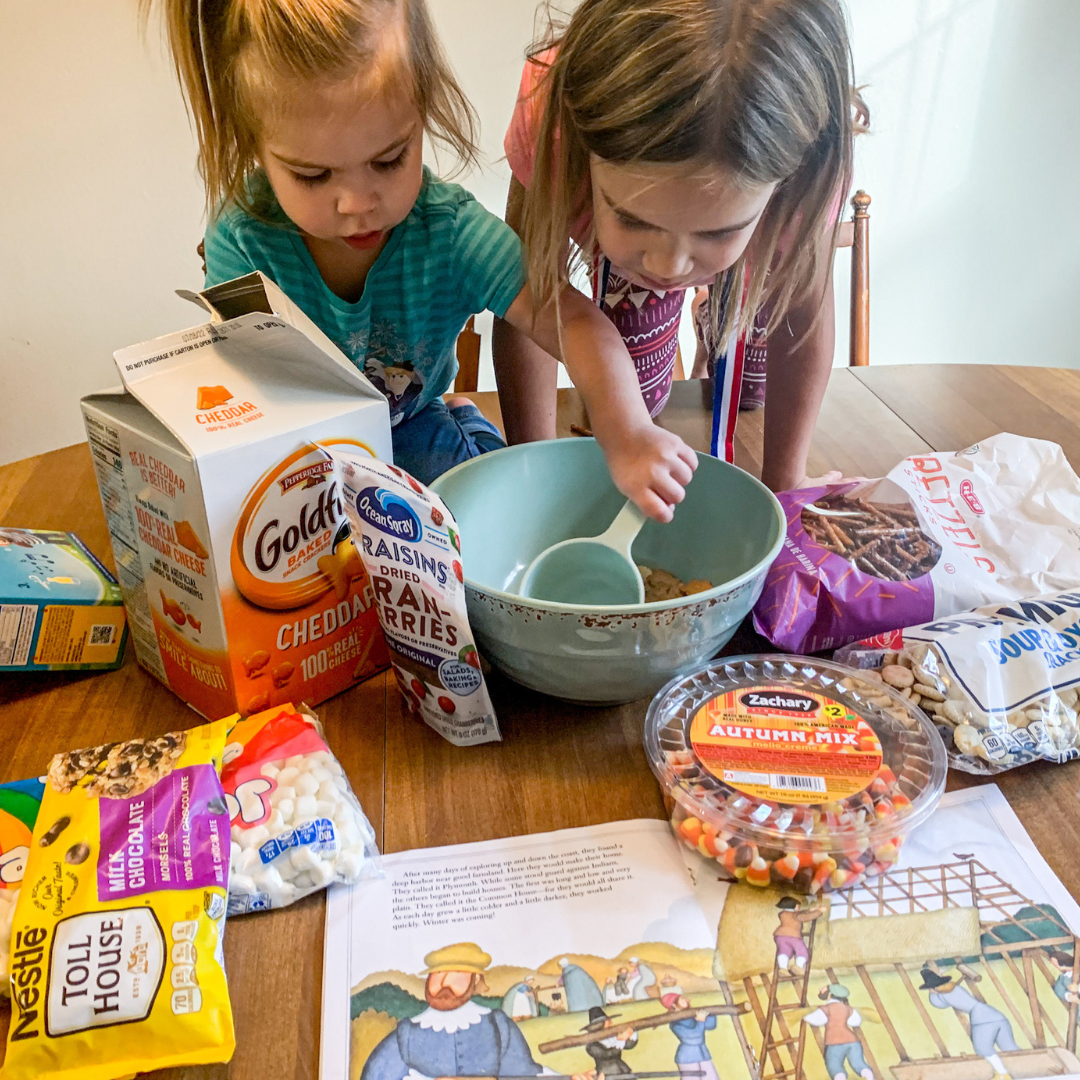
ACTIVITY: Thanksgiving Story Trail Mix
This trail mix recipe can be downloaded for free! It’s the cutest thing and it’s so fun to do along with this book. For example, one part of the recipe says to add marshmallows because the Pilgrims had to survive a long winter. When you get to the page in the story that talks about that, pause to add your marshmallows. It really is a perfect pairing! (We do this one every year – it’s a blast!)
This is a newer book and it is so, so wonderful. The book is beautifully illustrated and the story is told from the perspective of the three sisters – corn, beans, and squash.
ACTIVITY: The Three Sisters Craft
This craft was inspired by another blog, but we added our own twist. The supplies you’ll need are construction paper, pipe cleaners, yellow pom poms, hot glue, and beans. (TIP – if you want to simplify this even more take out the pipe cleaners, beans, and hot glue and just use markers to draw it on)
As a side note, the process of growing the three sisters is so incredibly interesting to me. If you are not familiar with it, read more about it here.
You’ll need to cut out the shapes, and it may help to do it in advance. See the photo above for a visual of these items. For each craft you’ll need a corn stalk, 3-4 pieces of corn, 3-4 green husks, and squash leaves.
Glue all of the paper pieces to your background paper. Next, take your pipe cleaners and wrap it around a marker. This will give it the twirl-y look. We used two per craft. Glue the pipe cleaners onto the stalk (this is the vine for the beans). Finally, glue the beans and the yellow pom poms to finish.
This book is really special as it follows the journey of the PIlgrims through the perspective of three young children. The illustrations are so beautiful, but the book does an amazing job teaching the reader that the voyage was not all fun and games. The book also provides factual information through pictures, maps, and extra pages at the end. I can’t wait to add this one to our personal library.
ACTIVITY: Interactive Mayflower
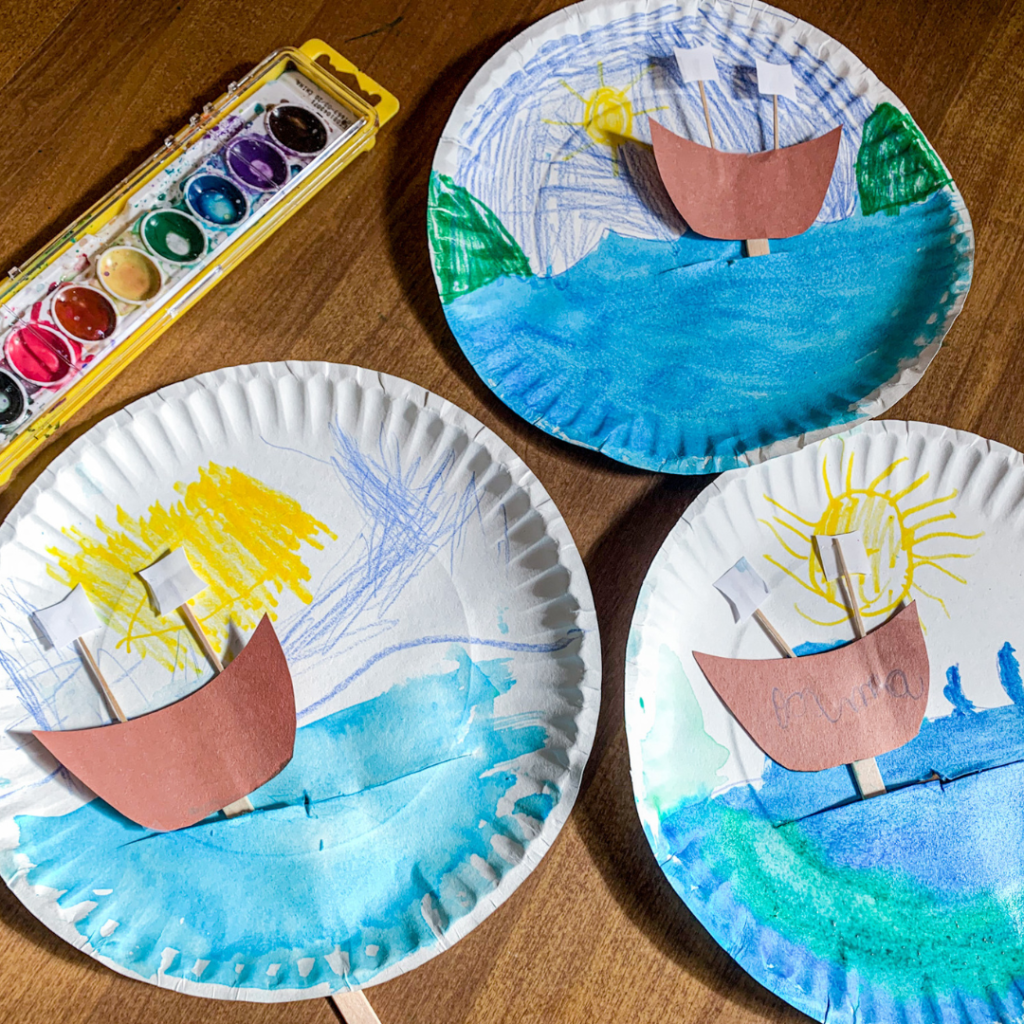
I found this craft from another blog, but I want to share how we changed it up to fit our family. First, we used watercolor to paint the ocean. I let the kids decide how they wanted to do the sky (colored pencils, more watercolors…).
Next, I prepared the pieces for the ship. This was easy to cut out right before we started. Each child needed 1 brown ship, 2 white sails, 2 toothpicks, and 1 craft stick. After putting one together for my youngest, my older children were able to assemble their ship on their own, using my example.
Finally, I cut a slit in the paper plate, and we were finished. Each child added their own special touch and played with the interactive boat for a while. When they finished I taped the craft stick on the back of the plate and hung it up on our art display!
This book tells you all about Squanto’s life, starting before the time he helped the pilgrims. There was a reason he was able to learn English, and this book allows you to learn all about what he went through. His story is one to remember!
ACTIVITY: Wigwam/Wetu Craft
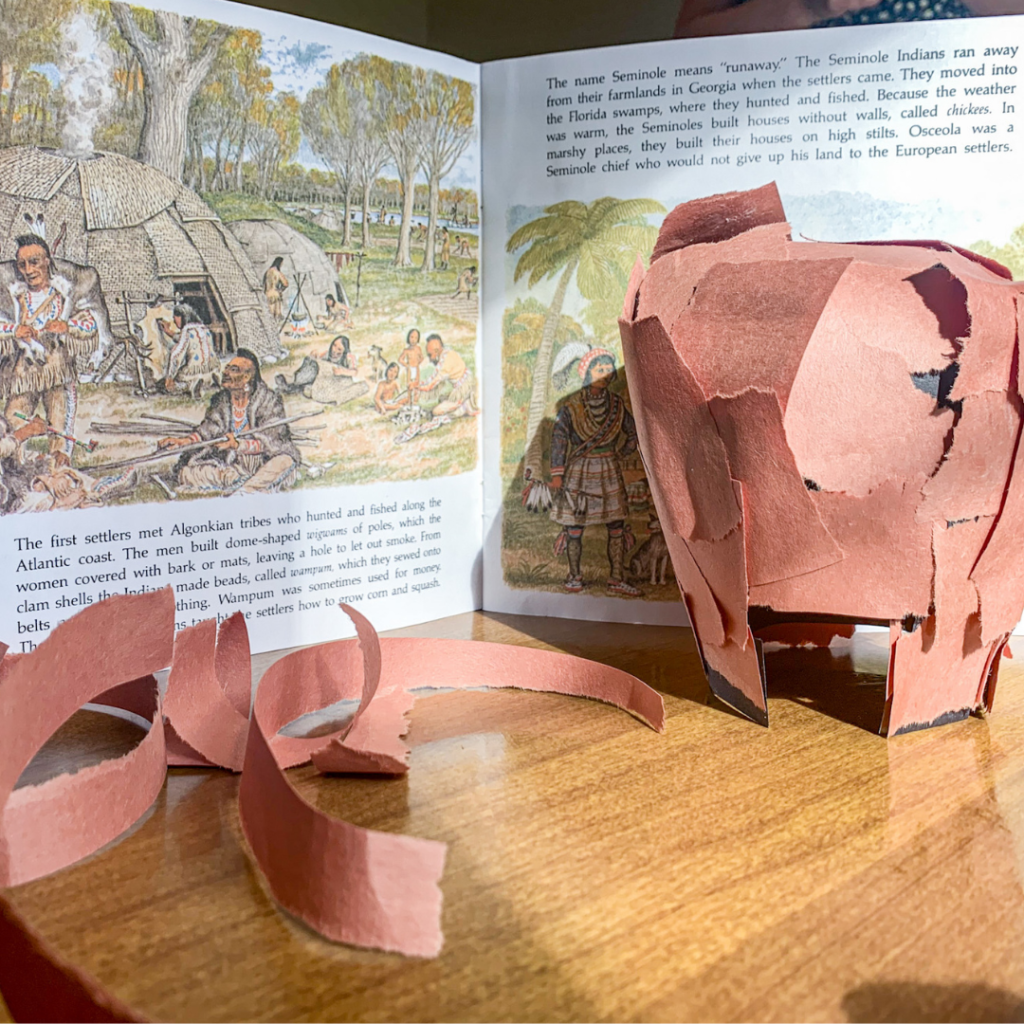
This craft is one we did with another story we read (directions linked here), but it’s the perfect activity to go along with this book as well. Native Americans lived in many different types of homes, depending on where they were and what tribe they were from. The type of home that Squanto may have lived in is like a wigwam. From the stories we read and the research I did, the house was called “wetu”.
As we studied Ancient Rome in our homeschool, I looked for fun ways we could use food/snacks to further our learning. I love doing this because we already eat every day – so adding a food activity doesn’t take much extra time out of our day.
I was searching on Pinterest and came across a recipe for building a Roman road as a dessert – Now, this is my kind of activity. The problem was I couldn’t understand the reasoning behind the food choices, and honestly it didn’t seem like it tasted that great to me.
So, I brainstormed a few ideas of how to put one together, and we successfully learned about and ate a Roman road in the process!
This post contains affiliate links. If you follow one of my links I earn a small commission at no extra cost to you. Thank you for supporting my blog!
All about the Ancient Roman roads
I highly recommend doing a little research with your kiddos before jumping in to do this. It will make a lot more sense as you complete the process. We used a few YouTube videos and some of our library books to learn about the building of the roads.
Almost every Ancient Rome library book had a little something about the roads, so that was easy to find. We used this reference book which is very kid-friendly and has great pictures with easy-to-read bits of text.
The best video we watched was an animated video, but it really broke down the process of how the roads were built. This is what I based my recipe on, so be sure to check it out after you glance at the recipe and it will hopefully all make sense.
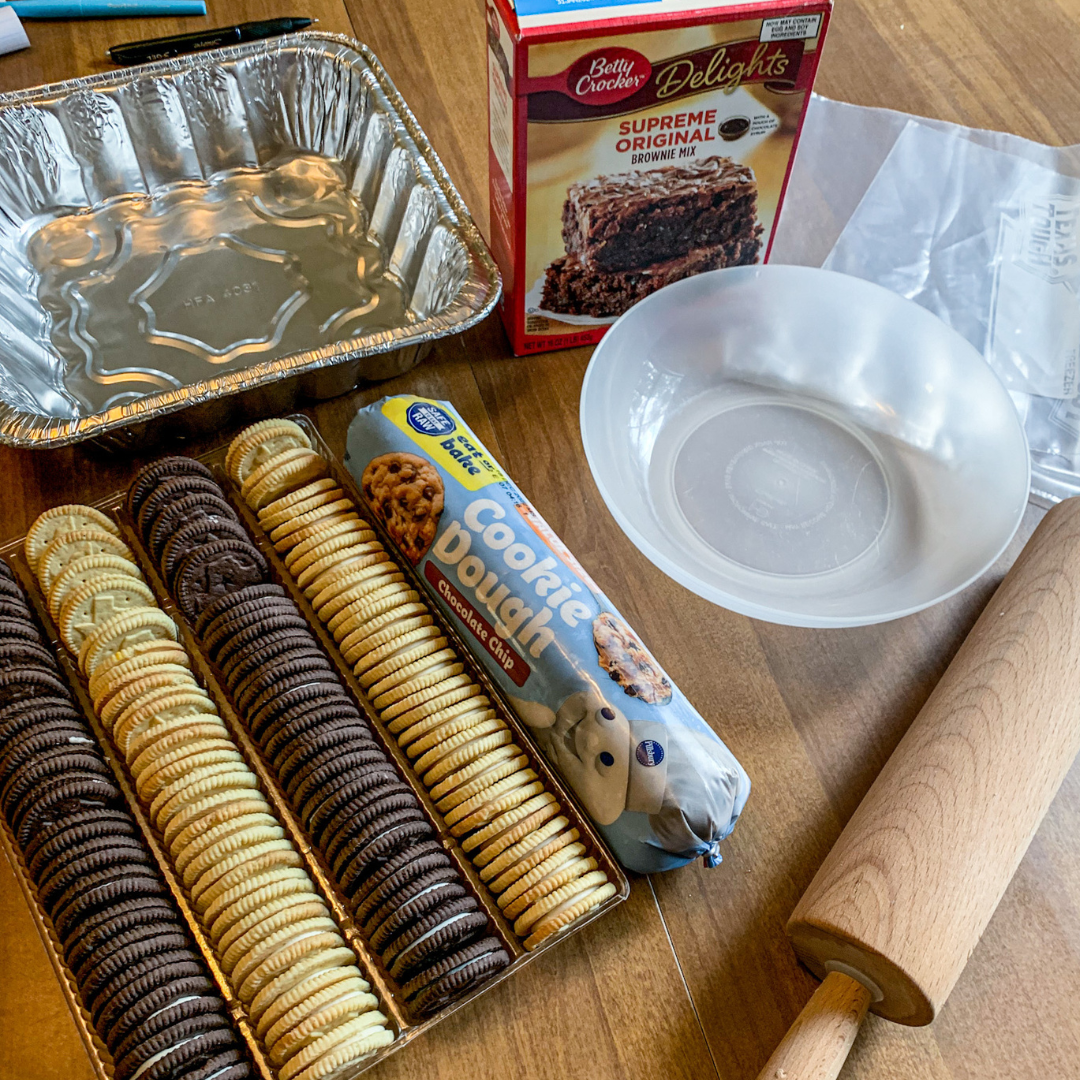
Supplies
Chocolate Chip Cookie Dough
Oreos
Golden Oreos
Brownie Mix (and the ingredients needed to make it)
Ziplock Bags
8×8 Pan
Rolling Pin (for smashing cookies)
Just as a heads up, our grocery store had a large, family-sized package of generic creme-filled cookies (that look like Oreos). It came with both regular and golden cookies so to save money, I purchased it. I kind of wish we would’ve used the brand name cookies, but all in all we still learned a lot and the product was delicious!
Setting the curb
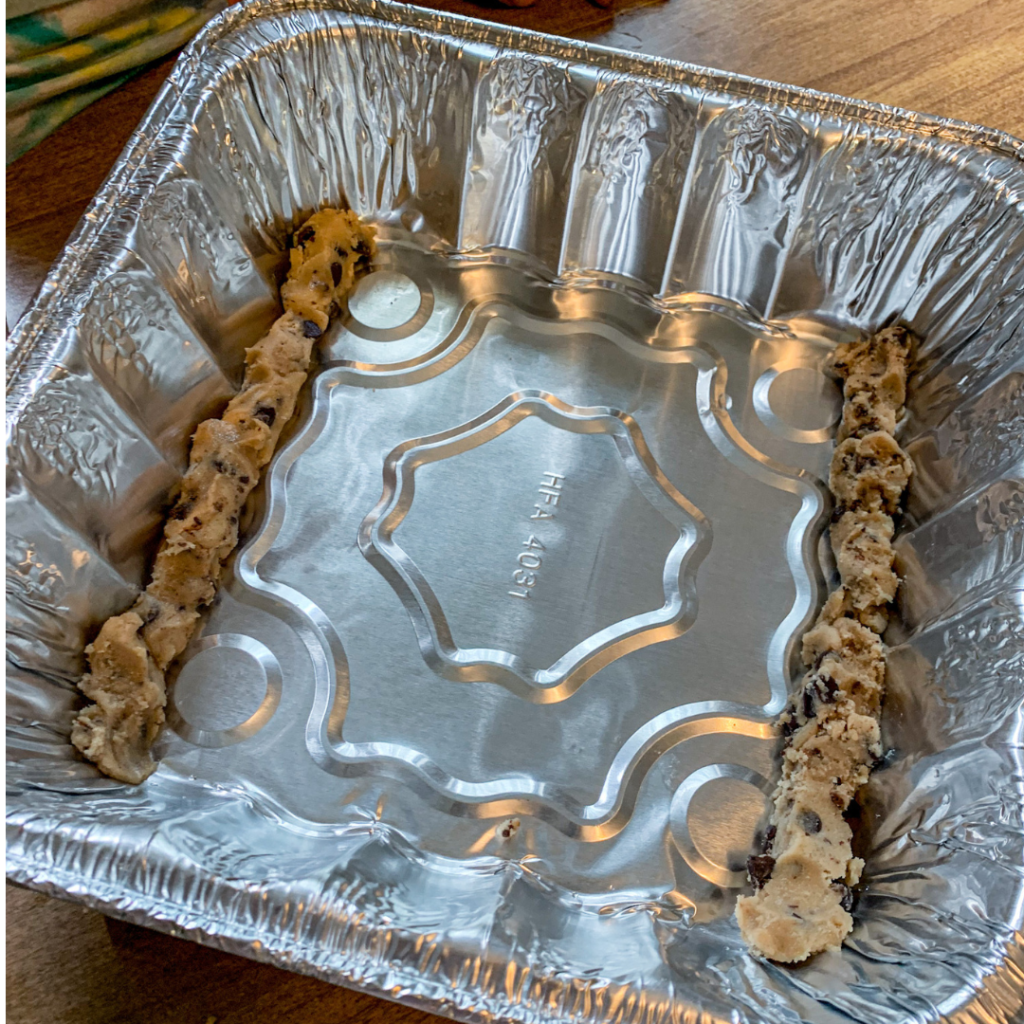
First we used the chocolate chip cookie dough to set the curb. We tore off small pieces of the dough and shaped them into little cylinder-like pieces. Then, we placed them along two sides of the pan to create the curb, just as the Romans would have done in stone.
Large Stone Layer
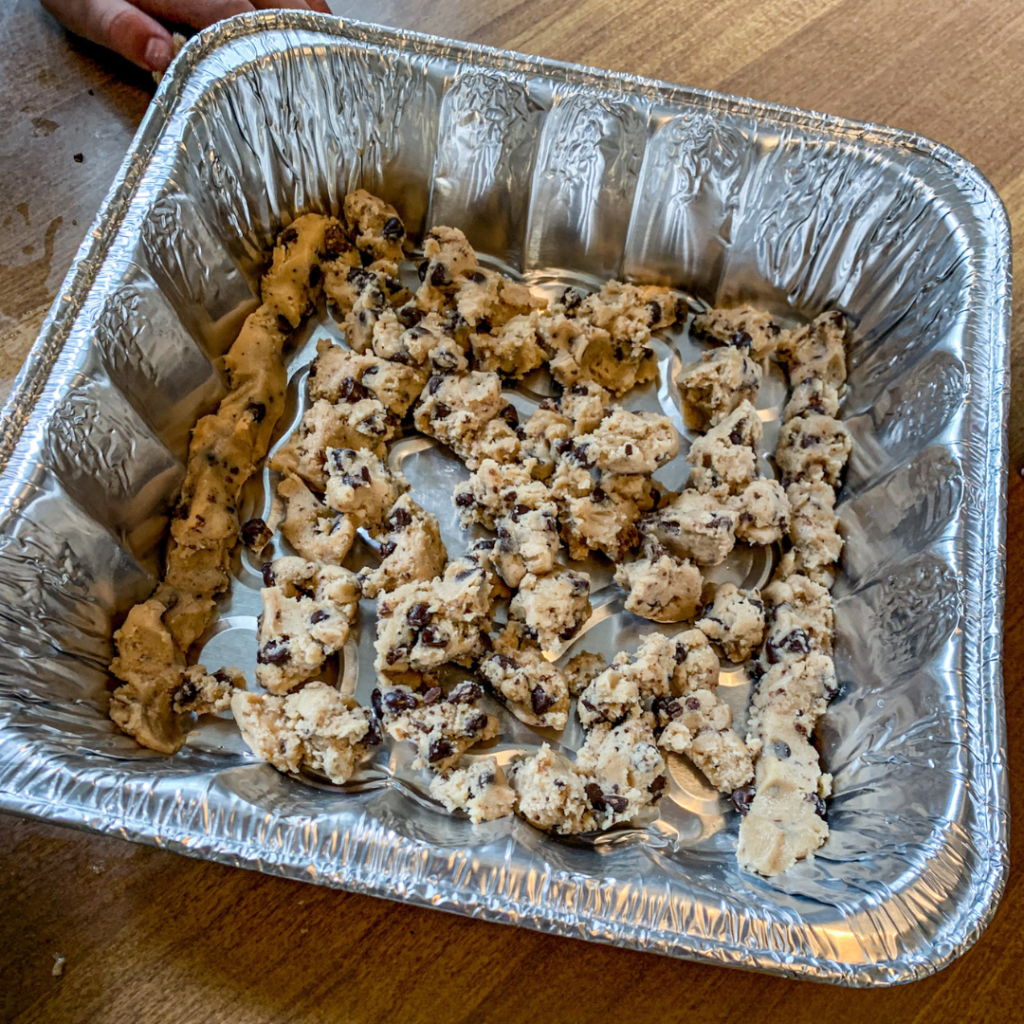
To keep it simple, this part is also made of the cookie dough. We tore off little chunks to represent the large stone foundation that was laid between the curbs.
Smaller Stone Layers
The next step in the road building process was laying smaller stones and sand on top of the larger stones. This would fill in gaps and create a solid foundation. We did a couple different cookie varieties for this.
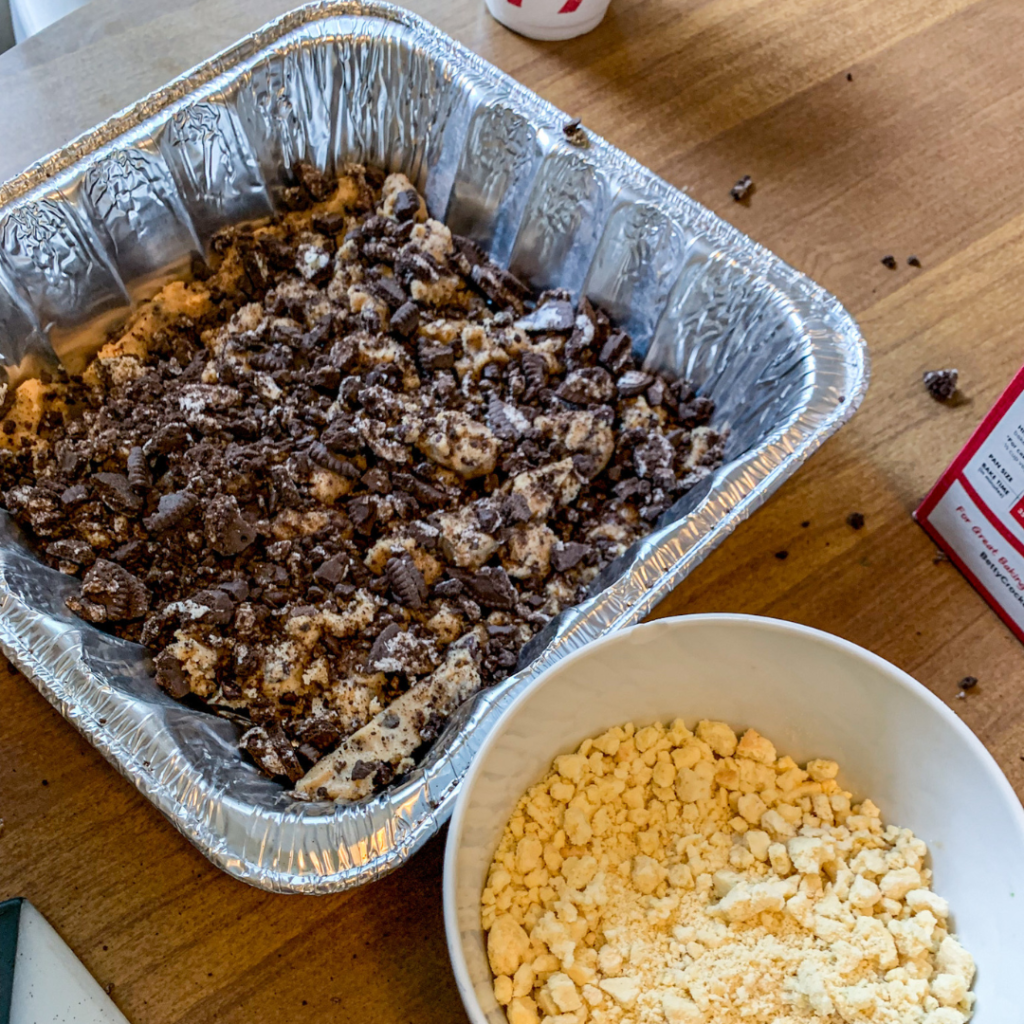
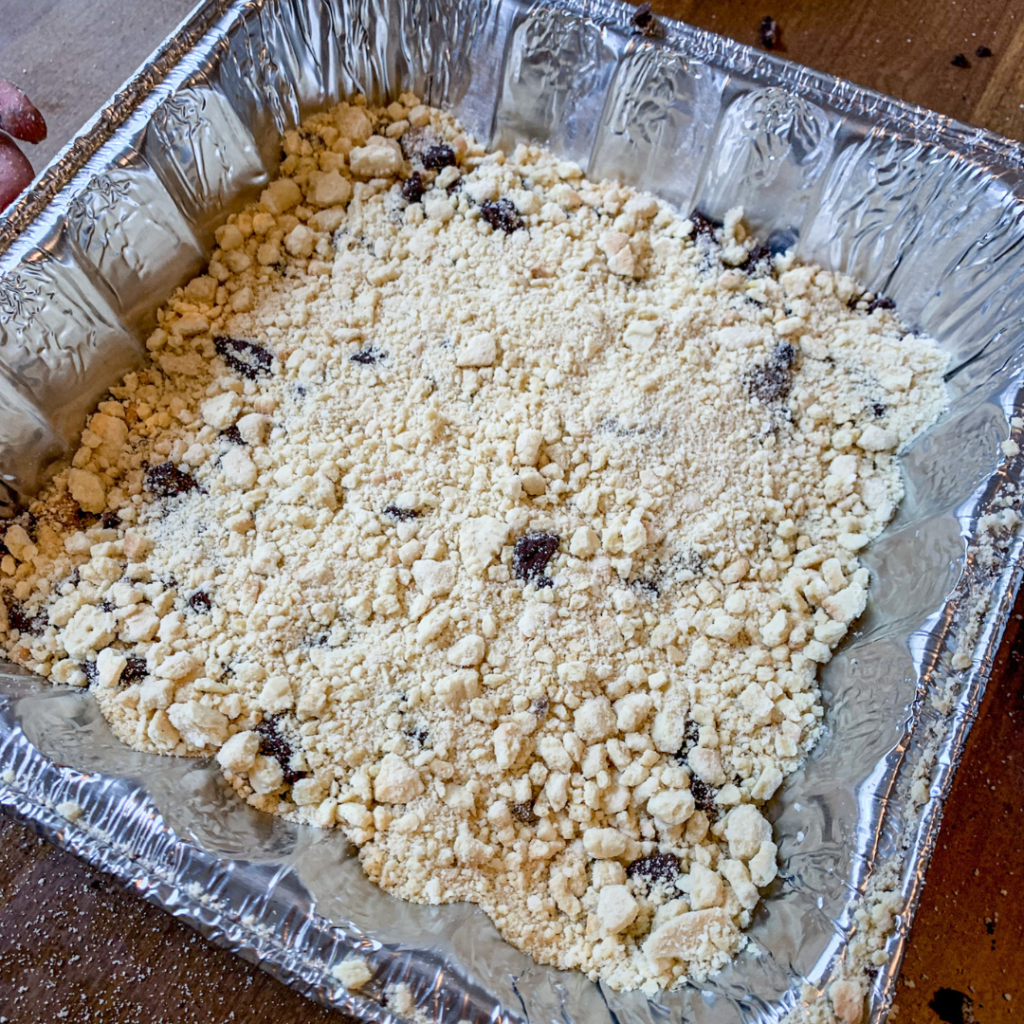
First, we put chocolate oreos in a bag and crushed them into chunks using a rolling pin. After sprinkling those on top, we filled a bag with vanilla oreos. The vanilla oreos were crushed into a sand-like powder.
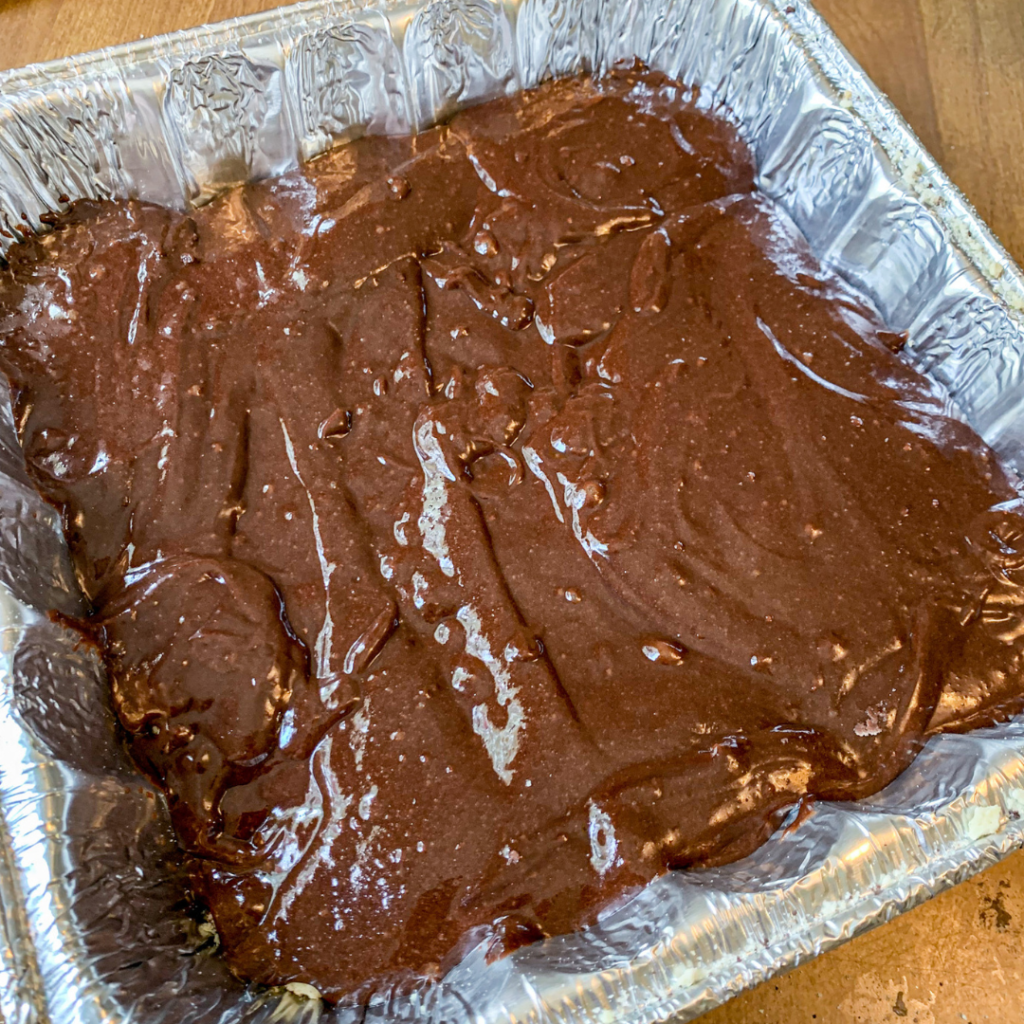
Finally to bind everything together, we mixed a box of brownies together and poured it all on top – YUM!
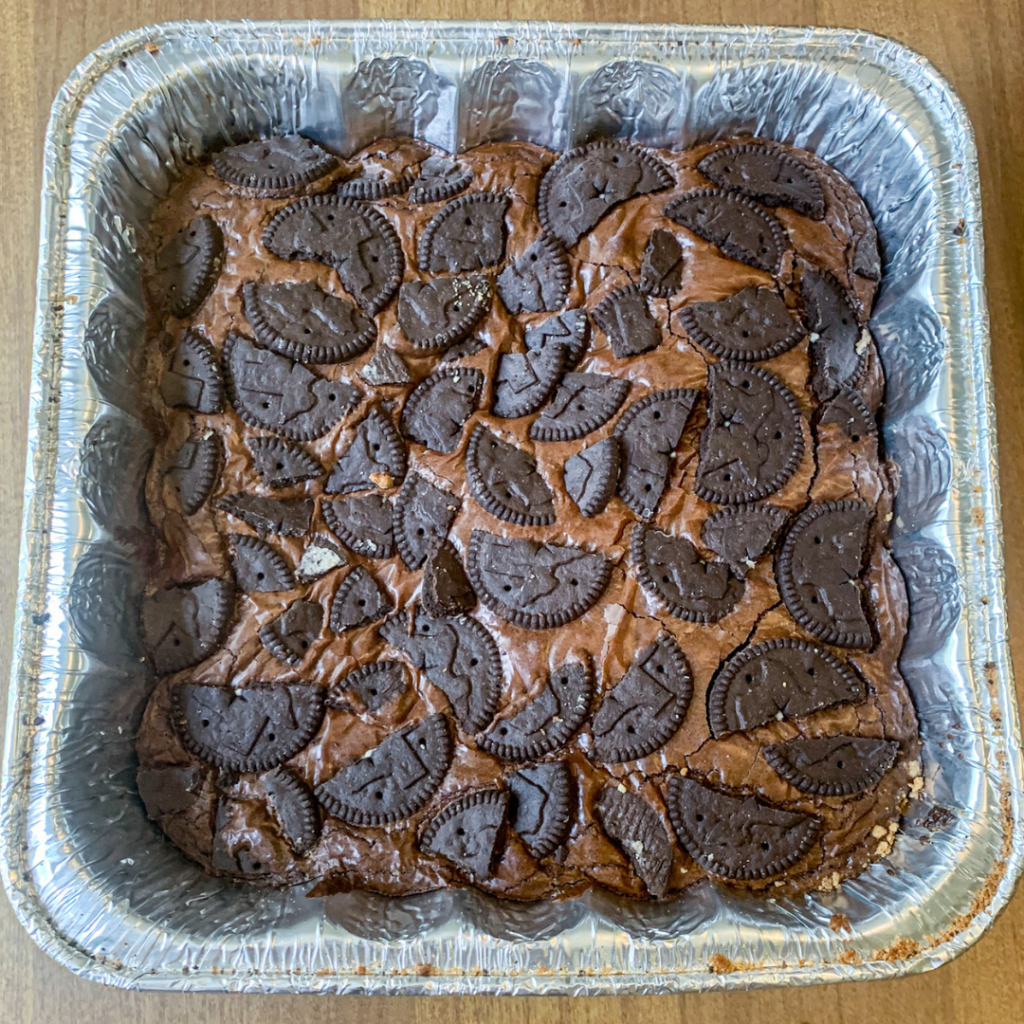
We had a few extra cookies left so we decided to take some of the cookie pieces and break them up. These were used to look like cobble stones on top of the road.
I pretty much followed the time on the brownie box to bake these. Be sure to let them cool all the way and then get ready to cut inside and see all the layers! What’s incredible is I was certain the brownie mix would mix all throughout the dessert, and it really didn’t.
But doesn’t that just prove the uniqueness and success of the actual Roman roads? Those things were solid! No wonder some of them are still around today.
This was such a fun little cooking experiment for us. It doesn’t hurt that they were absolutely delicious to eat, as well!
If you’re studying Ancient Rome, give this dessert a try! Snap a picture and tag me on Instagram @simply.learning.together I love to see other families learning together!
Check out all of the activities we did while studying Ancient Rome in my blog post.
This science unit study about weather was quick, simple, and easy to put together! We did multiple activities that took no time at all, and we continue to talk about the topics we learned throughout our daily discussions even after we finished.
I actually planned this unit very easily and I lay out the whole planning process in my YouTube video here. Be sure to check it out because it goes through a lot of my philosophies on simple planning!
This post contains affiliate links. If you follow one of my links I earn a small commission at no extra cost to you. Thank you for supporting my blog!
Unit Study Components
This unit study consisted of a daily devotion, library books, food, and hands on activities. I had a big, fun wish list for this one, but I didn’t get to check everything off. I think it’s important to let it go though and not stress about the checklists. I want my kids to be interested in what we are doing and I’m always going to make decisions based on what’s best for us.
In this post I’ll share all that we did, but I’ll also link you to the other simple activities I wished to do with my family. That’s not to say we’ll never do them, but we just didn’t get to it in our time span for the unit. I’ll save them for a rainy day!
Daily Devotion
This year we are reading from Louie Giglio’s “How Great is Our God”. We really enjoy these devotionals because they’re easy to read, fun to look at, and it has that learn-something-knew-every-day kind of feeling.
I love simplicity, but I did have to dig around for the right pages for this one. It wasn’t too hard. Using the index, I found all the weather-related devotions and wrote them down for me to follow each morning as I read them. (You can see how I did this in my planning video) I also added just a couple devotions from the “Indescribable” book in order to have 10 total devotions (for 10 school days)
The following is what I came up with from “How Great is Our God”:
Water Cycle p.62
Rain p. 56 and p. 146
Clouds p. 182
Storms p. 12
Thunder p. 176
Hurricanes p. 88
Seasons p. 42
The last two devotions are from “Indescribable”:
Rain p. 188
Lightning p.168
Library Books
I like to read at least one library book a day during our science units. When I pick library books I like to make sure they’re the kind of books that are read aloud friendly. If you have a routine of putting books on hold, you can do this. I usually just show up to the library and start quickly skimming through books in the non-fiction section to fill up my bag.
For a simple, stress free unit study, I do not think it is necessary to have a specific list of books. Whenever I have to follow a book list, it stresses me out. Can I find them at the library? Should I buy them? Can I afford to buy them?
Try to stay relaxed about your book selection. Whatever you read is going to be WONDERFUL. You’ll have great discussions with your kids and you’ll learn so much.
If you prefer to look for specific books, I will list the ones we really enjoyed from our selection:
I love to find snacks or meals that fit our theme when I can. To me, it’s an easy way to learn about a topic. We use multiple senses to experience something and its easy to plan into our day. We are already eating every day – now we are just changing the recipe!
Cloud Jello
I found this activity from the Totschool website. It was a great fit for our unit, and I knew my kids would love it. Unfortunately, it flopped for us! The directions are to use the quick set method for the jello. I don’t know what I did wrong, but my jello did not set at all!
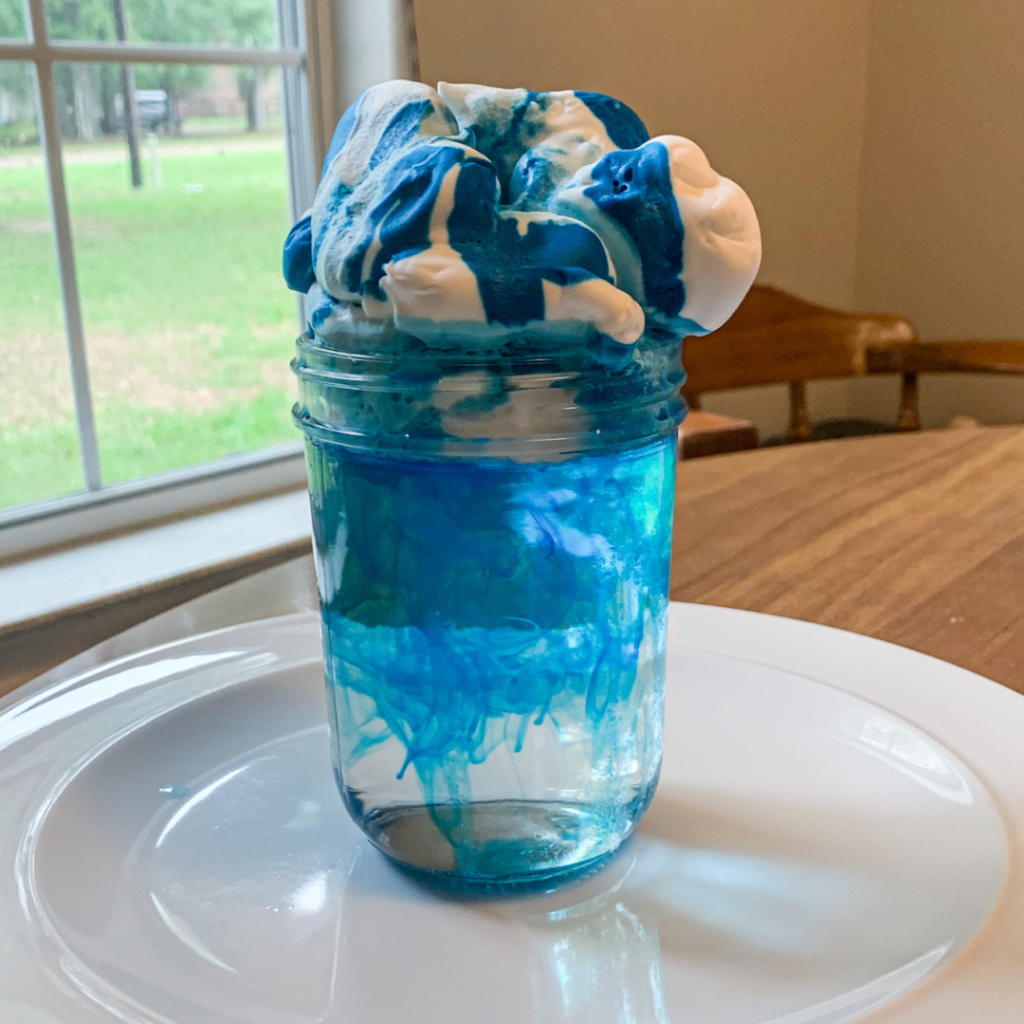
I will say, they still look pretty! If I were to do it again, I’d probably keep it even simpler. Make the jello following the regular recipe the night before. Add the cloud topping (whipped cream) to the top when you’re ready to eat it.
It will look like the ones I have pictured. Although you can’t really tell….that blue stuff is liquid! oops! I’d definitely try it again. This one has some fun potential.
Check out the activities we didn’t get to for some more food ideas I thought would be simple and fun for studying weather!
Hands-On Activities
I usually try to make a wish list of activities I want to do with the kids. I have a mindset of if I get to them, awesome! If not, it’s ok! I personally feel like our reading and discussions is enough. However, these activities really do bring us joy, so I do try to fit them into our schedule when I can.
Now, this unit I approached a little differently (by accident) and it worked out so well, I may continue the pattern. We had a really odd week, and I had no extra time for the hands on things I typically enjoy. So, that Friday, I skipped the workbooks and we had a full science afternoon! It was so nice because we did one activity after another and it took all the pressure off of fitting it in during our regular school days.
Weather Wheel
This idea came from one of our library books! It was the perfect simple “craft” to kick off our unit. I used a marker to divide a paper plate into five sections. Then, we talked about the different kinds of weather we might see at our house.
I let my big girls draw their own pictures and write the type of weather. We used “rainy, sunny, partly cloudy, thunderstorm, cloudy”. (It was summer time, so there was really no reason to put something like snow.)
For the next few days I never really had to do anything with them. They were in a very visible location right by the window. As the girls passed by one, they’d change it all on their own. I love that observing the weather became so natural to them.
Cotton Ball Clouds
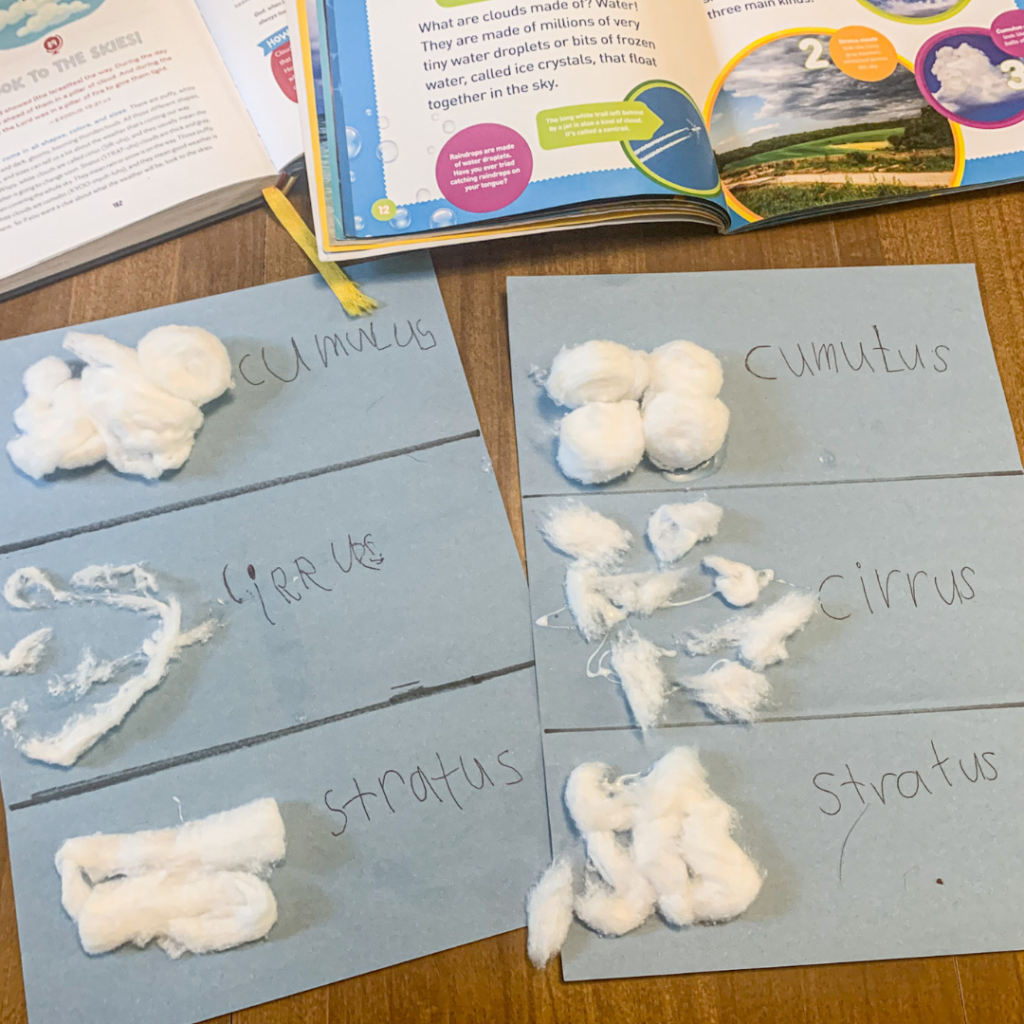
Almost all of our weather books talked about the different kinds of clouds and what they looked like. This made it easy for us to start recognizing clouds anytime we were outside or in the car.
For an easy way to review this, we used cotton balls to make the shapes of the clouds. I kept it simple by sticking to three: cumulus, stratus, and cirrus
Water Cycle in a Bag
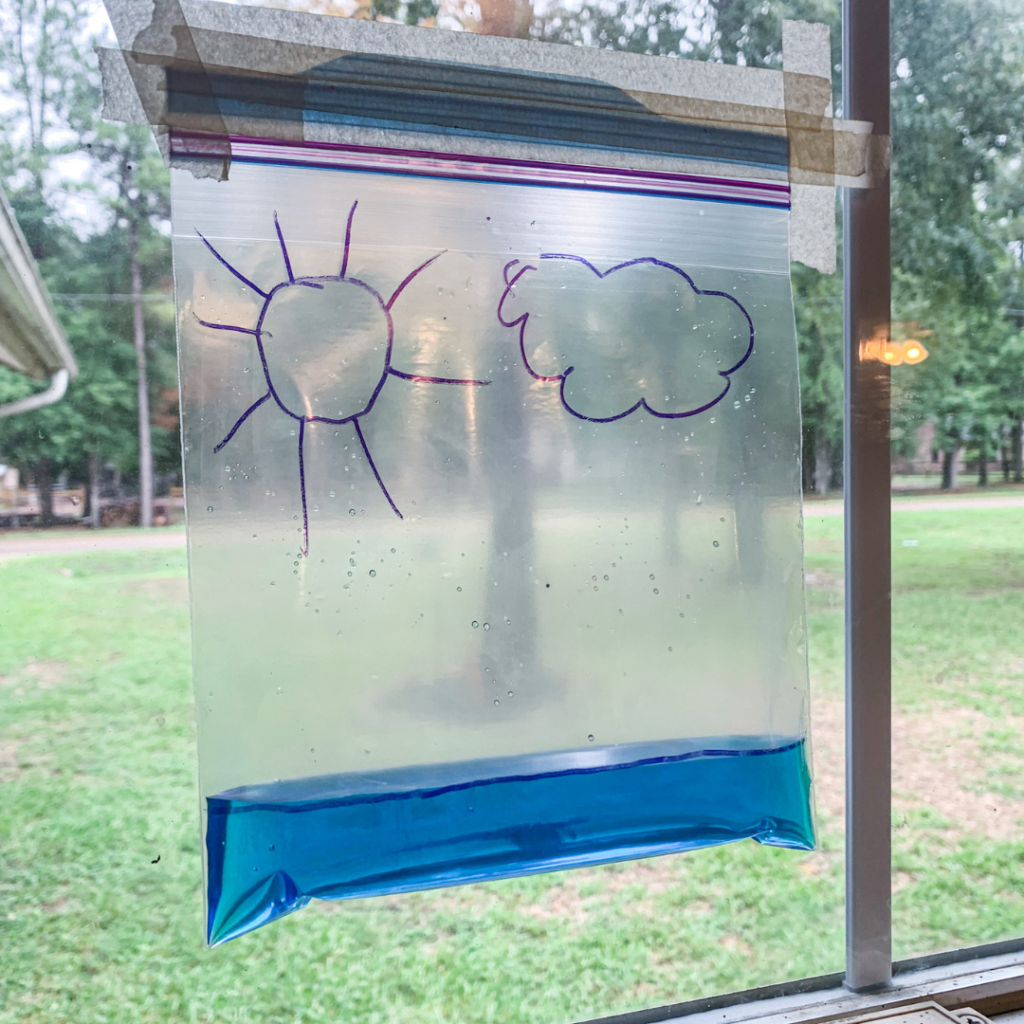
This is so simple to set up, and you leave it out for observation during your unit. I found the idea from Pinterest here. The supplies are simple – water and a ziplock bag. A marker and blue food coloring are optional to add a cute factor.
We put ours in a window right by our kitchen table. After a day or two we could see the drops of water starting to drip down the sides – the water cycle in action!
Cloud in a Jar
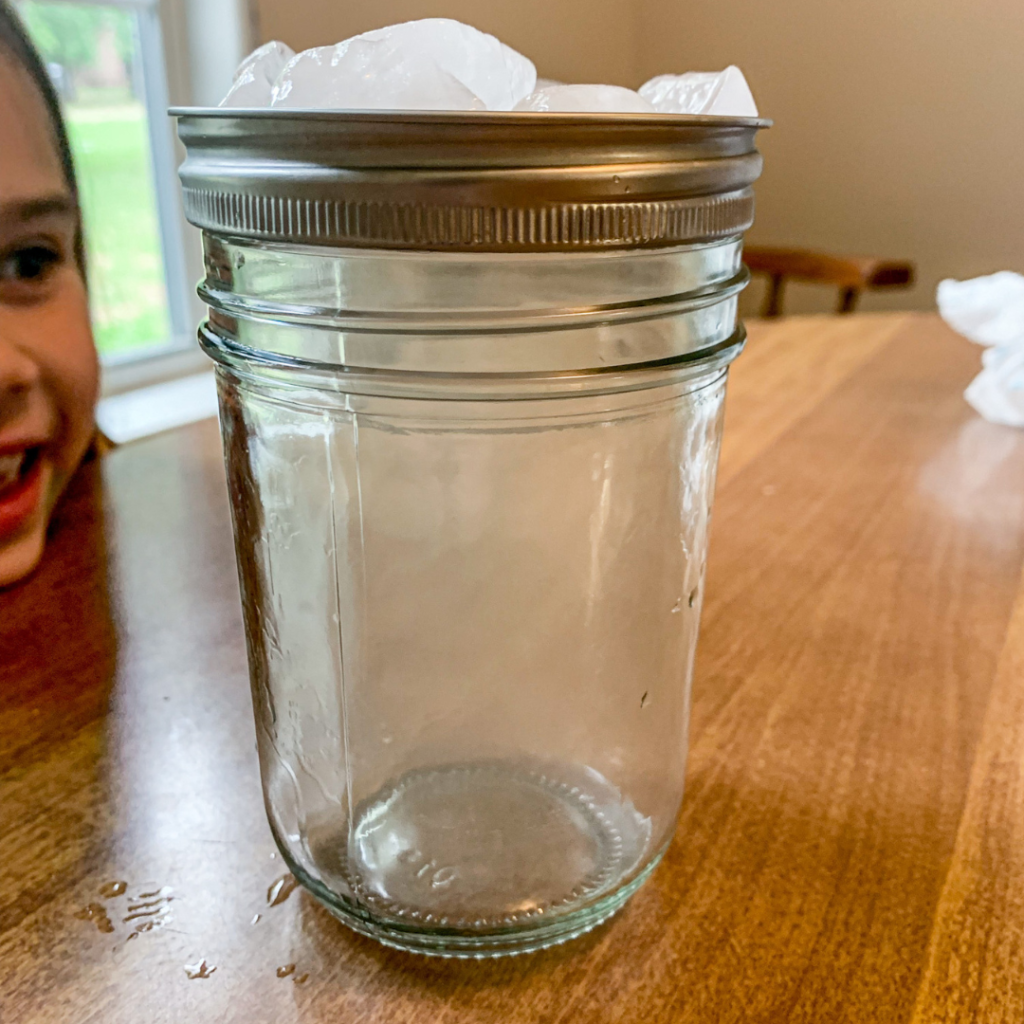
You can find the directions to this one here. The supplies you need are a jar (with a lid), ice, hot water, and hairspray. I love these types of science demonstrations because all the supplies are already at my house.
We did this one about 14 times! I’m serious! It was so neat to see. I read multiple blogs sharing this activity, but one suggested to actually lift the lid off the jar to “release” the cloud. I highly recommend doing that because it really makes the cloud stand out!
As it formed slowly in the jar, we really had to watch carefully to notice the cloud, but once we lifted the lid it was very obvious what had formed inside.
Rain in a Jar
Another easy set of instructions and short supply list for this one. You need a jar, shaving cream, food coloring, water, and a dropper. I also suggest some sort of tray or plate to put the jar on. We got a little crazy with how big our cloud was and the food coloring started to drip down the sides of the jar onto the table.
Fill your jar with water and spray the shaving cream on the top as your cloud. The water represents air. I suggest mixing a little bit of water with food coloring (maybe just a spoonful of water! not much). The reason is because it took a LOT of drops of food coloring to make it through our cloud. Watering it down gave us better results.
The food coloring mixture represents the drops of rain forming in the clouds. As they get heavier and heavier, the drops fall as rain.
This is another easy one to do again and again as long as you don’t mind losing so much of your food coloring.
“Wish list” Items We Didn’t Get to
I highly recommend making this adorable cloud shaped sandwich! You could definitely just cut out a shape from your regular sandwich bread, but this recipe calls for a braided challah loaf that already takes the shape when cut! I love it!
Have you ever heard of tornado cake? I’ve never heard of it, and it has absolutely nothing to do with weather! (ha!) However, with a name like tornado you can’t go wrong! Apparently it was named that because you can throw it together quickly for unexpected guests! The recipe looks delicious! I really want to try it, but ultimately my picky eaters aren’t fans of coconut. I did share the recipe with my husband, and he’s asking to try it soon!
Can you tell I love food activities? Well, the last thing I wanted to share is a non-food related demonstration. This thunderstorm formation experiment has a short supply list and a neat outcome!
You can also follow me on Pinterest. I have all of our activities plus the ones we didn’t get to saved to a “weather” board.
Watching the Forecast
I don’t know if you’d qualify this as an “activity”, but one simple thing we did was watch the weather forecast! We spent a few minutes the first day pausing and discussing all the different facts presented to us. We really enjoyed it and our local news had an app we could download onto our tv so that we could see it at any time of the day.
We didn’t do this every day, but a few times throughout our unit we paused to watch and learn from our local forecast.
Future Unit Studies
Is this information helpful? Let me know in the comments or connect with me on my YouTube channel or Instagram to let me know. I really hope to do this in order to give families ideas on how to throw together a unit study that’s fun and simple and low-stress.
As I mentioned before, we plan to loop our science and history, but I love sharing them here with you when we finish.
Be sure to check out one of our history units as well.
Are you a fan of novel units?
If you’re a fan of adding some fun to your read alouds in a simple way, I want to encourage you to see the different Read Aloud Experiences I have created. Almost all of them are absolutely FREE! These are created on a chapter-by-chapter basis and create such a unique, hands-on read aloud unit to do together with your family!
I also have a few different blog posts I’ve published sharing how we celebrate the books we read by experiencing the story through different activities.
This is our second history unit study for the year, and we are having so much fun! We just wrapped up studying Ancient Egypt and I’m so excited to share with you what we did these last two weeks.
This post contains affiliate links. If you follow one of my links I earn a small commission at no extra cost to you. Thank you for supporting my blog!
Where are the Great Pyramids?
We are basing our history units off of the “Who Was…?” series. So, our daily reading came from “Where are the Great Pyramids?” by Dorothy Hoobler. I love these books because they are so easy to read aloud to kids. My children are eight years and younger, and they are able to stay engaged and keep up with the facts.
There are also lots of black and white pictures throughout the pages that make it easy to visualize what we are reading.
We read our chapter book during our morning time, and I aim to read just one chapter a day. This gives us plenty of time to finish in about two weeks. We have great discussions and we learn so much!
Library Books
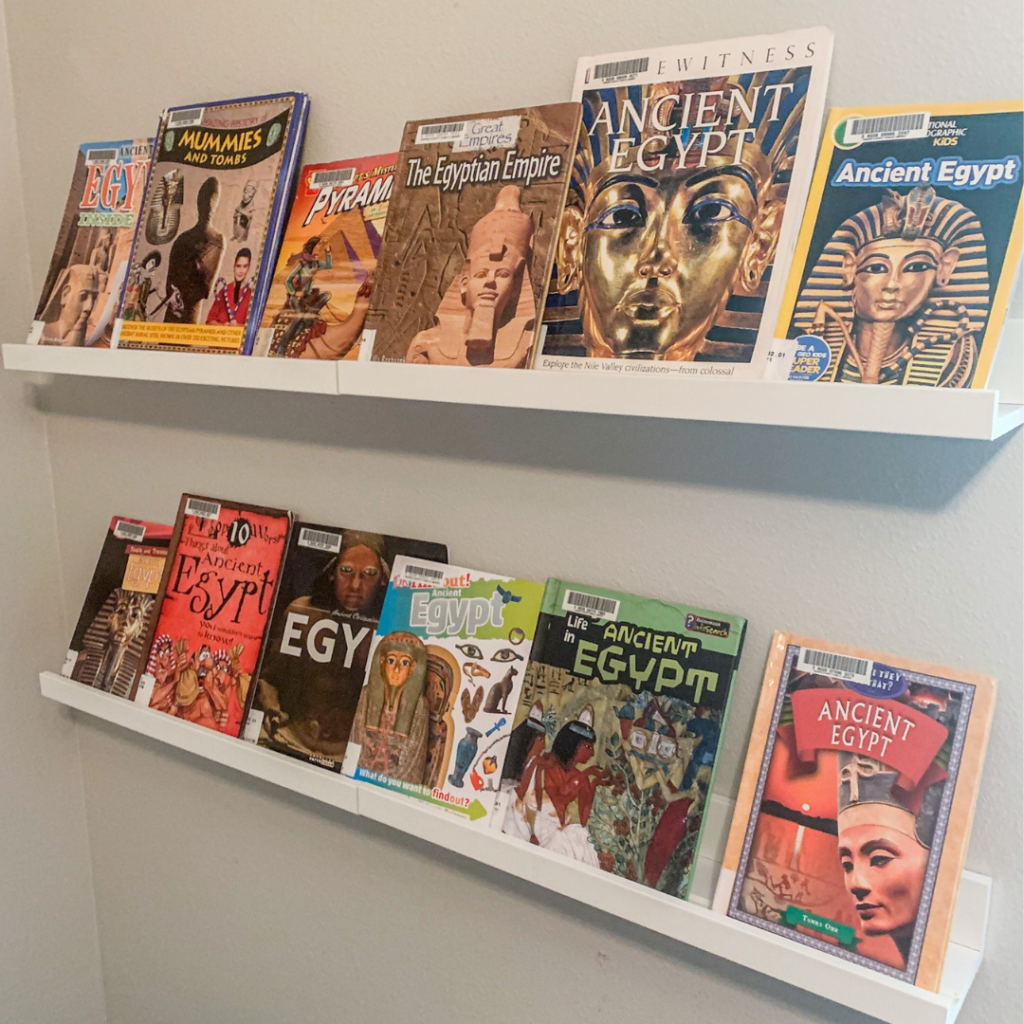
I try to keep the process of adding extra books for our units simple. The nonfiction section at our library had an entire shelf dedicated to Ancient Egypt, and this made it easy for me to just grab and go.
I like to look for books that will be easy to read aloud to my age group. I don’t want too many words or books I know won’t catch their interest. There’s almost always kid-friendly books in the nonfiction section and I grab as many as I can get!
Sometimes I’ll look through the children’s section to see if there’s anything related I might want to add. Even fictional books can be a great way to enhance a unit.
Once we have the books, I’ll display them so they stand out to my kids. This always catches their interest and drives them to want to read more!
Food/Snacks
I can’t deny a cute, themed snack. There’s something about them that makes the unit so memorable. I also love that you really don’t have to add extra time in your day for it. You already cook meals and provide snacks. Now, you’re just changing it up! Easy peasy.
Egypt Rice Krispies Treat
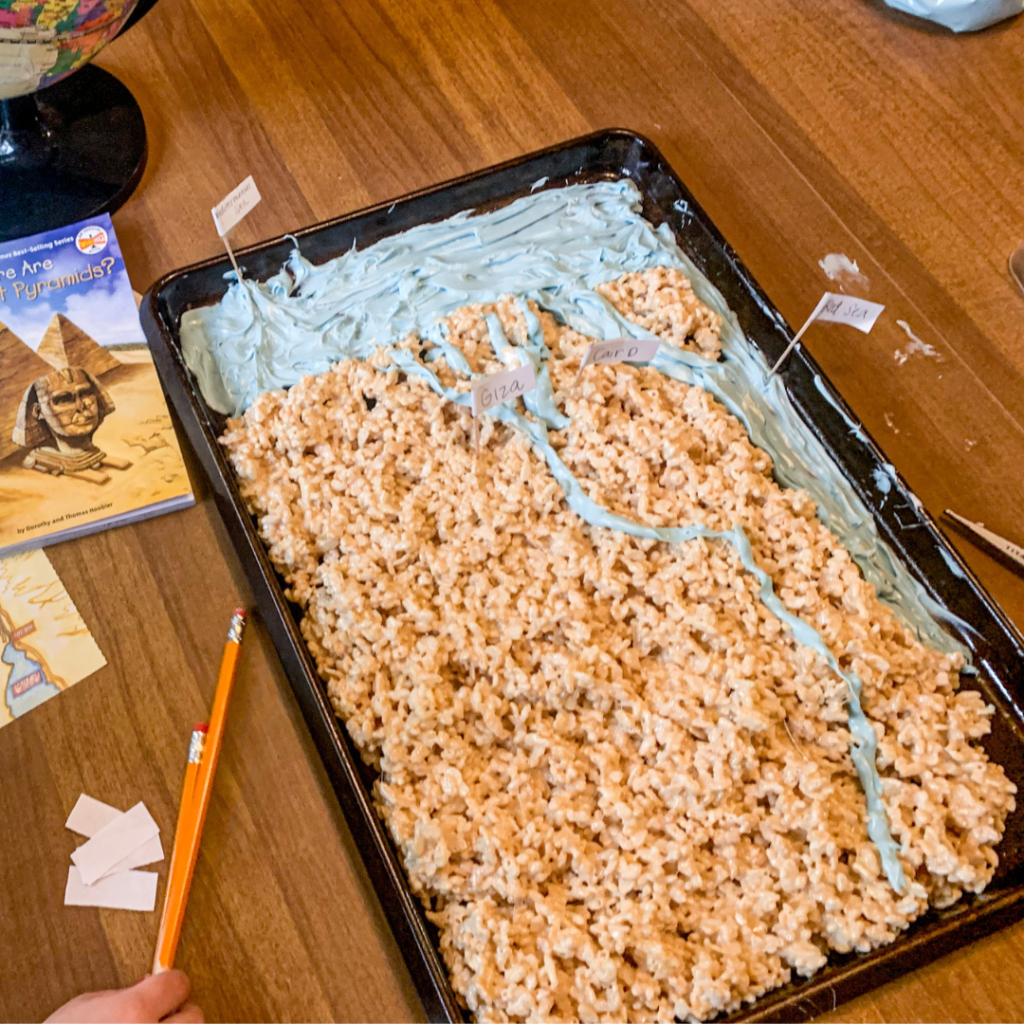
This geography lesson was so delicious. I made a batch of Rice Krispies treats and poured it onto a baking pan. Using a printout of a map of Egypt, I shaped the dessert to look just like the country! We used blue icing to add a Mediterranean Sea at the top, a Red Sea along the side, and a Nile River.
Next, I used a toothpick to label and to teach the kids about the different parts of Egypt. We labeled all the bodies of water as well as where the pyramids were located.
I kind of want to do this with every country we study. Yum!
Mummy Dogs
We made these one year for Halloween, and they were so perfect for this unit!. The best part is it’s just two ingredients – hot dogs and crescent rolls. Head to this website for detailed instructions. (We did ours without cheese)
My 3-year-old was even able to participate and wrap the hotdogs which made this all the more fun. It’s very easy for kids to do! If you’re a fan of hot dogs, you can’t go wrong with this. No extra time, no crazy prep. We just ate mummy dogs for lunch one day and it was a blast!
Sugar Cube Pyramids
Although this isn’t really something you want to eat, I’ll still put it with all of my food stuff. And you better believe they all begged to taste a sugar cube!
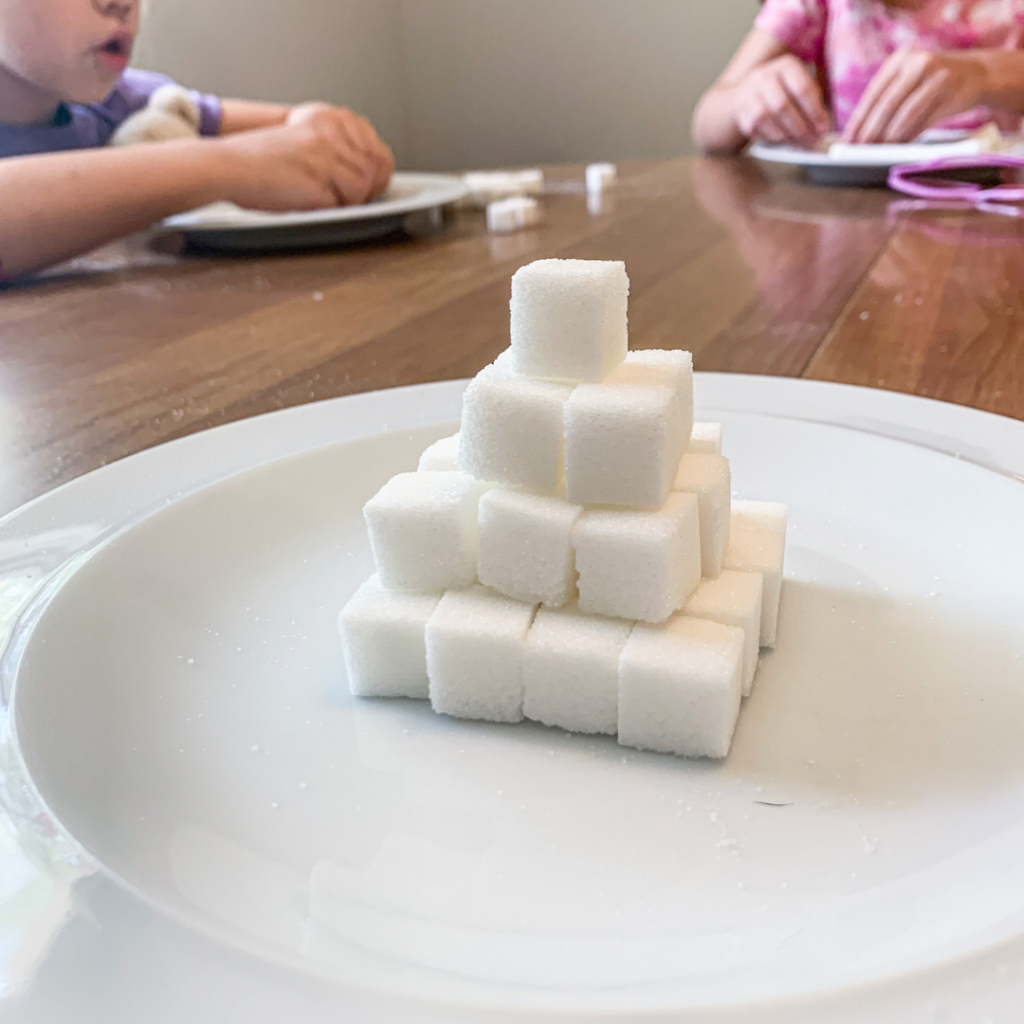
There was a chapter in our book that talked about the process of building the pyramids. The Egyptians would carry these big heavy stones, and it’s still a mystery how exactly they accomplished such a great task. As we started placing sugar cubes on the plate, we talked a little bit about this and shared our ideas.
I saw somewhere on Pinterest that a family did this and squirted their pyramids with water they dyed yellow. We did this too and the girls loved seeing the sugar cubes start to dissolve. If you have multiple kids, it would be fun to let each child try a different temperature of water to see how it would affect the pyramid dissolving. Make it into an experiment!
Mummifying Apples
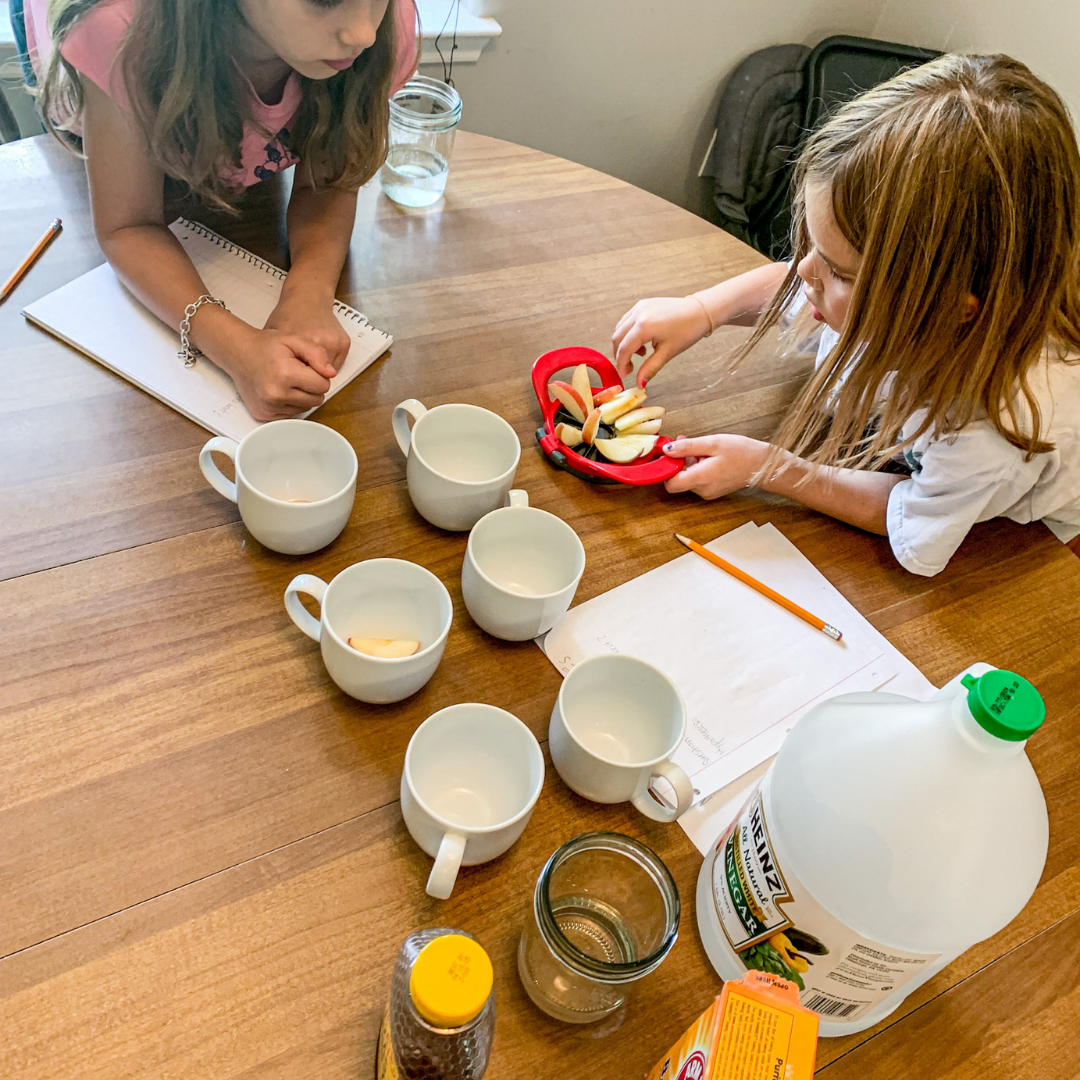
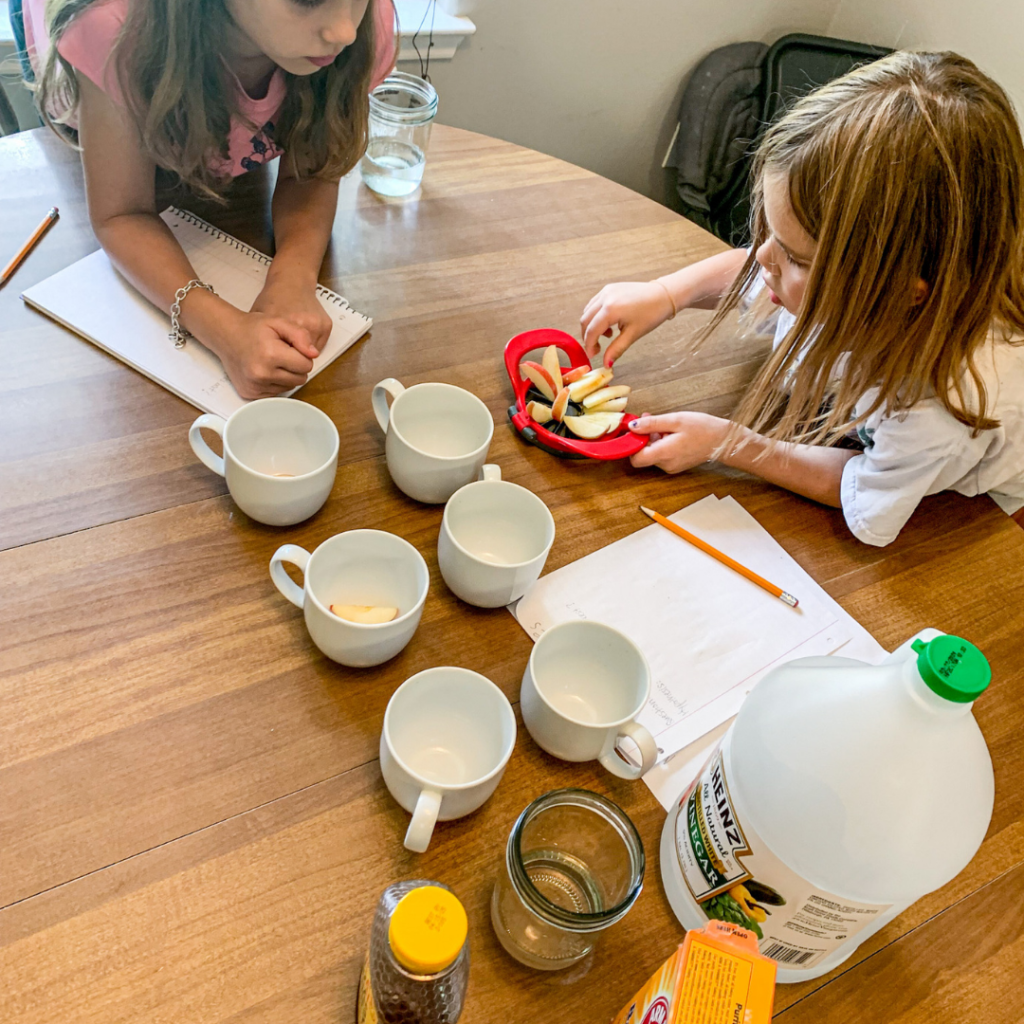
I always have apples at my house, so this one was easy to throw together last minute. The point of this experiment is to see what substance will preserve the apple the best.
I just used what was around our house and we were able to test six different substances:
Baking Soda
Salt
Honey
Vinegar
Water
Nothing-Apple Only (our control)
We left the apples alone for seven days and we were so surprised by our results! Not one apple looked the same! Did you know that scientists are still asking questions and trying to discover unknown facts about the mummification process?
Crafts/Activities
I love a good craft, but I don’t want to be stressed out. When I start a unit, I make a wishlist of things I want to do and fit them in our day as it feels right.
Unfortunately, we didn’t get to everything on our wishlist. However, that’s the benefit of making the crafts an option! Reading books alone is so wonderful for us to learn. Anything extra is a bonus. I’m sharing all that we actually accomplished but I’ll also share what we hoped to do, but didn’t quite get to at the end of this blog.
Toilet Paper Mummies
This happened on a total whim, but it was one of my favorite mornings learning about Egypt. We had just finished a chapter about how the Ancient Egyptians wrapped bodies in linen cloth. The book went into detail about what scientists know about the process. It was so interesting…weird…but interesting!
So when we finished I had one of my kids bring me a roll of toilet paper and we just took turns wrapping each other up. It was hilarious! The kids laid on this little bench we have in our home and acted like they were mummies. We loved it. Honestly, it really wasn’t a huge waste. I wrapped all four of my kids and it was only one roll of toilet paper.
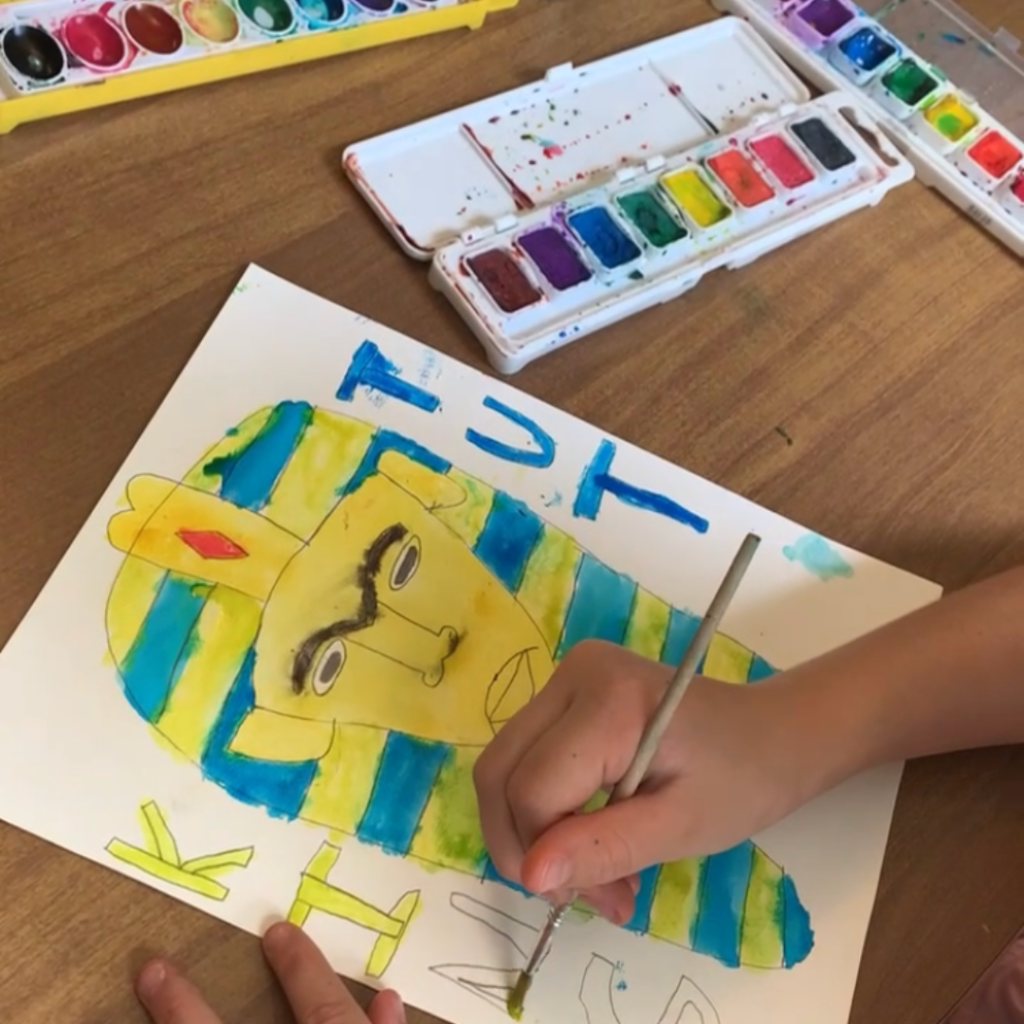
King Tut Footprint Art
We have these books that my kids write notes to each other in at the beginning of the school year. My 6-year-old wrote to my 3-year-old that the best part about preschool was that you got to paint your hands and feet and make pictures. (ha!) Well, every since writing it, she begged me to do an activity like that for my preschooler. That’s how this crazy piece of art came to life.
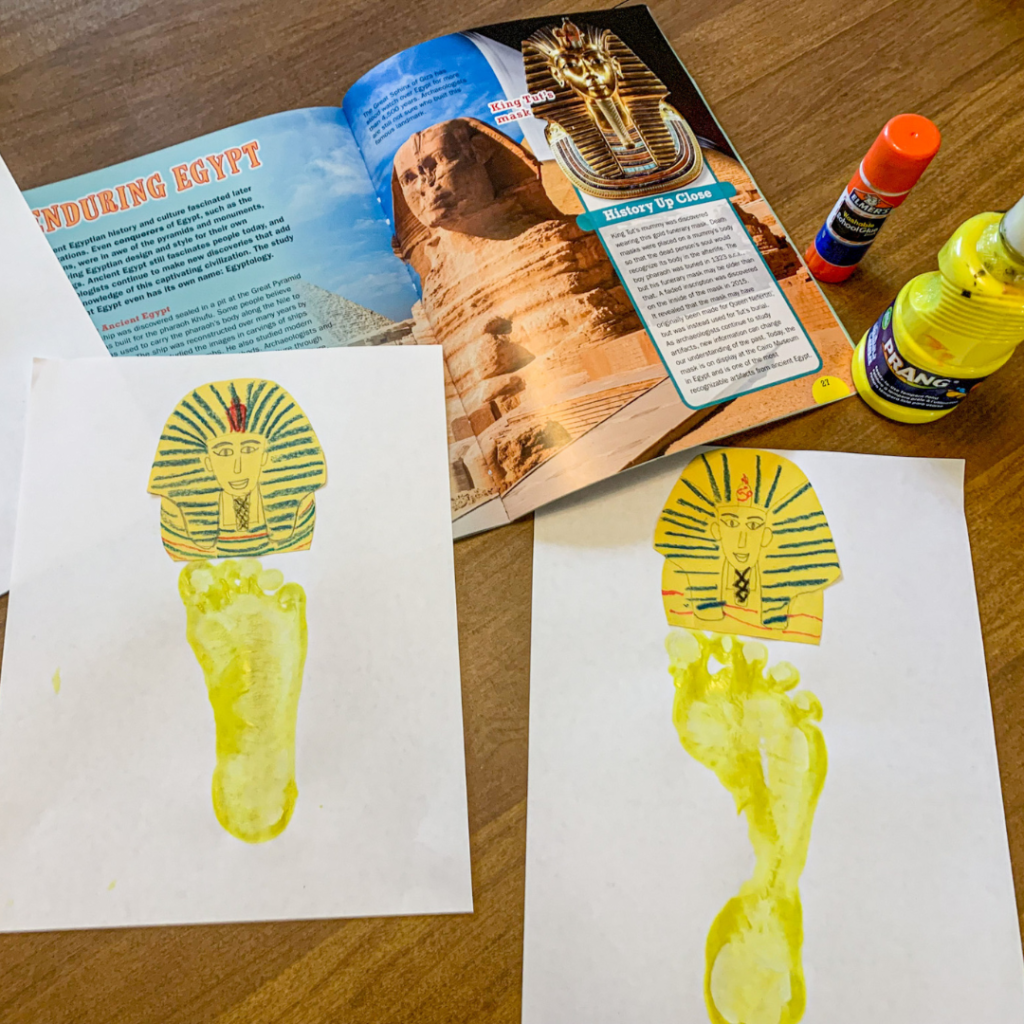
Using a library book, I made an outline of the top of King Tut’s coffin (see below) and drew the face with a pencil. I let my kids color it on their own. Next we did some footprint art. I pasted the piece they colored on top of the footprint and it actually turned out pretty cute! It may be a stretch, but I love taking something they really want to do and add a little more meaning to what we are studying.
Notebooking/Narration
I’ve been trying to do this at the end of each unit we do, and so far I’m loving the results. I heard about it on a podcast and I loved the idea of being able to look back on all the things we learned over the year.
I usually let my kids watercolor. There’s something unique about watercolor, and if you use the right paper, it really turns out so nice! I let them color whatever they want about our unit.
Finally, they narrate to me some things that they remember about what we studied. Depending on the age, I write (or my child writes) the narration on the back of the paper when it dries. It has been so neat for me to see what they remember from our units.
More “Wishlist” Items We Didn’t Get to…
When we start a new unit, I usually have a list of ideas that I think would be really fun to do. I add them into our days as they fit, but sometimes I don’t always get to my whole list. It’s not worth the stress to try and shove them in at the end. I’d rather end the unit on a positive note.
I do love the activities though and wanted to share with you in case you’re looking for a variety of simple Ancient Egypt activities.
First, I would’ve loved to make paper as the Egyptians did. I saw a variety of ways to do this online, and I‘ll share it with you here. Ultimately, it was a little bit messy, and I had a hard time fitting it in when babies wouldn’t disturb. Maybe we can save it for a rainy day.
Next, was the simplest little construction paper craft. I thought this was so perfect because it was minimal supplies! However, when we had time to do something from my wishlist, there was always something else I’d rather do with the kids. So, this one didn’t get completed. It would be so simple to throw together though!
Movies/Videos/Shows
We do enjoy a good video or show about the topics in our unit. We saw a couple great YouTube videos, listed below:
We also enjoyed a couple family movies that weren’t focused on Ancient Egypt in particular but had some slight relation to it in a small way.
Night at the Museum
Prince of Egypt
Bonus Read Aloud
This next part of our unit actually happened when it was over, but how awesome that we can continue learning even past the unit study!
The idea came to me when I was trying to think of chapter books my daughter would enjoy. It turns out the Magic Treehouse series AND the Imagination Station Series have books specifically about Ancient Egypt.
Is this information helpful? Let me know in the comments or connect with me on my YouTube channel to let me know. I really hope to do this in order to give families ideas on how to throw together a unit study that’s fun and simple and low-stress.
As I mentioned before, we plan to loop our science and history, but I love sharing them here with you when we finish.
Be sure to check out one of our science units as well.
We just wrapped up our first science unit study of the year focusing on Space. Using a variety of books, food, and activities we learned so much together!
In this post, I’ll share with you how I plan a unit study like this and all the things we did for the study. This post will be more of an outline of our study. For a detailed description and a variety of pictures, head to my YouTube channel where I discuss it all in detail.
This post contains affiliate links. If you follow one of my links I earn a small commission at no extra cost to you. Thank you for supporting my blog!
Planning
This unit consisted of a daily science devotion, a variety of books from the library, food, shows, and different crafts or activities. I am looping our science and history subjects this year so my goal was to finish the unit in two weeks.
The way our days play out is important when it comes to planning a unit study. I plan our school days to have space in the afternoon (around 3-5pm). Check out my video about our daily routine to learn more about why I do this, but that space is so important to us.
It allows me to catch up on anything I need whether it’s school related or house related. We can run errands if we need to OR…we can throw in a fun, enriching activity for our unit studies! This space allows me to be flexible with our afternoons.
Once I choose what we are studying, I start to make a “wishlist” of activities that I think we could do at home. This is not a checklist by any means. I simply browse Pinterest and different blog posts related to the subject and collect ideas. I know the things I like to do so I only choose those types of activities.
For example, I’m not a fan of an activity that requires an odd supply. If it’s not something I can get at the grocery store or I don’t have it around my house, I look for other activities. If you aren’t a fan of paint, don’t pick paint! That’s the best part about these units. Make them work for you!
Now, keep in mind this is a wishlist. We are not trying to get all of these done by a certain time. Instead I have a goal of having a list of things I can choose from when time allows. This is so important when trying to keep this simple. If we do them all, great. If not, no big deal! Our reading and discussions will be enough.
All extra activities are considered enrichment. By reminding myself of this “motto”, I am able to approach the whole unit study with less pressure, less stress, and more excitement to learn!
Daily Devotion
This year we are using “How Great is Our God” by Louie Giglio. This is our second devotional book by this author and we love them! The devotions are short, engaging, and interesting. This book in particular has a page that gives the reader four different categories: Space, Earth, Animals, and People.
For our space unit, we will read all of the devotions listed in the space category. I try to read one devotion each school day during our morning time. To learn more about our morning time, click here.
Library Books
Before our unit begins, I make a trip to the library to gather more books for our study. I’m really bad about putting books on hold. I can never remember to do it on time, so I usually just show up and head to the nonfiction section.
I look for books that would be great for my kids’ age group and start filling my bag! I take as many as I can fit. They might not all get read, but they’ll be there if I need it.
There are times where I am able to browse the children’s section as well. If something pops out to me, I’ll grab those, but the non-fiction section is usually a great source for books!
I have some shelves in our school room at home that I use to display these books. For some reason, when they are on display, my children become much more interested! They are easy to access and inviting to read.
Books We Loved
Even though I don’t plan out my book choices at the library, we still came across some great books by chance! The following books were some of our favorites that we checked out at the library. If you see them at your local library, be sure to grab them!
Sometimes when I’m preparing lunch, I’ll let the kids watch an educational show or a YouTube video that relates to what we are learning. We didn’t do this every day, but we did see a couple of things that we enjoyed.
We also have a family movie night each week. We watched “Rocketman“, made in 1997, which is super silly and fun. Another one we watched was “Galaxy Quest“. I will warn you that it has quite a bit of bad language and was scary for a couple of my kids. It’s probably better for your older elementary.
Enrichment
As you read in my “planning” section, I come up with a wishlist of things I want to do with the kids for our unit studies. I try to keep it low key and less stress, and the following is what we were able to accomplish. For more details on the activities or how I fit these into our day, check out my channel where I explain it all.
Solar System Cupcakes
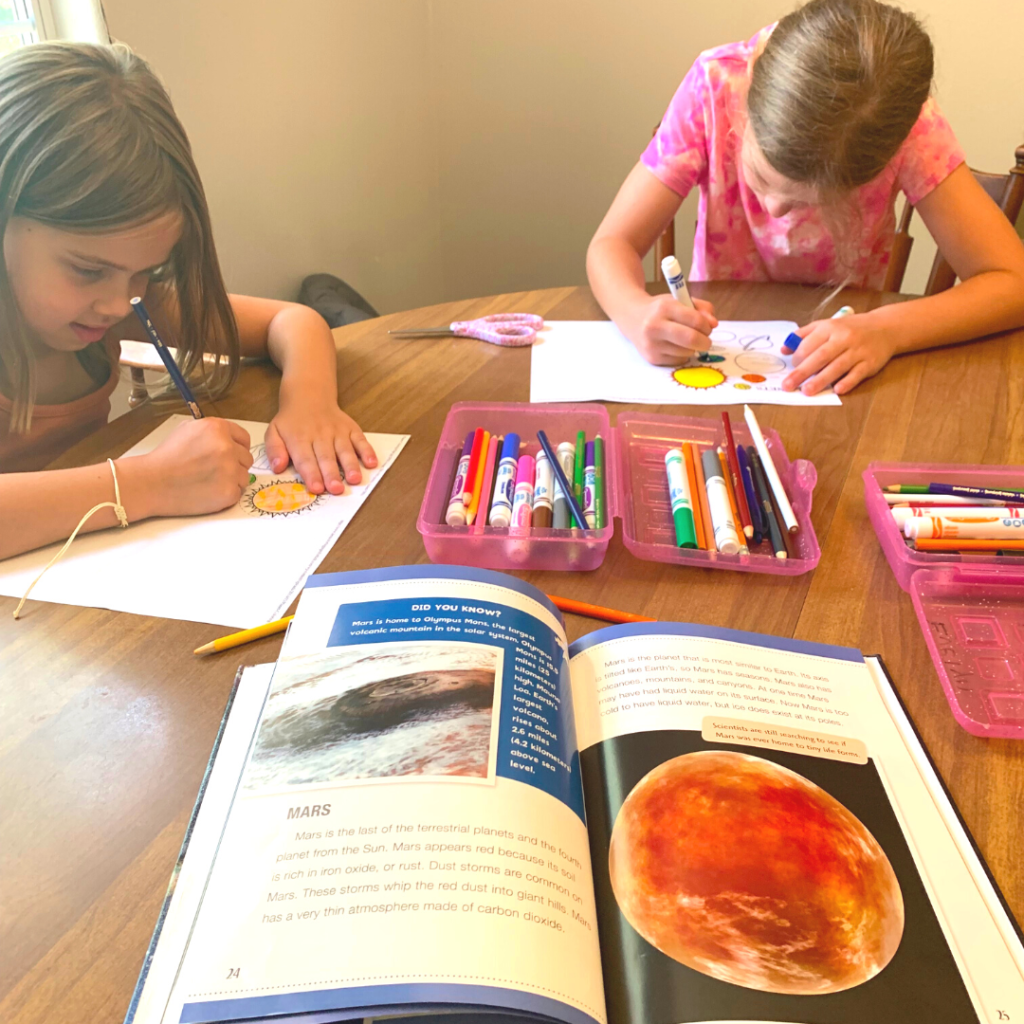
We were able to learn all about the characteristics of different planets with one library book and a box of cupcakes! As I read about the planets, the girls colored a free print out that had the sun and the planets. We learned so much!
We cut them out, taped them to a toothpick and let them become our cupcake decoration. Before we ate them, we even lined them up in the correct order! This was fun, simple, and delicious!
Moon Phase and Oreos
You’ve probably seen this activity before, but I can’t pass up a good snack lesson. I had a couple books about the moon from the library that we referred to. One had an excellent diagram of the different phases of the moon.
We used that diagram to create the different shapes of the moon using the Oreo cream.
Foil Painting of the Moon
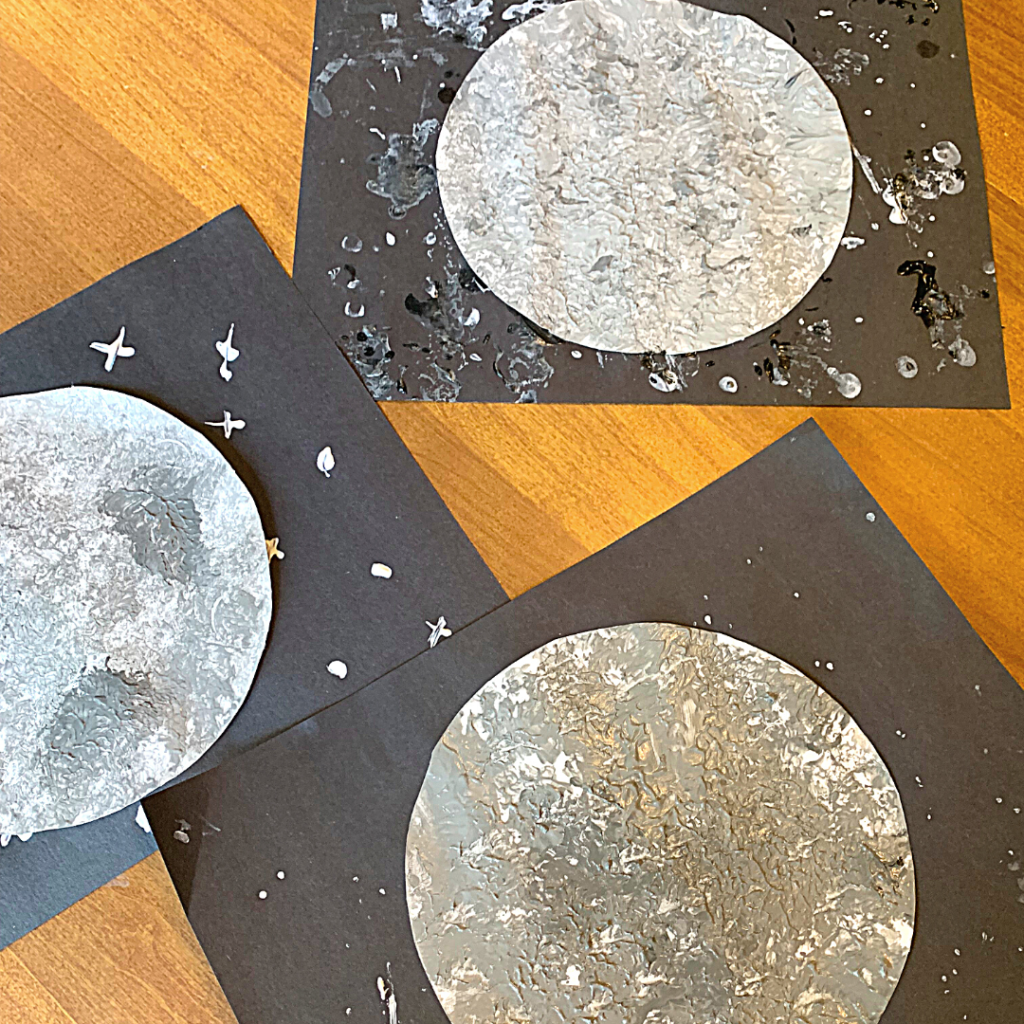
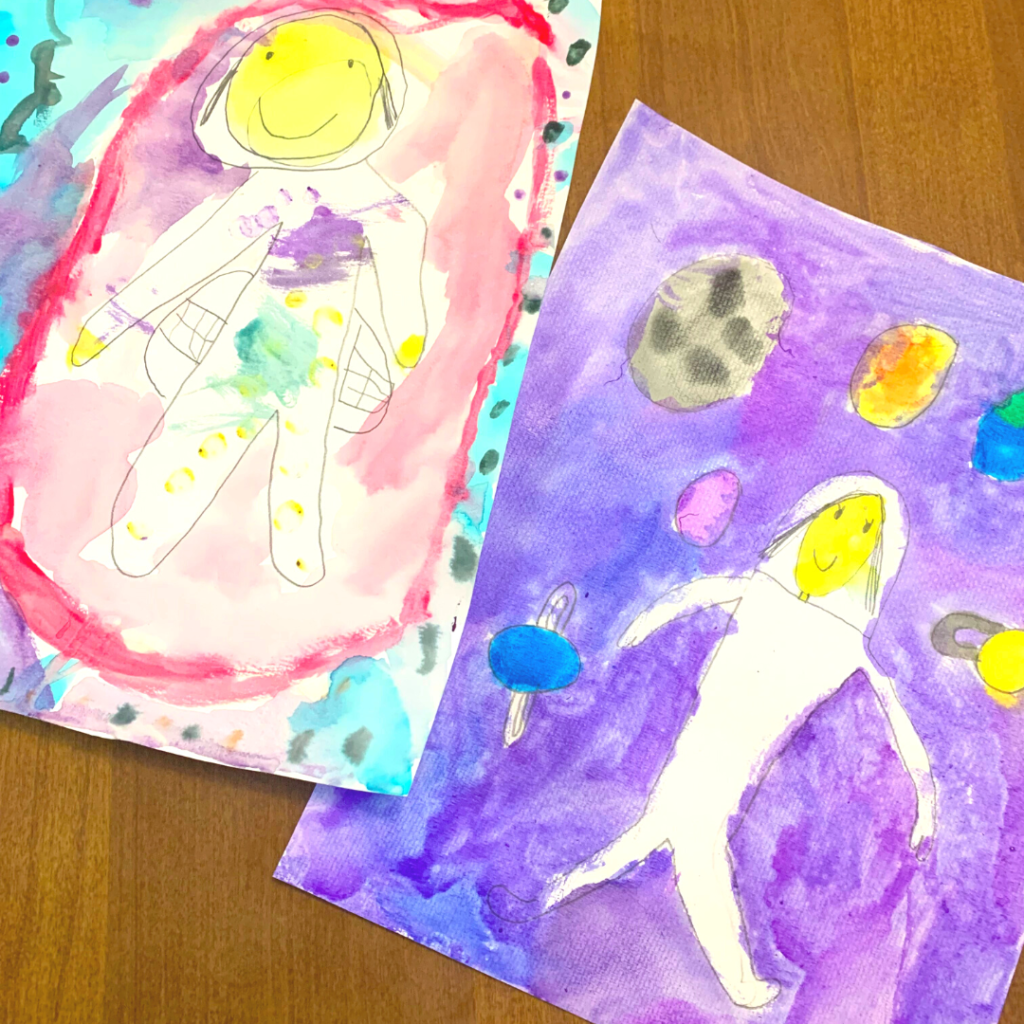
I know some people aren’t a huge fan of paint, but don’t let this one scare you away. It’s very simple and really only requires one or two colors. We mixed different shades of grey and used a crumbled up piece of foil to paint our moons. Each one turned out unique! My three year old was even able to participate and I love an activity that works for a variety of ages.
Field Trip
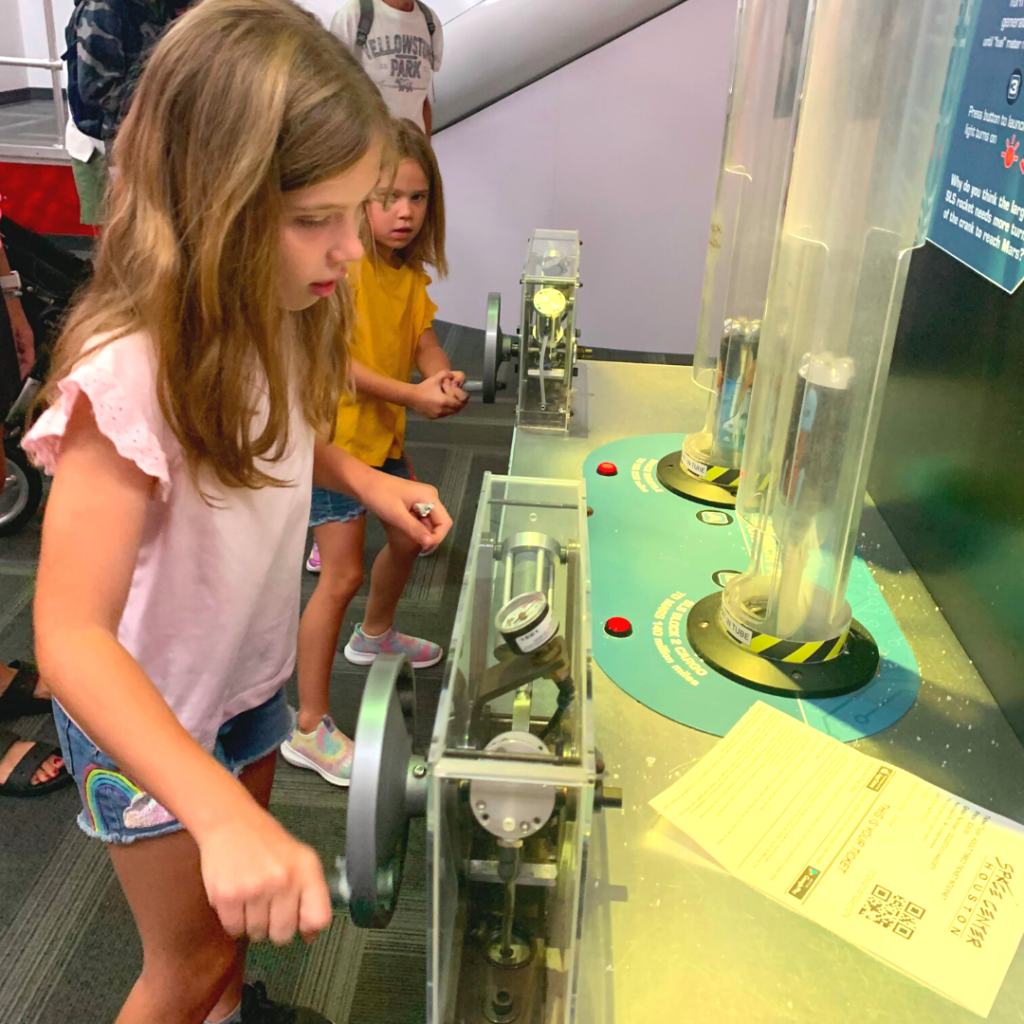
We aren’t too far from the Houston Space Center, so I couldn’t pass up on visiting after our unit. Our studies made the trip so meaningful. We even got to see an astronaut in training. What a cool experience!
Some other great ideas for a field trip could be an observatory, a planetarium at your local museum, or you can even check out the Imax showings at your local theatre.
Notebooking/Narration
At the end of each unit study, I am trying to have the girls complete a notebook page for their portfolio. This is the first year we’ve done this, and so far I’m really happy with the results.
I’ve been letting the girls watercolor (use watercolor paper – it’s amazing!) but you could definitely just color any picture with crayons or colored pencils. Then, each girl tells me about what they’ve learned and I’ll write it on the back. My oldest will write her own.
This has been such a great way to close out our units and I can’t wait to look back on them all at the end of our year.
Future Unit Studies
Is this information helpful? Let me know in the comments or connect with me on my YouTube channel to let me know. I really hope to do this in order to give families ideas on how to throw together a unit study that’s fun and simple and low-stress.
As I mention before, we plan to loop our science and history, but I’m thinking a “Weather” unit is in our near future for science this year!
Caddie Woodlawn is a beautiful story about a young girl growing up in the mid to late 1800s. Based on the story of a real girl, she lives in Wisconsin with her family where she gets along better with her brothers than her sisters. Through her mishaps and adventures with her friends and siblings, she learns about her role as a young lady and how plays a part in her family.
The following read aloud activities were put together as a plan for our Homeschool Book Club. You can read more about how I host that HERE. However, these activities are also fun to do with your family at home. The activities are intended to be completed at the end of the book as a little book celebration. So please use this plan as it best suits you in the season that you are in.
This post contains affiliate links. If you follow one of my links I earn a small commission at no extra cost to you. Thank you for supporting my blog!
Discussion Questions
What is your favorite part?
Who is your favorite character and why?
Caddie and her family lived a long time ago. What are some differences in their way of life that stick out to you?
At the end of the story, Caddies family had to make a choice. What was that choice? And what would you have done?
On the Map
This is a great opportunity to understand where Caddie lived and locate it on a map. We used a US Puzzle and turned it into a scavenger hunt! I’ve had this puzzle for a few years and we put it together all the time! It’s the perfect way to review a map of the United States. It’s large, and the pieces make up the actual shape of the states.
Hide the pieces all around your house or outside (I always love going outside when we can.) As your children bring them to you, begin putting it together. Once it’s complete, point out that Caddie lives in Wisconsin. Show it on the map. You can also locate Boston, where her mother is from.
Ask questions about what it would be like to travel from Boston to WIsconsin? Could they fly or drive? These kinds of questions are always so fun to ask.
Be sure to point out where you live on the map. How far is it from Wisconsin?
Snack – Taste the time period!
One of the moms in our group made a list of a bunch of the different foods that were mentioned in the book. The list included hazelnuts, salt pork, turkey, cranberries, and molasses cookies.
Prepare as many or as little of these as you want! I actually didn’t even know what salt pork was until we made it for book club. It’s not very good at all. (ha!) But it was so fun to try it! I found an easy recipe online, but you have to prepare it 48 hours ahead of time. It’s not hard, and it’s worth the experience if you can.
We were able to talk about why salt pork was so popular during that time period and why it was necessary to prepare it in that way. You can read about salt pork here.
Someone else made the Molasses cookies for our group, but here is a simple recipe if you are on the hunt for one. Molasses is so odd to me, but in a cookie it’s oh-so-good.
All of the other items can come from the grocery store. We didn’t have them all at our group, but I love the fact that any time we do try it, we can still think back to our novel.
Read Aloud
I love when I can read a picture book that relates to our story. Unfortunately, the way our timing worked out during our get together, we didn’t have a chance to read something. I will share what I had hoped to read though.
I went hunting in my own home library for this one. I found a picture book called, “Summertime in the Big Woods”. This picture book is from a series about Laura Ingalls Wilder as a child. The books are precious and easy to read.
Did you know that Laura Ingalls Wilder was also living in Wisconsin during her stories in the “Big Woods”. How is her summer like Caddie’s? How is their summer different from ours? These are all questions I had hoped to chat about with the kids.
If you’d like an alternative for the story time, my other option was to find a book about Abraham Lincoln. There’s a chapter or two that discusses his presidency, and I thought it would be neat to read some history. I considered reading “My Little Golden Book About Abraham Lincoln”. It’s an easy read and very inexpensive.
Raft Challenge
There’s a chapter in the book that Caddie and her uncle ride on a raft. Caddie’s uncle plays a trick on Caddie making it difficult for her to successfully use the raft.
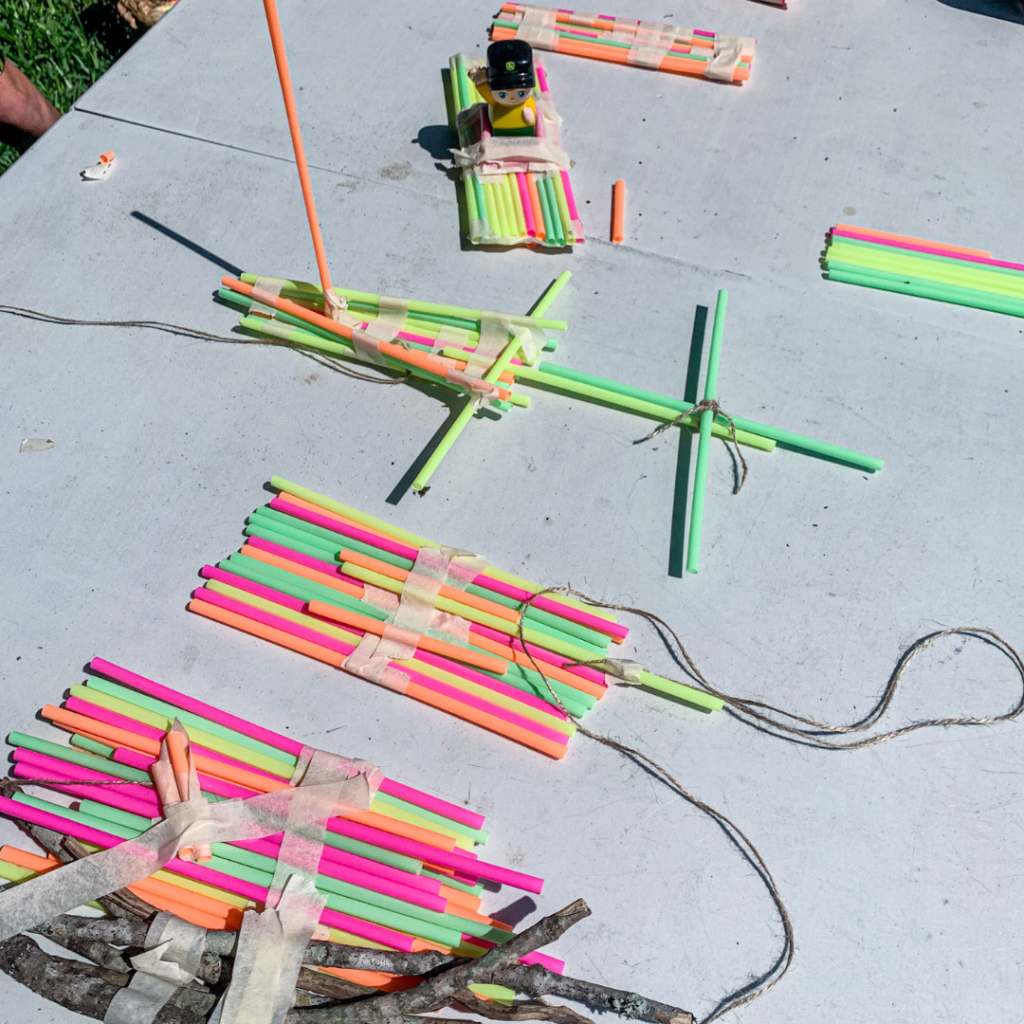
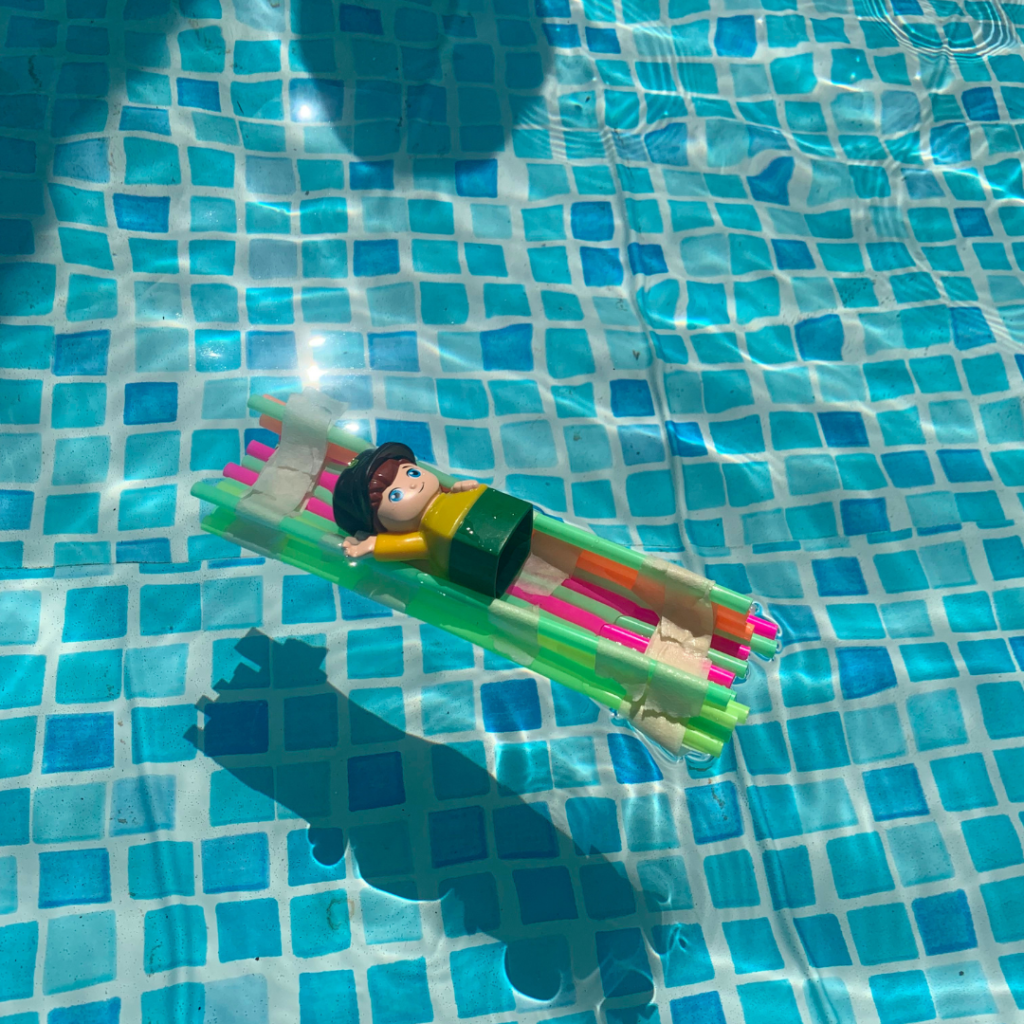
For this activity, I set up a STEM challenge, and it was such a hit! I provided the kids with a basket of supplies: straws, string, masking tape, and sticks from my yard. We talked about how rafts are made, and then I let the children have the freedom to make whatever they wanted. Their goal was to make a raft that a little lego man could float on successfully.
The results were so surprising to me! Every child created something completely different. As they were putting it together, I asked questions. What is your strategy to make this work? Why did you choose straws? What is the string for?
It was summer time when we did this and I set up a blow up pool in our yard filled with water. This is where we tested our rafts. You could use a big tub if you wanted. Want to know something crazy? The most outrageous looking raft was the one that worked the best! This activity went a little longer than I had planned, because the kids just couldn’t stop. They loved building their rafts.
I did stand nearby tearing masking tape for the kids to help them out and keep the building going.
Making Homemade Butter
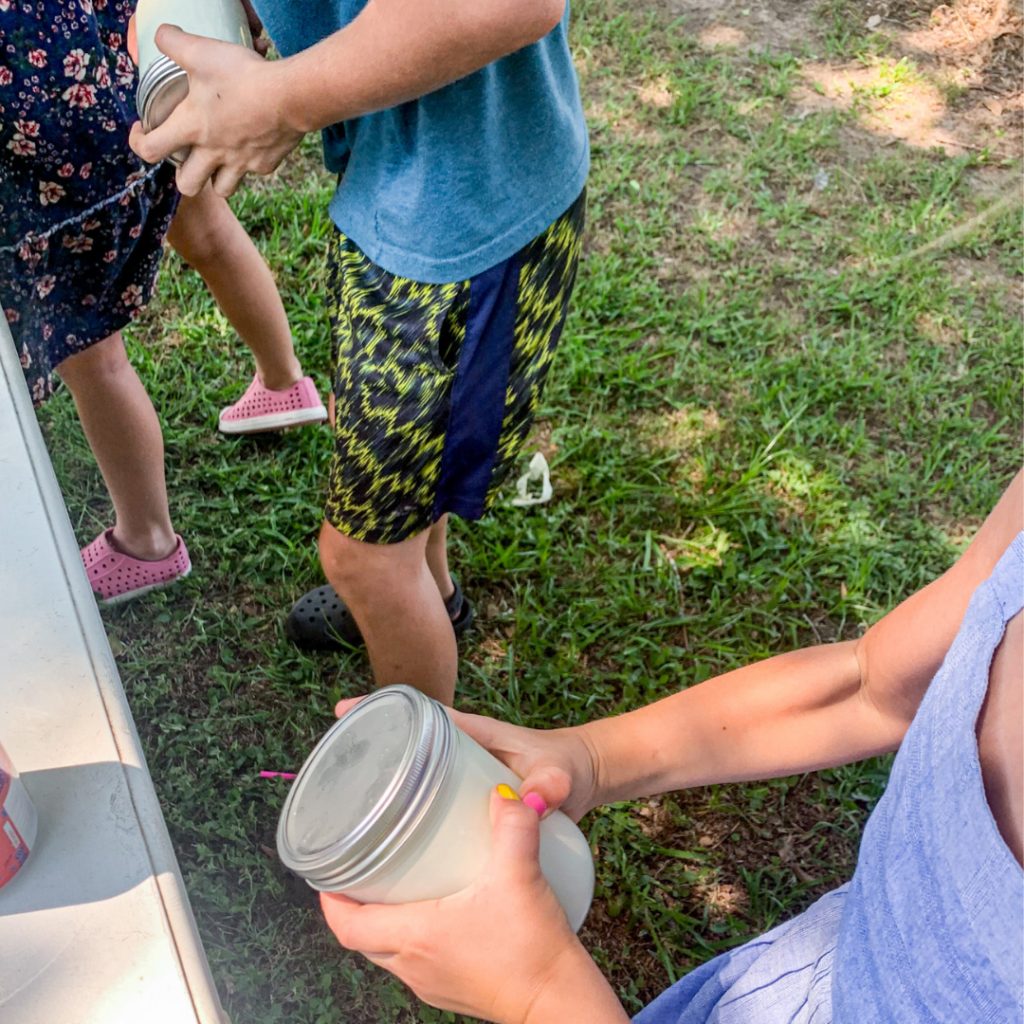
For the last activity, we made our own butter. Caddie and her siblings churned their own butter. If you have time or the resources, you could share what they might have used to do this. Then, try it yourself. If you’ve never done this – it’s so easy! You have to try it. You’ll need a mason jar and heavy cream. That’s it!
Fill the mason jar half way with cream. I made one for each family. It takes quite a bit of endurance, so sharing the job among the family members made it easier to complete. Put the lid on tight and start shaking the jar with all your might.
This takes a few minutes. When one person was tired, they passed it to someone else in their family. After a couple minutes, you will feel that the jar is not really moving liquid around. That’s because it has turned to whip cream! This is a fun opportunity to put a spoonful in a bowl and add some sugar. I had a bunch of plastic spoons and everyone got a taste. Yum!
Keep on shaking that jar! After a few more minutes, you will start to notice the butter surrounded by buttermilk. The butter actually provided us with a second snack. I added a little salt to the butter and was ready with some saltine crackers. Spread a little butter on the cracker and taste the homemade butter. The kids ate it up!
I labeled each jar with the family name so they could take it home to enjoy.
Want more Book FUN?
We were able to finish all of these activities in about an hour and a half.The kids had so much fun! They loved discussing the books together and the simple activities were engaging and exciting for them.
A small book celebration like this really brings a book to life and we love experiencing the novels we read together in this way. I plan to share all of our book club plans with you, so sign up for my email list below and be notified each time a new one is posted.
You can also check out the growing blog post containing each book we’ve completed already. If you’re a fan of adding to your read alouds in a simple way, I want to encourage you to see the different Read Aloud Experiences I have created. Almost all of them are absolutely FREE! These are created on a chapter-by-chapter basis and create such a unique, hands-on read aloud unit to do together with your family!
Homeschool book club is something I started in my home in order to connect with other homeschool families near me. It’s a homeschool group that focuses on literature by reading a novel at home and then meeting together to discuss it. On the day our book club meets we play, eat, read, chat, and do enriching activities to celebrate the novel.
Homeschool book club is not a new concept. I’ve seen some near me and have heard about some from others, but in this post I wanted to share about what it is and how ours came to be. I also want to provide you with ideas for activities in hopes that it might encourage or help others meet up together for the sake of good books! 🙂
And if you’re not into leading in a group setting, stick around! The activities can be done with your family alone, as well. Book activities are so much fun, and I’ve kept it very simple and low key.
This post contains affiliate links. If you follow one of my links I earn a small commission at no extra cost to you. Thank you for supporting my blog!
It starts small.
I mentioned the idea to one friend that was interested and she knew one more. That’s it! This group of families contains 11 kids, which was a great number to get us going.
We picked a SHORT novel that would be easy to finish. I didn’t want anyone to feel the pressure of reading a book in time. It also allowed us to finish reading quickly. I’ve read some pretty long chapter books with my kids and after a while it’s easy to forget things. Our first short and sweet book gave me as the planner a little wiggle room to play with ideas without feeling rushed.
The last “small” tip is don’t commit. Isn’t that so weird to say? It makes me laugh thinking about it, but it’s true. Sometimes the thought of a monthly/weekly commitment is overwhelming. We all agreed to one meet-up and than we would decide what to do next.
This worked out fantastic. We had so much fun and knew we wanted to continue. Instead of committing to once a month, we all picked a time in the near future that we were comfortable with…and that’s the only day we have planned for now. This laid back approach really takes a weight off.
Enrichment Activities
One of my passions is taking a book that I’m reading with my family and expanding upon it with games, crafts, food, or more books! We’ve done this many times in the past as a family. (Check out my Read Aloud Experience for The Secret Garden, Mrs. Piggle Wiggle, the Boxcar Children, or the Courage of Sarah Noble) So, I was so excited to share our love for literature with our friends.
Different enrichment activities might include themed snacks, crafts, scavenger hunts, drawing, reading, writing, dancing, videos…and more! I pick a couple of these to go along with our chapter book and it brings it to life!
Schedule
The schedule will change each time, depending on the activity, but I do have a goal for each time we meet. We plan for a two hour window and I hope to do the following
Welcome and Free Play
Book Discussions
Activity
Snack + Read Aloud (usually a picture book)
Activity
Every book will be different, but I can add or take away activities as I need to.
Planning
Planning can sometimes be the hardest part for some. There’s so many options and a ton of resources out there!
Don’t give up yet…I’m hoping to do the majority of the planning for you! It is my hope that each time we do a new book, I will write a blog post containing all of the activities we did. I’ll keep a running list on this page of the different books.
Make the Book Club work for you.
There’s no rules to this, but do have fun with it! Go as big or stay as small as you’d like. One thing you could always do is just try out the activities in your home with your family. There’s no rule saying you have to put together a group. Maybe you could read the book and meet with just one other friend. Instead of making a schedule of things, just choose one activity and voila! Simple, fun, and educational.
Whatever you decide, I’d love to hear how it’s going and if you enjoy the activities for the books. Leave a comment here, send me an email, or tag me on social media (@simply.learning.together)
Book List
This is a growing list. So, save this page for future reference!
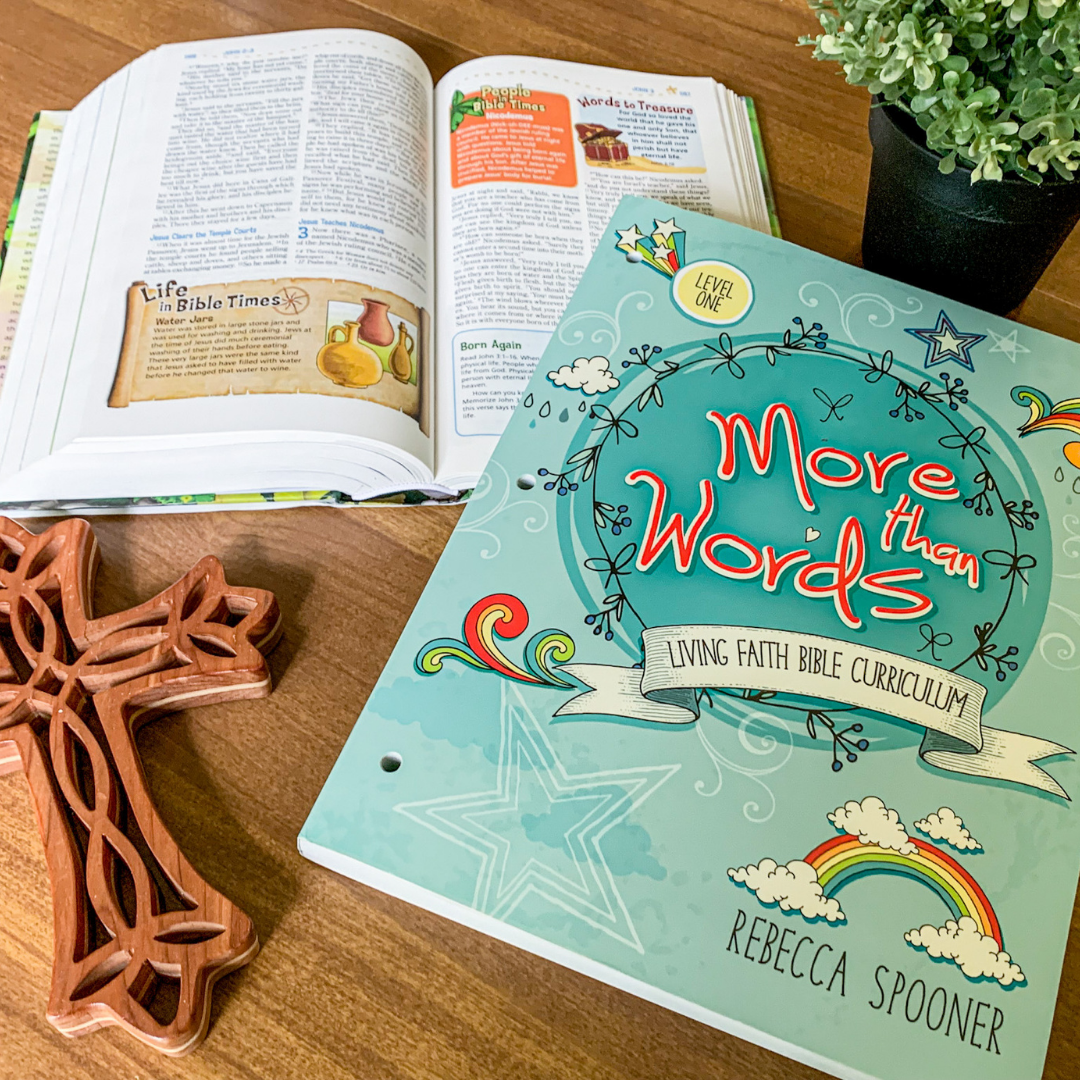
Now that my daughter was entering the second grade, I wanted to dig a little deeper. I also knew I wanted something that talked about character, and More Than Words does that and more!
I am going to tell you all about this book and the goodness it contains, but I’m also going to share things that I don’t like about it as well. (Everything has their pros and cons…and they’re probably different for every family!) However, I encourage you to read all the way through, because I’ll let you in on a little secret later on that I think may surprise you!
To get a detailed look inside this book, check out my video HERE for a look-through and review where I discuss some of the same points I make below.
This post contains affiliate links. If you follow one of my links I earn a small commission at no extra cost to you. Thank you for supporting my blog!
The book is written to follow a 4-day-per-week schedule.
I love this because we are usually gone one morning of the week. So, I never feel like I fall behind. On weeks where I need a fifth day, I usually just review the week’s material and read the prayer at the end.
Each week covers one specific bible passage, one key truth, a look into fine arts, and one character trait. The weekly lessons follow the same sort of pattern, which makes it super easy to follow as the parent (and child!).
Day 1: Journal Intro, Bible Verse, Key Truth, Copywork
Day 2: Art/Song/Poem
Day 3: Character Study, Coloring Page
Day 4: Drawing, Discussion Questions, and Prayer
Journal Intro
This is a short journal entry to start off the week, written by a character from the curriculum. These characters are based on the author’s daughter and son and some of the experiences they have had.
My children enjoy these very much because it makes the lesson extremely relatable for them. It’s a great way to start off the discussion and dive into what we will be learning for the week.
Bible Verse
After a few discussion questions about the journal introduction (provided in the workbook), the bible verse for the week is introduced. The book encourages you to read it from your bible, but it is also printed directly in the workbook.
Even though the verse is only listed for “Day 1”, we read and recite it each day of the week to work on memorization.
As a side note, I love finding songs that relate to the bible verses. There are so many great Christian groups on YouTube that write awesome children’s songs. So, it’s definitely something we like to add in as we learn the scripture.
Key Truth
Each week there is a Key Truth related to the bible verse. The book encourages you to memorize the different truths each week and has cute review cards to go with it.
We simply discuss the idea and repeat it throughout the week together. The sentences are short and easy to remember and, even better, I love teaching and talking about them with my kids.
Copy Work
A copy work page is provided for each week. This is usually a shortened version of the bible passage. It is also what the kids and I work on memorizing for the week. My kids are 7 and under, so it’s short and easy enough for all of us to say together, even my little ones.
Art/Song/Poem
This alternates each week. Our favorite is the art. We love looking at the different pieces and talking about them. Discussions and questions are provided in the workbook. This makes it easy for me because I’m not very familiar with art.
For the poems, I usually just read it out loud and discuss the questions provided. When a song comes along, I like to find it on YouTube and play it for my kids. We don’t try to memorize it or anything, but we do enjoy listening to what it’s supposed to sound like.
I really love the way this book alternates the three art studies (art/song/poem). It keeps it interesting and we never really tire of them.
Character Study and Coloring Page
This is one of the main reasons I bought this curriculum. Each week, I look forward to the new word based on a character trait. A short paragraph explains the meaning and why it is important. At the bottom of the page, their is usually a circling activity finding synonyms and antonyms of the word in order to help understand its meaning.
It’s been so helpful studying these words because I can use them in our day-to-day discussions and they have so much meaning to us. When I am speaking to a child about a bad choice or if I’m trying to help them make a good one, we can easily bring up these traits, and I love that.
The coloring page is a bonus to the character study. It’s a sweet picture with the character word in big letters. Honestly, my kids complete this when they want to. They aren’t really interested in coloring, but they have asked at times to do it.
Drawing, Discussion Questions, and Prayer
Each week, the lesson closes out with an opportunity to draw a picture about something related to what you’ve been studying. The last page contains a couple of questions to think about and a place for your child to write an answer.
Finally, a short prayer to read closes out your week.
The book is divided into 4 quarters that focus on specific topics.
The topics are, “Who is God?”, “Who Am I to God?”, “Walking the Walk”, and “The Great Relationship”. At the end of each quarter, there is an opportunity to discuss these questions and talk about it more in depth.
The book encourages you to review the “Key Truth” topics as well as the character traits discussed in that quarter. A few options are provided about how to do this.
There is also a hands-on art project that is a part of the review and all directions are provided for this.
Here’s my Confession…
We don’t actually WRITE in the book…AT ALL! Not one bit. I don’t feel that the book is wasted though because we use it to guide our morning discussions.
I originally purchased the book for my second grader to work on independently. However, it turned out to be a part of our morning routine and we all discuss it together instead. All four of my kids participate as we learn verses, sing songs, look at paintings, and talk about character.
The honest truth…I kind of feel like all the writing and coloring and drawing is busy-work. I know that’s harsh, but it felt true in my home. It was just another thing to have to get finished. So, instead I looked at it as another great workbook for our whole family to learn from.
There are times that my children request the coloring page. So, I rip it out and they color as they please, but it’s never my intention to assign them anything from this book. It is purely a guide for our discussions.
My Review
Even though we don’t actually use it properly, I really do love this book. I like the pattern that it follows each week. My kids and I know what to expect and look forward to certain pages. No teacher guide is needed. Everything is right there for you in one book, making it a cost-effective way to study together.
I love that it’s helping us remember different verses in the bible. My three year old even says them with us and it’s one of the main reasons I wanted all of us to use it. We can all learn together as a family.
I don’t really feel like all the writing and drawing is necessary. If you have a child that truly enjoys all of that extra work, then go for it. Otherwise, my suggestion would be to skip it.
I definitely recommend this book if you are thinking about using it. I have even considered using the second book they created as well.
We spend about five to ten minutes each day looking through the book, following the lesson, and practicing the weekly verse. Although it’s not a ton of time, our conversations are meaningful, memorable, and something I look forward to each morning.
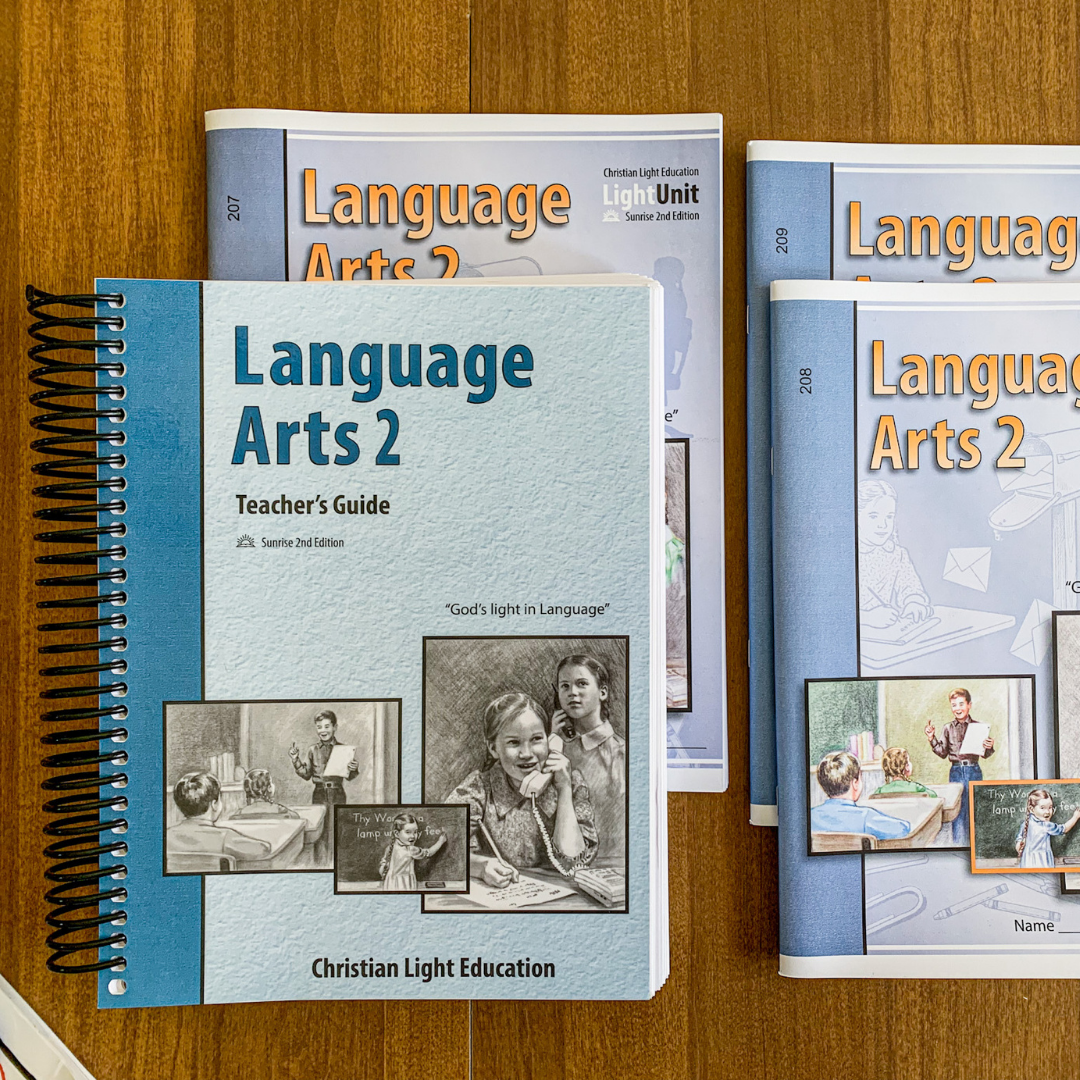
Christian Light Education really improved our second year of homeschooling for a variety of reasons. I picked it because it was inexpensive to try it out and it gave us the flexibility we needed.
We finished our first grade year with CLE and continued using it for second grade. The second grade level added quite a bit more that made the program even more thorough than I thought it was. In this post I hope to give you a very thorough description and honest review of the second grade program so that you can get a better idea of what it is.
If you’d rather watch the video version of this post, check it out on my YouTube channel HERE.
This post contains affiliate links. If you follow one of my links I earn a small commission at no extra cost to you. Thank you for supporting my blog!
Christian Light Education is published by Christian Light Publications
They are a Christian Mennonite company, and you can read all about their beliefs and practices here. I am a Christian, and although I do not practice some of the same things listed in the “what we believe” section for Christian Light Publications, I have never felt turned off by the curriculum because of this.
I actually didn’t even realize the difference in beliefs until I heard someone else tell me about it. Then certain things clicked – like the images in the workbook. It was hard for us to figure out what a few of the images were because we couldn’t relate to them. This happened two or three times and we moved right along.
The program does talk about God often and believing in Him and making good choices that please Him. It teaches good character and provides short readings for the kids, teaching about manners, kindness, and good study habits.
The Language Arts curriculum is broken up into 10 units.
This is one of the reasons I chose this curriculum to replace an old one in the middle of the year. You can buy individual units for less than $5. I loved this because I could buy a unit and test it out with my daughter without really breaking the bank or feeling like I wasted a workbook.
That’s exactly what we did. I started with one unit, and we kept going from there. There are also optional materials you can purchase, and you can check those out here. We have not used the optional items in our homeschool.
The lesson content is set up as a spiral review.
This means that a topic is introduced and practiced again and again throughout the year. You do not master a skill and move on. Instead you are working on a variety of skills every day and repeating them here and there throughout the program.
I personally love this set up, because it makes it harder to forget things. For example, we can learn and practice alphabetical order and 2 months later we end up practicing it again.
I also like this because every section in a lesson is just a few practice problems for each skill.
Beginning in Level 2, the Language Arts program includes handwriting, spelling, AND writing.
How nice to be able to have that all in one! This is not the case in their level one, so I was happily surprised when we figured this out.
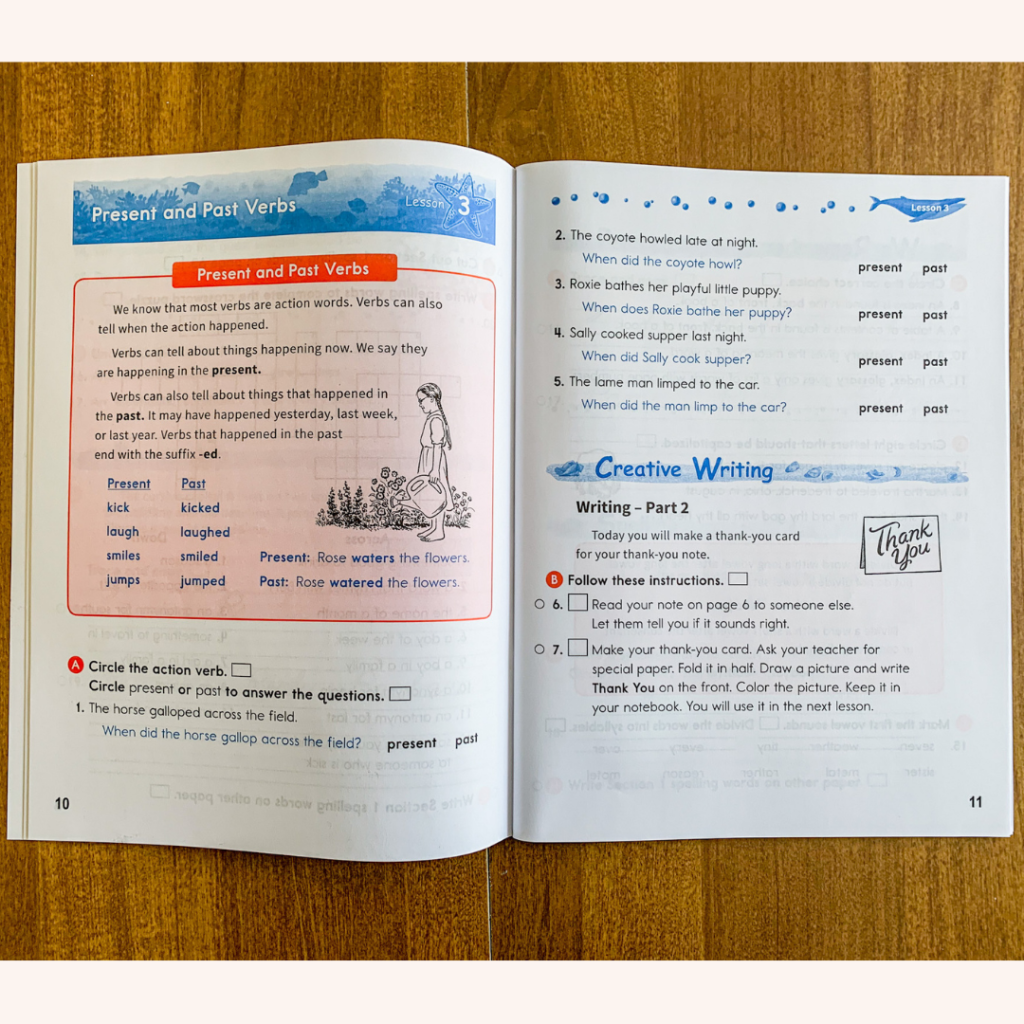
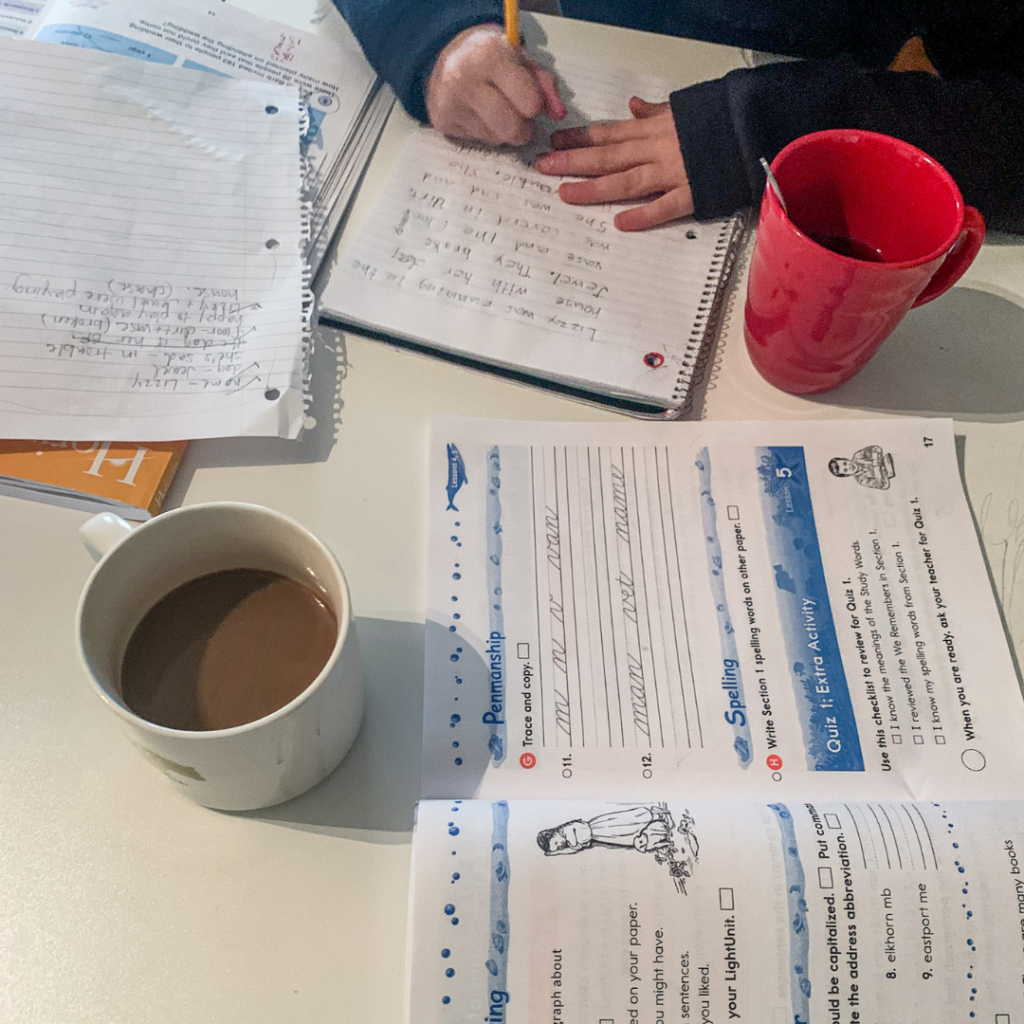
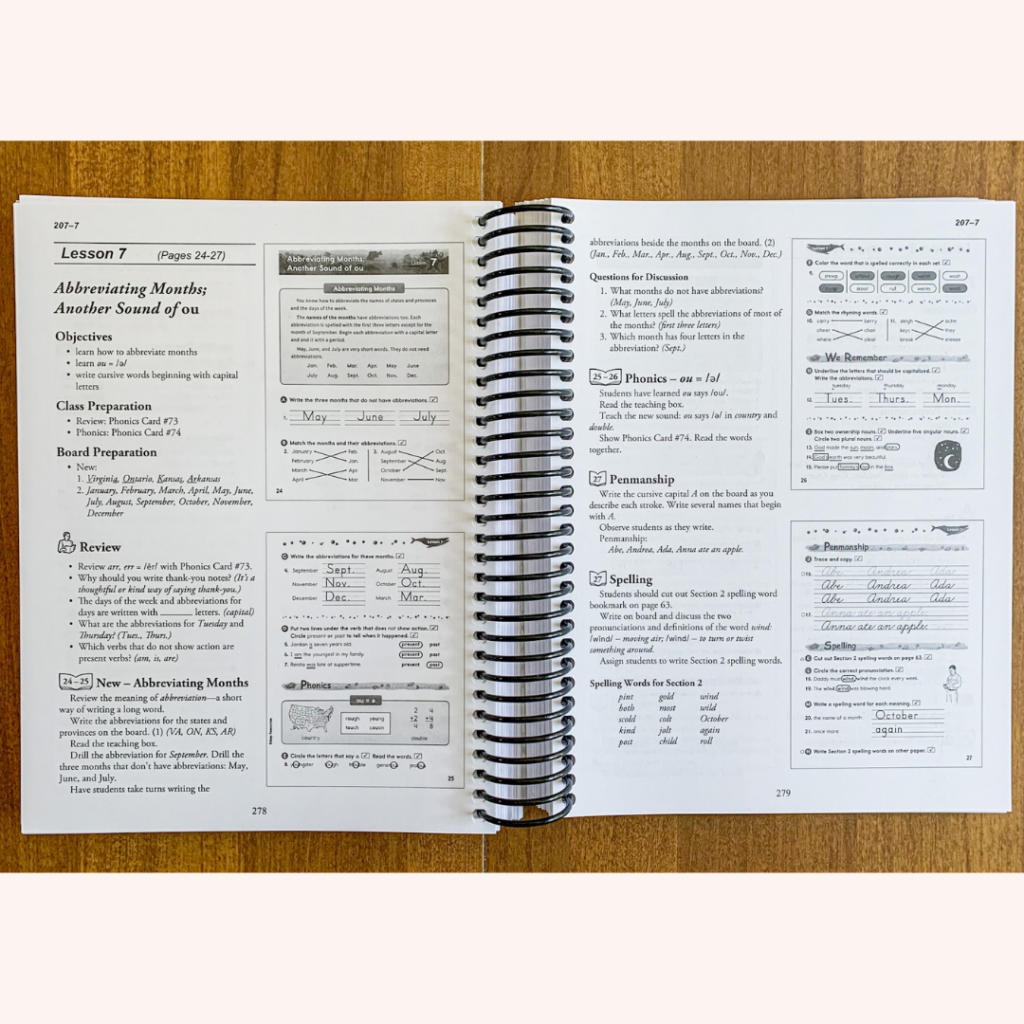
The handwriting sections start off with manuscript writing. It is a very short section in the lesson (see the image above). Next, it moves into curves and lines to get ready for cursive writing. When you get to unit 3, cursive letters and words are introduced.
The writing program becomes part of the lessons beginning in unit 3, as well. (See image below.) It’s so nice that I do not have to rearrange days or routines in order to incorporate writing practice. The process is broken down in the unit and easy to follow.
Each student book is called a LightUnit.
A LightUnit comes with the lessons, 2 quizzes, a self-check, and a test. One lesson usually begins with a new language skill followed by phonics and grammar review. Next, there is a short penmanship section to practice handwriting and, lastly, spelling practice.
There are also a few enrichment activities included in each LightUnit. (I’ve never actually even looked at these.)
The lessons are very to-the-point without extra things.
If you are looking for a variety of art and nature and song and poetry throughout your lessons…well, this isn’t for you.
A lesson is 4-5 pages long. Although it sounds like a lot, every section averages 2-6 practice problems.
If you sit and complete a lesson exactly as it is in the workbook every day, week after week, you are going to get bored.
Wow…that came off really strong, but hear me out. You can make it what you want! Honestly, that statement stands for almost anything! Homeschool is about making adjustments for your family.
The set-up of the lessons provide a flexibility when you plan!
For example, let’s say the review section is something that really doesn’t need practice. Your child has mastered it and is confident…so skip it!
Or maybe you’re feeling crazy and want to add some movement. Come up with a scavenger hunt or an activity to help get through some of the questions. Change up your routine and have fun with it!
Or MAYBE your infant won’t stop crying and your 3 year old is having a melt down and it’s raining outside and you haven’t even cleaned up breakfast yet…let your child work on it independently! I LOVE love LOVE that there are days that she can just practice on her own. As a mom of four, it’s so important to have this flexibility!
However, with the lack of variety in the lessons, it does tend to bore us after a while. Every couple months, I step away from it for a week or two and dive into something different. I might read a book with my daughter or complete a mini-unit together. This helps us go back to it fresh and ready to continue.
I do NOT follow the lessons exactly as they are written.
On the topic of spelling, I started the year by skipping the spelling section in the workbook completely and just having her write the words each day. We made this fun, and I can share more about how we did it soon. Even with fun spelling practice, we eventually tired of it after a few months and started only doing the spelling practice section in the workbook. We do not do daily list writing anymore.
After Christmas, I quit giving the quizzes and self-checks. It was a wasted day of lessons! My daughter was completing lessons well and was not struggling through the skills. (If she were, I may have kept doing them for practice).
One day, I just completely forgot about giving the quiz, and it affected us in zero ways. So, I stopped! We work through the lessons, and I give the test at the end of the LightUnit, if I feel she’s ready.
We also skip the penmanship sections most days. I do this because we already have a handwriting curriculum that I love (A Reason For, Level T). Completing the penmanship was overkill to me, so we only do it if we want a super short handwriting day and skip our handwriting book.
My point in telling you all of this is don’t ever feel like you have to do EVERYTHING!! You have the freedom to choose in your homeschool. If it feels like too much, cut it out. If it’s not enough, add to it. Do what’s best for your kiddo. Because of the way these lessons are set up, this is easy for me to do.
Let’s focus on the Teacher Guide for a second.
The guide is very thorough. The answer keys are actually on the same page as the lesson guide, and I really like that. You don’t have to flip back and forth to check answers.
Each lesson in the guide starts with scripted review questions. Next, it moves into a script for teaching the new skill. It provides questions for discussion as well as an explanation for each section in the lesson.
If there is any prep, it explains it at the beginning of the lesson guide. It also gives you optional activities to do during a lesson.
When it is time for a spelling test, the list of words and sentences are provided.
When I first received the guide, I was extremely overwhelmed. It’s a lot. However, once I read through the explanations and figured out how it worked with the lesson, I felt much better. It’s one of those things where you kind of just need to jump in and try it out to see how it would work best for you.
The guide is very helpful, but once we got in a groove, I didn’t feel like we needed it as much. It would be hard to have the program without it though. I’m glad I have it to refer to, as needed.
I’m really happy with CLE, but I’m not 100% sure yet if we will continue for 3rd grade.
The truth is…I’m somewhat bored. I want to read more books! I want to dive into novels with my kids and explore new characters and places and events. We do read chapter books together, but I feel like I want more. I’m starting to look for something more literature based.
My decision is not final. I really do love the flexibility I have with this. It’s almost like I would love to do CLE for 6 weeks and a novel for 6 weeks and than back to CLE…and so on. And I could…
I just have a couple more things I want to research, so I’ll keep you posted.
Let’s look at the pros and cons here.
PROS:
Inexpensive to try
easy to follow
includes spelling, handwriting, and writing beginning in 2nd level
flexible
can be completed independently (depending on child)
Christian values
CONS:
cut and dry
not hands-on
difference in beliefs
can feel boring at times
not much classic literature or fine arts (at least not in level 2)
I think this is all just proof that no ONE curriculum is going to be the perfect fit.
We get to make it what we want and add or take away as we please. Even when I was a classroom teacher, I was doing this with our textbooks for my students. The reason I bring that up is to point out that learning is not a one-size-fits-all matter.
My suggestion to you if you are considering trying Christian Light Education is to do what we did. Purchase one LightUnit. Look at the samples to get an idea of which one you should buy, based on your child’s abilities.
Then, try it out in your home! It’s the perfect way to figure out if it’s what you need for your language arts program.
I really did not think this would happen, but we stopped Horizons K mid-year. I love Horizons! We’ve used it for three years with my oldest daughter (now in Horizons 2). As a matter of fact, she still uses it, and I don’t have plans to stop.
This has been a tough decision for me. I know how Horizons works. I know how to add hands-on activities, and I know how to manipulate it to work for us. I’m very comfortable with it and recommend it to many. That hasn’t changed, but, let’s be honest…this isn’t about me. It’s about my daughter.
This post contains affiliate links. If you follow one of my links I earn a small commission at no extra cost to you. Thank you for supporting my blog!
I’ve known since November that something wasn’t right.
This decision has been quite the journey and my choice to stop was not based on a quick mishap. It’s been a process, and I’ll explain.
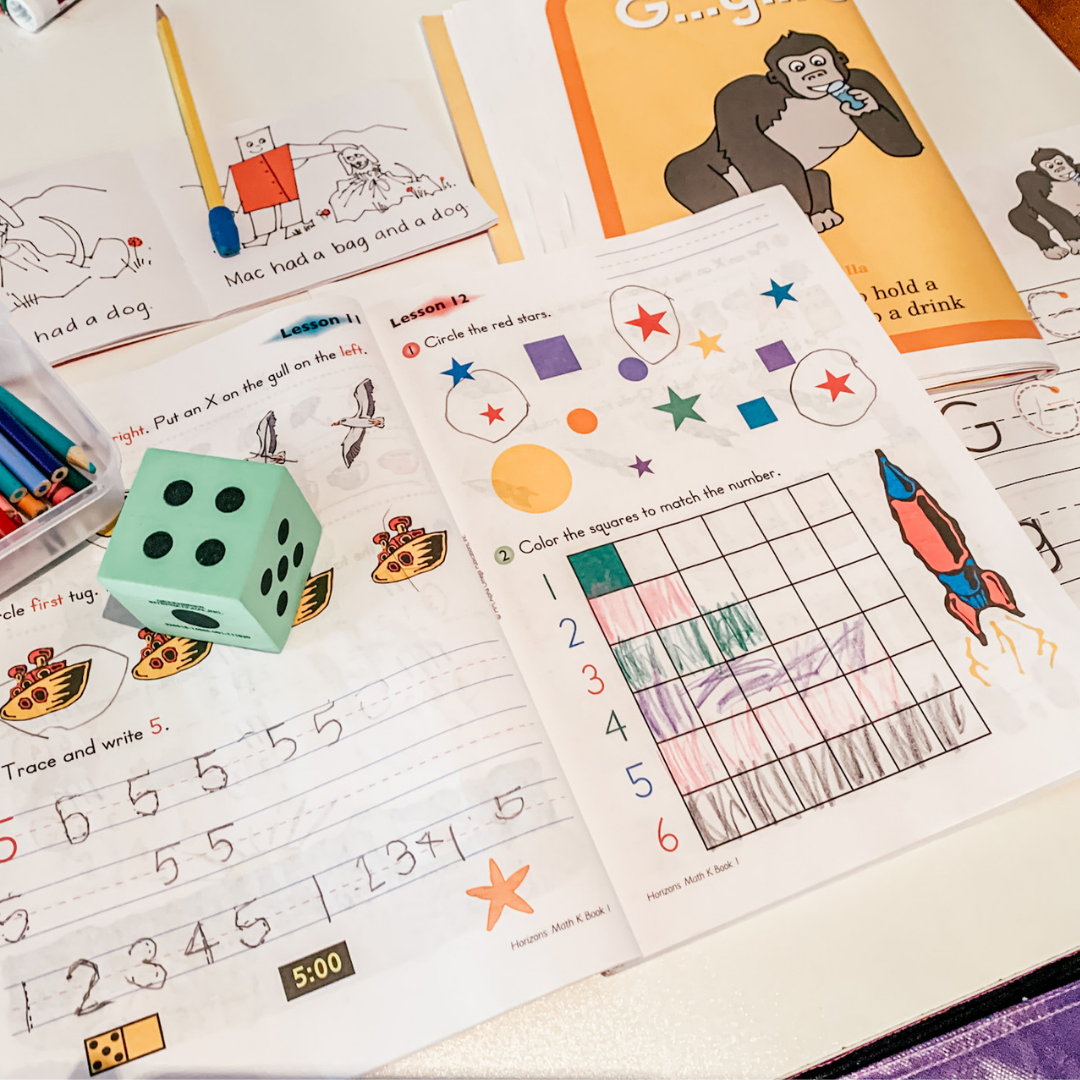
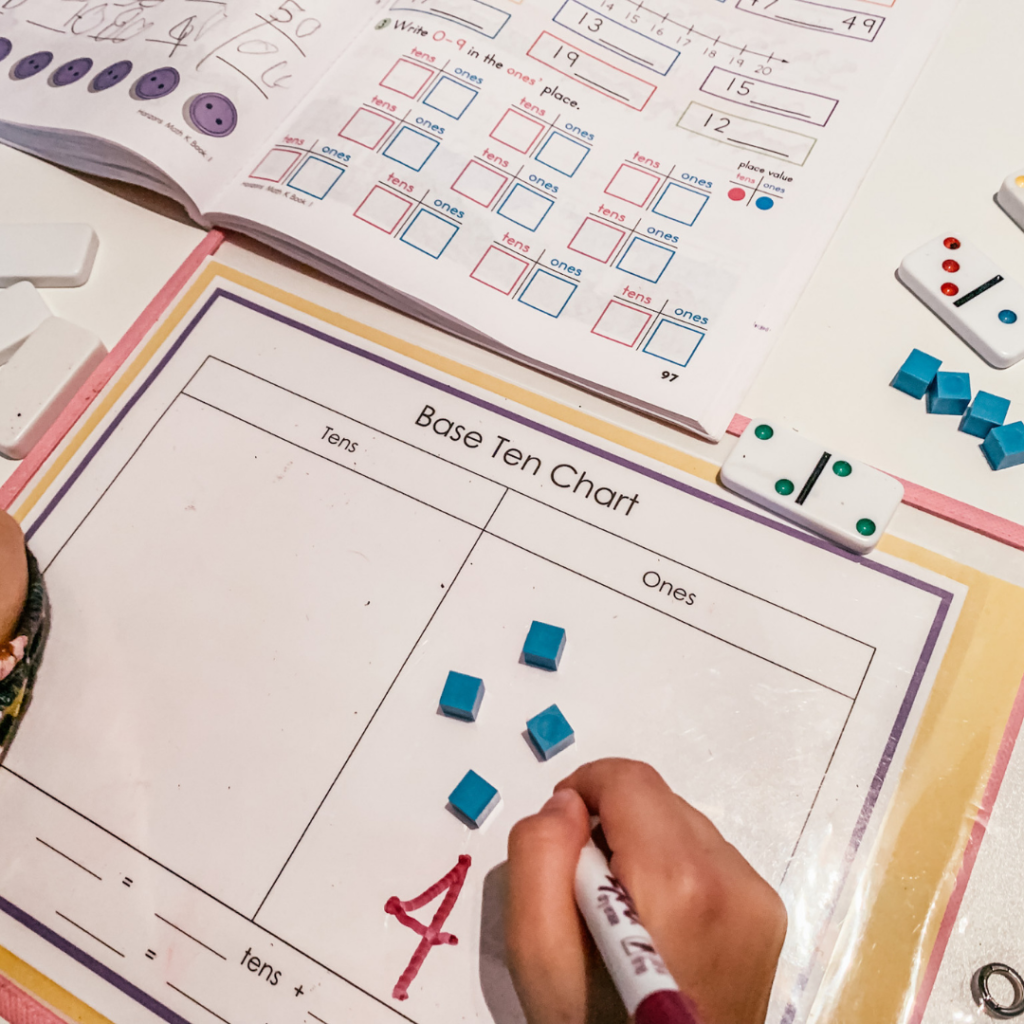
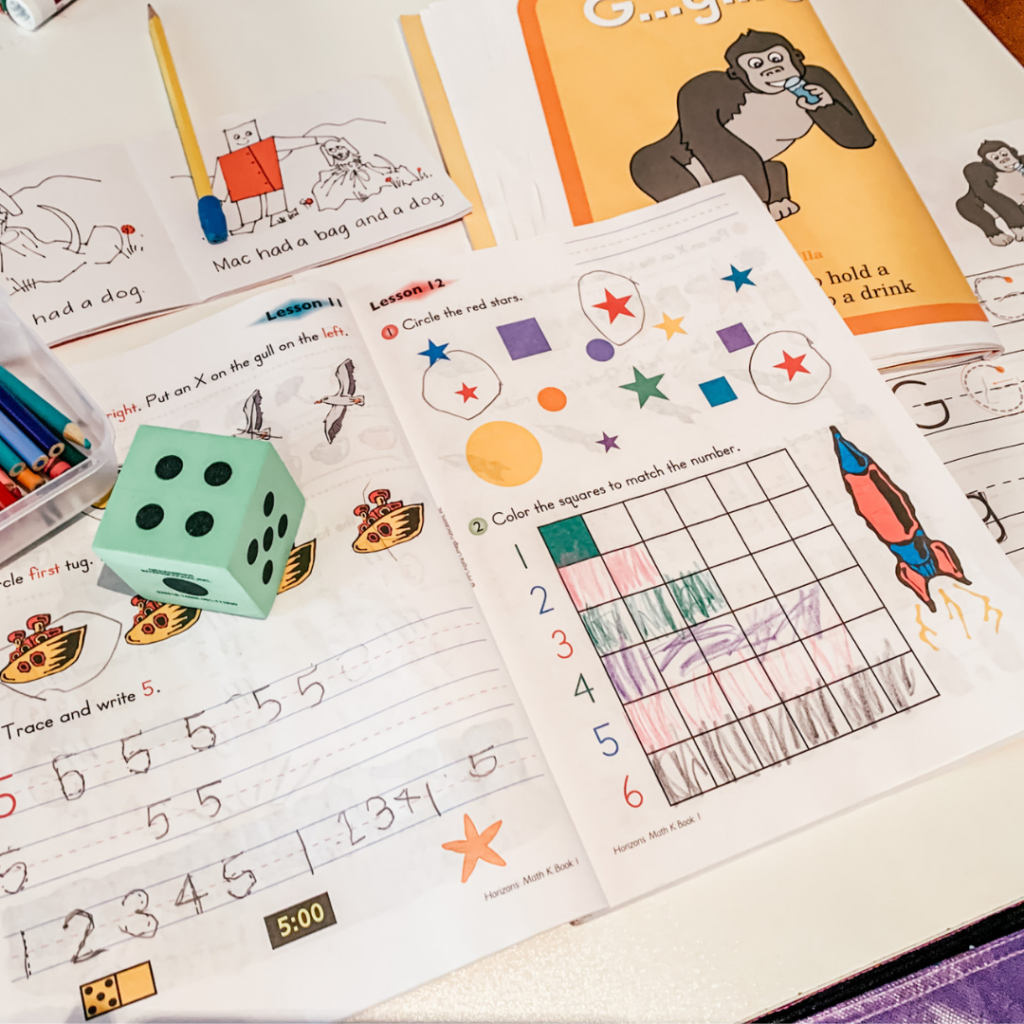
We started our school year the first week of August, and Horizons K starts very slow. It’s wonderful! The pictures are bright and colorful with just a few problems to complete in each section. It’s perfect. We can add a game to re-enforce a skill, and the lesson would be awesome.
Then, a few months in, it started moving very quickly. I tried not to worry. Horizons is set up in a spiral review format, so I knew she’d be getting practice again and again.
I put a large amount of energy into making it work for us.
It was tough to get through a lesson, mostly because it was a lot of problems to get through. We went outside. We played games. We added manipulatives and more movement.
The effort was worth it! We definitely enjoyed it more, but after a while, I could tell it had nothing to do with how “fun” it was anymore…
We took a couple weeks off to re-group and connect
Maybe I was trying too hard. It’s possible I was setting my expectations too high. I was dreading our math lessons, and I knew we needed a break. I prayed about it so much.
Those two weeks were needed. I highly suggest a break when you’re feeling confused about something in your homeschool. Connect with your kiddos and relax. It’s so refreshing and so helpful!
We didn’t do math for two weeks, and then the best thing happened. She ASKED to start again. YES! Ok, this is great. It’s exactly what I wanted. We jumped back in and pushed through.
Just a couple of weeks into January and she was moving on to Book 2. Woohoo! I was a proud mama, and she worked so hard to get there.
But book 2 is a whole new ball game.
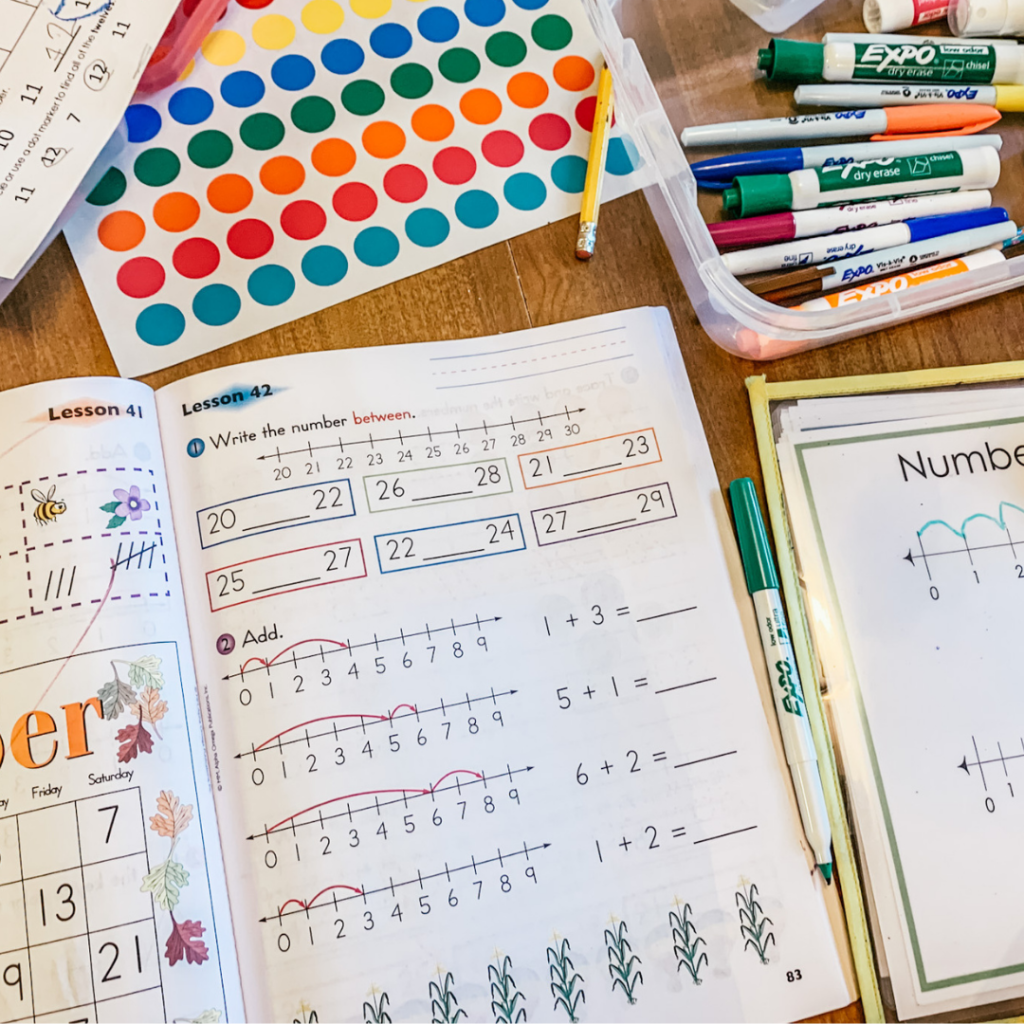
The work practically triples! What used to take us 15 minutes was now taking 45 minutes to an hour. On top of it, I kept feeling like we needed to go back! She needed to keep working on things she’d learned in book one. It felt too soon to be adding in brand new material.
Maybe you’re thinking I should’ve just not made her do all of the problems, and I’m all about that! Sometimes, I cut out half the work in our second grader’s workbook. However, if I feel like the practice is necessary, I want her to do it. I can’t cut the work if full understanding is not there.
It was this weird balance of trying to build her skills and confidence while also not pushing her too hard.
I really don’t remember it moving that fast when my oldest completed it three years ago. Of course it did, but as a new homeschooling mama at that time, I’m betting I just kept encouraging her to keep going- We had to finish. (Or so I thought.)
I’m thankful I know better now. We don’t have to just keep going. I have the freedom to make the changes needed to best fit the needs of my kids.
You know, I really don’t like swapping curriculum mid-year.
I’ve done it once before, and there’s this awkward phase of trying to figure out where to start in the new curriculum and figuring out how the new book works. It’s a scary commitment to me and a big decision! I don’t want to flip-flop from book to book.
There’s a part of me that feels like I’ve done something wrong. Did I do enough? (Isn’t that the million dollar homeschool question!?) I just have to keep reminding myself though that I know my child best.
As you can see, this has been a prayer of mine for months. I don’t think it’s coincidence that something keeps prodding me to change what we are doing. It’s no mistake that it suddenly felt very clear that we needed to pick something else. I truly feel God leading me to this next step in our homeschool.
So, what now?
Well, I have researched a lot of math curriculum over the years. I really do enjoy learning about it. There’s one other program that I’ve thought about using, because it is set up in a simple, spiral review format as well. I’m referring to Christian Light Education.
As I looked through Christian Light’s kindergarten program, I immediately went to their sample books and My. Jaw. Dropped!
Three quarters of the way through the units, and we would be counting dots on a domino for math. Wait…what?! We were past that. WAY past that.
Two feelings came over me. 1) That’s way too easy for her! 2) Oh my goodness, I feel awful that I’ve been pushing my daughter so hard.
In order to practice the skills that my daughter needed, I had to purchase the level one book. I’m talking- skills we learned back in August. WOW! This program was at a completely different pace! I felt so weird getting level one, but as I reviewed the scope and sequence over and over, I knew it was a good fit.
Honestly, even level one is MUCH easier than what we are doing now, but I want to start slow. I am not in a rush. This was even more proof to me that I made the right decision. Horizons was very advanced.
My goal for the end of the year is simple and easy-going.
I have hopes to work through book one and book two of CLE to end this year. Then, we will take a summer break and I’ll pick up where we left off for her first grade year.
It’s kind of nice because normally so much time is wasted reviewing at the beginning of the year. In our case, we are doing that at the end of this year and moving forward at the start of next!
This is very new to us. I plan to update you guys soon on how it’s working for us.
Let me go on one short rant here…
First, always make the decision that’s best for your kid. Stop thinking about how YOU feel (ahem…speaking to myself) and think about your child’s needs.
Every. Child. Is. Different. Like WAY different – I have four completely different kiddos in my home, and I am so grateful that God has chosen me to be their mother. He has given each of them their unique gifts and abilities, and it is my joy and pleasure to help them grow up and live out the purpose he has set for them.
My oldest child is a numbers girl. Math comes easy for her. I only bring this up because Horizons has been amazing for her, and we plan to stick with it. This is proof that it really is about the child. As much as I love Horizons, I’ve learned it may not work for all four of my kids the same.
Think about what brought you here to this post. You probably have something on your mind about math, whether its what curriculum to buy or which one to stop! If you haven’t prayed about it, take a minute and do it. My homeschool changed drastically for the better when I started praying about specific needs in my homeschool. (God is so faithful!)
I am not one to say, “Yes! Change it! Get something new!” But, sometimes, we just know that it’s not a good fit.
There’s so many options out there! Sometimes I wish I could just have a little taste of all of them in one book. Wouldn’t that be nice? Here’s the thing – no curriculum is going to be perfect for you. Not ONE. So, pray about the steps to take in making it work. Does that mean changing it up a bit? Shortening the lesson? Adding in games? Switching to every other day?
Or…does that mean it’s time for a bigger change? It took me almost three months to finally say yes, but I’m so glad I did.
Cookie Consent
We use cookies to improve your experience on our site. By using our site, you consent to cookies.
Cookie Preferences
Manage your cookie preferences below:
Essential cookies enable basic functions and are necessary for the proper function of the website.
Name
Description
Duration
Cookie Preferences
This cookie is used to store the user's cookie consent preferences.
30 days
These cookies are needed for adding comments on this website.
Name
Description
Duration
comment_author
Used to track the user across multiple sessions.
Session
comment_author_email
Used to track the user across multiple sessions.
Session
comment_author_url
Used to track the user across multiple sessions.
Session
WooCommerce is a customizable eCommerce platform for building online stores using WordPress.
Name
Description
Duration
wp_woocommerce_session_
Contains a unique code for each customer so that it knows where to find the cart data in the database for each customer.
2 days
woocommerce_recently_viewed
Powers the Recent Viewed Products widget
session
store_notice
Allows customers to dismiss the Store Notice.
session
woocommerce_snooze_suggestions__
Allows dashboard users to dismiss Marketplace suggestions, if enabled.
2 days
woocommerce_dismissed_suggestions__
Count of suggestion dismissals, if enabled.
1 month
woocommerce_cart_hash
Helps WooCommerce determine when cart contents/data changes.
session
woocommerce_items_in_cart
Helps WooCommerce determine when cart contents/data changes.
session
WPForms is a user-friendly WordPress plugin for creating custom forms with drag-and-drop functionality.
Name
Description
Duration
wpfuuid
Used to track user interactions with forms.
11 years
Statistics cookies collect information anonymously. This information helps us understand how visitors use our website.
SourceBuster is used by WooCommerce for order attribution based on user source.
Name
Description
Duration
sbjs_session
The number of page views in this session and the current page path
30 minutes
sbjs_udata
Information about the visitor’s user agent, such as IP, the browser, and the device type
session
sbjs_first
Traffic origin information for the visitor’s first visit to your store (only applicable if the visitor returns before the session expires)
session
sbjs_current
Traffic origin information for the visitor’s current visit to your store
session
sbjs_first_add
Timestamp, referring URL, and entry page for your visitor’s first visit to your store (only applicable if the visitor returns before the session expires)
session
sbjs_current_add
Timestamp, referring URL, and entry page for your visitor’s current visit to your store
session
sbjs_migrations
Technical data to help with migrations between different versions of the tracking feature