Posted on 2 Comments

11 Flash Cards Games To Add To Your Math Lesson

flash card games

You can get flash cards at the dollar store! They’re an inexpensive tool to practice math facts. Let’s steer away from the old, boring drill method and find ways to add in some fun with these 11 flash card games!

If your math book has a section to practice basic facts, try replacing it with one of these flash card games. Get out of the textbook and move around! Having go-to activities like this make it easy to add excitement to learning.

My first grader is using addition and subtraction flash cards. I can do the same activities for my preschooler with simple number/counting cards. You can purchase them through the links or just make a trip to the dollar store and get them cheaper!

This post contains affiliate links. If you follow one of my links I earn a small commission at no extra cost to you. Thank you for supporting my blog!
number line

1. Giant Number Line

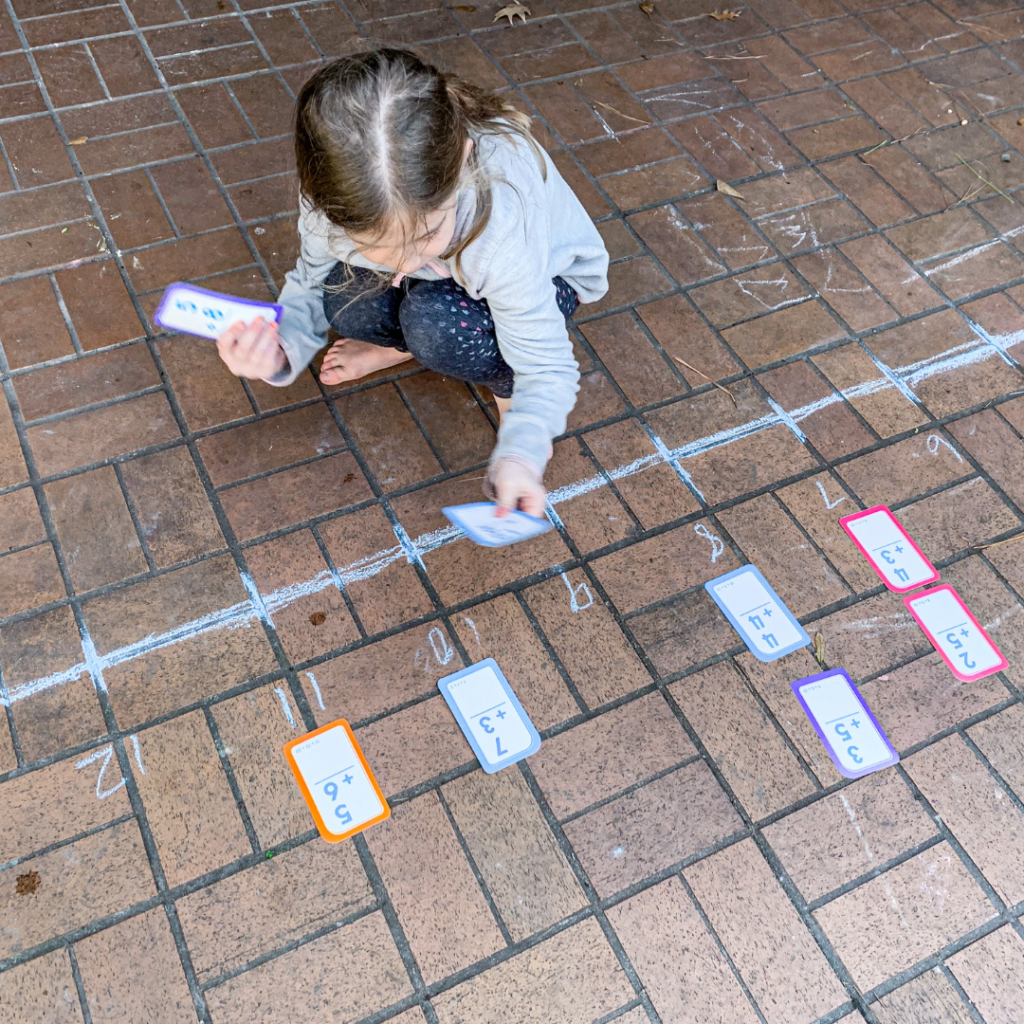
Create a giant number line. We did this with sidewalk chalk, but you could also tape sheets of paper together. I just love getting outside whenever we can. Number the line based on your flash cards. For example, 1-20 would be good for addition and subtraction for early elementary. If you’re doing multiplication, number it by 2s or 5s…whatever works best.

Have your child pick a flash card and solve it. Place the card on the number line according to it’s answer. So, 2+3 would go on the 5. Some of your cards will have the same answer, and that’s okay. Just stack them on top of each other or in a straight line.
flash card game

2. The Floor is Lava

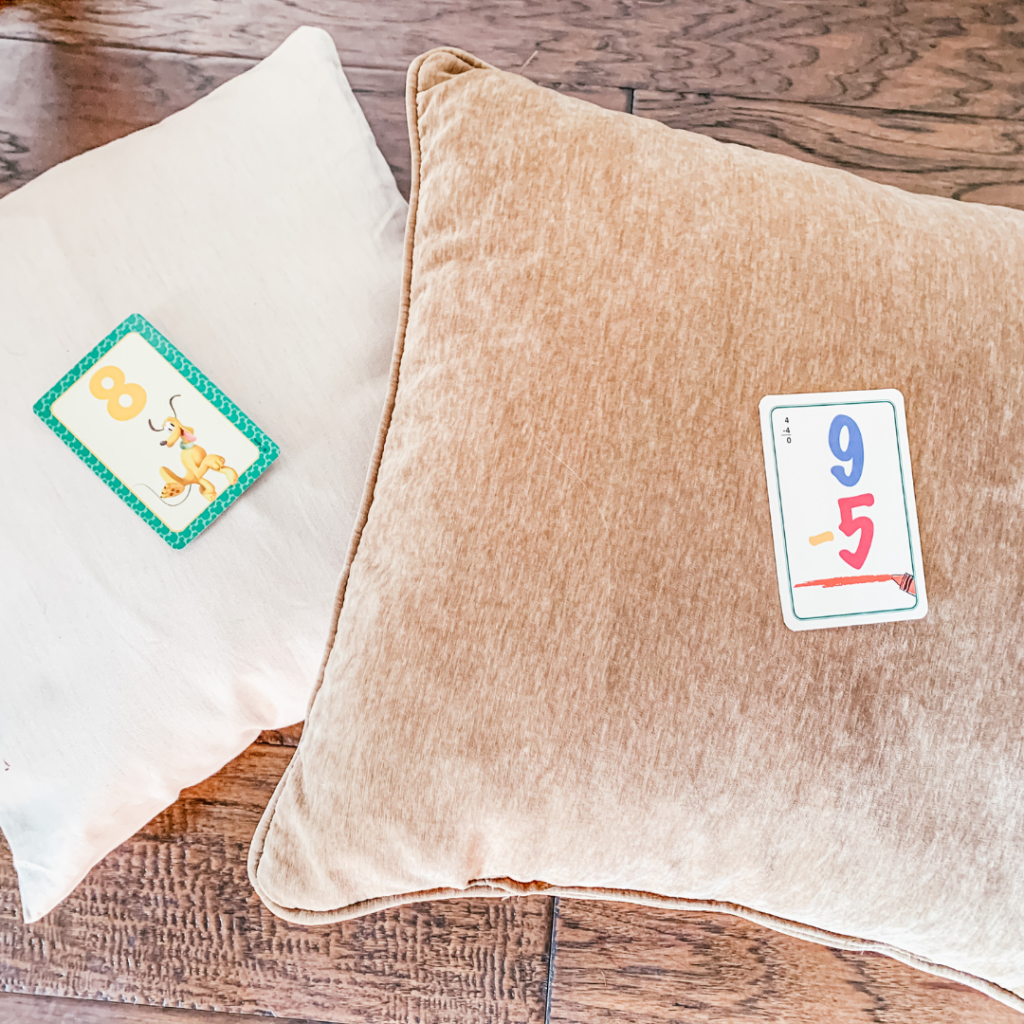
Don’t you remember playing this as a kid? Gather as many pillows as you can and place them on the floor. Make sure to spread them out. Place a flash card on every pillow. Your child will jump from pillow to pillow solving math problems. It sounds so simple, but it is SO fun!

Once he/she gets to the end, jump all the way back to the start – don’t fall in the lava!! Since I introduced this game to my girls, they’re always asking to play!
flash card game

3. Shaving Cream

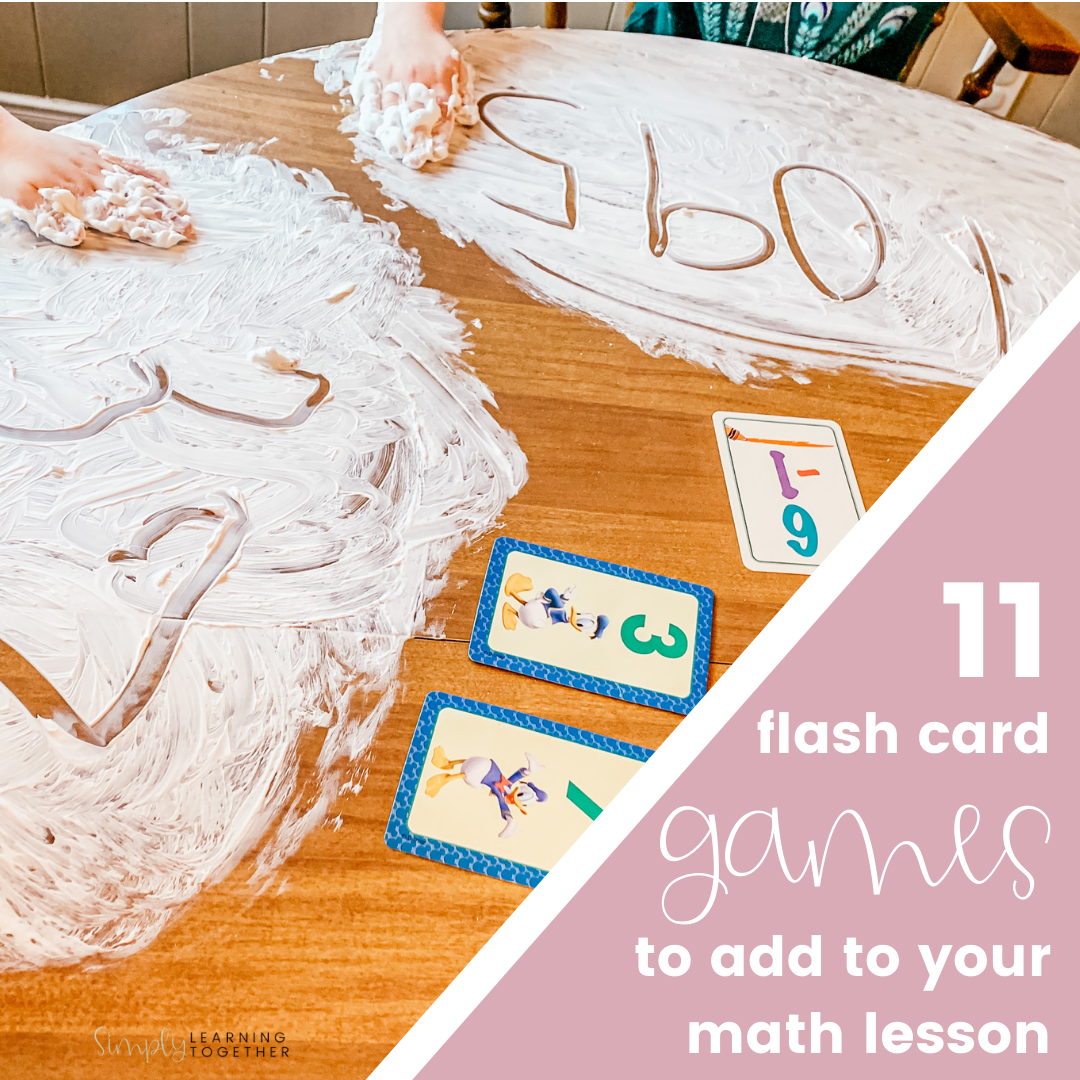
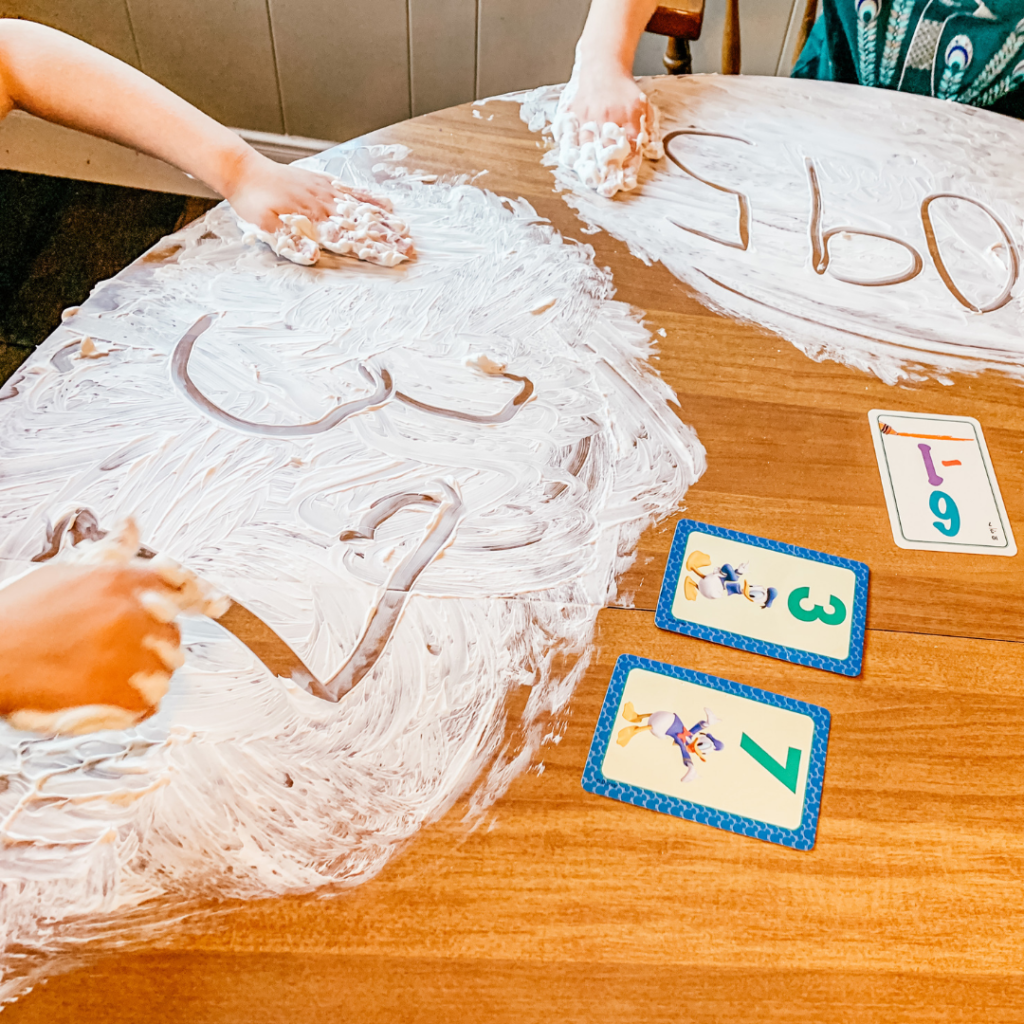
I’m a huge fan of shaving cream. You’ll probably read about it a lot here, but it’s because you can do so much with it, and it’s a blast. It’s another dollar store treasure! Now, you’ll have to help with this, because you’ll be the only one with clean hands.

Every time I spray shaving cream on the table, I always allow a minute or two of just free play. It helps!

Place 2-4 cards in front of your child. He/She can write the answer in the shaving cream. Erase and repeat.

Change it up: Siblings can challenge each other. Or, have your child write a problem and you solve it. They’re the teacher, so it’s important to check your work. (See what I did there? They’re solving it too!)
flash card activities

4. Dry Erase Pocket

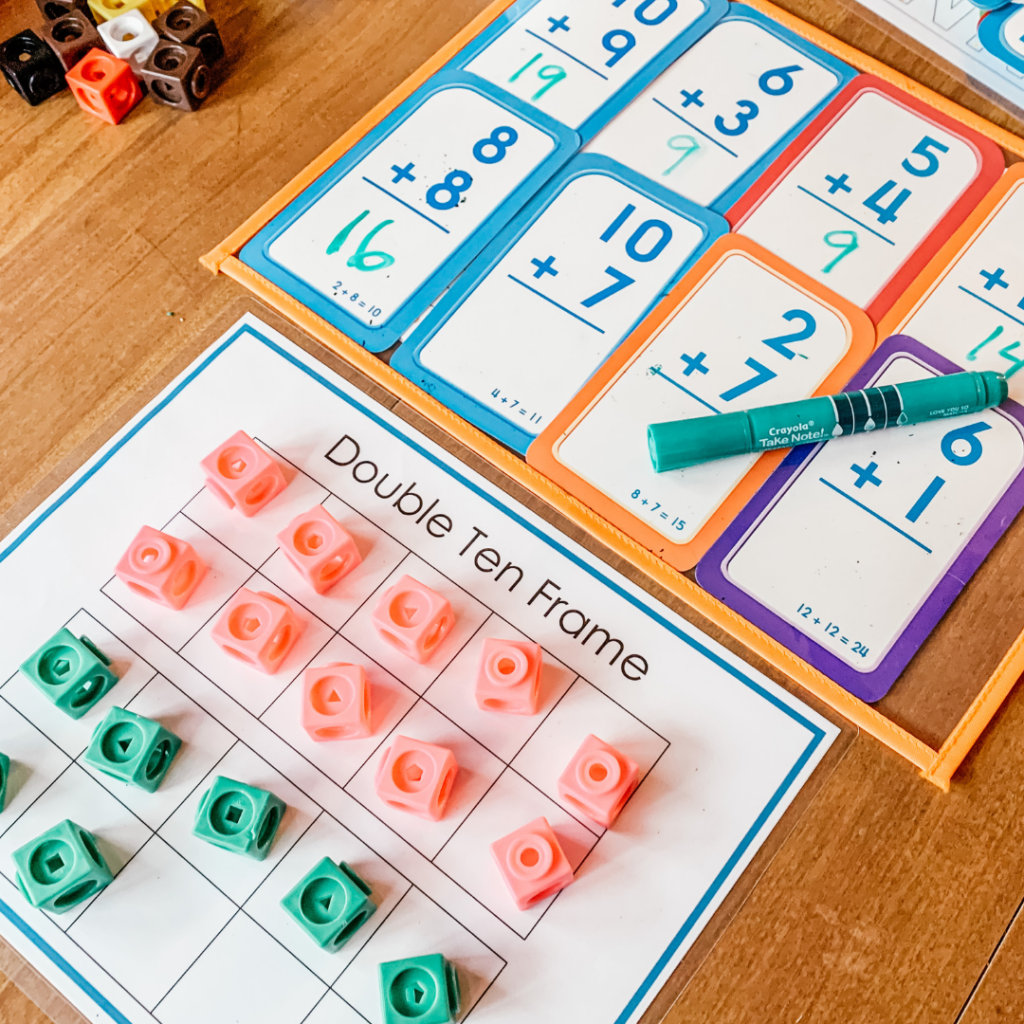
If you don’t have dry erase pockets at home, they are totally worth the cost. Place as many flash cards as you can in the dry erase pocket. Have your child write the answer on the cards. This is great for independent work.

Use manipulatives alongside the cards. For example, print out a ten frame and solve. (Get a ten frame FREE in my shop.)

If your flash cards are double sided, flip the pocket over and do the back!

5. Battle/War Game

This is just like the traditional card game. Two people go against each other and flip a card. The highest card wins. I even had my girls play against each other with different cards. My preschooler had just a number and my first grader had an addition problem. Adjust it so that it works for your children.

scavenger hunt

6. Scavenger Hunt

Hide the cards around your room/house. Have your child find the cards. Once a card is found, write the problem and answer onto a paper, clipboard, notebook – anything!

The important thing is don’t forget where you hid them! Been there, done that.
flash card game

7. Squirt the Answer

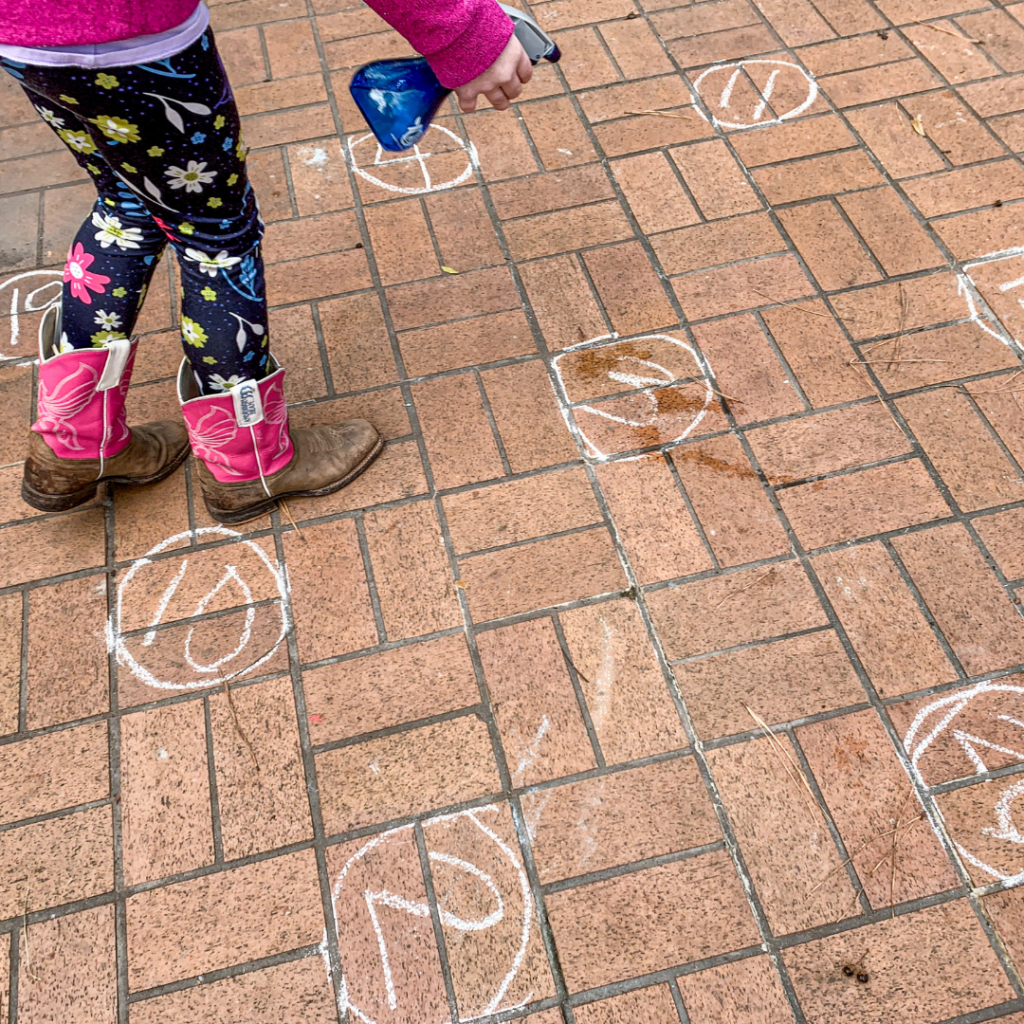
This will take a minute or two of prep. It’s an outside flash card game using sidewalk chalk and a spray bottle (dollar store! See a pattern?). Write the answers to your flash cards on your driveway/patio. Spread them out to encourage a little movement.

For Addition/Subtraction, I would write 1-20. This would be great for my preschooler as well learning numbers 1-20.

For multiplication, you can write the products.

Now, show a flashcard, and when your child solves it, he/she will spray that number. It doesn’t have to be washed away completely, because it will probably get sprayed again.

You could also do it backwards. Show a number card (Let’s say 8) and your child can spray all of the addition problems that equal 8! (2+6, 4+4, 3+5…and so on!) It’s a great way to memorize basic facts.
flash card game

8. Exercise!

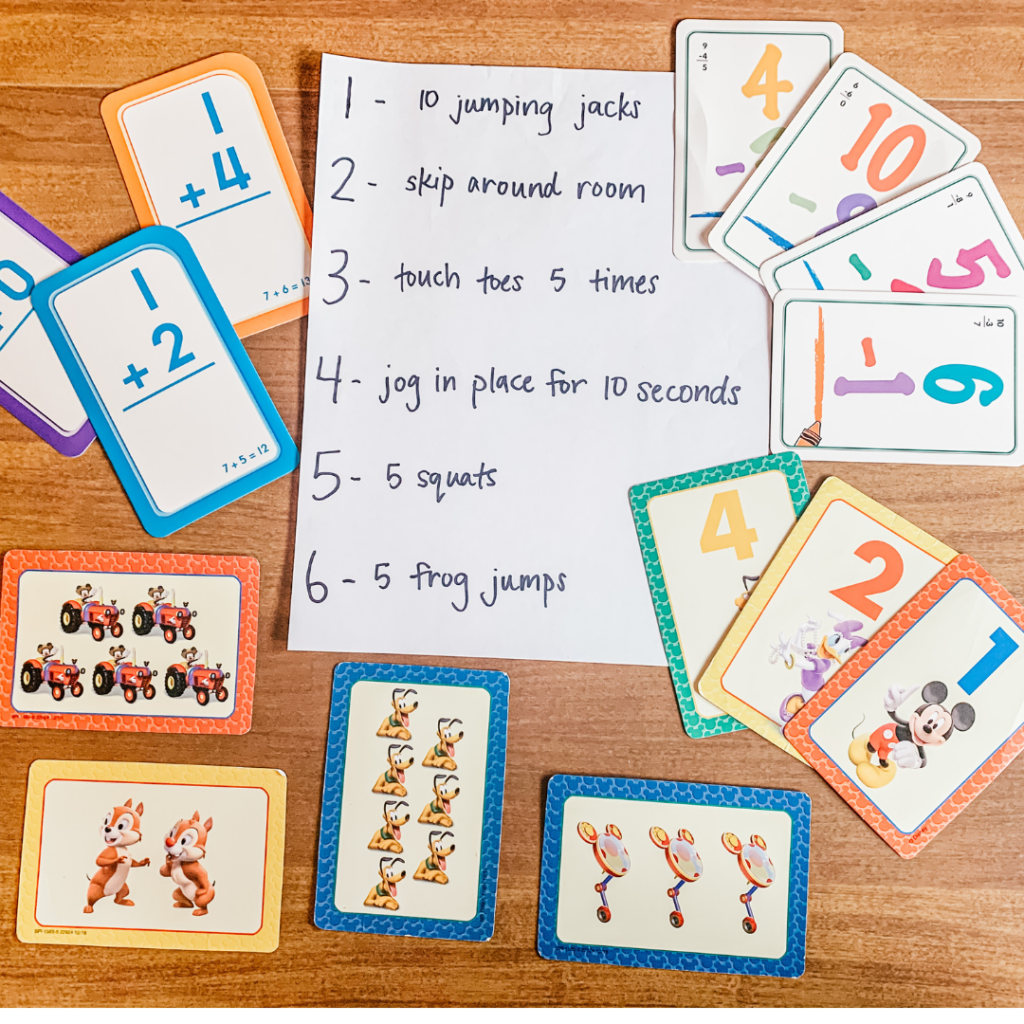
This is another great activity to get moving. I love exercise activities like these because my children usually forget we are actually learning. They’re having so much fun! You have to be intentional with this one. Pick the right kind of flash cards. I used addition cards and found about 15 cards that had the sum of 1-6. Next, I made a key and gave each number (1-6) an exercise.

Show the flash card and have your child answer. Whatever the answer is, that is the exercise you complete.

You could find cards with the sum of 10-20 if you want to make it more challenging. If you wanted you could do 1-20! You would just have to come up with 20 different exercises.

For multiplication you could set it up to where you give a range. For example, if the product is between 10-20, you do jumping jacks. If the product is between 20-30, you skip around the room, and so on…

Have fun with this! Join in if you’d like – it’s an easy way to add a little exercise into your day. It would also be a PERFECT rainy day activity.

9. Sidewalk Solving (or Driveway)

If you have a sidewalk in front of your house, this could be so fun. We do not, but I was able to set up some giant squares with chalk in our driveway The concept is simple. Give your child some sidewalk chalk and place a flash card in each square. Your child will walk to each square solving the flash cards and writing the answer in the square.

This would also be great writing practice for your preschooler. Place number cards in the squares to practice writing a number.

5

10. Comparing

This activity compares two flash cards. The supplies needed are flash cards and popsicle sticks. If you don’t have the sticks, use anything with that shape (crayons, sticks, pencils, toothpicks…)

I set mine up around the table. Each spot had two flashcards and two sticks. My first grader solved each card and wrote her answer on a white board to help her remember. Next, she shaped the sticks into the correct comparison sign: greater than, less than, or equal to.
flash cards

11. Building Blocks

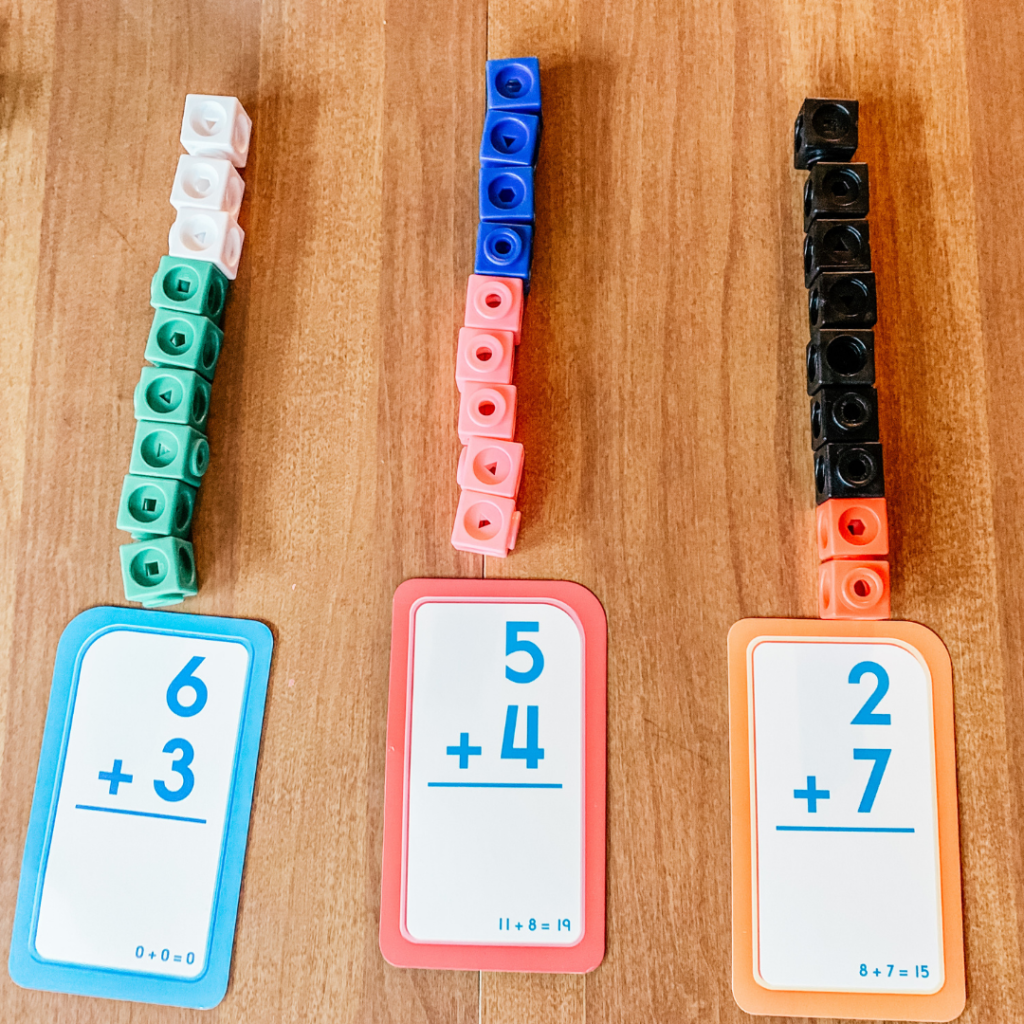
Pick any type of building blocks: legos, wooden blocks, math cubes, PicassoTiles… This is a great activity for addition flash cards or simple counting. Lay a few cards out on the floor/table. Use the blocks to visualize the problem. Here’s an example – The flashcard says 5+4. Pick 5 blocks in one color and 4 blocks in another. Then, solve.
Posted on

Simple DIY Valentine’s Day Activities for Every Subject

homeschool valentine's day

Valentine’s Day is almost here, and it’s always fun to prepare something special to celebrate. There have been times when I’ve hunted around for different activities to print and cut and prepare…but I end up searching and searching and wasting time. I want it to be simple and in one place. So, I’m sharing a Valentine’s Day activity that you can do for just about every subject.

All you need is materials around your house – the prep is easy!

Some of the activities require a teensy bit of prep from you, but go ahead and look through – decide which are your favorites and how to best plan for them. I’ve recorded a video of myself doing the actual prep. It’s a time lapse video, so I obviously don’t move that fast, but the real time of setting all of these activities up was about 30 minutes. That’s not bad – 30 minutes of planning and you have an entire day’s worth of Valentine’s Day learning! It’s worth it.

Simple DIY Valentine's Day Activities for your Homeschool

Bible/Devotion – “Love is…”

Read 1 Corinthians 13:4-7. You are going to be discussing what love is and isn’t. The verse will state just that. Now, get ready to get a little messy. Sit at a table/counter and spray shaving cream on the top. Give your kids a minute to just mix it around and enjoy.

Talk about each of the words describing love and have your child write the word in the shaving cream. If you have a younger child, you could have him/her write the first letter. For example, love is “patient” (P), love is “kind” (K). If you wanted to speed it along a bit and you have multiple children, you could give each child a different word.

Here’s the trick – don’t let them erase and play until you discuss an example of each trait. So one might say, “I can be patient when I wait for my turn with the toy.”

The bible also talks about what love is NOT. While discussing these, put an “X” through the words and discuss their meaning.

The best way to clean up is with a wet washcloth. Just wipe and rinse a few times, and you’ll be all set. Whatever room you are in will smell quite delightful. To close the lesson, remind your children of our greatest Valentine, Jesus. Just as we erase the words, He wipes our sins clean and forgives us. He loved us so much that he died on the cross to save us. Read John 3:16. “For God so LOVED…”

Math – Matching Hearts

4 1

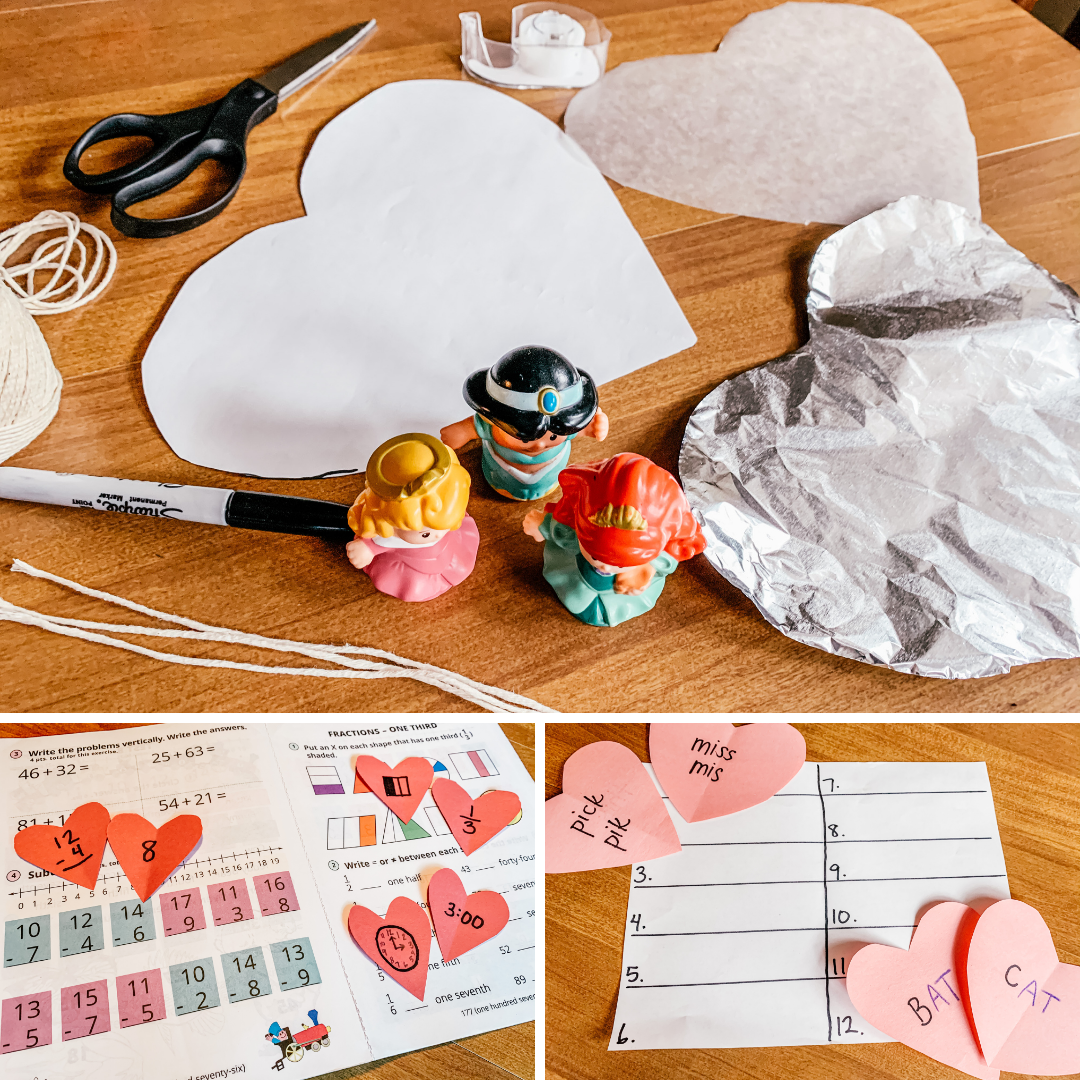
You need 5-10 minutes to prep for this. (See Video) Grab 4-5 sheets of red/pink paper. Stack them together and fold hot dog style. (That’s the long way.) Cut out four hearts along the crease.

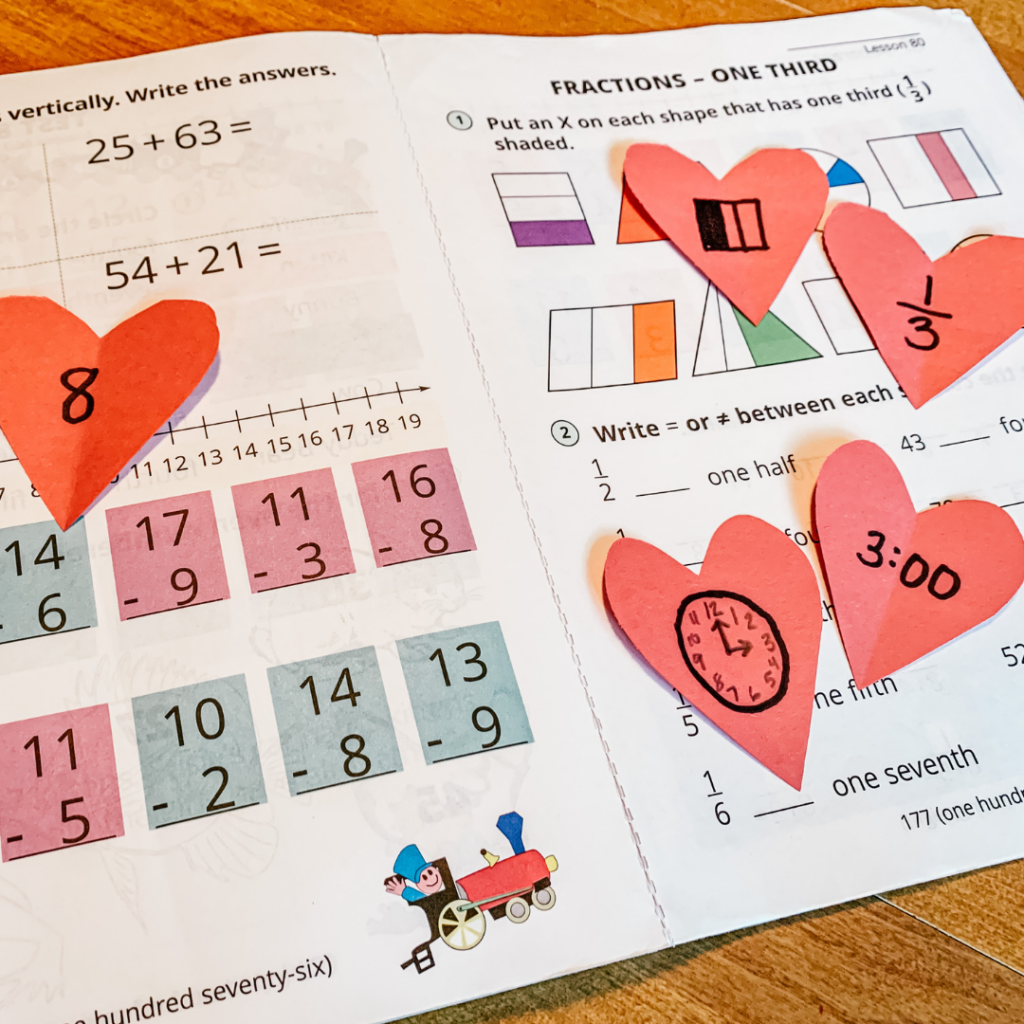
Think about what your child is practicing in math. Use the hearts to make matching sets. Get the problems straight from the math book. You don’t have to come up with it on your own! Maybe your child is in first grade like mine and you’re practicing basic addition and subtraction, telling time, or fractions. Write the math problem on one heart and the solution on another. That makes a match. Make as many as you please. Ten is a good goal, but more won’t hurt.

If you have a preschooler, practice numbers and counting. A match could be four circles on one and the number four on another. Or, match shapes. Maybe you’re ready to start some simple addition. Pick an activity that will best benefit your child.

Language Arts – Write the Room

3 1

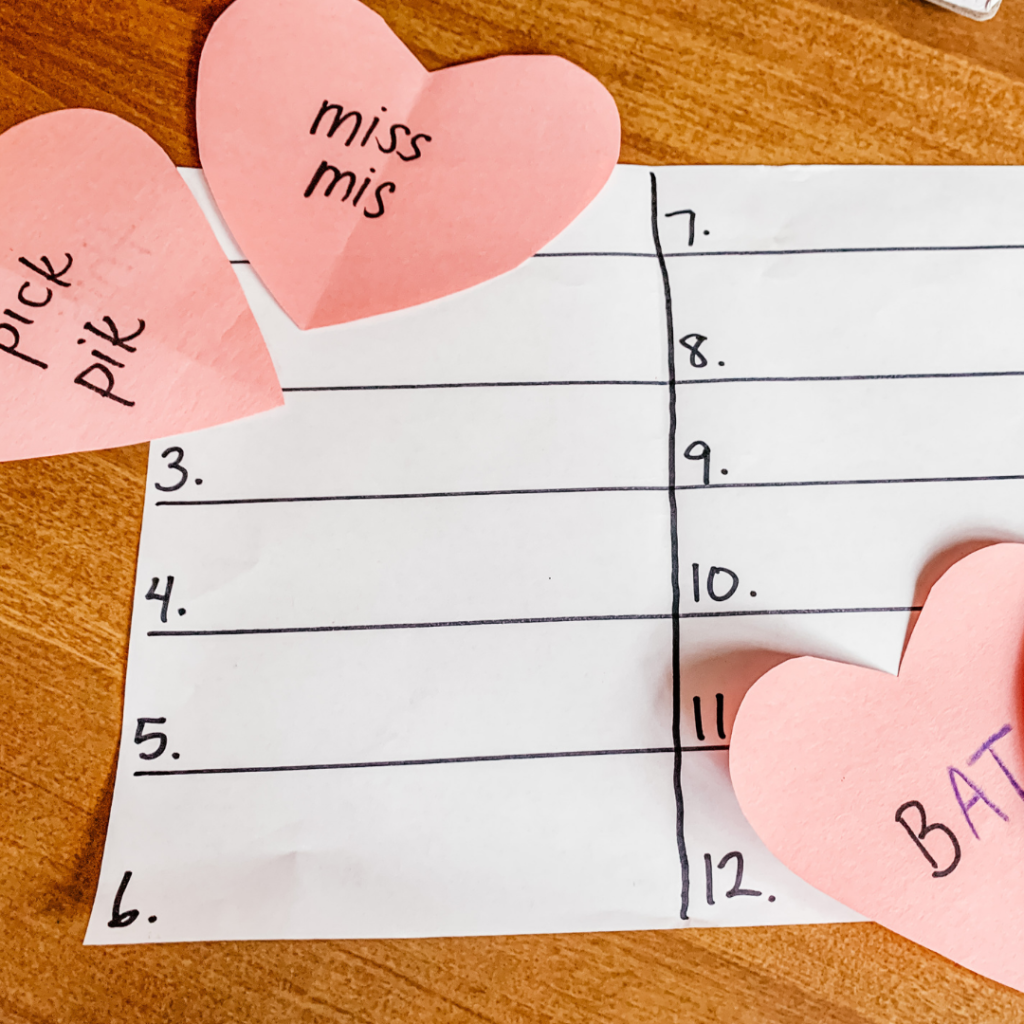
You’ll need more paper hearts for this, but you can change the color to mix it up! (See Video) If you’ve never played write the room, I’m so excited for you to try it. It’s a favorite in our house. The way it works is there are words/prompts placed around the room. The child goes around and writes the word or an answer onto a recording sheet. It’s a great way to get moving.

Once again, use your curriculum to see what you’re child is practicing. Maybe it’s CVC words, consonant digraphs, blends, sight words. Little ones can write letters or draw pictures. Prep your paper hearts with the words and tape them around the room. To help your child stay organized, it’s best if you number the hearts and number the recording sheet. When you’re ready, let them loose!

Writing/Handwriting – Send a Valentine

Send someone special a letter for Valentine’s Day. Discuss the components of writing a letter. Challenge your student based on their writing abilities. You can always help as needed. Send it through the mail. This will give you even more teaching moments as you talk about addressing an envelope and putting it in the mailbox. Don’t forget a stamp!

Snack Time – Cookies or Fruit

I’ll share a couple options and you can decide what works for you. Or, do both! First, my favorite is always baking cookies to decorate. Make it really simple and buy the package of dough/mix at the store. There is no shame in that. You have an exciting day ahead! (Also, it’s just easier!) If you have cookie cutter hearts, you can use them. Otherwise, just make a regular cookie and you can have your kids decorate with pink/red icing and sprinkles.

Another option is to cut up bite size pieces of fruit. Give your child a plate and have them create a heart shape with the pieces. Then, of course, eat and enjoy – so simple!

Art/Craft – Painting Hearts

This time let’s have the kids cut the hearts! Teach them the process. Fold a piece of paper and talk about symmetry – that’s a good word! Each child will need 2-3 different sized hearts. I found this craft from A Dab of Glue Will Do, and you can see it here. You’ll be taping the hearts to a piece of paper and painting all around it. Be sure to paint the borders of the heart first. When your child finishes painting, remove the hearts for a fancy reveal!

You can paint thumb prints as the site suggests, or try painting with anything! Cotton balls, q-tips, sponges, paintbrushes…get creative and let your child pick something fun and new.

History – Valentine’s Day

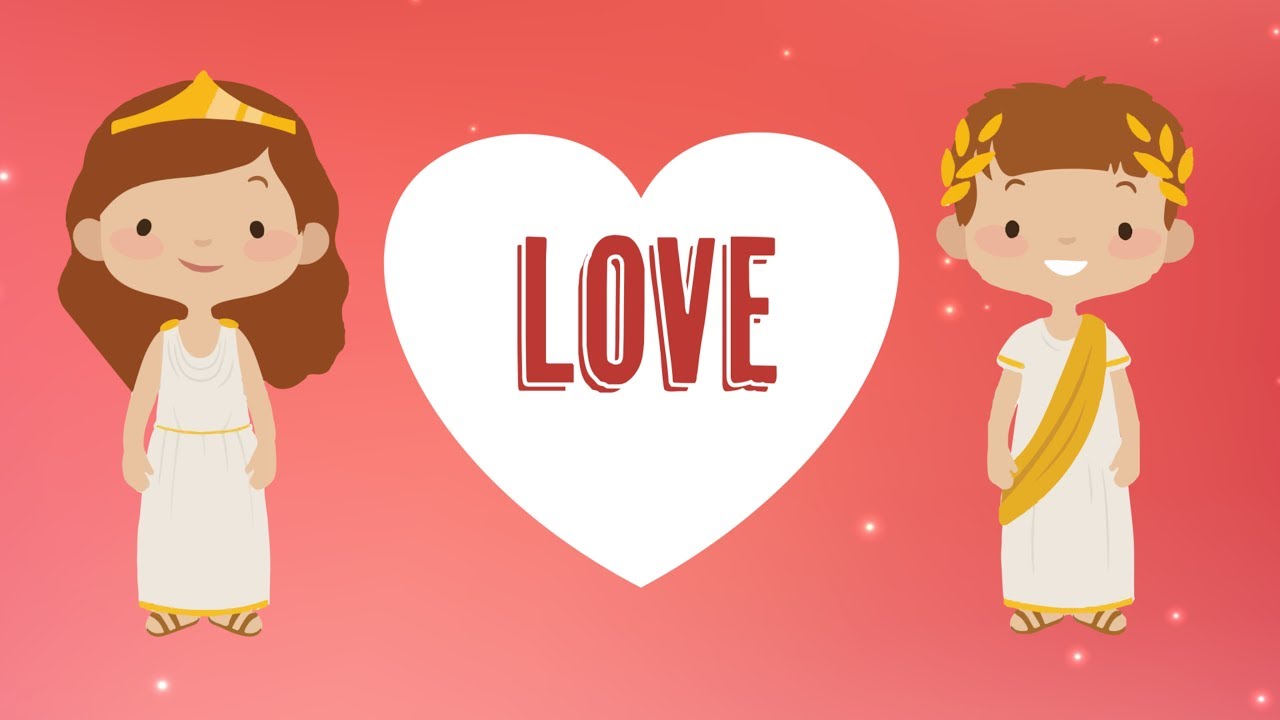
Whenever we want to learn more about a topic, I love using YouTube. There’s so much great stuff there, but just make sure to view it before your kids do. Below is a video I plan to show my children. It’s about a minute long. It’s a quick way to get a little history lesson in for the day, and it may bring up some fun discussions!

History of Valentine’s Day - Kid Friendly (Under 1 Minute)

Science – Heart Parachutes

2 1

This is a quick experiment you can do at home with stuff around the house. Those are my favorite kind. The question we will be answering is – How does the parachute material affect the flight of the toy? (See Video for prep)

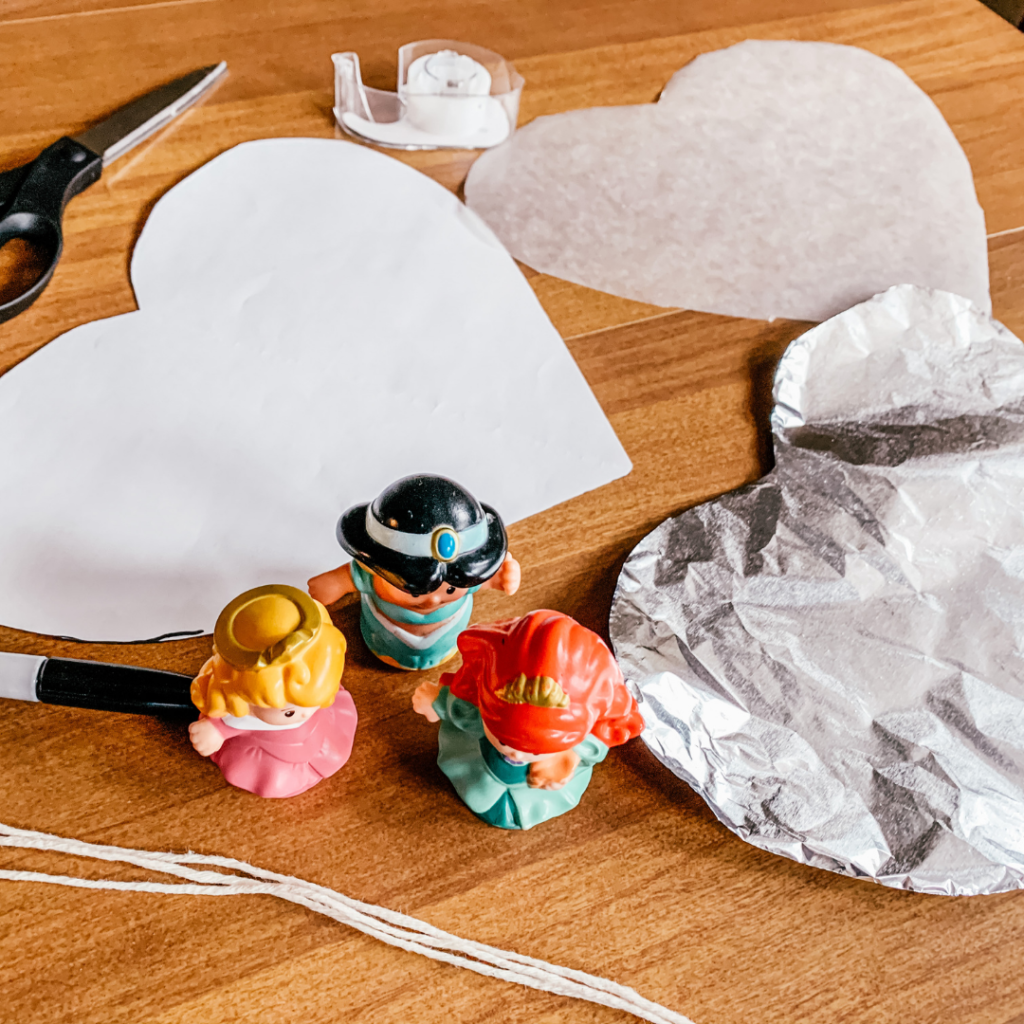
First, you’ll want to test at least three types of material. Start with an 8.5 x 11 in piece of paper and cut out as big of a heart as you can. Now, use that heart to measure your other materials and make the same shape. (foil, wax paper, cloth, constructions paper, plastic bag…) You should have at least three heart shapes in different materials – all the same size.

Next, gather string or yarn and cut three pieces for each parachute, all the same size. Tape the string to the top of the parachute. It’s best to spread them out in a triangular pattern. I used masking tape, and it worked just fine. Do your best to keep all the string the same size and taped the same way. These are our controlled variables (another great word! Go ahead – jump into that discussion as you do the experiment. The teaching moments are endless.)

Normally, you’d want to test these with the exact same object pulling on the parachute, but we are going to break the rules a bit and use an almost-exact-shaped-toy. You need three. We used the little fisher price princesses. They’re basically the same size, just painted differently. You could try army men, hot wheels, small dolls. Make sure it’s not too heavy. Tape the string to the toy.

Set it up like a winner-moves-on tournament. You can fly them over the railing on your stairs. Or, stand carefully on a chair. Observe which one flies in the air the longest. That’s the better parachute – not the faster one. The “winner” goes against the third parachute, and so on. I would test each flight about three-five times to make sure you have a clear winner. Here’s a quick tip – if your phone has a slow motion recording mode, you can record the flights and see the winner much easier. Plus, who doesn’t love a slo-mo video?

Once you tested them all, talk about why you think that material was the best!

It’s a whole day of celebrating and there was so. much. learning!

So, how fun does that sound? Which one is your favorite? Anyone think they’re up to doing ALL of them? The most important thing to remember is not to stress. If you’re worried about time, split it up into two days. Or, pick just one, and call it good. Don’t let it get you worked up about fitting it in. Whatever you decide to do, I’d love to hear about it. Leave a comment or share it with me on social media. Have a great Valentine’s Day!

valentine freebie

BONUS: Valentine’s Day FREEBIE!

Here’s a fantastic little activity book for your young learners this Valentine’s Day. Use dollar store stamps, stickers, or even manipulatives to add some hands-on fun! This freebie is only available for the month of February so get it while you can! Sign up for my email list and it will get sent right to your inbox today.

Sign up below for your Valentine’s Day Freebie!

Posted on

10 Tips for Homeschooling With an Infant

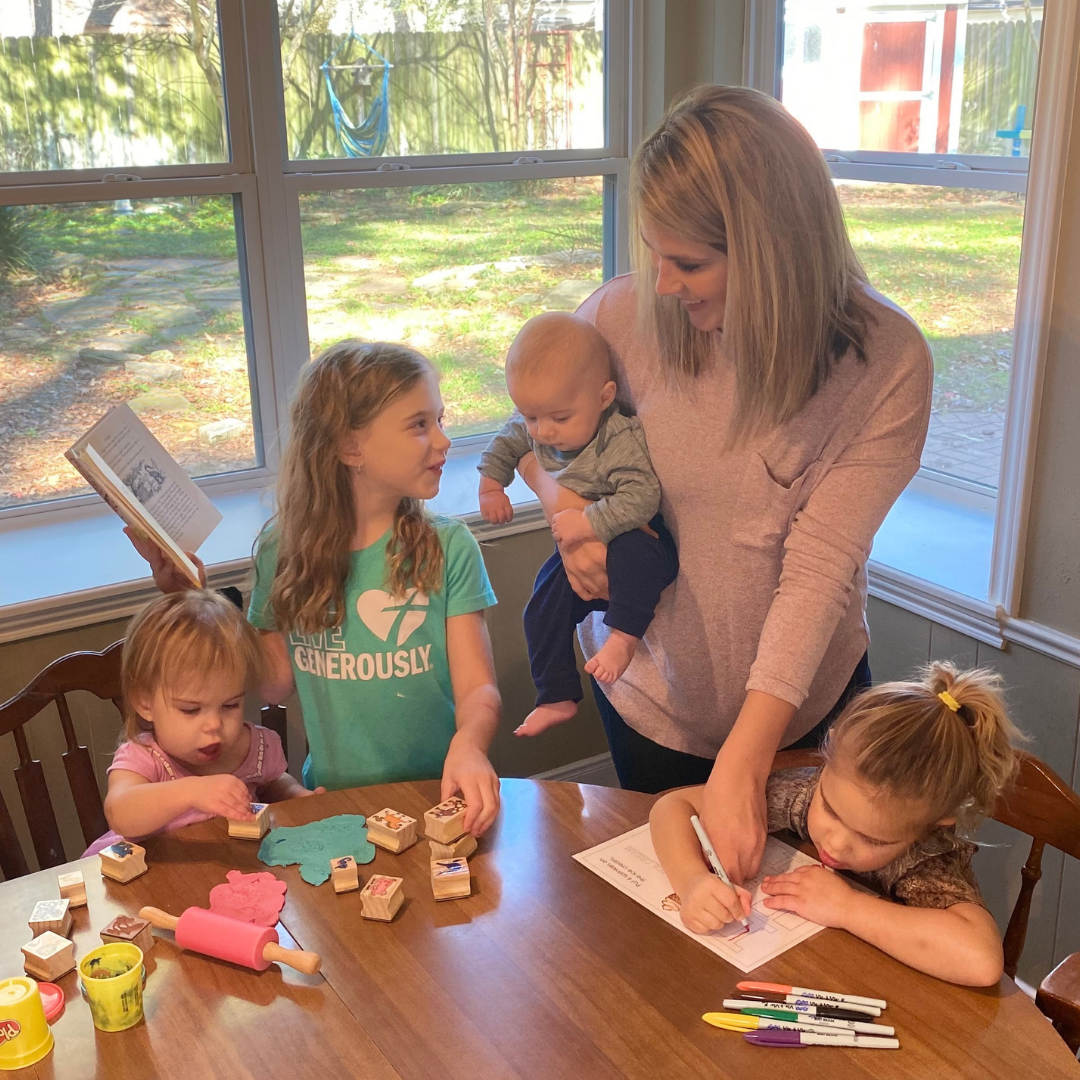
homeschool mom with infant

When I first found out I was pregnant with my fourth baby, I was immediately scared of what it would be like to homeschool with an infant at home with us. I knew it could be done, so I just prayed for that peace until the time came.

As I write this, my baby is 4 months old.

We are still adjusting our homeschool each day/week to accommodate the baby. We have great days and we have everyone-is-in-tears-bad days. So, although I don’t have the complete solution to making it 100% successful, I will share with you some things that have helped me while homeschooling with an infant.

1. Plan Ahead – Before the baby is born

The best thing I did was start our homeschool year early. My baby was due in September, and we normally take summers off and start mid August. However, with the baby arriving shortly after we started, I wanted to set up a good routine ahead of time. By starting a few weeks earlier than usual, I gave myself the confidence to take a break when the baby was born. We were able to get in a good 8-9 weeks of school before we paused, and I felt so much better knowing that was done.

2. Rest and Take a Break

Give yourself permission to just stop. Once that baby is born, you need to rest and recover. Your family is adjusting and changing, and it may feel a little crazy at times. REST. Don’t feel pressure to start school up again. (That’s why you planned ahead. See #1) Give your other children the freedom to create and use their imagination. Teach them how to be your big helpers. Let go of school.

3. Start Back to Homeschool SLOWLY

One thing I did after a couple of weeks was plan one “fun and new” thing to do the next day. It could be a craft, baking, a walk – nothing intense. It was one task for us to look forward to and complete together. The activity acted like a practice run for trying to add something into our day. You can also start a new read aloud. Focus on that and nothing else. The reading will be so good for the kids, and you can sit and recover.

Next, I would consider adding maybe one or two subjects at a time. There’s no need to jump into everything at once. Add your book work slowly. It will be less stress for everyone.

4. Wear Your Baby

Baby wearing is a game changer. I wish I did it more with my other children. If the baby isn’t taking a nap, I can always wear him and he will sleep on me while we need to finish something up. If we are out and about, I never worry about napping for this same reason. Plus, you get both hands when you wear baby! He is happy, all snuggled up to mom…it’s a win-win! I use a Baby K’Tan, and I couldn’t live without that thing. I’m not sure what I’m going to do when he gets too big for it!

5. Work on Sleep for Baby – But not right away

I am not good at sleep training, because I’m a bit of a sucker…I love rocking my babies. I am trying to start good sleep habits as best I can. It’s a slow process, but I do think it’s helpful. My third child was not the best sleeper and getting her to take a nap would take forever. I hope to set better routines with this baby. Although he is still not on a consistent schedule, he goes down for a nap pretty easy and that’s been so helpful!

Be patient with yourself. This is not going to happen quickly and easily. (This is also me giving myself advice as we are still working on this!)

6. Do NOT Try to Schedule Your Days

Just let it go…it’s not going to happen. I have to tell myself this daily! An infant does not have a set schedule. You can read all the books you want, but every single day is going to be different. One morning he will nap for 3 hours and the next morning will be 20 minutes. It’s going to be tricky to figure out how to plan everything out at first. (Another good reason to take a long break.) Once you get to know your baby better, try to develop a rhythm, not a schedule. This took about 6-8 weeks for me to “figure out.” (quoted because it’s still a work in progress) I will also let you know that my son is 4 months and still does not take consistent naps. It’s definitely tough to try and balance it all while also doing school, but this is all temporary. I feel like I’m going to blink and he will be turning one. The days are long, but the years are short.

7. Get Outside – Even You, Mama!

There is nothing like fresh air. God created us to be a part of this beautiful earth, and there is something so healing about experiencing His creation! It is so, so easy as a mom of a new baby to lock ourselves indoors and get wrapped up in feeding, and changing, and napping, and cooking, and cleaning, and burping, and wiping…..I’ve done it. Every. Time. Take some time each day to step outside. Breathe in that fresh air. Go on a walk. Sit on your back porch. Don’t stay cooped up inside.

8. Self-Care

I’ll admit, I’m not the best at this, but it really is necessary. Take time for yourself. This could be something as simple as taking a nice bath, or setting a goal to get dressed for the day! Or, you can go even further and schedule a nail/hair appointment. Set a date with some friends. Try to do these things regularly to give yourself that mental boost! Do something you love and take care of yourself so that you can take care of your home as your best self.

9. Find Your Support Squad

Find that friend that you can count on for anything – the one that’s been in similar shoes as you. Or, talk to the person you can totally be yourself with and let out any good/bad feelings you have. Get the support. I just love a good mom-chat with my girls. It makes me feel so renewed and happy. If you’re not able to feel better, talk to your doctor. Post-partum is so tough. Hormones are crazy and emotions are constantly on a roller coaster. Don’t hesitate to get the support that you need.

10. Lean on the Lord

This should be number one. I first titled this “Give yourself grace”, but then I realized, it’s not about you making yourself better. You can’t do it all. Nothing is going to fully prepare you and make it easy. It’s hard work having a baby. Add on homeschooling to your day, and it gets really tough to balance it all. I can leave you with these ten tips, but I’ll tell you this – I STILL struggle with a lot of them. I forget to take care of myself. I don’t always get fresh air. I don’t have the best napper/sleeper, and sometimes I just plan too much for the day! No one is perfect. Pray about this new transition. Let God take on your burdens and give you the strength for each day. Be kind to yourself and know that out of all the women in the world, God chose YOU to be the mama for your kids. YOU were the perfect pick for Him.