Posted on 4 Comments

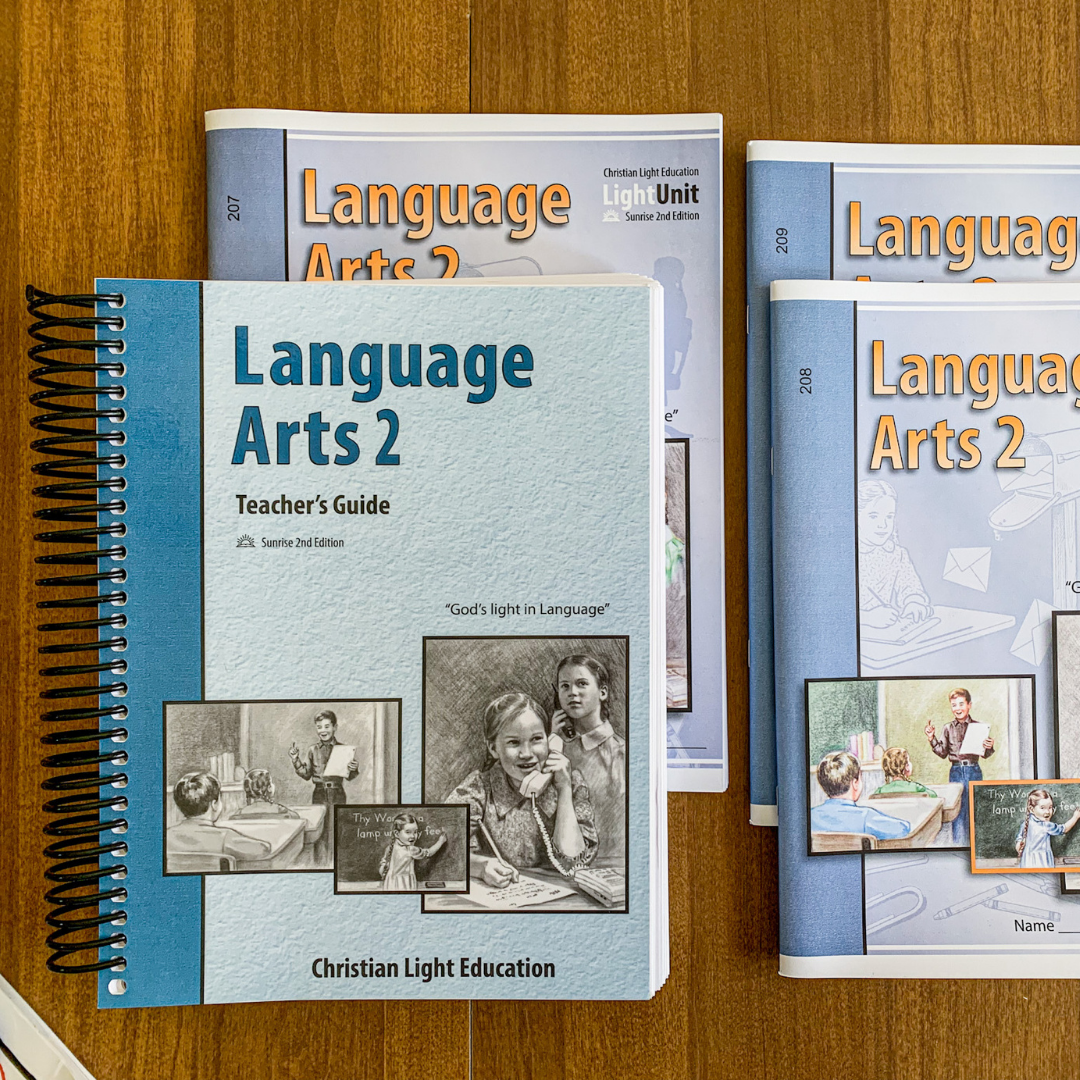
Christian Light Education Language Arts Review

christian light education

Christian Light Education really improved our second year of homeschooling for a variety of reasons. I picked it because it was inexpensive to try it out and it gave us the flexibility we needed.

We finished our first grade year with CLE and continued using it for second grade. The second grade level added quite a bit more that made the program even more thorough than I thought it was. In this post I hope to give you a very thorough description and honest review of the second grade program so that you can get a better idea of what it is.

If you’d rather watch the video version of this post, check it out on my YouTube channel HERE.

This post contains affiliate links. If you follow one of my links I earn a small commission at no extra cost to you. Thank you for supporting my blog!

Christian Light Education is published by Christian Light Publications

They are a Christian Mennonite company, and you can read all about their beliefs and practices here. I am a Christian, and although I do not practice some of the same things listed in the “what we believe” section for Christian Light Publications, I have never felt turned off by the curriculum because of this.

I actually didn’t even realize the difference in beliefs until I heard someone else tell me about it. Then certain things clicked – like the images in the workbook. It was hard for us to figure out what a few of the images were because we couldn’t relate to them. This happened two or three times and we moved right along.

The program does talk about God often and believing in Him and making good choices that please Him. It teaches good character and provides short readings for the kids, teaching about manners, kindness, and good study habits.

The Language Arts curriculum is broken up into 10 units.

This is one of the reasons I chose this curriculum to replace an old one in the middle of the year. You can buy individual units for less than $5. I loved this because I could buy a unit and test it out with my daughter without really breaking the bank or feeling like I wasted a workbook.

That’s exactly what we did. I started with one unit, and we kept going from there. There are also optional materials you can purchase, and you can check those out here. We have not used the optional items in our homeschool.

The lesson content is set up as a spiral review.

This means that a topic is introduced and practiced again and again throughout the year. You do not master a skill and move on. Instead you are working on a variety of skills every day and repeating them here and there throughout the program.

I personally love this set up, because it makes it harder to forget things. For example, we can learn and practice alphabetical order and 2 months later we end up practicing it again.

I also like this because every section in a lesson is just a few practice problems for each skill.

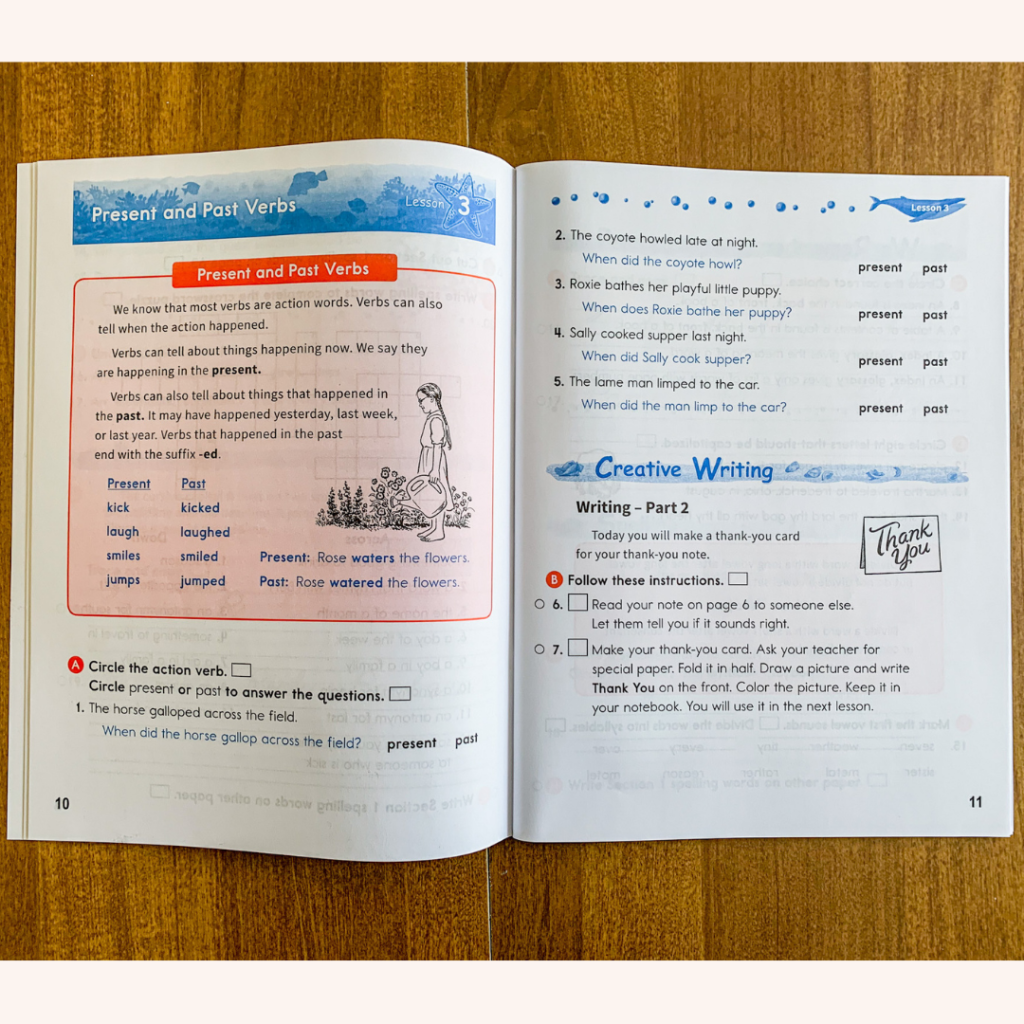
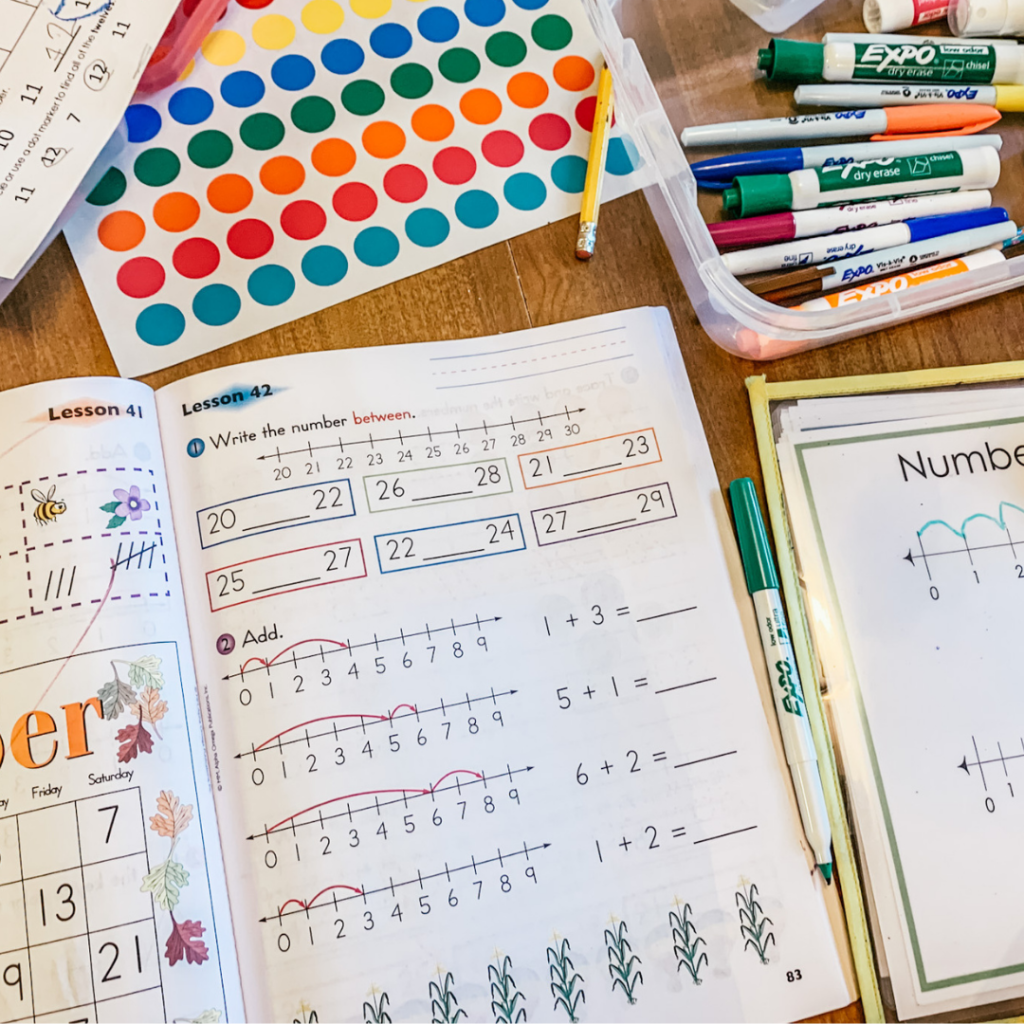
Beginning in Level 2, the Language Arts program includes handwriting, spelling, AND writing.

How nice to be able to have that all in one! This is not the case in their level one, so I was happily surprised when we figured this out.

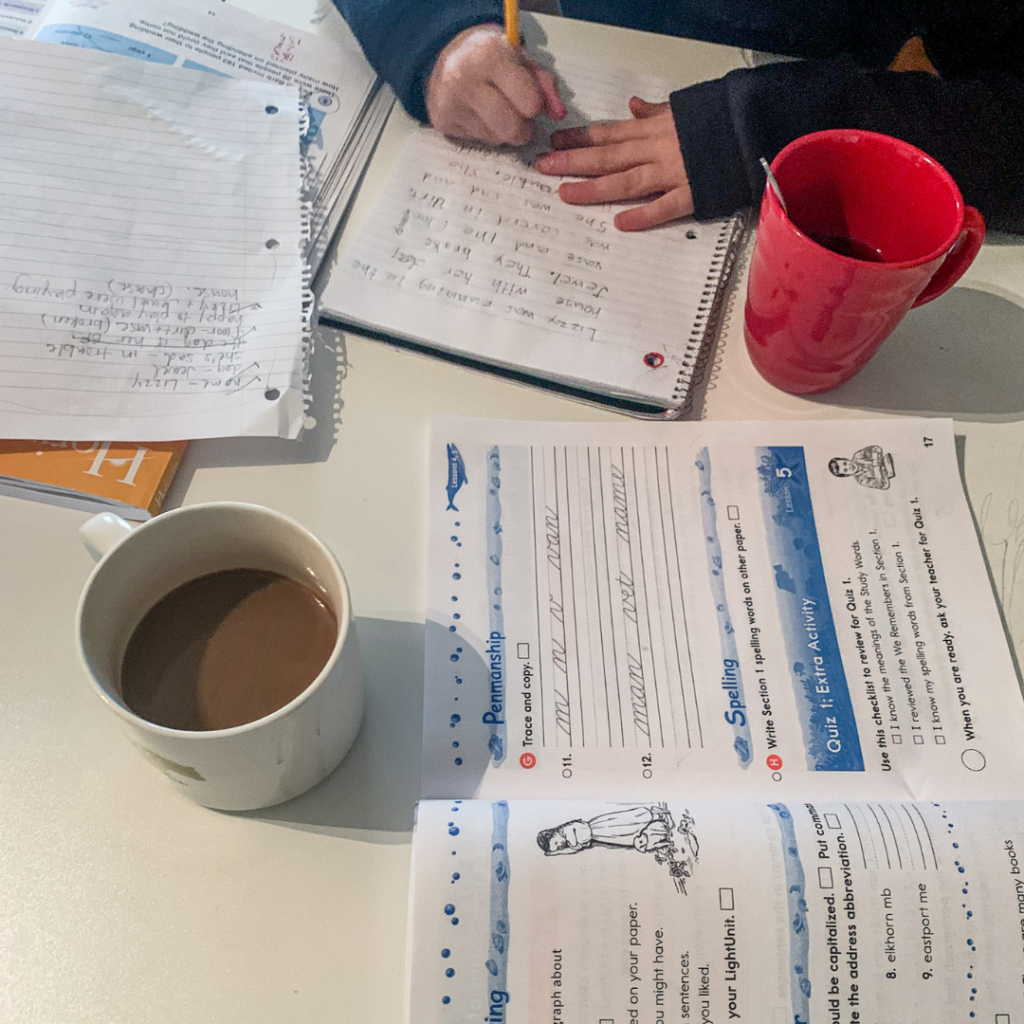
The handwriting sections start off with manuscript writing. It is a very short section in the lesson (see the image above). Next, it moves into curves and lines to get ready for cursive writing. When you get to unit 3, cursive letters and words are introduced.

The writing program becomes part of the lessons beginning in unit 3, as well. (See image below.) It’s so nice that I do not have to rearrange days or routines in order to incorporate writing practice. The process is broken down in the unit and easy to follow.

Each student book is called a LightUnit.

A LightUnit comes with the lessons, 2 quizzes, a self-check, and a test. One lesson usually begins with a new language skill followed by phonics and grammar review. Next, there is a short penmanship section to practice handwriting and, lastly, spelling practice.

There are also a few enrichment activities included in each LightUnit. (I’ve never actually even looked at these.)

The lessons are very to-the-point without extra things.

If you are looking for a variety of art and nature and song and poetry throughout your lessons…well, this isn’t for you.

A lesson is 4-5 pages long. Although it sounds like a lot, every section averages 2-6 practice problems.

If you sit and complete a lesson exactly as it is in the workbook every day, week after week, you are going to get bored.

Wow…that came off really strong, but hear me out. You can make it what you want! Honestly, that statement stands for almost anything! Homeschool is about making adjustments for your family.

The set-up of the lessons provide a flexibility when you plan!

For example, let’s say the review section is something that really doesn’t need practice. Your child has mastered it and is confident…so skip it!

Or maybe you’re feeling crazy and want to add some movement. Come up with a scavenger hunt or an activity to help get through some of the questions. Change up your routine and have fun with it!

Or MAYBE your infant won’t stop crying and your 3 year old is having a melt down and it’s raining outside and you haven’t even cleaned up breakfast yet…let your child work on it independently! I LOVE love LOVE that there are days that she can just practice on her own. As a mom of four, it’s so important to have this flexibility!
However, with the lack of variety in the lessons, it does tend to bore us after a while. Every couple months, I step away from it for a week or two and dive into something different. I might read a book with my daughter or complete a mini-unit together. This helps us go back to it fresh and ready to continue.

I do NOT follow the lessons exactly as they are written.

On the topic of spelling, I started the year by skipping the spelling section in the workbook completely and just having her write the words each day. We made this fun, and I can share more about how we did it soon. Even with fun spelling practice, we eventually tired of it after a few months and started only doing the spelling practice section in the workbook. We do not do daily list writing anymore.

After Christmas, I quit giving the quizzes and self-checks. It was a wasted day of lessons! My daughter was completing lessons well and was not struggling through the skills. (If she were, I may have kept doing them for practice).
One day, I just completely forgot about giving the quiz, and it affected us in zero ways. So, I stopped! We work through the lessons, and I give the test at the end of the LightUnit, if I feel she’s ready.

We also skip the penmanship sections most days. I do this because we already have a handwriting curriculum that I love (A Reason For, Level T). Completing the penmanship was overkill to me, so we only do it if we want a super short handwriting day and skip our handwriting book.

My point in telling you all of this is don’t ever feel like you have to do EVERYTHING!! You have the freedom to choose in your homeschool. If it feels like too much, cut it out. If it’s not enough, add to it. Do what’s best for your kiddo. Because of the way these lessons are set up, this is easy for me to do.

Let’s focus on the Teacher Guide for a second.

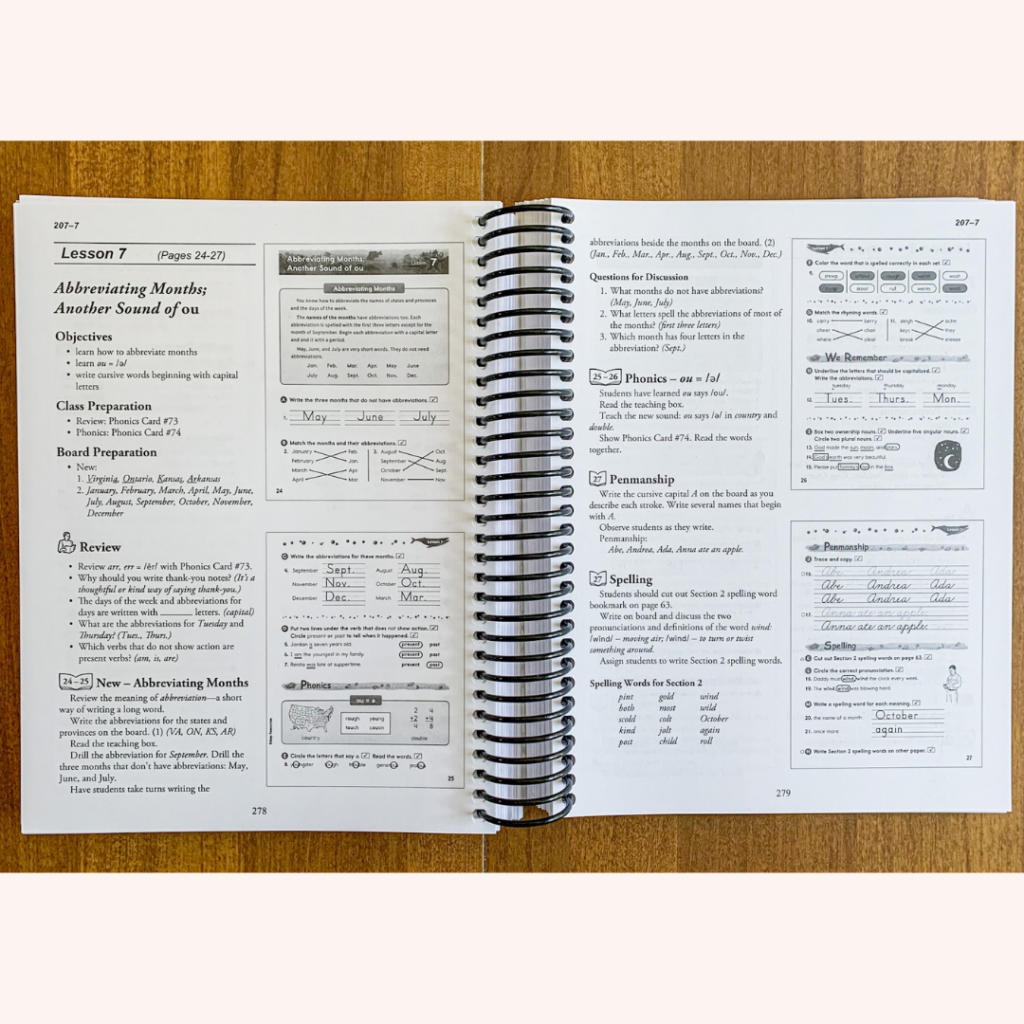
The guide is very thorough. The answer keys are actually on the same page as the lesson guide, and I really like that. You don’t have to flip back and forth to check answers.

Each lesson in the guide starts with scripted review questions. Next, it moves into a script for teaching the new skill. It provides questions for discussion as well as an explanation for each section in the lesson.

If there is any prep, it explains it at the beginning of the lesson guide. It also gives you optional activities to do during a lesson.

When it is time for a spelling test, the list of words and sentences are provided.

When I first received the guide, I was extremely overwhelmed. It’s a lot. However, once I read through the explanations and figured out how it worked with the lesson, I felt much better. It’s one of those things where you kind of just need to jump in and try it out to see how it would work best for you.

The guide is very helpful, but once we got in a groove, I didn’t feel like we needed it as much. It would be hard to have the program without it though. I’m glad I have it to refer to, as needed.

I’m really happy with CLE, but I’m not 100% sure yet if we will continue for 3rd grade.

The truth is…I’m somewhat bored. I want to read more books! I want to dive into novels with my kids and explore new characters and places and events. We do read chapter books together, but I feel like I want more. I’m starting to look for something more literature based.

My decision is not final. I really do love the flexibility I have with this. It’s almost like I would love to do CLE for 6 weeks and a novel for 6 weeks and than back to CLE…and so on. And I could…

I just have a couple more things I want to research, so I’ll keep you posted.

Let’s look at the pros and cons here.

PROS:

  • Inexpensive to try
  • easy to follow
  • includes spelling, handwriting, and writing beginning in 2nd level
  • flexible
  • can be completed independently (depending on child)
  • Christian values

CONS:

  • cut and dry
  • not hands-on
  • difference in beliefs
  • can feel boring at times
  • not much classic literature or fine arts (at least not in level 2)

I think this is all just proof that no ONE curriculum is going to be the perfect fit.

We get to make it what we want and add or take away as we please. Even when I was a classroom teacher, I was doing this with our textbooks for my students. The reason I bring that up is to point out that learning is not a one-size-fits-all matter.

My suggestion to you if you are considering trying Christian Light Education is to do what we did. Purchase one LightUnit. Look at the samples to get an idea of which one you should buy, based on your child’s abilities.

Then, try it out in your home! It’s the perfect way to figure out if it’s what you need for your language arts program.

Posted on Leave a comment

Why we stopped Horizons K mid-year

I really did not think this would happen, but we stopped Horizons K mid-year. I love Horizons! We’ve used it for three years with my oldest daughter (now in Horizons 2). As a matter of fact, she still uses it, and I don’t have plans to stop.

This has been a tough decision for me. I know how Horizons works. I know how to add hands-on activities, and I know how to manipulate it to work for us. I’m very comfortable with it and recommend it to many. That hasn’t changed, but, let’s be honest…this isn’t about me. It’s about my daughter.

If you prefer to watch instead of read, check out my YouTube video on this same topic HERE.

This post contains affiliate links. If you follow one of my links I earn a small commission at no extra cost to you. Thank you for supporting my blog!

I’ve known since November that something wasn’t right.

This decision has been quite the journey and my choice to stop was not based on a quick mishap. It’s been a process, and I’ll explain.

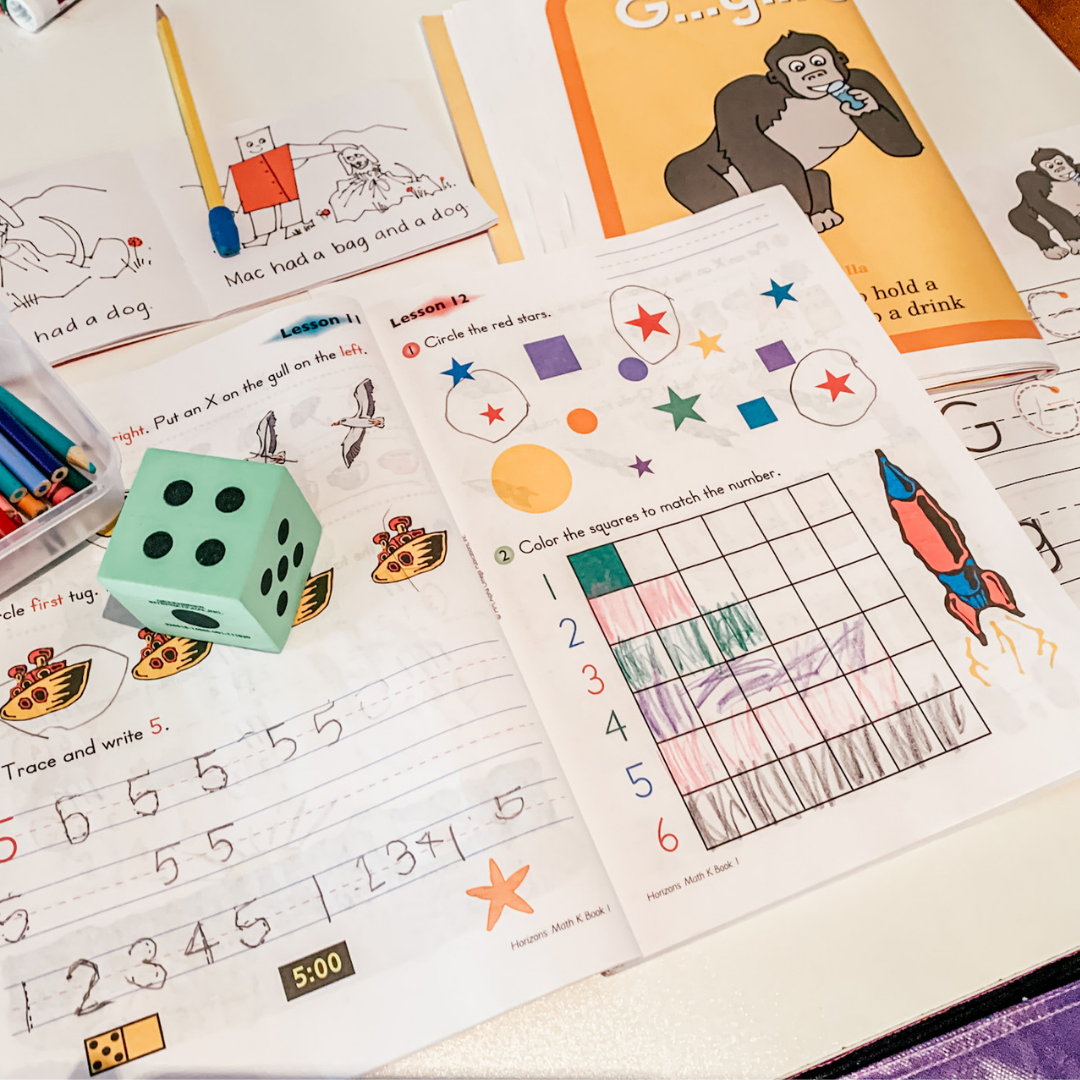
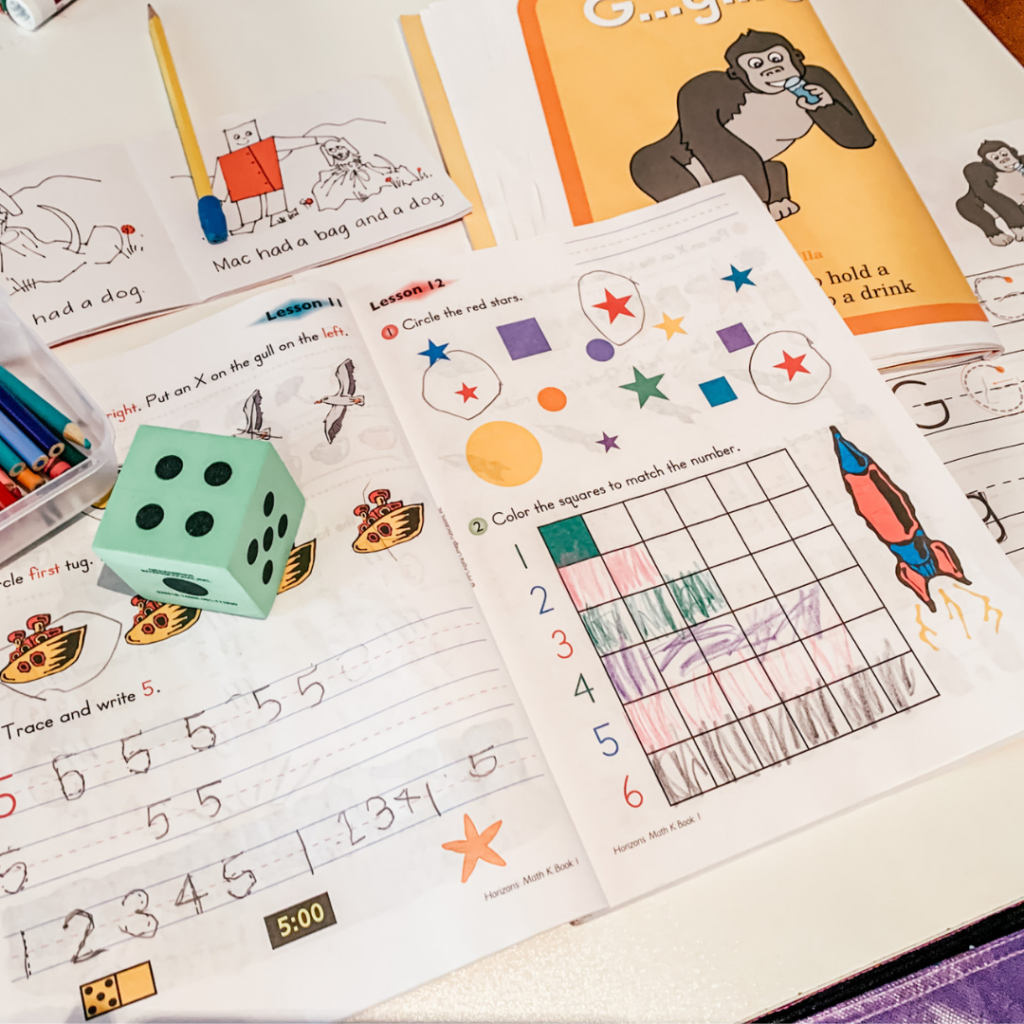
We started our school year the first week of August, and Horizons K starts very slow. It’s wonderful! The pictures are bright and colorful with just a few problems to complete in each section. It’s perfect. We can add a game to re-enforce a skill, and the lesson would be awesome.

Then, a few months in, it started moving very quickly. I tried not to worry. Horizons is set up in a spiral review format, so I knew she’d be getting practice again and again.

I put a large amount of energy into making it work for us.

It was tough to get through a lesson, mostly because it was a lot of problems to get through. We went outside. We played games. We added manipulatives and more movement.

The effort was worth it! We definitely enjoyed it more, but after a while, I could tell it had nothing to do with how “fun” it was anymore…

We took a couple weeks off to re-group and connect

Maybe I was trying too hard. It’s possible I was setting my expectations too high. I was dreading our math lessons, and I knew we needed a break. I prayed about it so much.

Those two weeks were needed. I highly suggest a break when you’re feeling confused about something in your homeschool. Connect with your kiddos and relax. It’s so refreshing and so helpful!

We didn’t do math for two weeks, and then the best thing happened. She ASKED to start again. YES! Ok, this is great. It’s exactly what I wanted. We jumped back in and pushed through.

Just a couple of weeks into January and she was moving on to Book 2. Woohoo! I was a proud mama, and she worked so hard to get there.

But book 2 is a whole new ball game.

The work practically triples! What used to take us 15 minutes was now taking 45 minutes to an hour. On top of it, I kept feeling like we needed to go back! She needed to keep working on things she’d learned in book one. It felt too soon to be adding in brand new material.

Maybe you’re thinking I should’ve just not made her do all of the problems, and I’m all about that! Sometimes, I cut out half the work in our second grader’s workbook. However, if I feel like the practice is necessary, I want her to do it. I can’t cut the work if full understanding is not there.

It was this weird balance of trying to build her skills and confidence while also not pushing her too hard.

I really don’t remember it moving that fast when my oldest completed it three years ago. Of course it did, but as a new homeschooling mama at that time, I’m betting I just kept encouraging her to keep going- We had to finish. (Or so I thought.)

I’m thankful I know better now. We don’t have to just keep going. I have the freedom to make the changes needed to best fit the needs of my kids.

You know, I really don’t like swapping curriculum mid-year.

I’ve done it once before, and there’s this awkward phase of trying to figure out where to start in the new curriculum and figuring out how the new book works. It’s a scary commitment to me and a big decision! I don’t want to flip-flop from book to book.

There’s a part of me that feels like I’ve done something wrong. Did I do enough? (Isn’t that the million dollar homeschool question!?) I just have to keep reminding myself though that I know my child best.

As you can see, this has been a prayer of mine for months. I don’t think it’s coincidence that something keeps prodding me to change what we are doing. It’s no mistake that it suddenly felt very clear that we needed to pick something else. I truly feel God leading me to this next step in our homeschool.

So, what now?

Well, I have researched a lot of math curriculum over the years. I really do enjoy learning about it. There’s one other program that I’ve thought about using, because it is set up in a simple, spiral review format as well. I’m referring to Christian Light Education.

As I looked through Christian Light’s kindergarten program, I immediately went to their sample books and My. Jaw. Dropped!

Three quarters of the way through the units, and we would be counting dots on a domino for math. Wait…what?! We were past that. WAY past that.

Two feelings came over me. 1) That’s way too easy for her! 2) Oh my goodness, I feel awful that I’ve been pushing my daughter so hard.

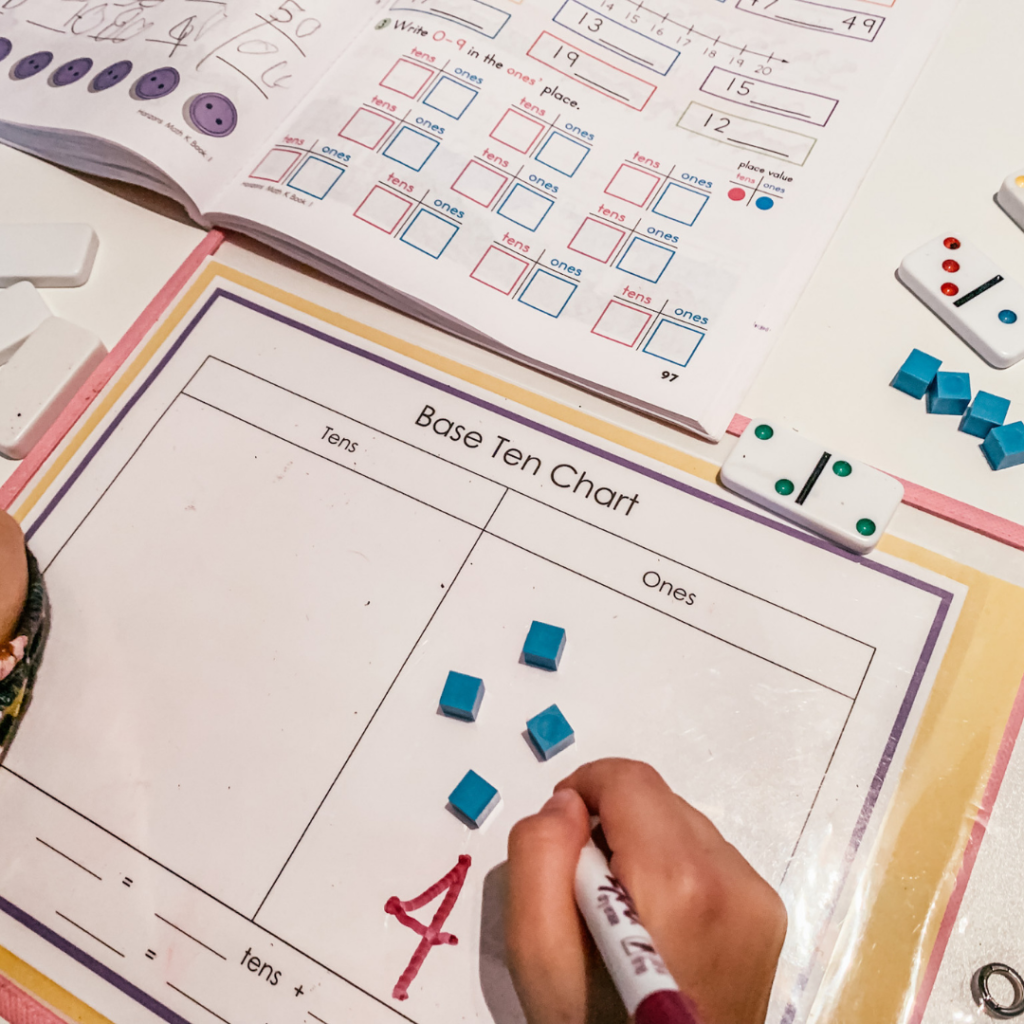
In order to practice the skills that my daughter needed, I had to purchase the level one book. I’m talking- skills we learned back in August. WOW! This program was at a completely different pace! I felt so weird getting level one, but as I reviewed the scope and sequence over and over, I knew it was a good fit.

Honestly, even level one is MUCH easier than what we are doing now, but I want to start slow. I am not in a rush. This was even more proof to me that I made the right decision. Horizons was very advanced.

My goal for the end of the year is simple and easy-going.

I have hopes to work through book one and book two of CLE to end this year. Then, we will take a summer break and I’ll pick up where we left off for her first grade year.

It’s kind of nice because normally so much time is wasted reviewing at the beginning of the year. In our case, we are doing that at the end of this year and moving forward at the start of next!

This is very new to us. I plan to update you guys soon on how it’s working for us.

Let me go on one short rant here…

First, always make the decision that’s best for your kid. Stop thinking about how YOU feel (ahem…speaking to myself) and think about your child’s needs.

Every. Child. Is. Different. Like WAY different – I have four completely different kiddos in my home, and I am so grateful that God has chosen me to be their mother. He has given each of them their unique gifts and abilities, and it is my joy and pleasure to help them grow up and live out the purpose he has set for them.

My oldest child is a numbers girl. Math comes easy for her. I only bring this up because Horizons has been amazing for her, and we plan to stick with it. This is proof that it really is about the child. As much as I love Horizons, I’ve learned it may not work for all four of my kids the same.

Think about what brought you here to this post. You probably have something on your mind about math, whether its what curriculum to buy or which one to stop! If you haven’t prayed about it, take a minute and do it. My homeschool changed drastically for the better when I started praying about specific needs in my homeschool. (God is so faithful!)

I am not one to say, “Yes! Change it! Get something new!” But, sometimes, we just know that it’s not a good fit.

There’s so many options out there! Sometimes I wish I could just have a little taste of all of them in one book. Wouldn’t that be nice? Here’s the thing – no curriculum is going to be perfect for you. Not ONE. So, pray about the steps to take in making it work. Does that mean changing it up a bit? Shortening the lesson? Adding in games? Switching to every other day?

Or…does that mean it’s time for a bigger change? It took me almost three months to finally say yes, but I’m so glad I did.

Posted on Leave a comment

Make Explode the Code FUN – Adding variety to the workbook pages

IF YOU PREFER TO WATCH THE VIDEO ON THIS SAME TOPIC, CLICK HERE: Make Explode the Code Fun!

Explode the code is set up with a very consistent format. I love this, because it’s easy for my daughter to follow. However, it wasn’t long before I was itching to add a little variety to the workbook pages. We wanted to have some FUN.

We started Explode the Code (Book One) half way through my kindergartener’s year, and I wish we would’ve had it from the beginning. It’s great practice, and I love how the lessons are set up. She can do a lot of it independently.

Sometimes repetitive practice gets old. When this happens I like to mix up the lesson a bit in order to add some excitement. It makes teaching more fun and it really helps my daughter have a great time learning, as well.

Are you ready to add some variety to the workbook? I’m so excited for this. I want to give you a SIMPLE alternative way to complete the majority of the workbook pages in Book One. Mark this page, or write down what you like. We are about to spice up some phonics!

This post contains affiliate links. If you follow one of my links I earn a small commission at no extra cost to you. Thank you for supporting my blog!

These are not activities to do every day.

That would be incredibly exhausting! These ideas are more for you to keep in your pocket for a day that really needs some mixing up!

Let’s be honest, some of the workbook pages can be completed so quickly on their own. We even combine a couple pages at times. We definitely just do the workbook most days. However, my point is to provide you with options. You never know what day you’ll need a change in routine.

For some of these, we will be cutting the textbook.

Yes, cutting it up! I LOVE doing this. I’ve cut almost all our workbooks at some point. The reason for cutting is because it’s less work. Hear me out! The book has the practice we need – so let’s use it! No need to go searching online for extra. Let’s use what we paid for.

So, think ahead…If you are cutting up a page, what do you want to do with the other side? Sometimes, I skip it altogether. Other days, I’ll do the back side FIRST so that it’s done, and then I can cut the other side the next day. You could also make a copy. It’s completely up to you.

Let’s get to it!

Some of these activities would work for multiple pages, so feel free to change them around a bit if you’d like. But like I said earlier, the point is just to have fun options for each one.

Cut and Paste

SUPPLIES: Construction Paper, Writing Utensil, Glue stick, Scissors

Book Directions: Find the picture that begins with the sound of the letter below. Circle it.

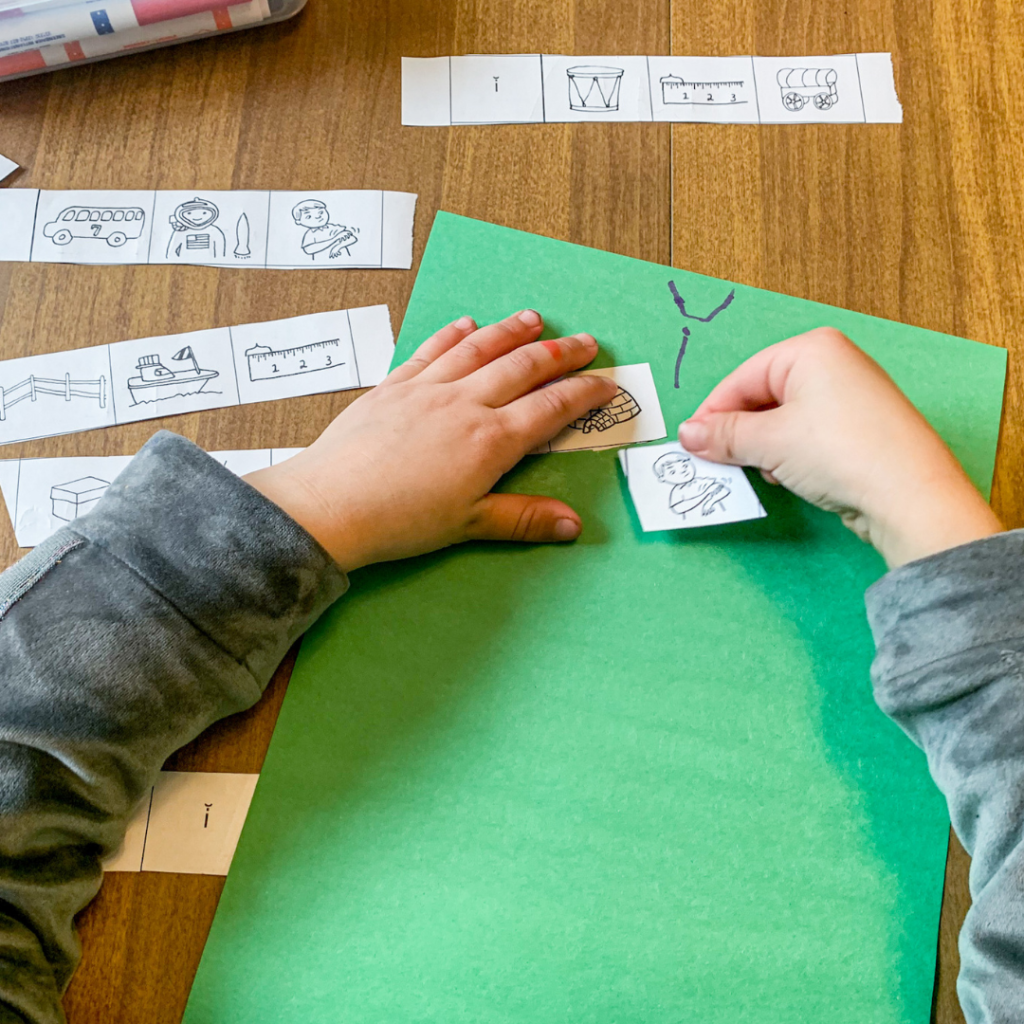
To prep this activity, cut the rows of pictures out. Leave them in their rows so you’re left with strips of paper. (See image)

Begin by introducing the letter and its sound. (Follow the wording from the book) Have your child write the letter at the top of the construction paper. Next, he/she will look at each row of pictures and cut out the picture that makes the correct sound.

Then, glue the picture onto the paper. Repeat this for each of the rows of pictures.

explode the code watercolors

Watercolor Matching

SUPPLIES: Watercolors (or just colored pencils), construction paper and glue stick (optional)

Book Directions: Circle the same word.

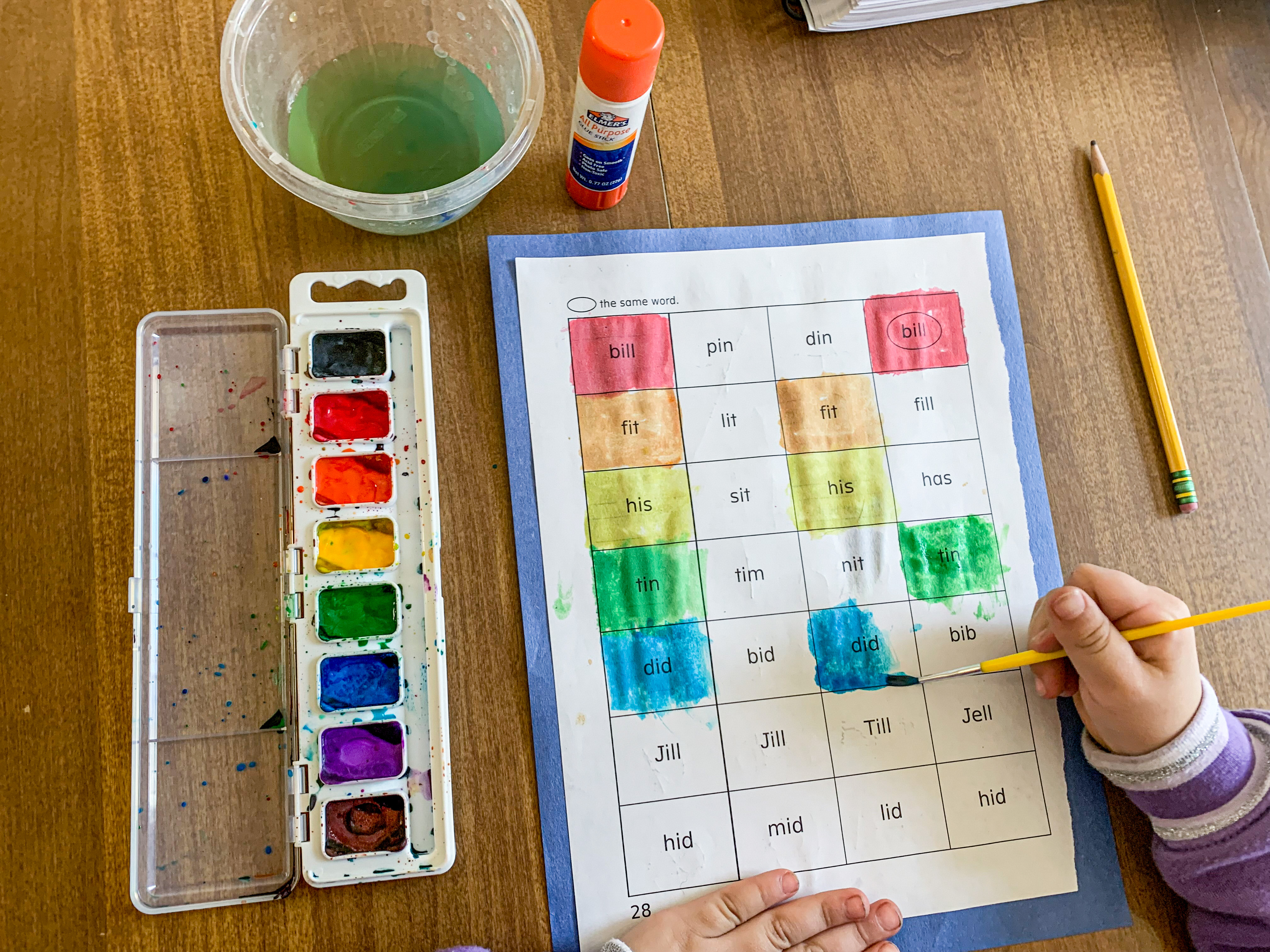
We love using watercolors at our house. If that’s something you’d prefer not to use, you can also use colored pencils. Since we were using the watercolors, I tore the page out and glued it to a piece of colored construction paper to make the paper a little thicker.

I chose to go with a rainbow theme, because I knew my daughter would enjoy that. She read the word on the side of the page and painted it red. Next, she found the matching word and painted it red, as well. Now, the matching words also match in color.

We painted with orange next, and then yellow, and so on until we had all of the colors of the rainbow. If there were any extra boxes, I let her pick the color.

At the end we had a pretty workbook page that now hangs up on our work display wall.

Matching Words

I love setting up a DIY matching game and it would be perfect for the workbook page mentioned above. Cut up some scraps of construction paper and write the words on the paper scraps. I would just write the given word and exact match, not the extra words.

If you wanted to add to it, you could make cards with words from the previous pages that look just like this. Save the scraps and add to it as you move through the book. your game will get bigger and BIGGER as you complete it.

Read, Roll, and Write

SUPPLIES: Dry Erase marker, dry erase board/pocket, die, paper, pencil

Book Directions: Read, copy, and circle it.

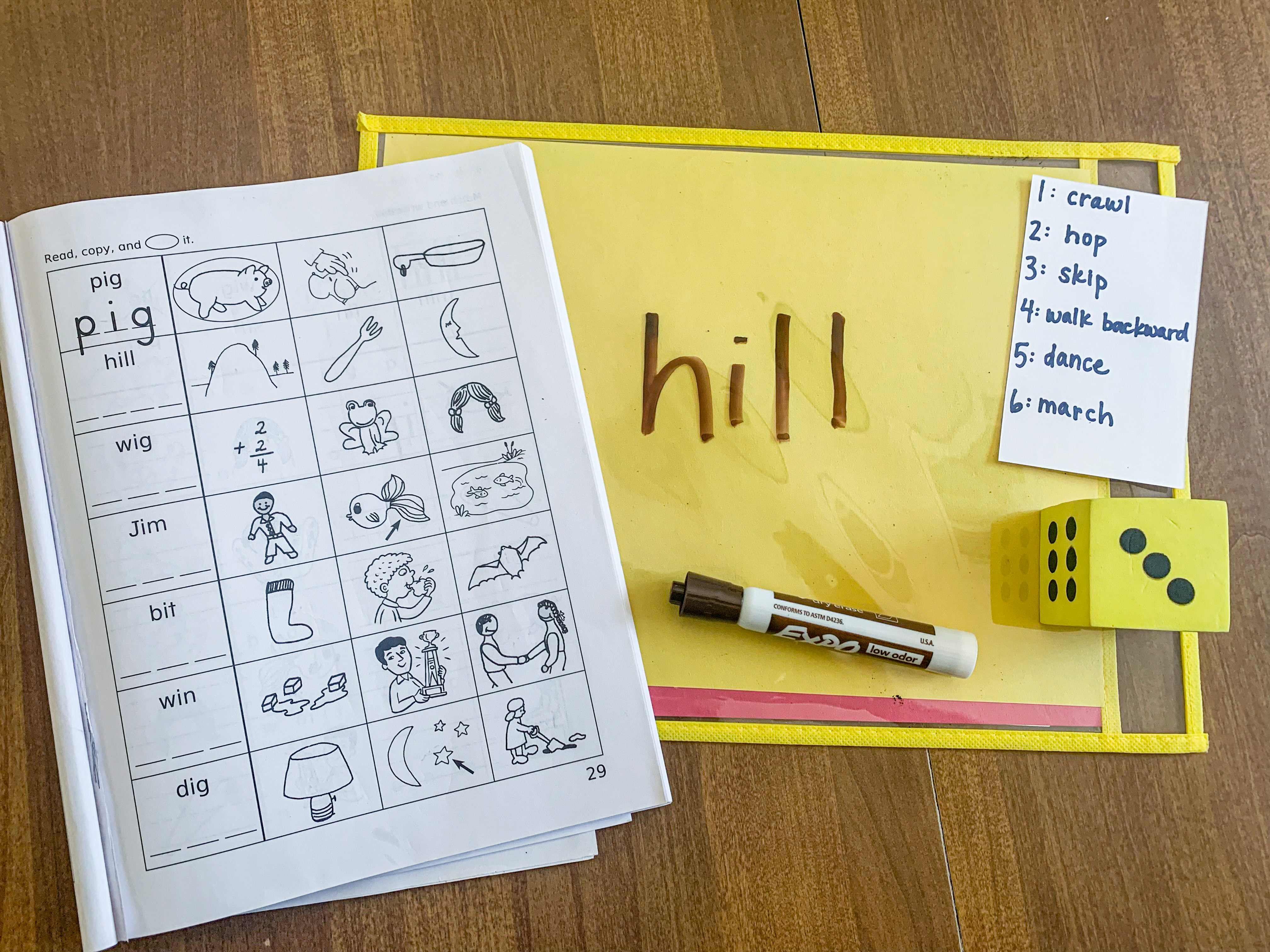
On a piece of paper, assign an exercise/movement to a number 1-6. (See image above). Have your child read the word in the workbook and circle the matching image.

When it’s time to write the word, add in some movement! Roll the die. Whatever number is landed on determines the movement to be completed.

I like to put our dry erase pocket on the other side of the room. This gives my child a place to go while moving. Once she arrived to the pocket, she wrote the word and then returned for another.

Sidewalk Chalk – Jump on the Sound

SUPPLIES: Sidewalk Chalk

Book Directions: Spell. Write.

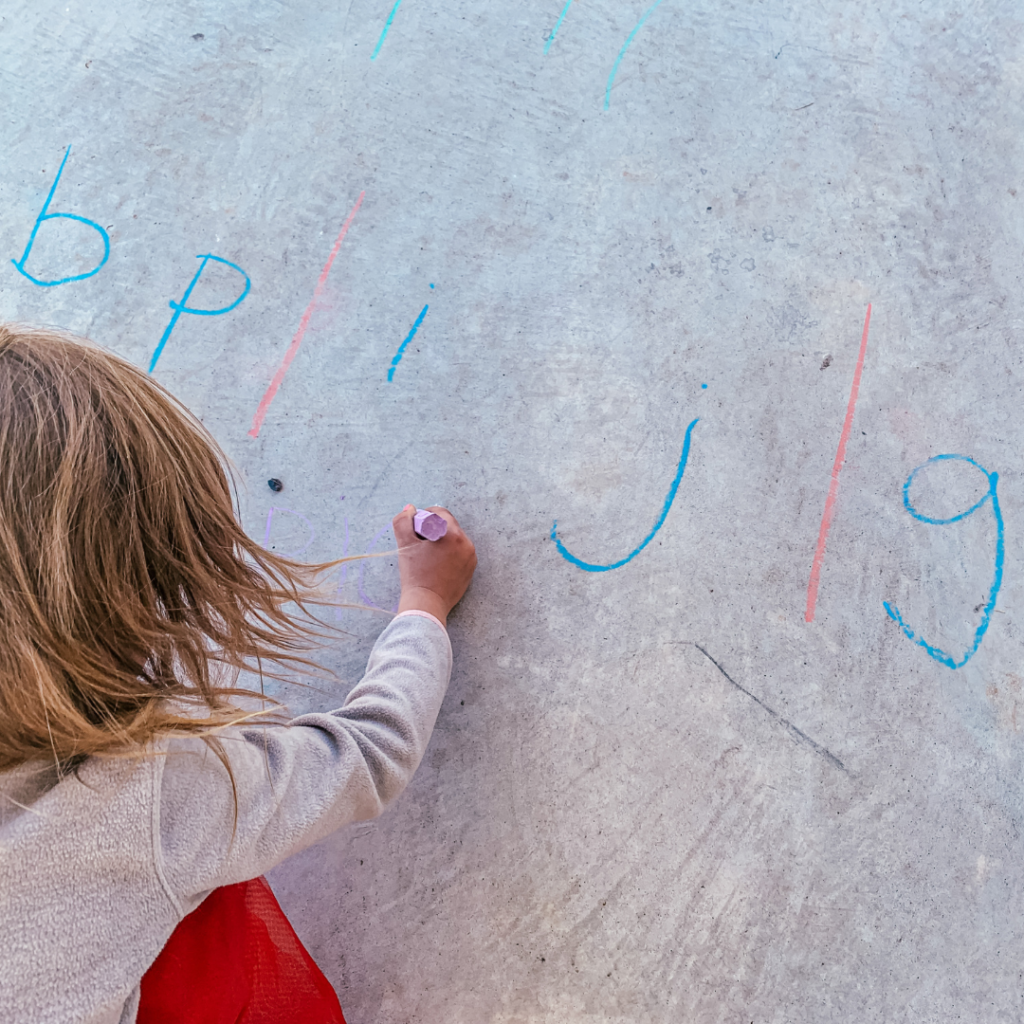
For this activity I showed my daughter the picture in the book for her to identify. Next I wrote the letters on our patio, just as they are written in the workbook. By using 2 different colors, it was easy to separate the columns (see image).

As she sounded out the word, she jumped from letter to letter, sounding out the word with the correct letter sounds. We had fun putting the letters further and further apart! Actually, I should rephrase that and be a little real with you – she insisted I make it further to jump, because the way I wrote it was just way too easy! (ha!)

I also gave her a piece of chalk to write the word on the patio as well.

Squirt the Sound

Follow all of the directions above, but instead of jumping on the sound, use a squirt bottle! Get them from the dollar store. These are so great to have.

Wait for a beautiful day and take your lesson outside. Have your child squirt the letter that makes the correct sound! This is so much fun!

DIY Write the Room

SUPPLIES: Scissors, clipboard/folder, pencil, tape

Book Directions: Match and write it.

This worksheet is set up so that there is a group of words to pick from at the top. The bottom 3/4 of the page are the pictures with a space to write the word.

For this one, I wrote the words on scratch pieces of paper and taped them around the room. We created a “Write-the-Room” activity. Next, I put the rest of the workbook page on a clipboard and handed it to my daughter.

As she walked around the room, she’d read the word on the card and then write the word down on her clipboard.

window writing

Window Writing

SUPPLIES: Dry erase marker, scissors, tape, mirror/window

Book Directions: Circle it.

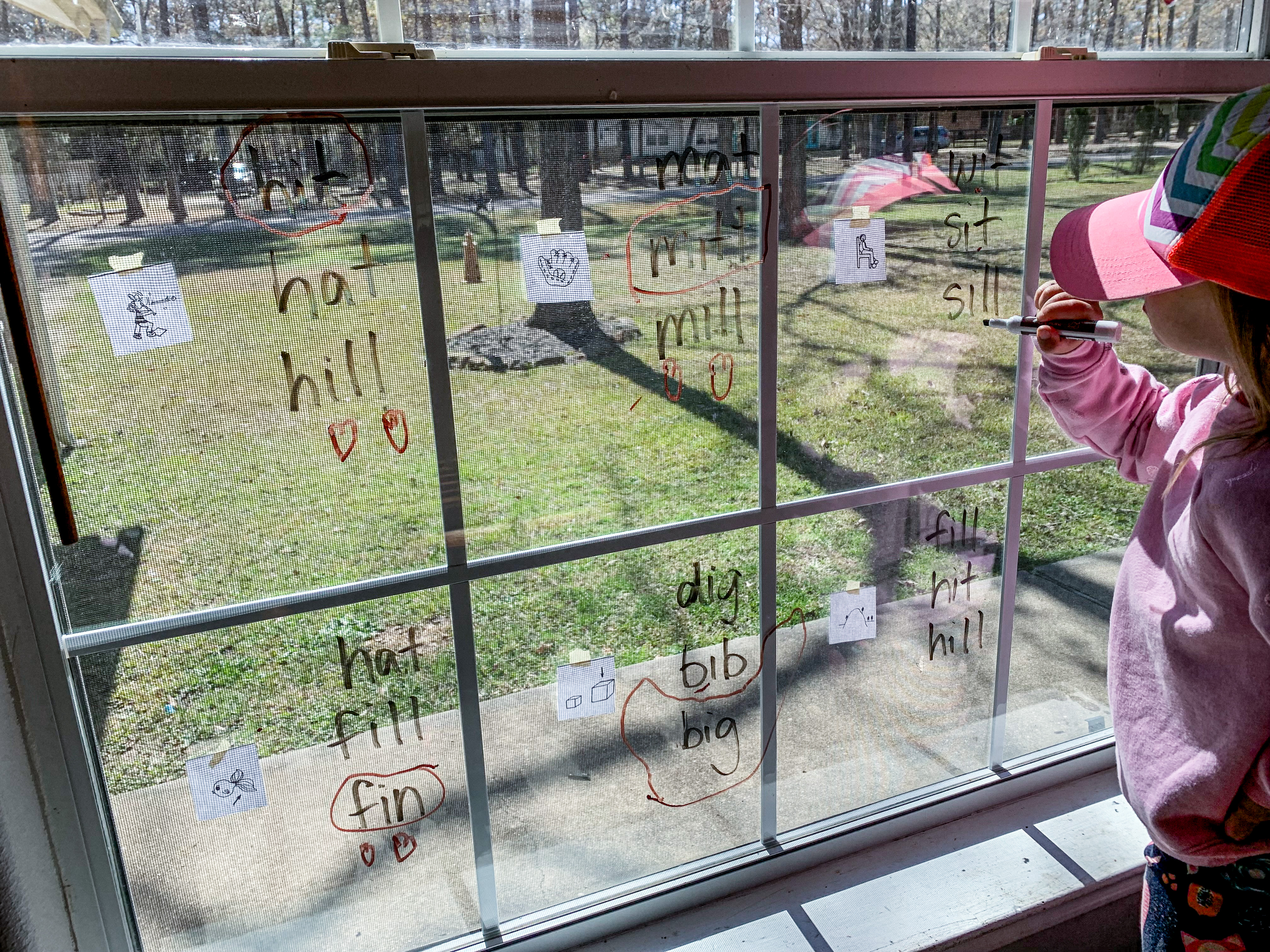
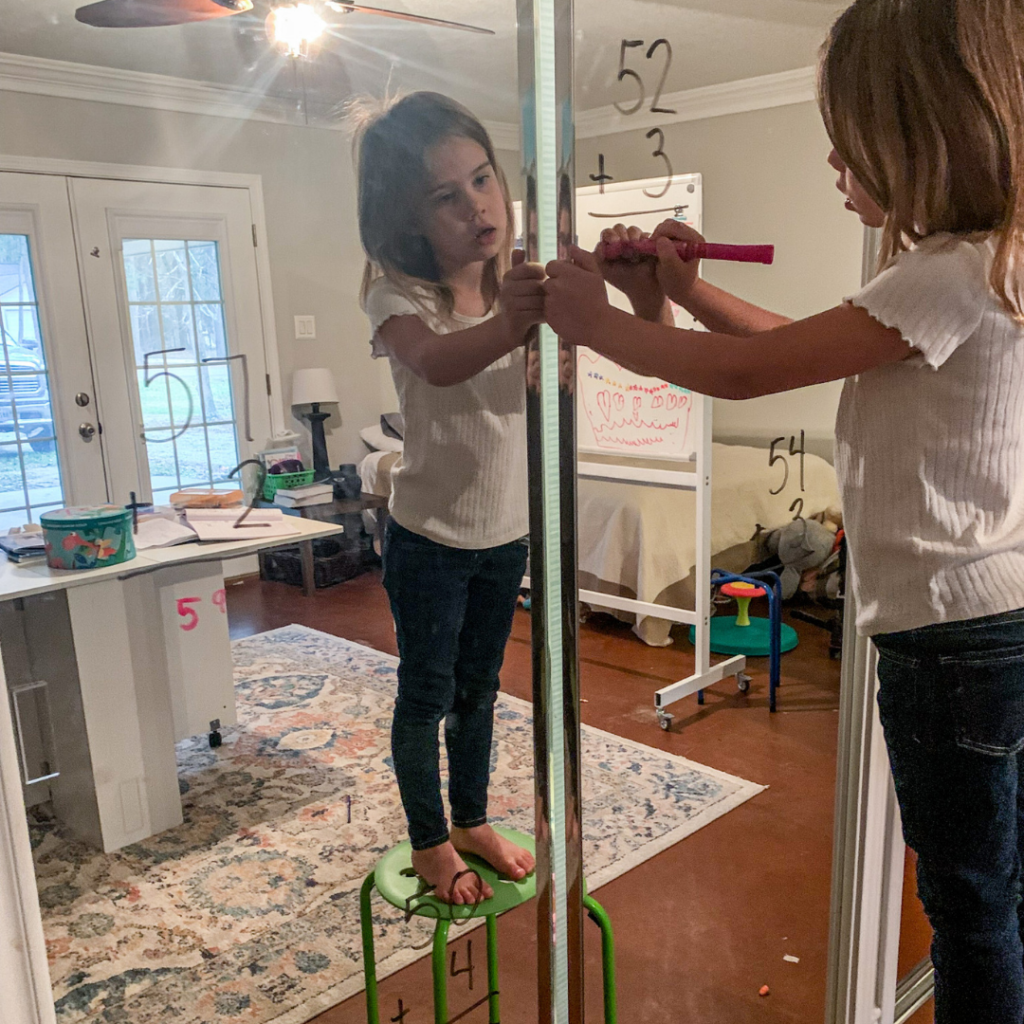
Window/mirror writing is a a simple and fun way to add a twist to any lesson. I set this one up so it looked just like the workbook page.

Cut the picture out and paste it to the window. Write the set of words next to the picture. Your child can go to each picture and circle the right word with a dry erase marker.

When you finish, remove the pictures and wipe it off with a towel. Easy clean-up!

Chatterpix Reading

SUPPLIES: iPad/iPhone, Toys (optional)

Book Directions: X it.

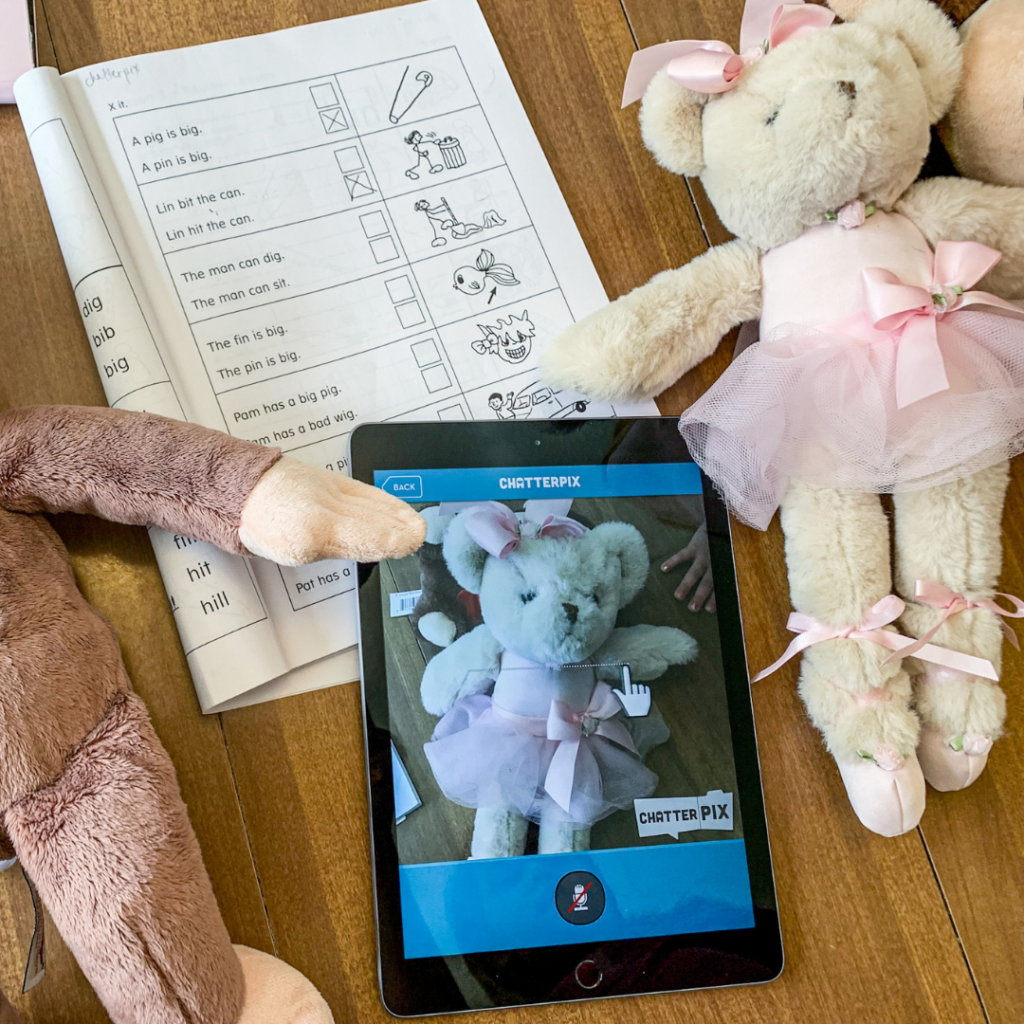
When we get to this page, I have my daughter read the sentences to me and then she decides which one matches the picture. She’s not always happy about doing this, so I wanted to come up with something crazy-fun for her to do.

Enter Chatterpix Kids. This app is free. I never really use apps in our homeschool, so this was quite the treat. To use the app, you take a picture of something – It can be ANYTHING. I chose to focus on stuffed animals.

I let my daughter take a picture of her stuffed animal. Then, we traced a line where the mouth is. Next, I had her sound out the words of the sentence so she would know what it said. When she was ready, she hit the record button and said the sentence into the iPad.

You have the option to add stickers to the picture as well. I let her pick one sticker, and then we hit PLAY. Oh my goodness, did we giggle!! It was such a silly time.

I’ll be honest, you could probably do the worksheet in five minutes. By doing this app, we spent probably 30 minutes playing. So, it more than triples the time. However, like I mentioned above, this is not an everyday thing. This is meant to be something fun and special to add variety to your workbook.

It was obviously very special and enjoyable to her as she has asked me to skip all the other workbook pages and just do this sentence one again and again! 😉

Microphone Fun

Another idea I had for this one is to use a microphone. My daughter loves talking. So, naturally I bought her a bluetooth microphone for Christmas (lol!) Even though it’s silly, we can get it out and read sentences or words into it. There’s even an echo feature on there to add something to her voice if we want to.

We used a microphone for one of the pages, and I encouraged her to come up with a new voice every time. She sure made us laugh!

If your child loves singing, you could connect it to some background music and let your child sing their sentences! Maybe it sounds crazy, but I promise your kids will get a kick out of it!

Shaving Cream Spelling

SUPPLIES: scissors, shaving cream, wash cloth for clean-up

Book Directions: Write it.

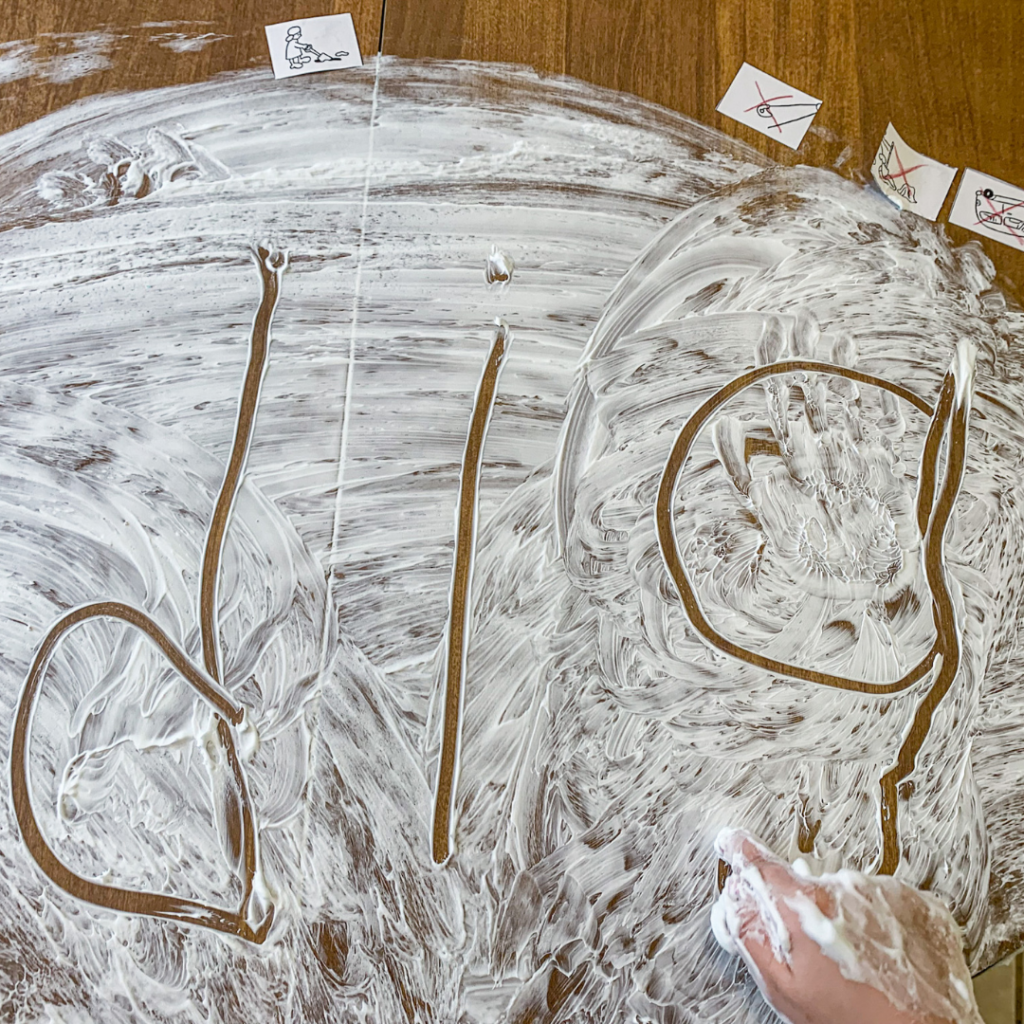
Cut out the pictures on the side of the workbook page. Just a tip – When I cut ours, there was also part of a picture on the back, so I made sure to put an “X” on the back side of the cut-outs. I didn’t want to confuse the sides.

Have your child sit at a table with the pictures piled on the side. Squirt shaving cream onto the table and spread it around (you’ll want to give a minute to free play first).

Have your child draw from the pile of words (or if you need to, show one of the pictures) and then write the word in the shaving cream. For every new word, wipe the shaving cream to make a blank slate.

This is so much fun, and most of the time it doesn’t even feel like school work!

Letter Play

If you don’t feel like making a shaving cream mess, try just using wooden letters or magnetic letters instead of writing the word. Choose a picture and make the word. A simple change like that can really make it interesting.

Do you have letter stamps? These stamps are great to have on hand. You could stamp right in the workbook if you wanted to! Spell out the word using the stamps. Add some color patterns by using your different colored stamp ink.

Small changes can be so much fun!

Sometimes it’s nice to have a go-to list like this to keep in your back pocket for a day that really needs it. I would not recommend doing something like this every day, but if you wanted to take a week off of the workbook, this would be a fun way to do it! Or, if you’re feeling a little funky, a small twist can make a big change in attitudes.

I’d love for you to share your activities with me! Send me an email or tag me on social media @simply.learning.together

Have fun with phonics!

Posted on Leave a comment

Addition Activities for your Homeschool Math Lesson

addition activities for homeschool

Sometimes I look at a lesson and think, “This is going to get frustrating today…” That’s when I know I need to change it up. I usually do this by throwing in something hands-on or by simply changing up the routine a bit.

In the early years, we are always practicing addition, so it’s a go-to section for me to add something new. In this post, I want to focus on addition activities for your homeschool math lesson. These are great to break up a lesson, add some hand-on learning, mix up your routine, or just to PLAY with math.

I’m keeping it simple by using things you probably already have around your house! We take the problems straight from the math book and then skip the section in the text. It’s actually quite fun to scratch it out and move on. PLUS, it’s no extra work for you coming up with problems.

You could also do these activities with addition flash cards. Check out my post on more flash card activities here.

I feel like this may be a growing blog post. I come up with new things often to play with my daughter and I want to add them here as we do. I will start with simple addition, but there are some activities that could be used with older grades as well.

This post contains affiliate links. If you follow one of my links I earn a small commission at no extra cost to you. Thank you for supporting my blog!

Magnet Tile Ten Frame

You’ll need: Magnet Tiles (2 different colors), Optional White Board and Dry Erase Marker

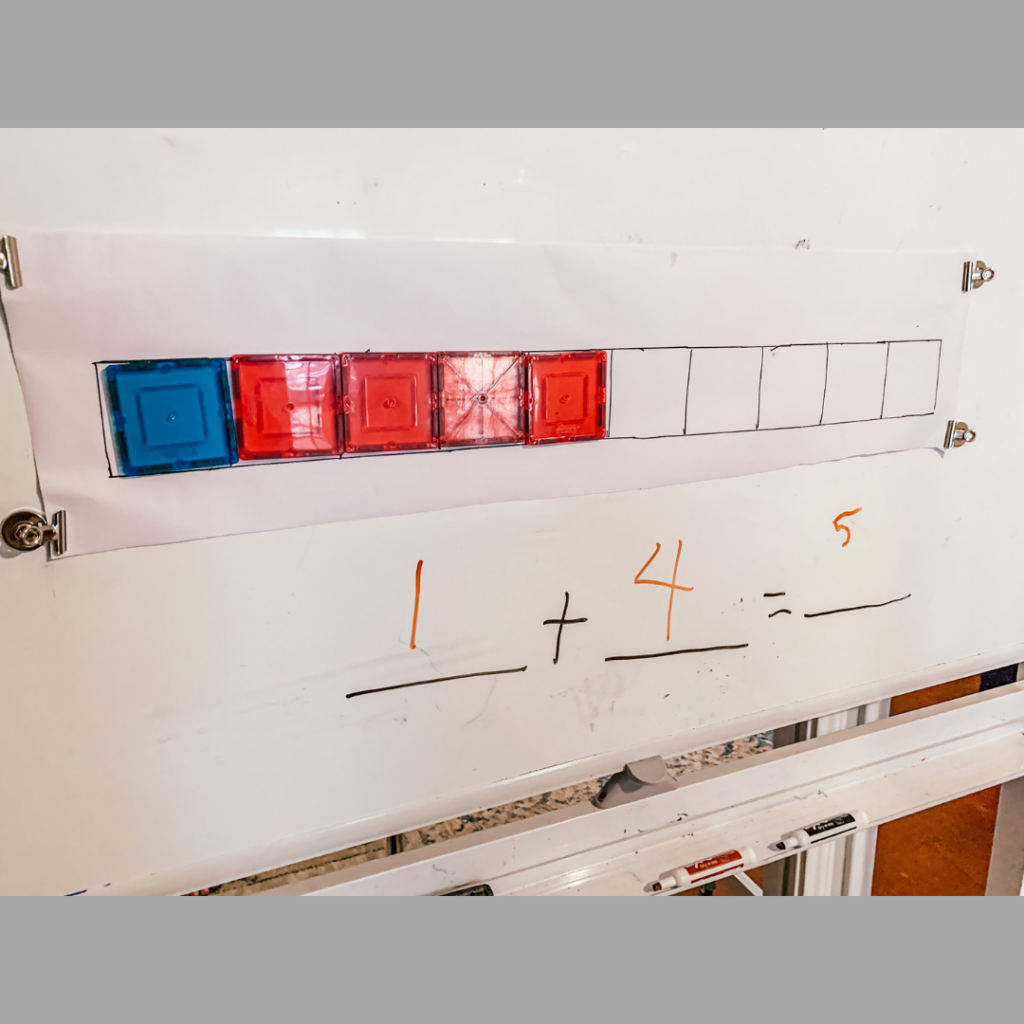
The image above isn’t the typical ten frame you see. However, our Horizons math book had it set up like this, so this is how we practiced it on this day.

We use the Picasso Tiles at our house. They’re affordable and provide tons of fun! Thanks to the square shape of these tiles, you can easily create your own ten frame. If you have a big white board, you can create an actual frame on it using a marker. Fill in the spaces as you complete the problems.

For example, 3+5 – Place 3 blue tiles and 5 orange tiles together on the frame.

Legos

You’ll need: Legos – two different colors

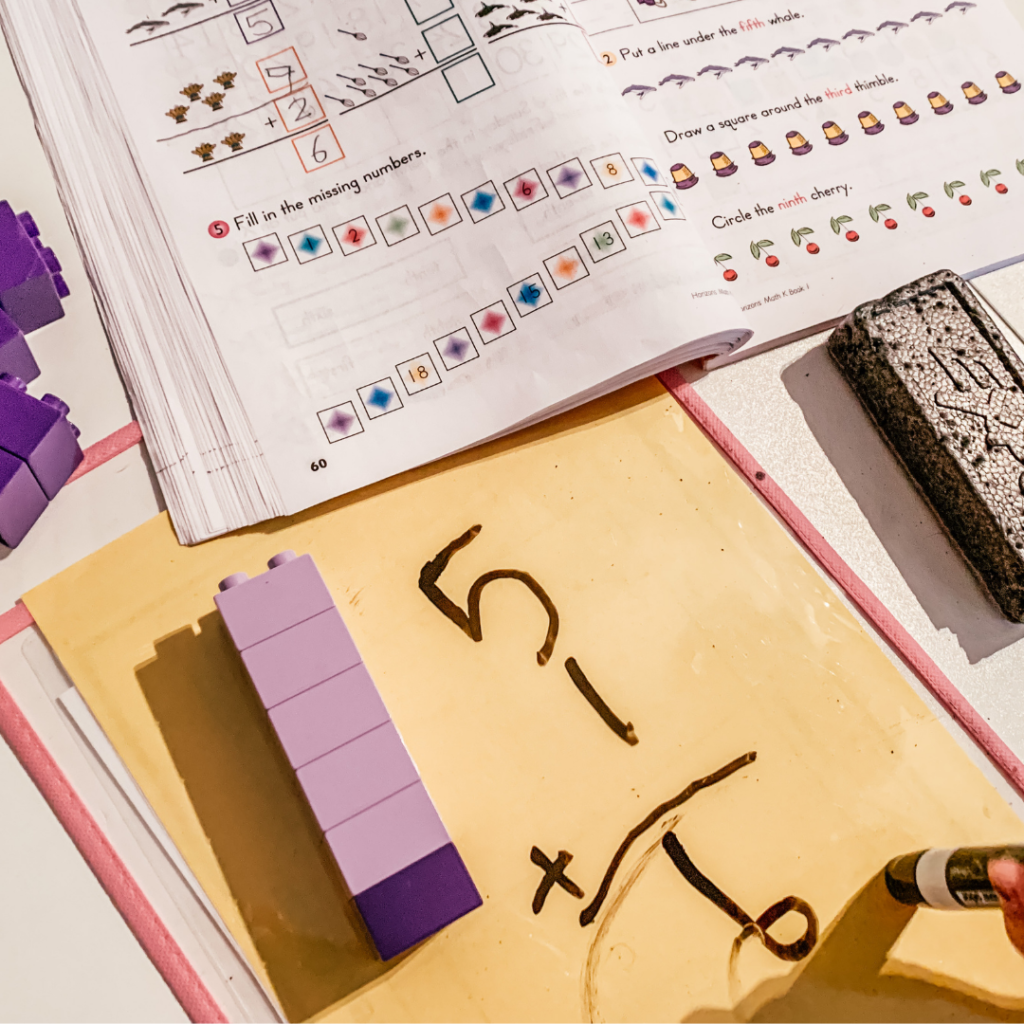
The point of this is to stack the legos together to make one big tower. If the problem is 7+5, stack 7 red legos and then add 5 yellow legos on top. Count the total number in the stack to get your answer.

Draw out of a Hat/Box

You’ll need: A box or bag

There’s something about drawing out of a bag/box that adds excitement. Throw some flashcards in there or write the problems from your book onto sheets of scratch paper. Sometimes we even cut the problems out of our textbook!

Have your child draw a problem and solve. It’s that simple! Add some blank cards in there with wiggling cues. For example, “do 20 jumping jacks” or “march around the room”. This will add some fun movement as well.

Dominoes

You’ll need: Dominoes

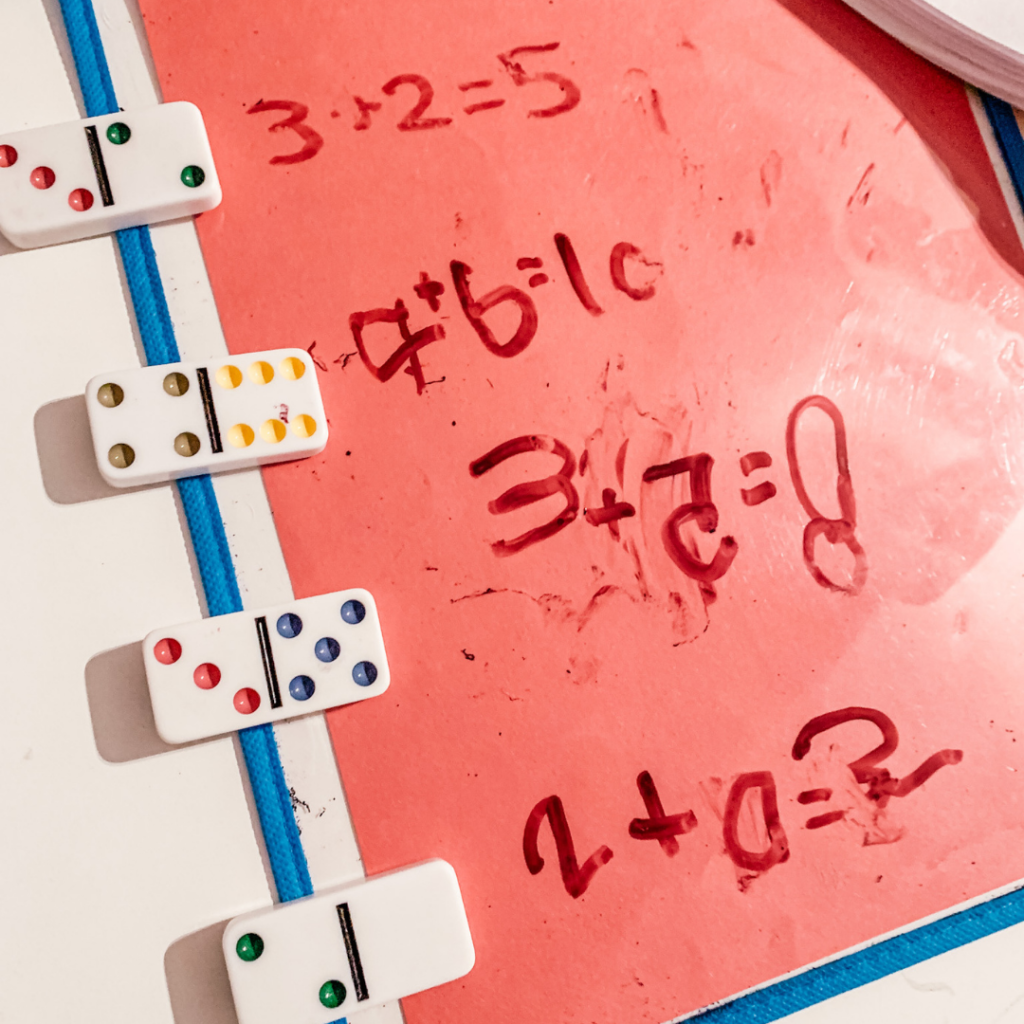
When we’ve done this in the past, I only chose five or six Dominoes. I have my daughter actually write the problems out in order for her to get the writing practice. We talk about the math signs and what each one means.

A dry erase pocket is perfect for this. Each side of the domino is added together to get a total. Write the addition problem and solve. Or, just discuss each side and count the total number of dots.

Simple Addition Math Mat

You’ll need: Addition math mat, counters, writing utensil

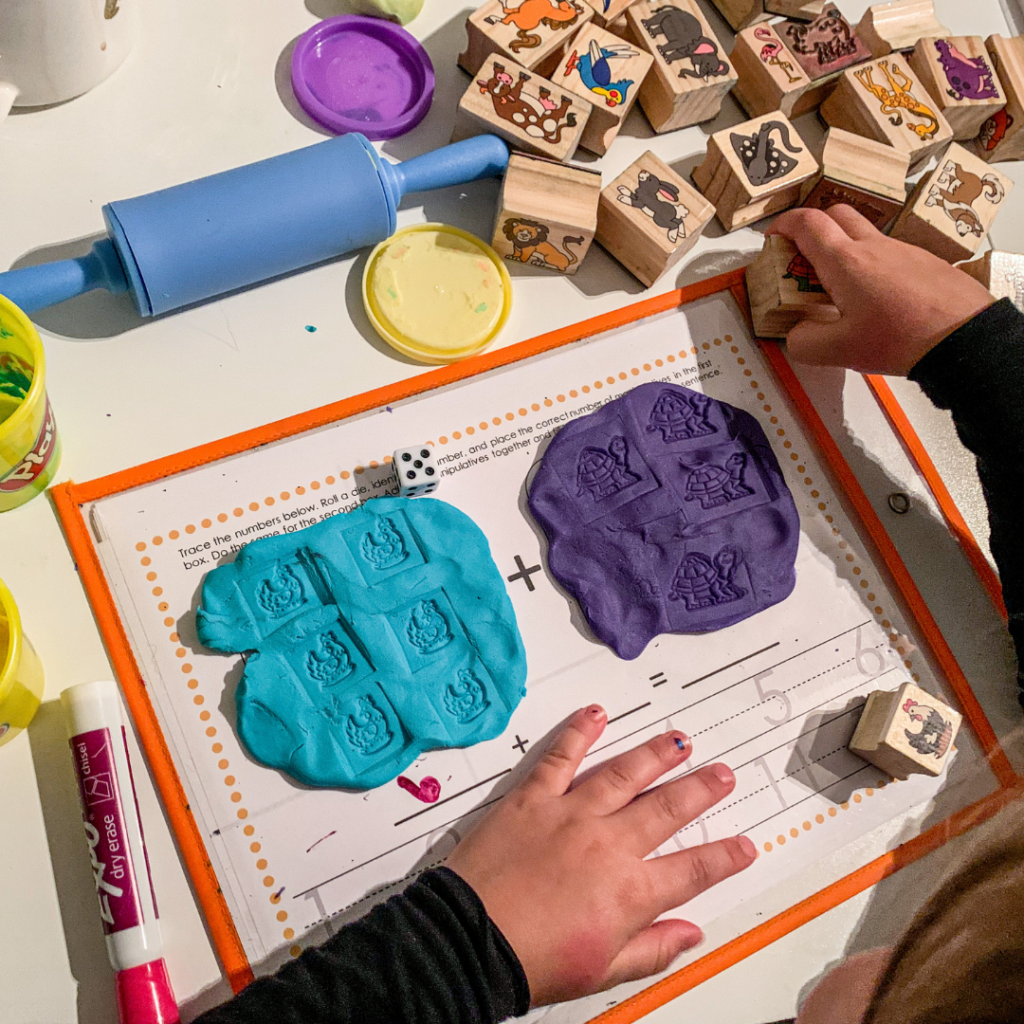
This addition math mat is perfect for when you are just beginning to start addition and you can use it over and over. The best part is there are traceable numbers on the mat to help with writing.

The directions are on the mat, but you simply roll a die and place that many counters in a square. We use teddy bear counters, but anything works. Do the same for the second square. Write your math problem, and solve.

We’ve also used this mat with play doh and it was super fun! Roll out 2 big squares of Play Doh on to the squares on the math mat. Use stamps (yes, stamps!) as your counters. If you’ve never stamped Play Doh, then you must try this! Add them all up to get your total.

Unifix Cubes

You’ll need: Unifix Cubes

As mentioned before, use the problems straight from your math book or for a little twist, roll a die for each addend. The Unifix Cube activity really follows the same guidelines as the Lego activity above. However, the great thing about these cubes is they really do stick together nicely. The variety of colors makes it a lot of fun.

For a special reward, try making a Unifix Cube rainbow tower. Start with red. Roll a die and stick that many red cubes together. Next, move to orange. Roll the die and add that many orange cubes to the red. Do this for every color of the rainbow. Can you count them ALL at the end?

Secret Picture

Every child will have their own taste when it comes to games. This one I made especially for my daughter who loves pictures.

You’ll need: Coloring Page, Construction Paper, glue stick, scissors, writing utensil

Glue the coloring page to the center of the construction paper. Flip it over so that you only see the solid color. You are going to cut this into six sections. I numbered mine so I could keep them in the right order.

Cut the paper in half (long ways). Then, cut each half into thirds. You will have 6 pieces. On each piece, on the blank side, I wrote 1-2 math problems from her textbook.

When it was time for her lesson, I told her there was a surprise on the back side of the paper, but she would have to finish to see. As she solved the problems, I reminded her – nooo peeking!

Once the problems were solved, we taped them back together (This is where the numbering helps) and she finally flipped it to reveal the secret image!

She was so surprised and immediately asked to do it again. We are looking forward to another secret picture activity soon. As a bonus, she even colored the picture later that day.

Matching

You’ll Need: Constrution paper, scissors, writing utensil

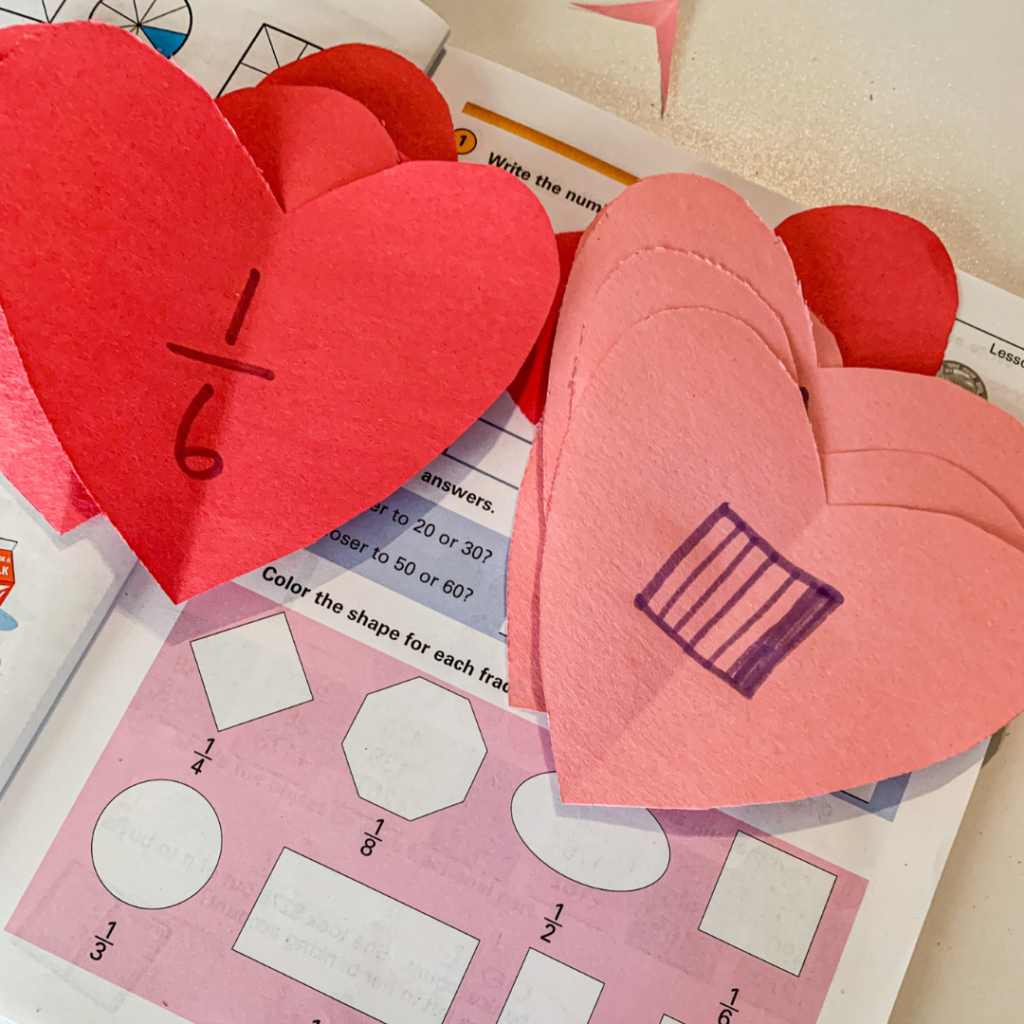
I always use my child’s textbook for the math problems (no extra work for me!), so for this activity I determined how many total problems needed to be solved. It happened to be around February, so I went with a Valentine theme. I cut 8 red hearts and 8 pink hearts.

Next, I wrote the addition problem on PINK hearts and the answers on the RED hearts. This made the game flow a little bit easier

We played the game following the same guidelines as the popular “concentration” card game. If she flipped over a card with an addition problem, she solved it first and wrote the answer. This meant she only had to solve it once.

It’s so helpful to break up the problems like this and a lot more fun to do than out of a big group of problems in a book.

Whenever it was my turn, she still solved the addition problem I flipped over, but I wrote the answer.

Not an Activity, but a TWIST

You don’t always have to plan out a separate activity to add something fun to your math lesson. A simple change or twist can really mix up the lesson and make it fun. Here’s a quick list of ideas to do just that:

  • Dry Erase on window/mirror
  • Toss a ball back and forth as you work through the lesson
  • Take the problems out to the sidewalk and use chalk
  • Solve and show – write the answer on a mini dry erase board and reveal to mom (This is so incredibly simple, but it’s DIFFERENT, and sometimes a small change does big things!)
  • Exercise between problems: jog, jumping jacks, squats, lunges. You could even roll a die to figure out what the exercise is going to be
  • Go outside! Solve a few and ride your bike up and down the street. Come back and do it again. No bike? Jog around the yard! Enjoy the fresh air!
  • Cut out the problems and hide them around the house. Go on a scavenger hunt. (This is one of our favorites!)

What’s your favorite way to mix up an addition lesson? Try out an activity above and share it with me on social media (@simply.learning.together).

Posted on Leave a comment

What is Homeschool Kindergarten really like?

kindergarten homeschool

Have you been researching about homeschool kindergarten and reading that it can take as little as 30 minutes? If you’re anything like me, this is possibly blowing your mind. What is homeschool kindergarten really like?

As a former classroom teacher, this was almost impossible for me to grasp. How could 30 minutes to an hour be enough to do all the things needed? I could not understand how it was accomplished.

Well, after a few years experience in our homeschool life, I can see how amazing kindergarten at home really is. This is my second kindergartener, and it is so neat to watch her grow. Every day is different and she does SO MUCH learning naturally through our conversations and her play. In this post, I want to explain how that happens.

Maybe you’re not new to homeschooling, but you’re wondering the question that pokes at a homeschool mom’s mind every so often —

“Am I doing enough?”

This question stopped me in my tracks today. It was 10:15 AM, and my kindergartener finished all of her school work. (See what we are using for kindergarten in this post.) We started at 9:20 and had a break or two in between! As I paused to warm my coffee up for the umpteenth time, I asked myself, “Am I doing enough?”

You see, what I failed to remember was how much learning takes place beyond our table of books.

The questions in the car, the imaginary play, the quiet time creativity, the chores, the cooking help….all of it is learning! And so much of it!

On this day, I decided to focus on all of the little teachable moments we had beyond our school books. It really made me grateful for all the time we have together to do this, but it also reassured me of how much learning takes place in our day.

I want to share with you what our homeschool looked like on this day that I began to question myself.

Keep in mind none of the discussions or activities that came up the rest of the day were planned! It can be terrifying to think that, but once you see how much can take place naturally, you will understand the beauty of it.

Think of this like a peek into the life of a kindergartener “after school”.

Once our school work is finished we head outside. I usually take care of the garden or anything in the yard that needs it. This time in the sun is so important for our day to go well. It’s important that I soak up the sun a bit too, so I decided to get a few things done while we were outside.

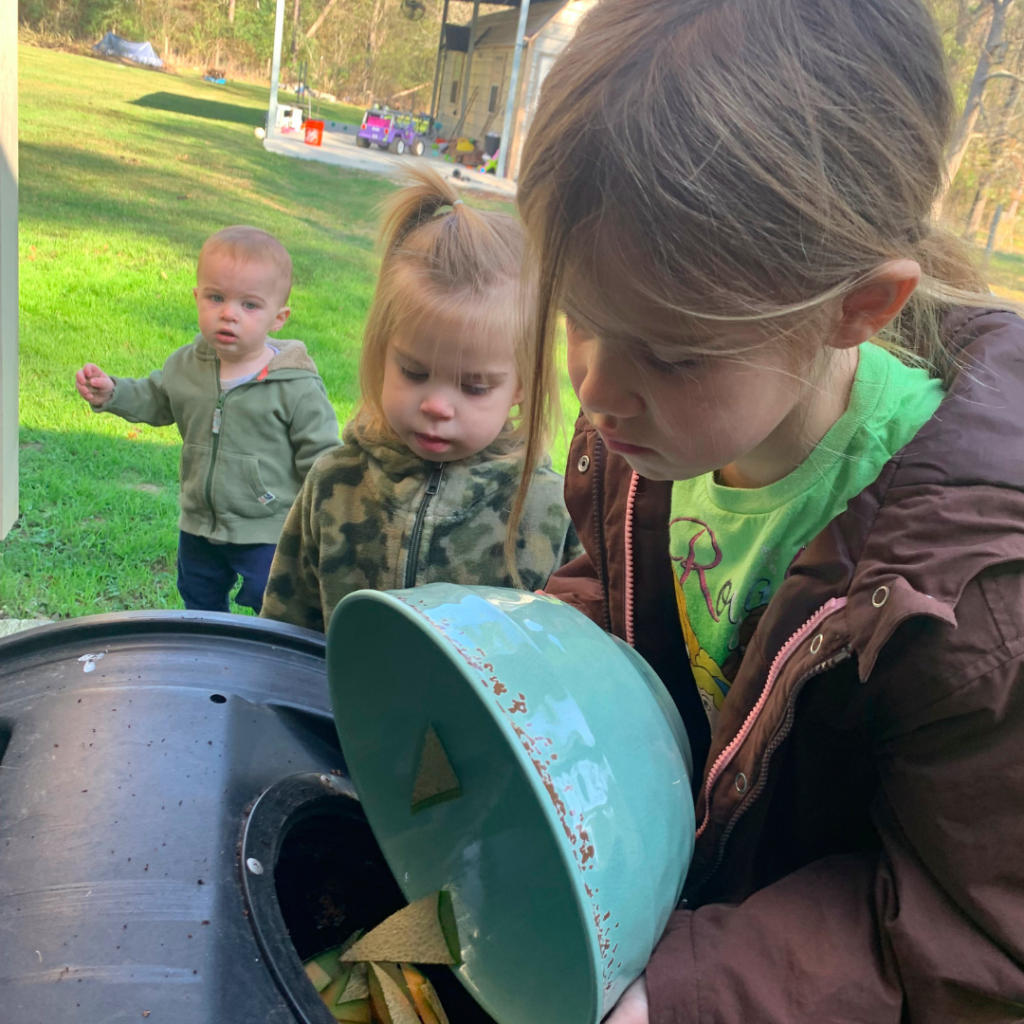
We added to our compost and talked about it’s purpose.

Why do we add this in here? What happens to it? How is it helpful for our home? These are all questions that came up. See the spontaneous science lesson taking place? Next, we mixed the compost around and observed what was inside. We gave examples of where we might use it in our yard.

Not long after that, we discussed our shadows.

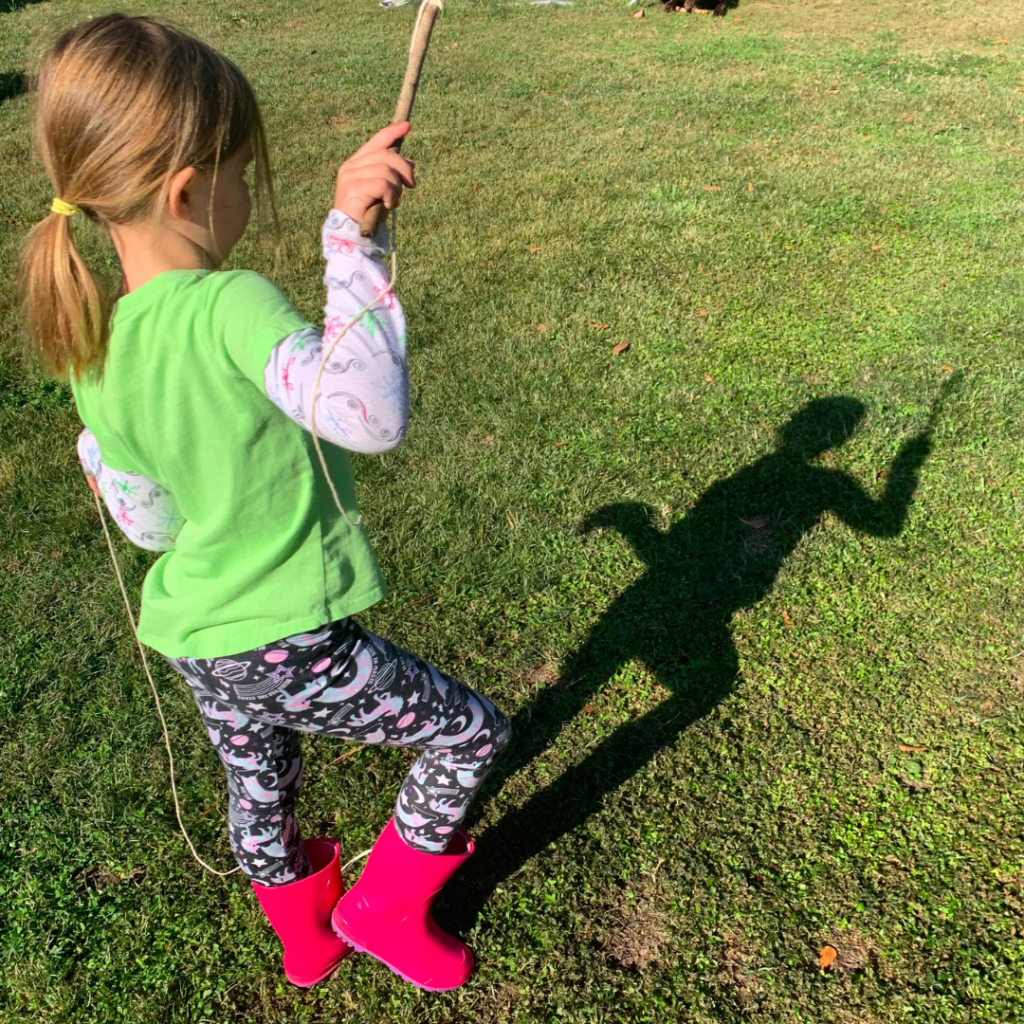
My daughter started playing with a stick connected to a string and was waving it around, watching the shadow on the porch. So we went out into the yard and looked at our own shadows. We discussed how the sun has to be in a certain place for you to actually see your shadow. We turned around and saw that in action. My 3 year old even participated and loved making poses for her shadow play.

At this point, we’ve been outside for almost an hour.

All the kids were immediately drawn to the lesson Dad was about to lead.

Who knew a car jack could be so mesmerizing? We watched as he slowly lifted the truck off the ground. Next, we watched him check the wheels and listened as he told us what he thought was wrong. It was a total of about 10 minutes, but I’ll tell you this – we talked about car jacks and their job at least 5 more times throughout the day!

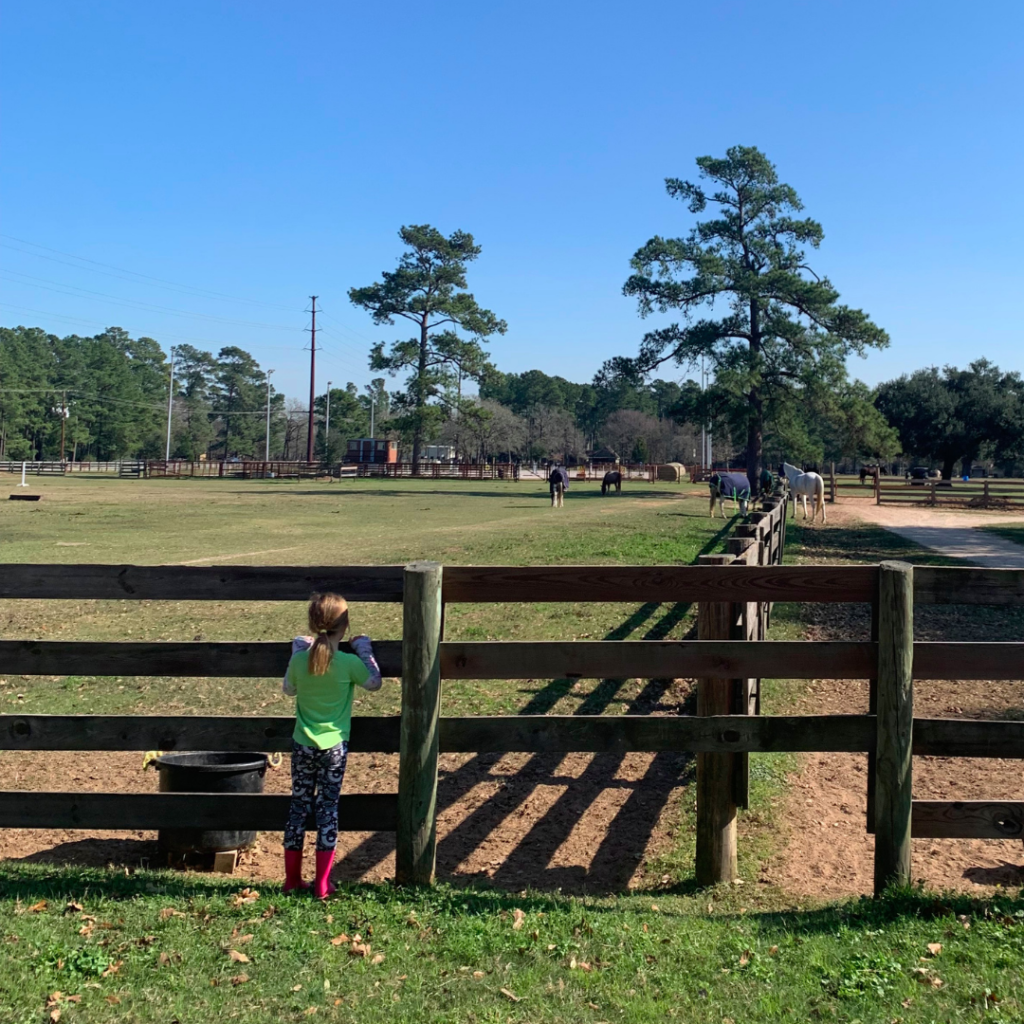
Moving to the next part of our day, my oldest daughter had riding lessons, so we headed to the stables to pick her up. As we waited, we observed the horses in the pasture and noticed that quite a few had blankets on.

This led to a discussion about weather and the needs of animals, specifically horses.

We watched as my oldest daughter helped remove all of the blankets, since the day was warming up. We don’t sit still for long…

A sensory bin from nature at your service!

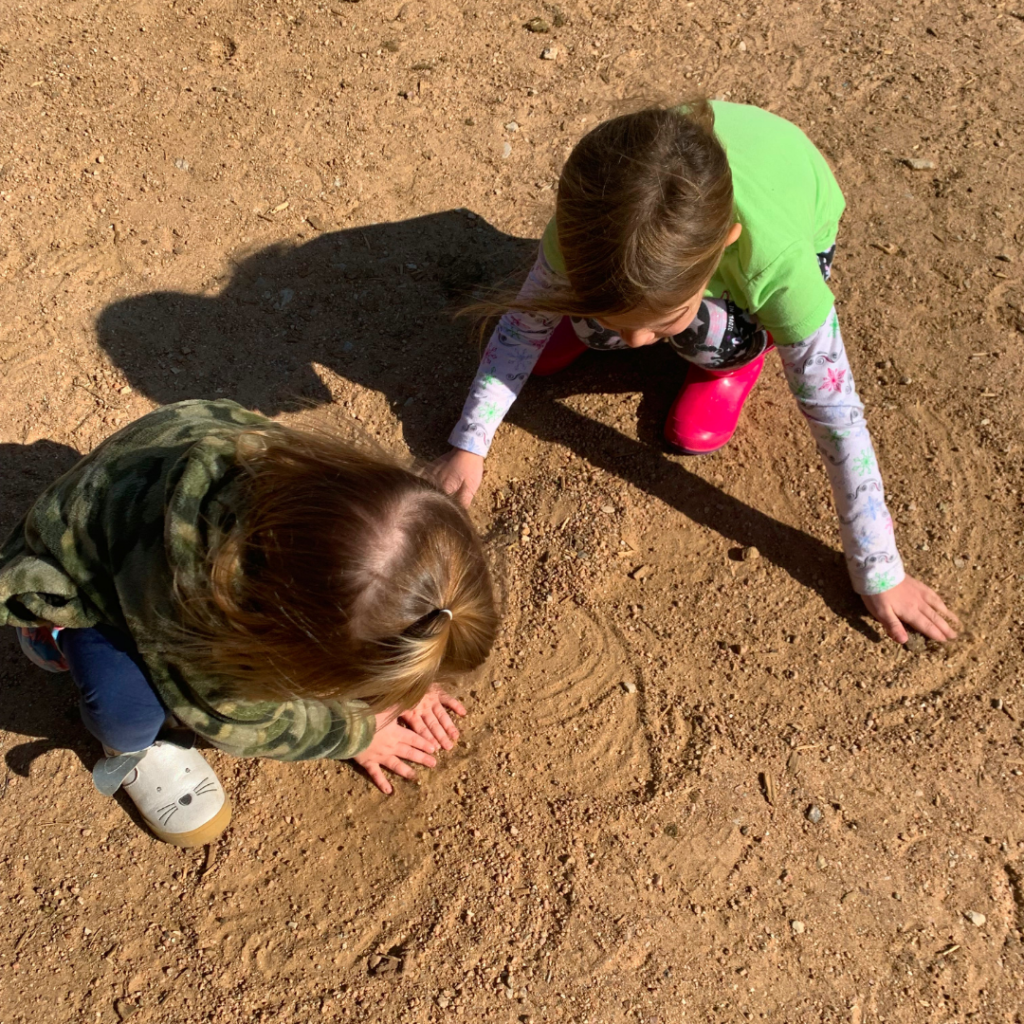
A mixture of sand and rocks made for a good time while we waited. The rocks were all different and some even shined in the sun. They made sounds when we rubbed them together, and they were all different shapes and sizes.

Time for lunch!

Can you believe that? Scroll back up and adventure into the morning we just had. How cool to experience all of this. I’ll be honest, not every day is like this, but WOW this was just what I needed in the moment. Thank you, God for this wink of encouragement.

It was PBJ day, and I always let the girls make their own. This is an important skill and although her sandwich may not have been pretty, she continues to get better at it, and I have a free hand to help my little ones.

Free play after lunch led to a creative Barbie playground.

I love buying gifts that I know all of my kids will play with. For Christmas this year, I bought Quiet Time

My kids all have a rest/quiet time. I love getting them from their rooms when it’s over because they are so creative with their time. They’ve built something, drawn something, written something…they have the freedom to do whatever and I’m always impressed by the outcome.

A mini-lesson at dinner closed out our day

I had no plans of getting help with dinner from my kids, but my kindergartener had plans of her own. As she saw me measuring ingredients, she begged to help. In that quick 5 minutes of cooking we discussed measuring cups, compared teaspoons to tablespoons, and smelled and tasted multiple spices.

Every day brings its own unique learning experiences

Some days are filled with great conversations and little mini-lessons throughout. Other days are more relaxed, but on THIS day I was filled with joy as I saw all of these experiences play out. Is 30 minutes enough? Yes, yes, 1000% yes!

If you are new to homeschooling and trying to figure out your days, start SMALL and simple. Stick to the basics first, because you can always add more later. If you are interested in what we are doing for kindergarten you can read about it here.

If you’re in the middle of your kindergarten year and feeling overwhelmed with tasks and workbooks, I hope this might inspire you to consider simplifying your day. Just try it for a week! Watch the natural learning explode!

This post contains affiliate links. If you follow one of my links, I earn a small commission at no extra cost to you. Thank you for supporting my blog!

Posted on 4 Comments

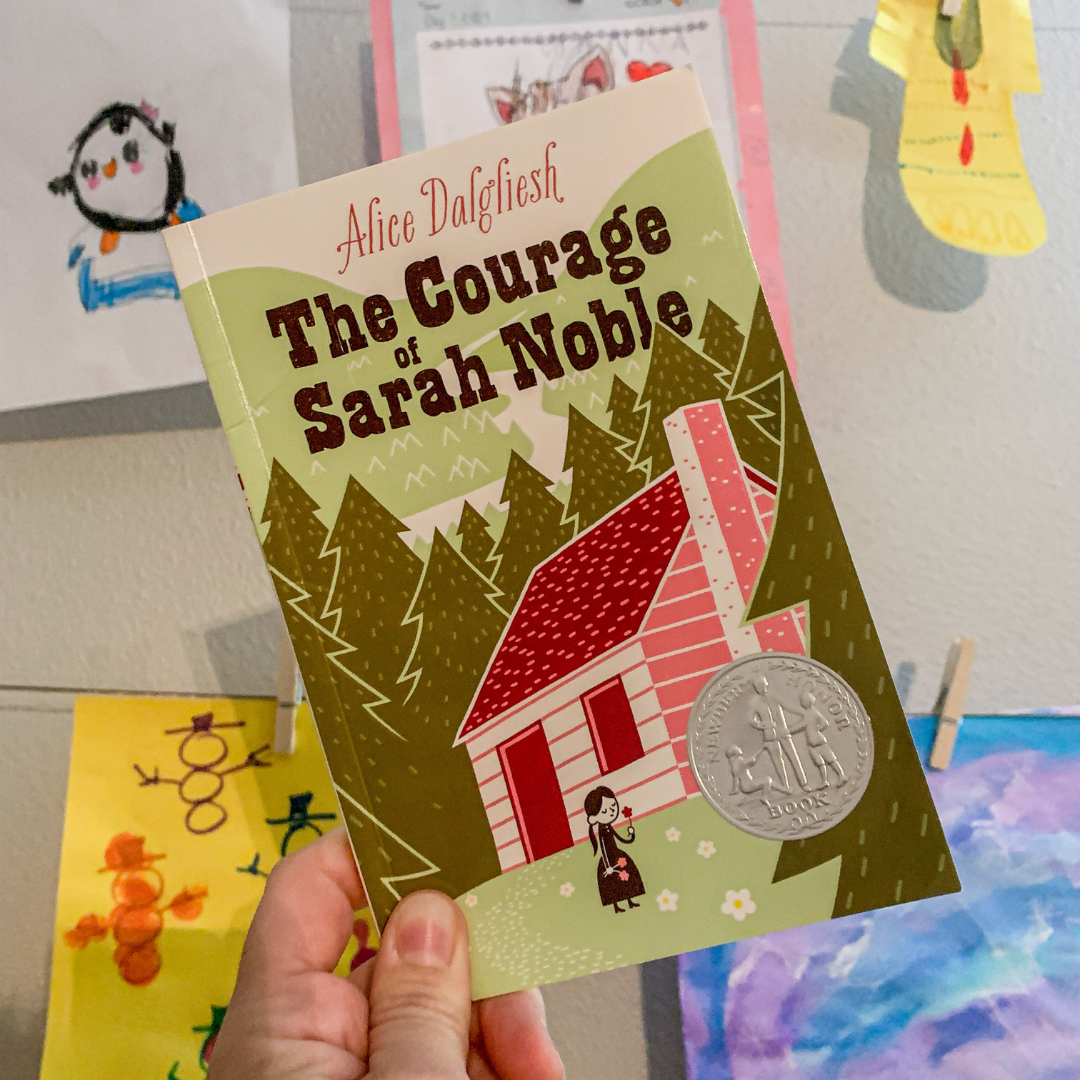
The Courage of Sarah Noble – A Homeschool Read Aloud Experience

courage of sarah noble

The Courage of Sarah Noble is a super short, sweet story of a girl and her father. Based on a true story, Sarah and her father must travel long distance to begin making a new home for their family.

In this post, I want to share with you a variety of simple activities you can do at home while reading this book. The activities are designed for you and your children to experience the story a little deeper. By making it available to you in this post, I hope you are encouraged to pick and choose the things that fit best for your family.

Everything is optional. Books are wonderful and educational just as they are, but every once in a while I love to dive a little deeper with my kids and see what sort of fun we can have together through the readings of the story. That’s what I’m here to help you do.

Follow along chapter by chapter for different activity suggestions. Complete them as you read or wait until the end. Read four days of the week and save the fifth day for fun! Everything is meant to be flexible for you. Activities include something as simple as a discussion to tasks a little more involved, like a craft.

Chapter 1:

NIGHT TIME SOUNDS: Sarah and her father have to sleep in the woods on their journey. The sounds of the night scare Sarah. Head out to your backyard when it gets dark. Be very still and quiet and listen to the sounds of your neighborhood/home. What animals do you hear? Do you think Sarah heard the same kinds of sounds?

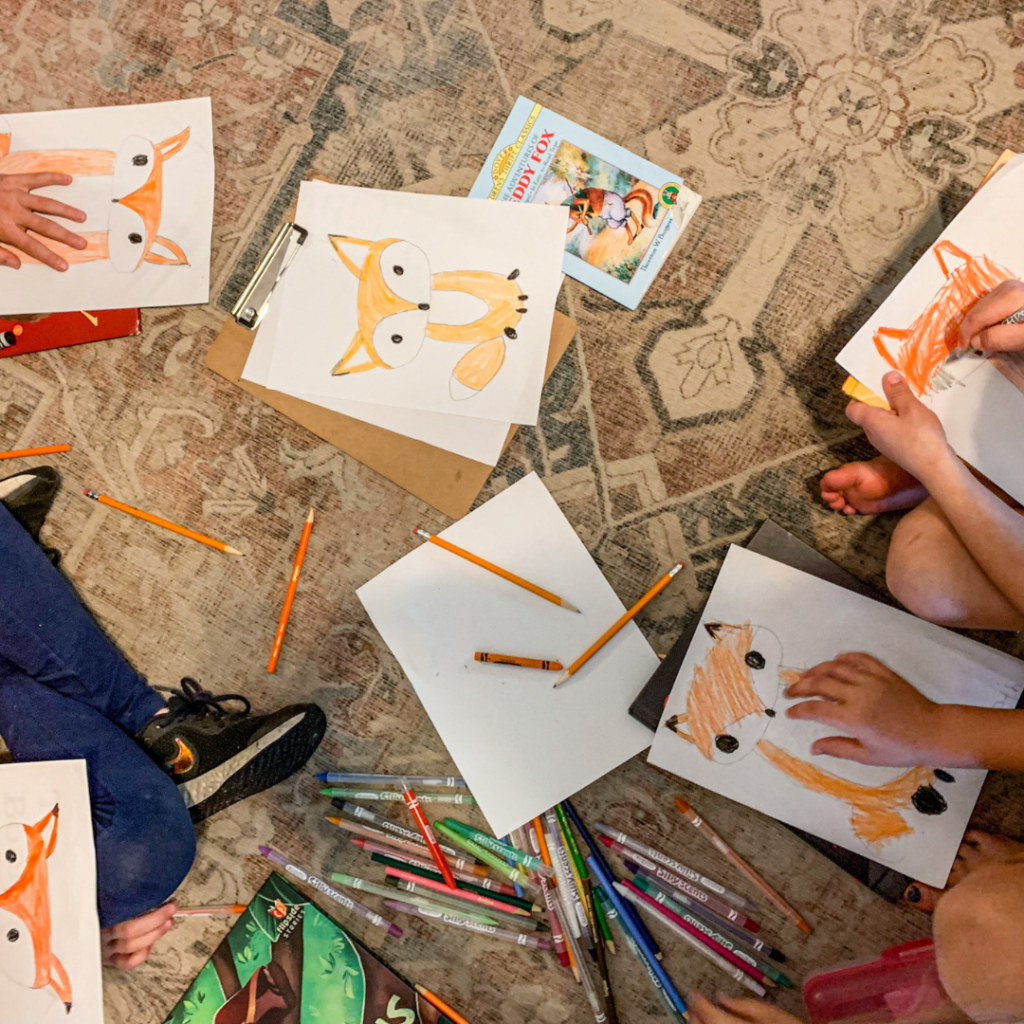
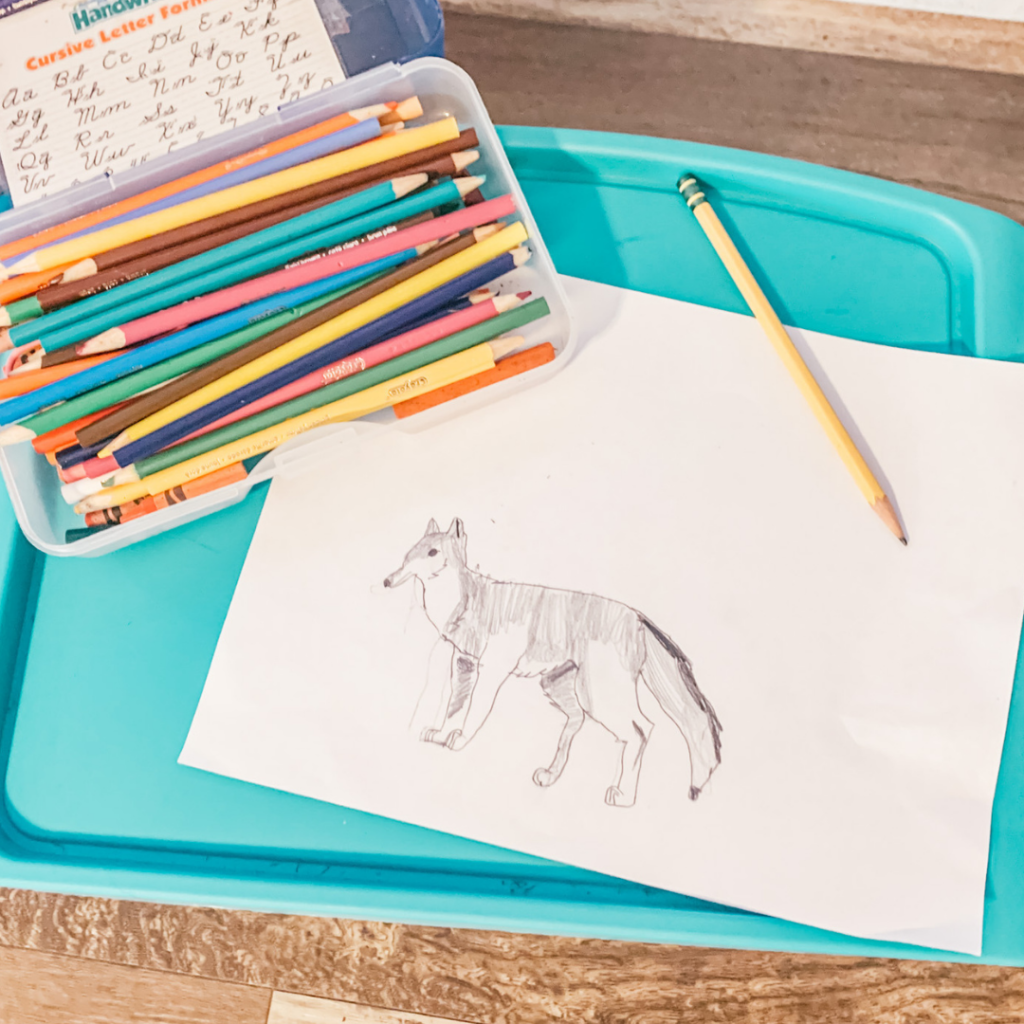
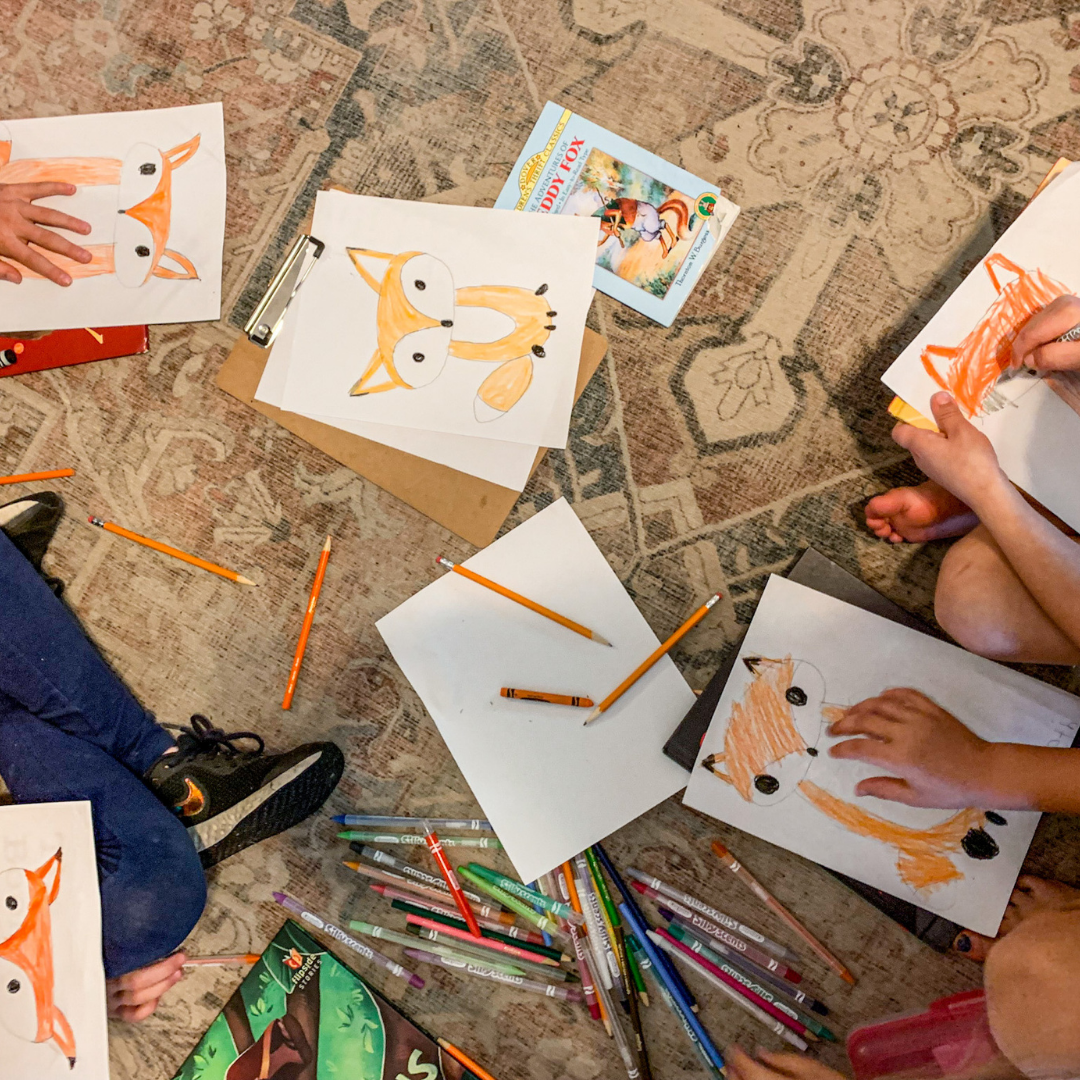
ANIMAL RESEARCH: Sarah’s father lets her know that she hears a fox and a wolf as they are trying to sleep. Learn a little more about one or both of those animals. Watch an educational video on YouTube. Check out books from your library. Draw a picture of one or both. You can copy it from a book you have or check out Art for Kids Hub for an easy drawing tutorial:

Click HERE for a wolf drawing.

Click HERE for a fox drawing.

Chapter 2:

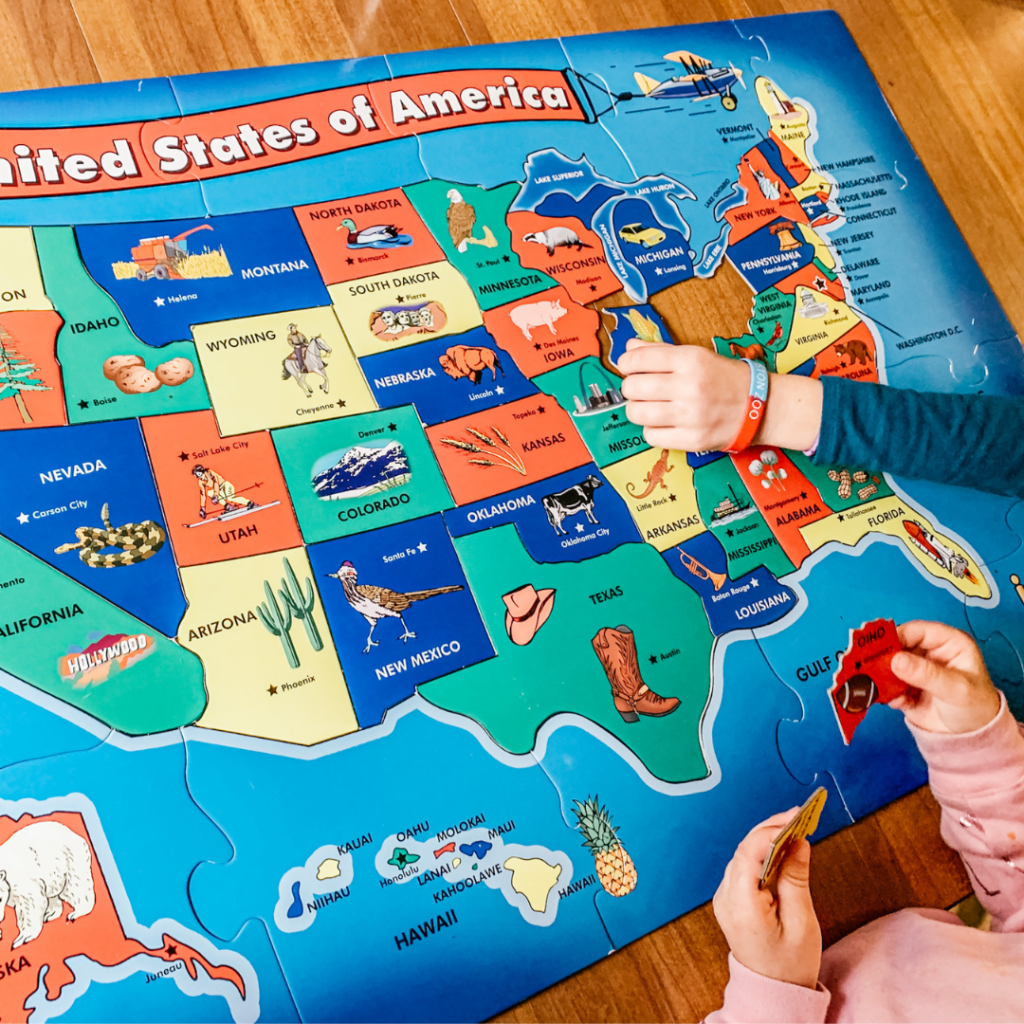
MAPS: In this chapter, we find out that Sarah and her father are traveling from Massachusetts to Connecticut. Complete a US Map puzzle together and point out these states. (This puzzle is our favorite.) Then, point out where you live!

FOREST DREAM: At the end of the chapter, Sarah describes what seems like a dream full of trees. Imagine what this might look like. Draw a picture OR get out paints. Watercolors would be fun and less mess! She mentions men moving in the background. Add it to your drawing/painting. Who might those men be?

Chapter 3:

KINDNESS: Sarah and her father recall the mistreatment they experienced at the settlement. Over and over, Sarah’s father talks about the importance of kindness. Keep this activity simple. How can you show kindness in your home? How about at the park? Or while you are with friends?

Check out this blog post for a list of books about kindness. You may have some at home or visit your library website and see if you can check them out.

Lastly, consider spreading kindness in your home or outside of it:

  • write a letter
  • deliver baked goods
  • offer to complete someone’s chore
  • write a thank you
  • let someone else go first
  • share your toys…the list could go on!

Chapter 4:

JOHNNY CAKE: Sarah is so excited to eat something besides dry johnny cakes! Have you ever tried them? Visit this site to read a little bit of history and for a recipe to make your own. Would you love eating them all the time?

ANIMAL RESEARCH: Animals are always so fun to learn about. Just as you may have done before in chapter one, you can look into skunks, especially if your child(ren) enjoyed the research. Your local library, personal library, or even YouTube may have some great information to look into.

Complete a super simple skunk craft by following this video. Be sure to check it out. It’s more than just a drawing and would be really easy to put together.

Chapter 5

NATIVE AMERICANS: Sarah observes the Indians near her new home. She notices their houses built of bark. Check out the book, “North American Indians.” and learn so much about history and the way different tribes lived. See an example of the different homes they built and learn about their lifestyle. This is a fantastic history book to add to your library.

BIBLE STORY: Read the story of Samuel together with your family. Find it in your Bible in 1 Samuel 3:1-21. Talk about how the Lord spoke to Samuel.

Chapter 6

LANGUAGE: Do you speak more than one? Can you speak a few words in another language? The chapter is titled “Friends”. Did you know that friends in Spanish is “amigos”? Visit www.signingsavvy.com and see how to say friends in American Sign Language. What other languages would be fun to translate the word “friends”?

Chapter 7

MAPLE TREES: Are there maple trees where you live? See them in person if you can. If not, look up pictures or read about them in books. In the fall, the leaves turn beautiful colors.

If you feel up to a painting craft, check out this fun, easy broccoli-print maple tree.

Chapter 8

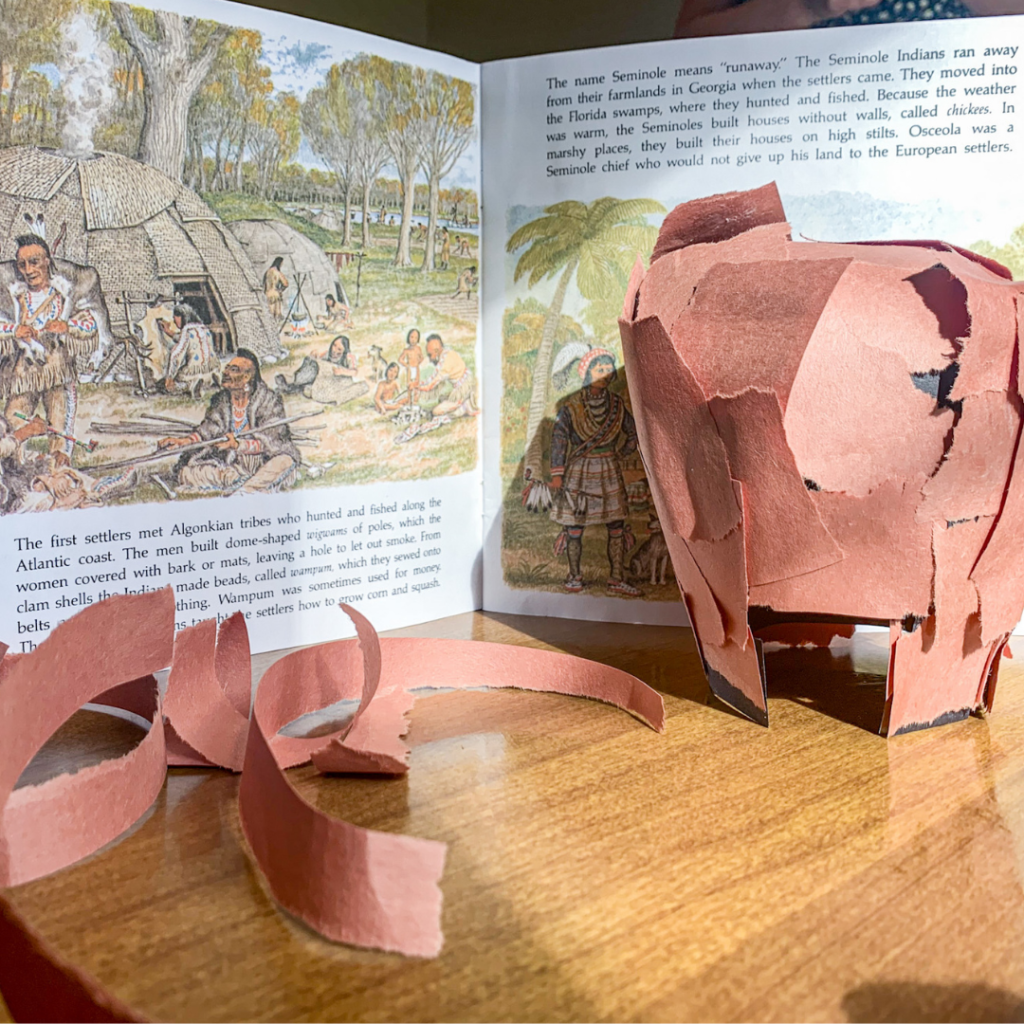
NEW HOME: Sarah finds out she has to live with the Indians temporarily. Based on her description of their homes, the location, and the illustrations in the book, we can assume that the home might have been similar to a wigwam. Construct a wigwam home that is similar to this out of construction paper. See this blog post for full instructions. What might it have been like to live in a home like that?

Chapter 9

BASKET WEAVING: Sarah learned many new things staying with the Indians, including how to weave her own basket. Try making these simple woven bowls with paper plates and yarn.

Chapter 10

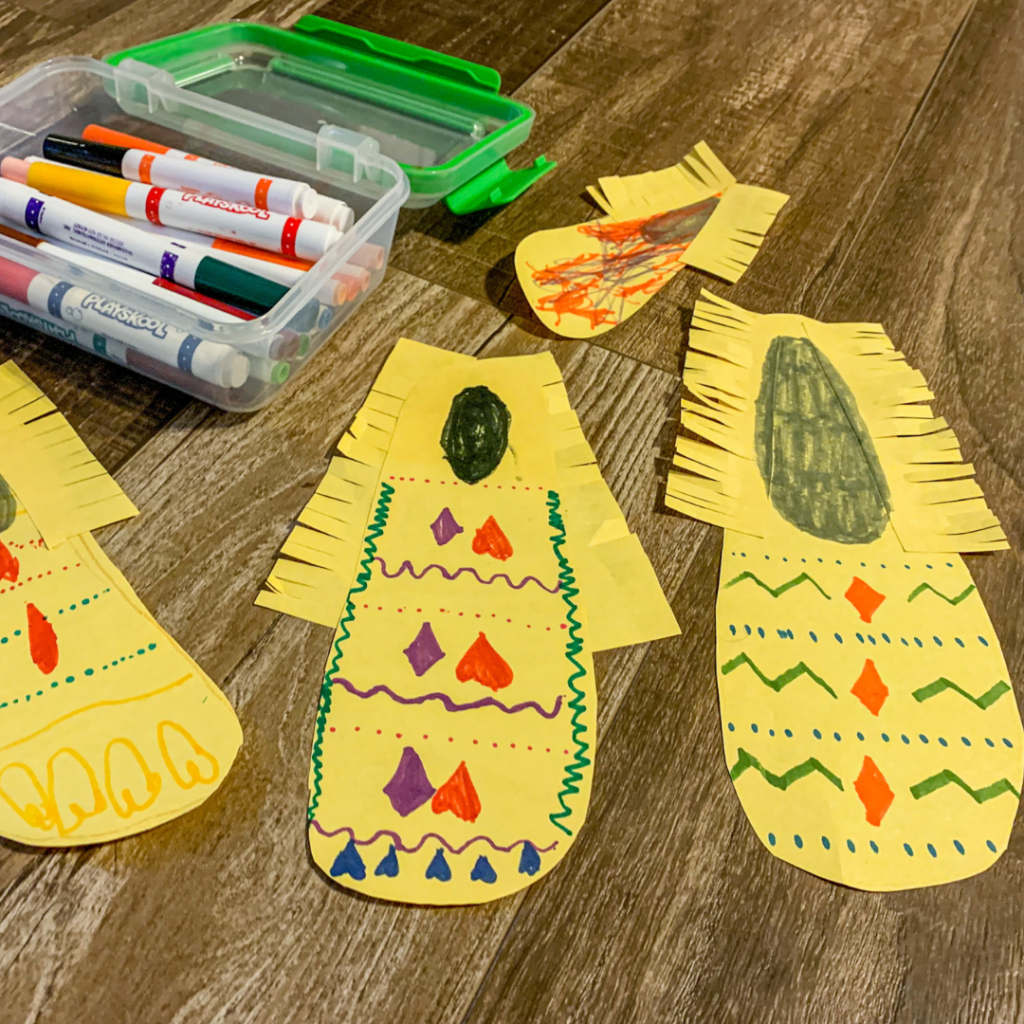
MOCCASINS: Read about moccasins from Brittanica Kids. Do an online search for images of different kinds of moccasins. How were they decorated? What were they made from? Make a simple paper moccasin. Trace your child’s foot onto yellow construction paper. Cut it out and let your child decorate the top. Next cut strips of paper about an inch thick. Cut mini strips to create a frilly look. (See the image above) Use a glue stick to add the frill to the shoes.

Chapter 11

GROWING UP: Sarah thinks she wants to be a teacher when she grows up. Talk with your children about what they want to be when they grow up. What do they hope to accomplish? What did mom/dad want to be when they grew up?

Simple, Flexible, and Fun

That’s what I want this to be for you and your family. Do as little or as much as you’d like, and most importantly enjoy the book with your sweet kiddos.

If this was helpful for you or if you have an interest in more like this, I’d appreciate it so much if you let me know. Leave a comment below. Send me an email jaimie@simplylearningtogether.com. Or, reach me on Instagram @simply.learning.together.

As always, I love seeing all of these activities in action from your families! Please tag and share with me on social media. Seeing you guys enjoy these at home brings me so much joy!

Looking for more novel-based units?

If you like a variety of activities like this, check out my Read Aloud Experiences. These novel units walk you through each chapter and provide multiple ways to experience the book inside your home.

Read Aloud Experience Units

Language Arts Without All-in-One Curriculum

A few years ago, my family ditched the all-in-one workbooks and focused on novels for our language arts study. It’s been the best decision, and we actually have fun learning the subject! After forming a good rhythm in my own home, I now have multiple novel units available for purchase as well. These units take you through a novel with chapter summaries and discussion, provide enrichment activities and literature, AND they will help you hit all the parts of language arts including spelling, grammar, vocabulary, and even some writing! Don’t miss these!

Download a free sample.

See more novel units.

More Literature-Based Curriculum We Love

American History Through Picture Books

Science Through Picture Books

Picture Book Studies (Grades K-2 Language Arts Curriculum)

Posted on Leave a comment

Homeschool Day in the Life with 4 Children – Ages 7, 5, 2.5, 1

homeschool day in the life

Days in the life are so interesting to me. I love seeing how other families live out there day. I feel like I can learn something from everyone. The differences are incredible and it’s just proof how wonderful the flexibility of homeschool really is.

We do not schedule out our days, but we have a daily rhythm that we follow. Having little ones means it changes pretty often as we adjust to new nap schedules and such, so I thought I’d share what we are doing now, and as things change, I can share again.

I currently have a second grader, kindergartener, an almost-three-year-old, and a one year old. The following is what we’ve been doing since August. We’ve made minor changes here and there, but the routine has stayed same.

This post contains affiliate links. If you follow one of my links, I earn a small commission at no extra cost to you. Thank you for supporting my blog!

Wake-up between 6-7

This is still very inconsistent for us. We all wake up at a different time each day, but it is usually between 6 and 7. With four kids in the house, things move quickly right from the get-go. So, it’s important to me that I make the right choices to start the day on the right foot.

My best days are when I keep the TV off in the morning. Attitudes from my kiddos are just better all around. There are days when I cave and turn it on, especially if one child gets up VERY early. Sometimes it helps if I immediately turn worship music on. It always makes me feel good and the desire to have the TV on usually goes away.

Mom’s Quiet Time

By 7:00 the whole house is up, and the very first thing I do is have a few minutes of quiet time and prayer. My husband is home, so he will stay with the kids while I step away for just a bit. I’ve read a few different devotions, but my favorite so far is “Unhurried Grace for a Mom’s Heart…” by Durenda Wilson. I mention it because it is written specifically for homeschool moms, and it really changed my prayer life when it comes to our homeschool.

I usually spend about 5 minutes reading the bible and a devotional (It’s not a lot, but it’s been such a blessing in this phase of our life). Then, I quickly get dressed for the day, making it about 10-15 minutes total.

Breakfast

Once I’m dressed, I make breakfast. It could be something delicious like eggs and sausage OR something as simple as frozen waffles. I usually plan out our meals for the week so there’s no guessing or planning during the day. I know what to expect for meals, and it takes a burden off of me not to have to come up with anything in the moment.

I’ll be honest, I used to despise meal planning. Well, I still do (ha!) but I’m ALWAYS happier when I do. There’s just something about not having to come up with a meal that just takes a weight off of your day.

Morning Chores

After breakfast, we all work together to start the day with a picked up house. It sets the tone and really helps us function better. My oldest two play a big part in this. I have a designated living room helper and kitchen helper. We rotate the job each week. Their job is pretty self-explanatory – one picks up the living room and the other helps me with the kitchen.

My almost three year old isn’t quite ready for a big job, so I give her the same job every day. She picks up the couch pillows. It’s super simple, but it’s teaching her that she plays a part in keeping our home together. The baby is probably climbing furniture or toddling around back and forth with us. One day he will play his part too 🙂

I wish I could say that we all happily do this every morning, but it wouldn’t be true. Each day has its challenges. Some days I have to do a LOT of redirecting. Other days go pretty smooth. Either way, our day is always better with a picked up house to start, and my children are learning how we all work together to maintain our home.

Get Dressed

I’m already dressed at this point, so I help my little two get dressed. At the beginning of the school year or after taking a long break, my two oldest girls follow a checklist to get dressed in the morning. This checklist helps me not have to ask 100 questions each morning: have you brushed your hair? Did you brush your teeth? And so on…

Once they get the hang of it, I don’t make them check anything off. It all becomes habit and my expectations are set.

Morning Time/Morning Basket (This is usually around 8:00am)

We don’t have a basket, but we pretty much follow the concept of what a morning basket does. I love this time together, but if I’m being completely honest, it is also one of the things that stresses me out the most during the day. I mostly get worked up because my younger two have trouble being still and quiet.

It takes an incredible amount of patience. It’s something we will continue to work on, because the things we go over are very important to me. Plus, the discussions we have bring me so much joy.

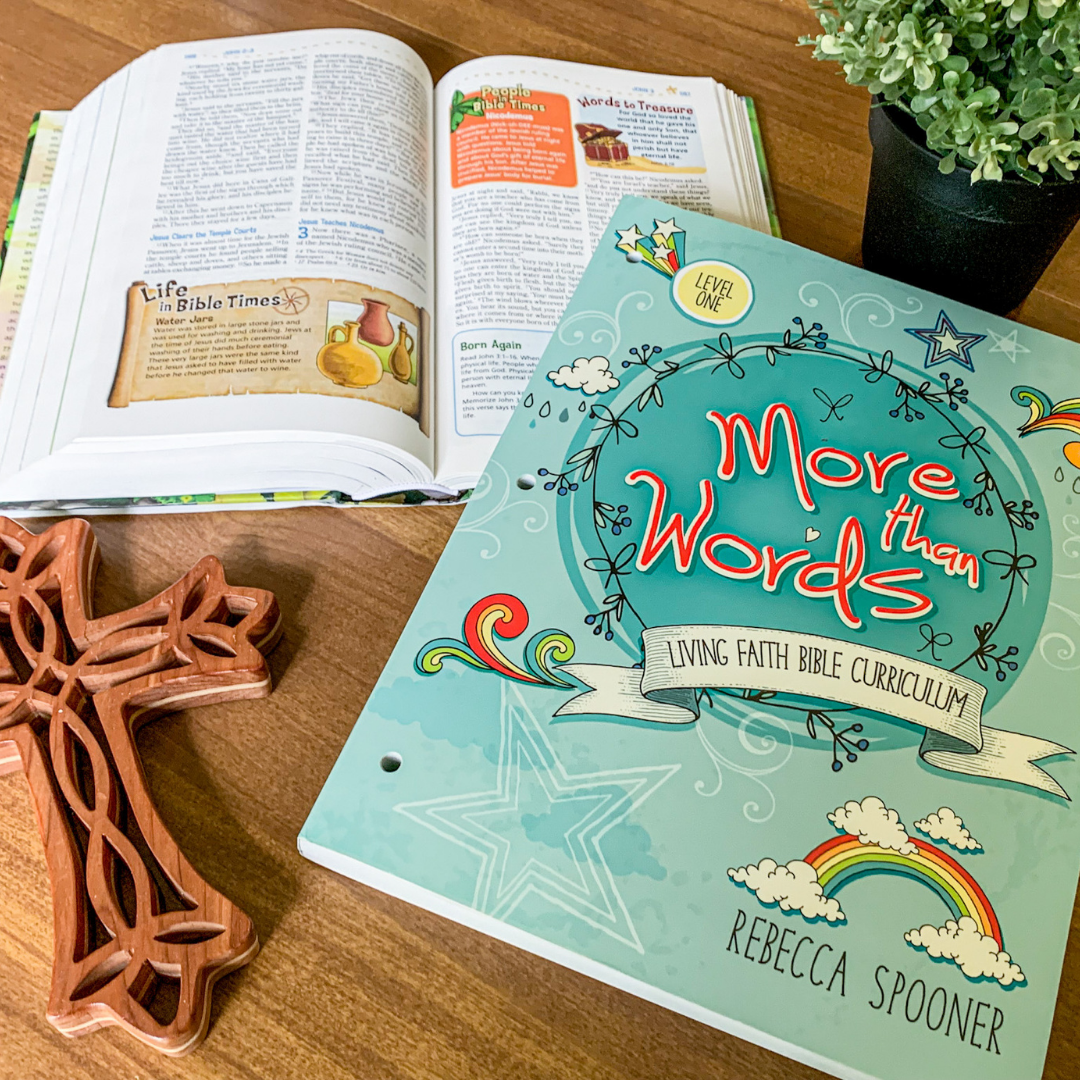
One day, I hope we can spend much more quality time together reading and discussing different things in the morning. Right now we read the bible, discuss our bible curriculum (More Than Words), read a poem from our Nature Book (my kids LOVE this!) and review our Classical Conversations memory work for the week. Total time is about 20 minutes (on a good day!) It’s short and sweet in this phase of our life, but it’s beautiful.

Outside Time

In my experience, a day that starts outside brings better attitudes and happier learners. This is all free play. I will usually work on setting up our school table and looking over the workbooks for the day. If I want to prep an activity, I can do it at this time. This is also a time I can connect with my little two by reading books or sitting on the floor with them. At around 9:00, my youngest child takes a nap.

Time for School! (9:15ish)

It doesn’t matter to me what order my kids do their work. I usually let them choose. They have a goal to accomplish a certain amount of work each day. My second grader completes a math page (Horizons), Language Arts lesson (Christian Light Education), and a handwriting lesson (A Reason For).

My kindergartener completes a math lesson (Horizons K) and a handwriting lesson (A Reason For). She also practices reading with me some days. We are not rushing this, so it looks different each time. Right now we are working through Bob Books to accomplish this.

My almost-three-year-old does a variety of things while we work. She has a notebook she likes to do with super simple prompts from me. I hope to do a blog post about this one day, but for now, follow me on Instagram and check out my Toddler NB highlight for tons of ideas for this notebook. It’s one of her favorite things.

I sometimes set out a blanket for her to play independently with toys or blocks. We call it her “spot” and my goal is for her to stay and play on it so that we can work on something. It’s a work in progress.

If the notebook or “spot” activity do not work, a snack is always a go-to while we work through our books.

All of book work takes anywhere from 1.5 to 2 hours. My baby USUALLY sleeps through it all and whatever doesn’t get finished, we catch up in the afternoon.

Outside

This is another outside break while I get lunch ready. If I have not made it outside yet during the day, I really try to get out in the sun at this point, even if just for a few minutes. Outside time is so important for mom too. If you aren’t getting some sunshine, I highly recommend finding a way to get outside during your day.

Lunch (11:30ish)

Some people like to read at lunch or maybe even do a simple activity. I can’t. I’ve tried. I like to just sit and eat with the kids. We chit chat a bit and just relax.

Catch-up/Free Play

Between the end of lunch and our quiet time, a variety of things could get done. We catch-up with any school work as needed. If all of that is finished, we go outside and play.

The baby and my youngest daughter nap at 1:00. So, if I want to do anything that would be best without little ones running around (baking/craft/experiment), I will do it between 1 and 2.

2:00 Quiet Time

My oldest two go to separate rooms and have about an hour of quiet time. They can choose what they want to do or play with during that time.

My husband works from home, so this is when I go for a run. I enjoy running, but I mostly love the fresh air and quiet. I like to listen to homeschooling podcasts, and I get a little energy boost for the remainder of the afternoon.

3:00 Pick Up and FREE

At this point in our day, we are done. I really try to make sure afternoon chores get finished before I send them off to play. Afternoon chores include cleaning up bedrooms and the school room. It’s easier than having to call them in later to do it.

This is also a great time for me to do my reverse planning. As we clean-up our school room I look over work, correct or discuss anything that needs attention, and then I’ll write down all that we accomplished for the day in the planner. This is my first year reverse planning and I love it so much!

During any free play period, I am always encouraging my kids to go outside. The more time outdoors for us, the better.

We eat dinner around 5:30 and between dinner and bed time at 7:30 we might spend time outside, play a game, or watch a show together.

I’ve moved our read aloud time to before bed.

This has been so much easier because my baby is already asleep. Everyone is settling down, and it gives us all something to look forward to before bed.

Keep in mind this schedule is on a day where we are home most of the day and have no extra-curriculars. Right now, that’s only two-three days out of the week. So, although this is our routine, each day might look a bit different. What a blessing to be able to be so flexible with our time!

Soon, my youngest will drop a nap and everything will adjust again, but that’s all a part of parenting in general. When the time comes, I’ll probably play with a few different routines to see what works best with those changes. I look forward to sharing that with you soon.

I’m curious, does your day look anything like this? I’ve seen such a variety of homeschool schedules and I love learning from all of them!

Posted on Leave a comment

Simple Homeschool Activity: Seasonal Themed Self-Check

christmas self check

It’s just after Christmas, and I have the cutest activity to share with you, but don’t think this is just for Christmas! Scroll down and I’ll show you how you can use this at any time of year.

Somehow, the Christmas season always gets BUSY. It’s hard to fit things in. I usually start my December imagining all of the beautiful Christmas crafts and ornament making that we will do in our homeschool…and then the days fly by and I haven’t done one of those things!

This year I chose to keep it super simple. I didn’t in advance (besides choosing our advent study), and I threw things together as they fit into our day. One of the things we did was add a simple self-check tool to mix up our lesson and add a little festive fun to our day.

This post contains affiliate links. If you follow one of my links, I earn a small commission at no extra cost to you. Thank you for supporting my blog!

This simple self-check activity can be done with practically ANY subject.

It’s a way for your child to check their own work and correct as needed. I love doing this, because it means I don’t have to check over as much that day (yay!) AND it provides my child with an opportunity to problem solve when they can’t find their answer. Let me explain.

You need just a few things to put this together…and maybe about 2 minutes of prep time.

Grab a pencil, scissors, green construction paper (although any color works!), a pen/marker, and dot stickers (dot markers work too! Or, even simpler…just color in the circles. Don’t sweat this!)

Cut out a simple Christmas tree from the construction paper. Choose an activity from one of your workbooks that you want to use and select 8-10 problems. I chose the math lesson for the day and picked about 8 addition problems from a section in the lesson.

Draw that many circles on the tree and write the answer (Yes, the answer!) inside the circles.

As a problem is completed by your child, he/she will look for the answer on the Christmas tree and cover it with the dot sticker.

Don’t see your answer, time to try the problem again. When all the circles are covered, the problems are solved correctly AND you have a cute Christmas tree with sticker ornaments. I even used mine to decorate the school room!

This is something you can do with all AGES!

Answer math problems, read sight words, match capital and lowercase…the options are endless! I love an activity that can work with something I already have, and that’s exactly what this is. Use it with any subject!

This doesn’t just have to be for the Christmas season. See below for ideas for any month of the year:

Simply sketch one of these images below and cut it out of construction paper. All of these can be quickly drawn and easily cut.

January: Snowman

February: Hearts

March: Clover

April: Flower

May: Sun

June: Beach Ball

July: American Flag (4th of July) – It would be so fun to color code this one with red, white, and blue

August: Big Pencil

September: Apple

October: Pumpkin

November: Turkey (keep it simple here! Think a circle for the head and body and some big feathers surrounding it.)

December: Christmas Tree

Have fun self-checking at any time of year. Share your self-check activities with me on social media. (@simply.learning.together)

Posted on Leave a comment

10 Ways to PLAY with Shapes Using Items Around Your House

play with shapes

My youngest daughter will be three in one month. She loves shapes so we are always playing games with them. My kindergartener is also working on mastering the names of all different kinds of shapes so I wanted to share different ways we have played with shapes to learn them.

This post contains affiliate links. If you follow one of my links, I earn a small commission at no extra cost to you. Thank you for supporting my blog!

1. The first one may seem obvious, but do a puzzle!

We have a couple shape puzzles at our house, but our favorite is a Melissa and Doug wooden puzzle. These are so great to have for multiple age levels. I also love to use the pieces for a variety of games, which you’ll see as you keep reading.

2. Scavenger Hunt

Use your wooden puzzle to do this next one. Hide the pieces around your house or around the room. (Try not to forget where you hide them!) As your child finds the pieces, place them in the puzzle. Call out the name of the shape. Play this same way OUTSIDE on a beautiful day. The fresh air will really add some goodness to your day.

3. Sidewalk Chalk

Draw large shapes on your sidewalk with chalk. Depending on your child’s age, he/she can draw them or you can draw them. Call out a shape and have your child jump inside that shape. Keep playing until you’ve called all of the shapes.

4. Spray Bottle

A spray bottle with water in it can be hours of fun! Pick them up at the dollar store for an inexpensive activity! Kids love it, and it’s a great way to play with shapes. Use your sidewalk chalk to draw shapes outside on the concrete. Call out shapes and have your child spray them with the bottle. Want to add a challenge? Add some color to it – Can you spray the BLUE circle?

5. Surprise Shapes in a Bag

Use your puzzle pieces again and place all of them into a bag you can’t see through. Your child will place a hand in the bag without looking, choose a shape, and name it. I actually played this with my five year old and had her skip to the next room each time and draw the shapes onto a piece of paper. It added tons of movement PLUS she got the drawing practice. If your child isn’t drawing yet, just name them. For an added touch of fun, see if your child can feel the shape and name it before they see it!

6. Peek-A-Boo Shapes

This next one came upon us by accident. We originally used magnet tiles to create a tower with a door at the top. My toddler opened the door and peeked through the tower while I held a shape (from the puzzle again) at her eye level. You can get a better idea from the image above. She told me what the shape was. This sounds so simple, but we giggled so much and had a ball!

I eventually tried to come up with something anyone could use. Take a cereal box and cut a square out of the narrow side of the box. On the opposite side, cut a small hole to peek through. As your child looks through that hole, hold up a shape right outside of the square you cut. It’s really just a fun, silly way to look at shapes and name them.

7. Play Doh

Using Play Doh is especially great if you have shape cutters. We bought a set a long time ago that works awesome, but we also own a giant cookie cutter set that I use ALL. THE. TIME. and it has shapes in there as well. Simply roll out the dough, and cut shapes! I couldn’t find the exact cutters that we have, but here’s a link to a set with a few basic shapes.

8. Play Doh Pizza

We have also made play doh pizza with shapes. Your child is the chef and rolls out the play dough. Place your order with whatever kind of “shape toppings” you want. This can be so fun! All the toppings are cut out of the play dough. Set up a little restaurant and collect orders. Siblings can play too! Challenge your child by ordering half of one topping and half of another. Have fun with it!

9. Play Doh and Dice

Assign 6 different shapes to a number on the die. You could simply write this on a piece of scratch paper or maybe even a mini whiteboard/chalkboard if you have it. This is great for your 4-6 year old who may be practicing to recognize numbers on a die. Roll the die and call out the number. Cut out the correct play doh shape according to the assignments you set when you started.

Find a way to get a “winner”. You can do this by rolling a certain number of times (like 10) and seeing which shape was made the most. Or, you play until one of your shapes gets to 5. Keep it simple, keep it fun, keep it just right for your kiddo.

10. Shaving Cream

Don’t be scared of this one. It’s such a blast! And your kitchen will smell awesome when you’re finished. Spray a little bit of shaving cream on your counter or table. Give your child some time to spread it around and play with it for a little bit. Then, draw shapes with your finger! This can be free choice from your child or you can call out a shape for your child to draw.

There are so many ways to play with shapes while learning. I love these ideas because they all use items around the house. This makes it so easy to throw together last minute and have a good time learning with your little ones.

Posted on Leave a comment

Halloween Activities for Kids – Write and Play Mats

There’s something about October 1 that makes you want to spin around and soak up the season! Maybe it’s the sweater weather…or the turning leaves…but for me it’s the approach of the holiday season in full force.

Oh how I love the holidays! The themed activities, the baking, the memories…It all flies by so quickly but it’s just such a fun time of the year.

To celebrate, I created these Halloween Write and Play Mats for my kiddos!

Write and Play Mats are made to be versatile, flexible, and low prep.

You can simply print a black and white version to use as an activity sheet. Add color to the letter and ten frame. Trace the shapes, and play roll and cover.

You also have the option to print and protect the page to re-use over and over again. Pull out some play dough to add some hands on fun! Consider using Halloween candy as manipulatives and add some real excitement to math!

Two sets are available.

Preschool – Shapes and Numbers. Early Elementary – Shapes and Early addition. Each set comes with 10 different mats to practice with. (PLUS the black and white version as well)

Inexpensive, Festive, Fun, and Educational

These words just about sum up the beauty of these mats. Click on the image below to link to the store and download.

Halloween Activity for Kids