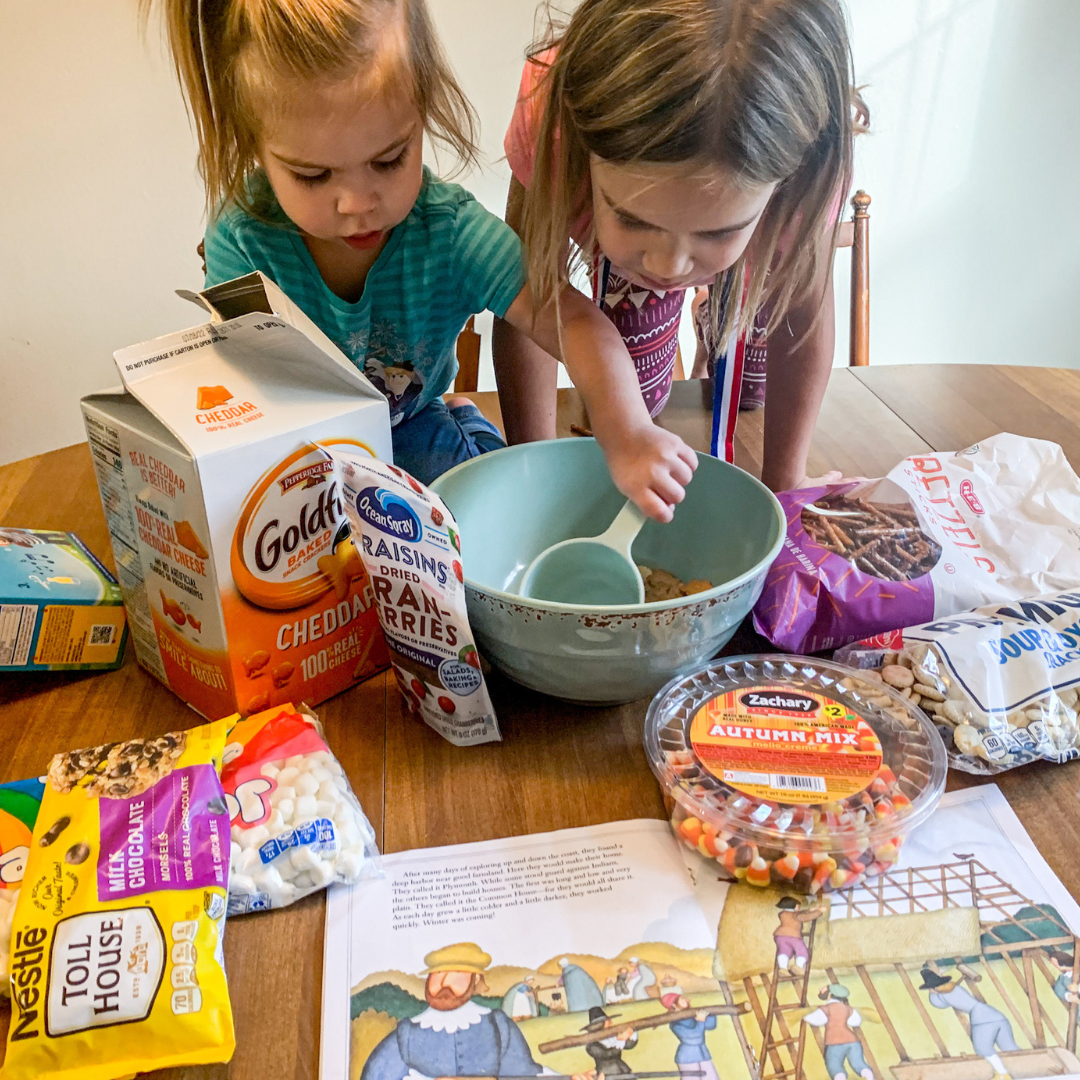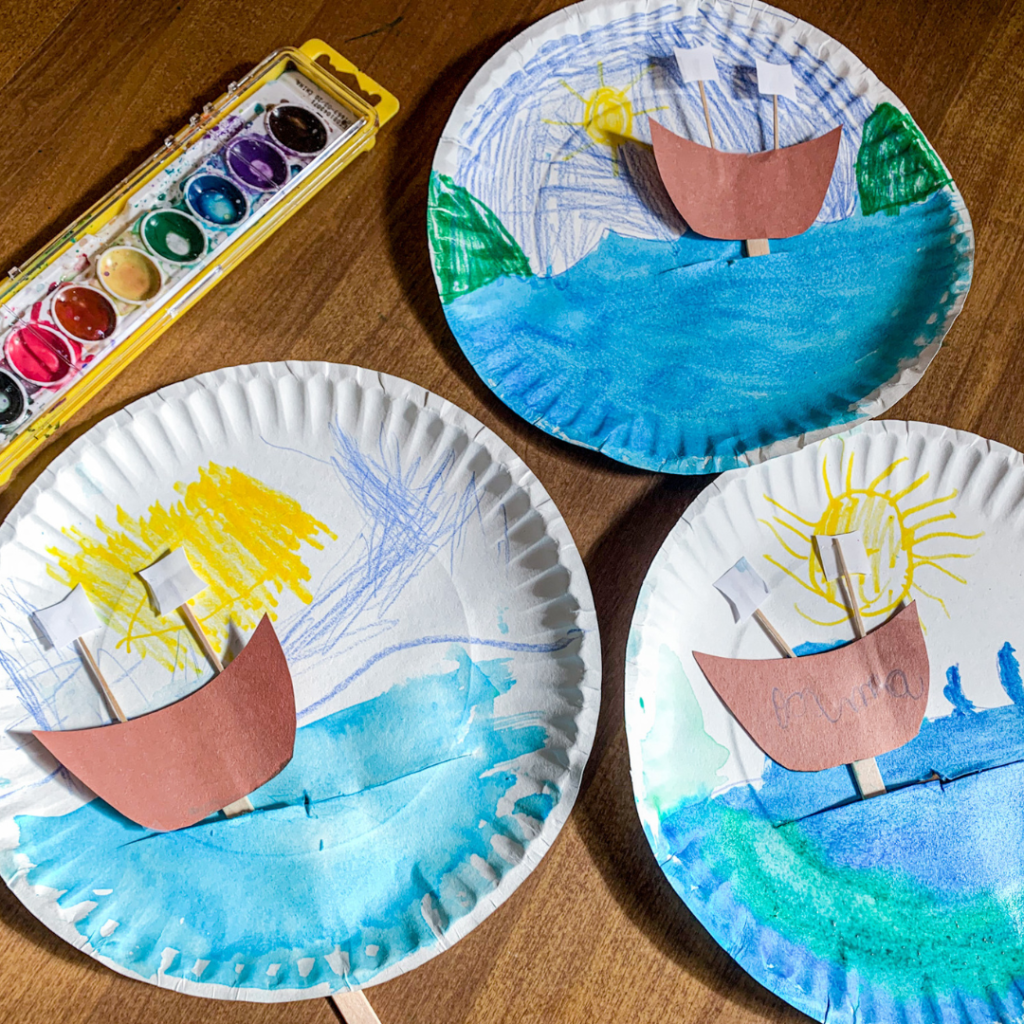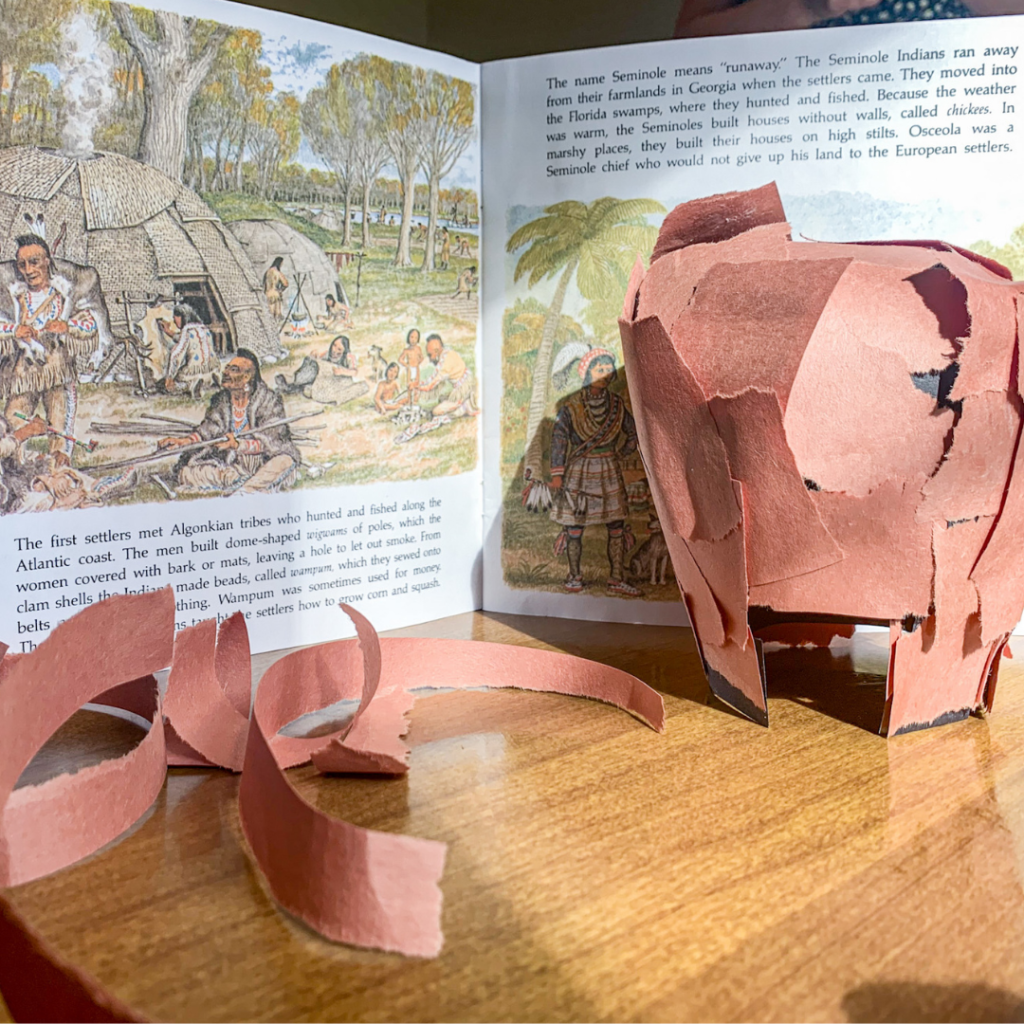
As we studied Ancient Rome in our homeschool, I looked for fun ways we could use food/snacks to further our learning. I love doing this because we already eat every day – so adding a food activity doesn’t take much extra time out of our day.
I was searching on Pinterest and came across a recipe for building a Roman road as a dessert – Now, this is my kind of activity. The problem was I couldn’t understand the reasoning behind the food choices, and honestly it didn’t seem like it tasted that great to me.
So, I brainstormed a few ideas of how to put one together, and we successfully learned about and ate a Roman road in the process!
This post contains affiliate links. If you follow one of my links I earn a small commission at no extra cost to you. Thank you for supporting my blog!
All about the Ancient Roman roads
I highly recommend doing a little research with your kiddos before jumping in to do this. It will make a lot more sense as you complete the process. We used a few YouTube videos and some of our library books to learn about the building of the roads.
Almost every Ancient Rome library book had a little something about the roads, so that was easy to find. We used this reference book which is very kid-friendly and has great pictures with easy-to-read bits of text.
The best video we watched was an animated video, but it really broke down the process of how the roads were built. This is what I based my recipe on, so be sure to check it out after you glance at the recipe and it will hopefully all make sense.
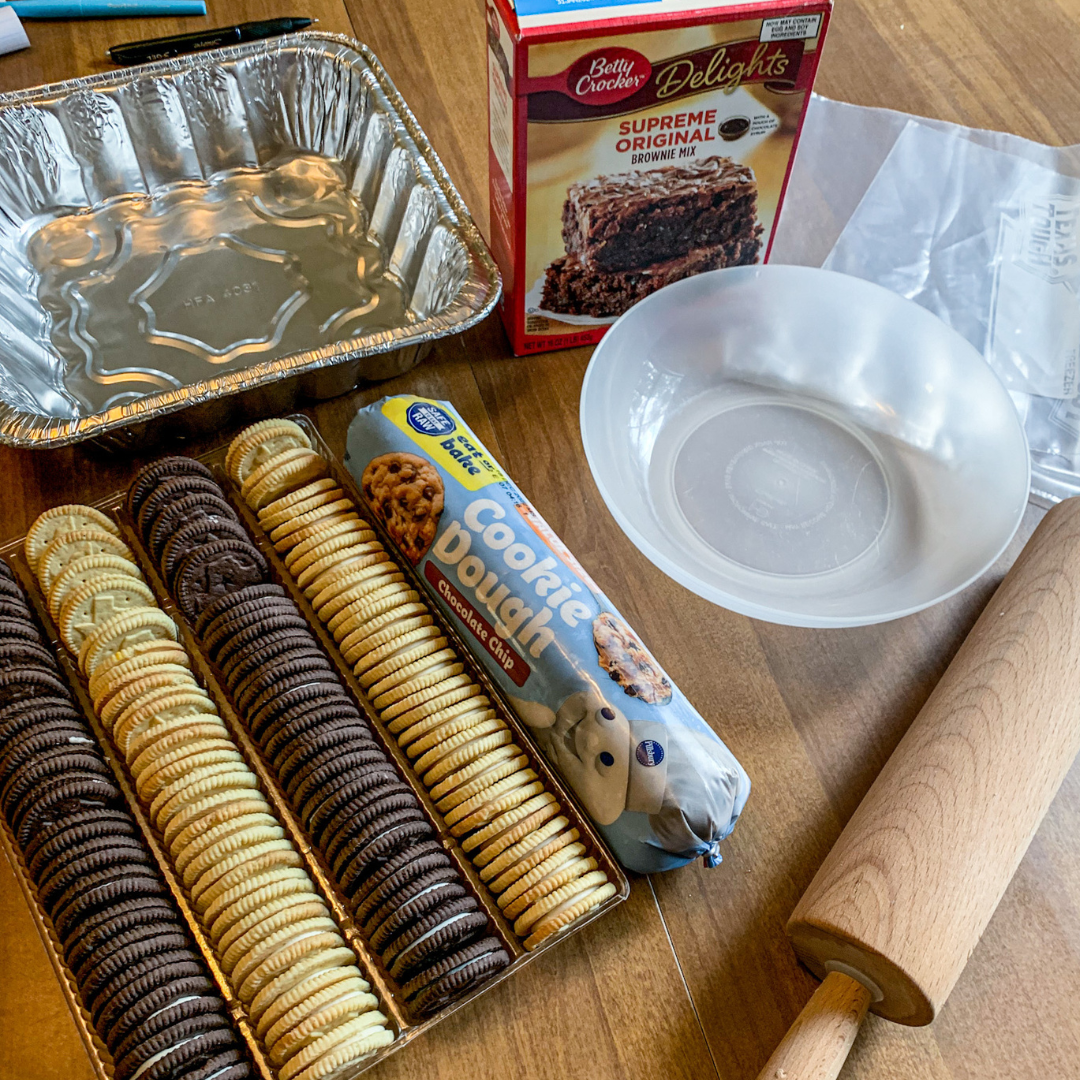
Supplies
Chocolate Chip Cookie Dough
Oreos
Golden Oreos
Brownie Mix (and the ingredients needed to make it)
Ziplock Bags
8×8 Pan
Rolling Pin (for smashing cookies)
Just as a heads up, our grocery store had a large, family-sized package of generic creme-filled cookies (that look like Oreos). It came with both regular and golden cookies so to save money, I purchased it. I kind of wish we would’ve used the brand name cookies, but all in all we still learned a lot and the product was delicious!
Setting the curb
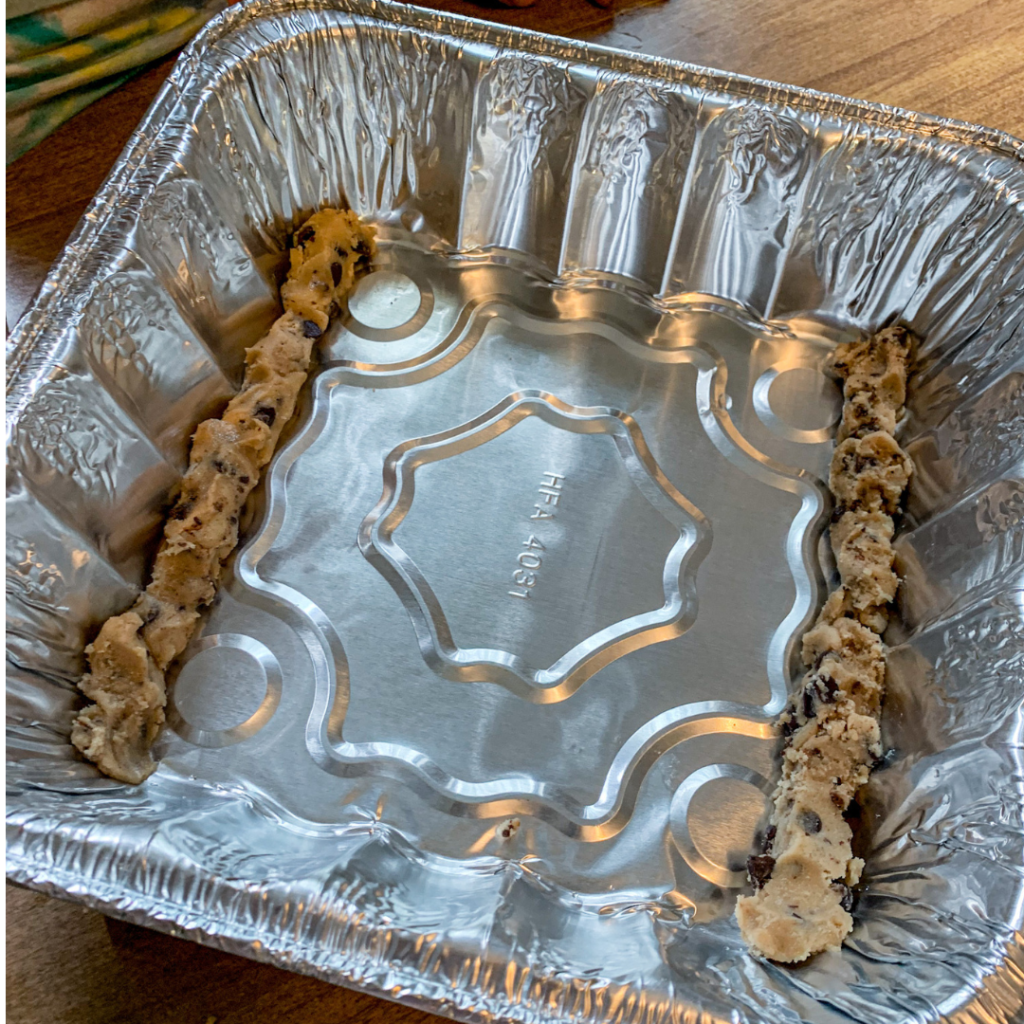
First we used the chocolate chip cookie dough to set the curb. We tore off small pieces of the dough and shaped them into little cylinder-like pieces. Then, we placed them along two sides of the pan to create the curb, just as the Romans would have done in stone.
Large Stone Layer
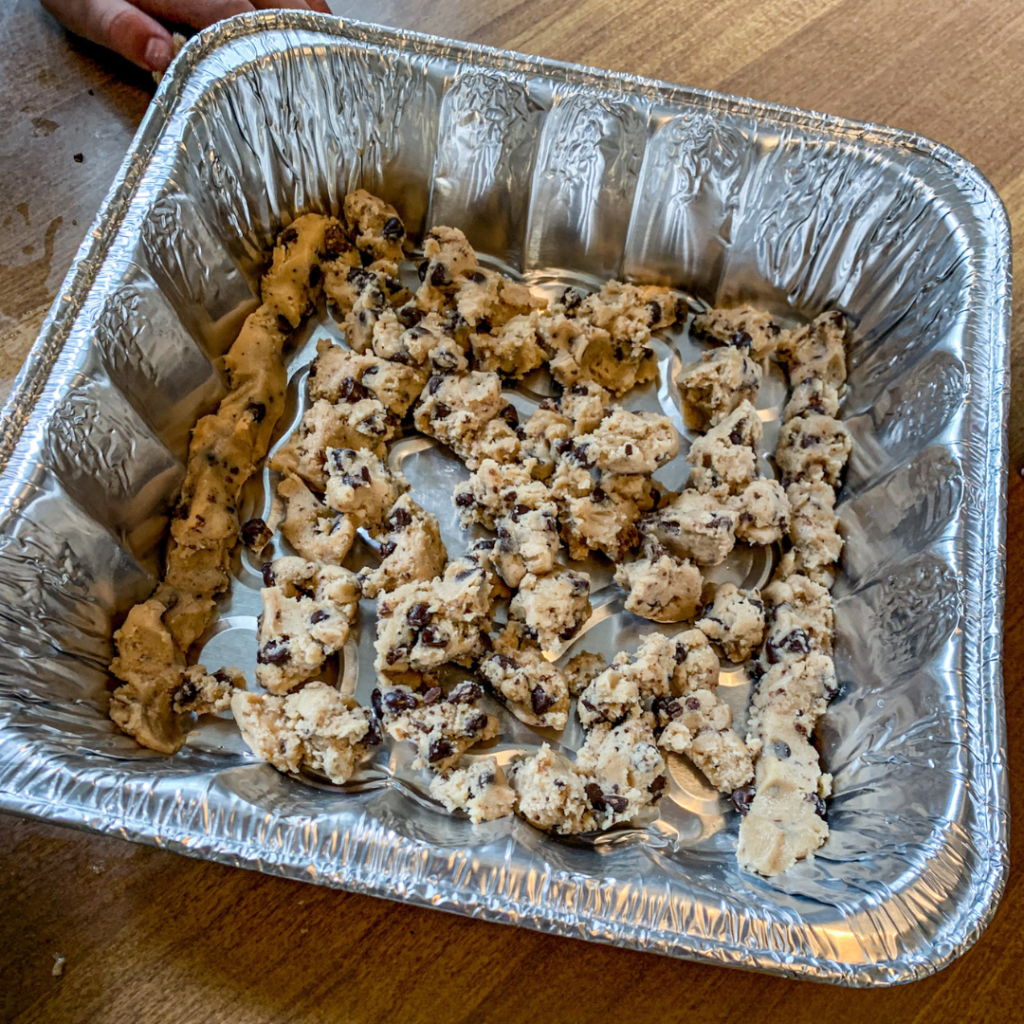
To keep it simple, this part is also made of the cookie dough. We tore off little chunks to represent the large stone foundation that was laid between the curbs.
Smaller Stone Layers
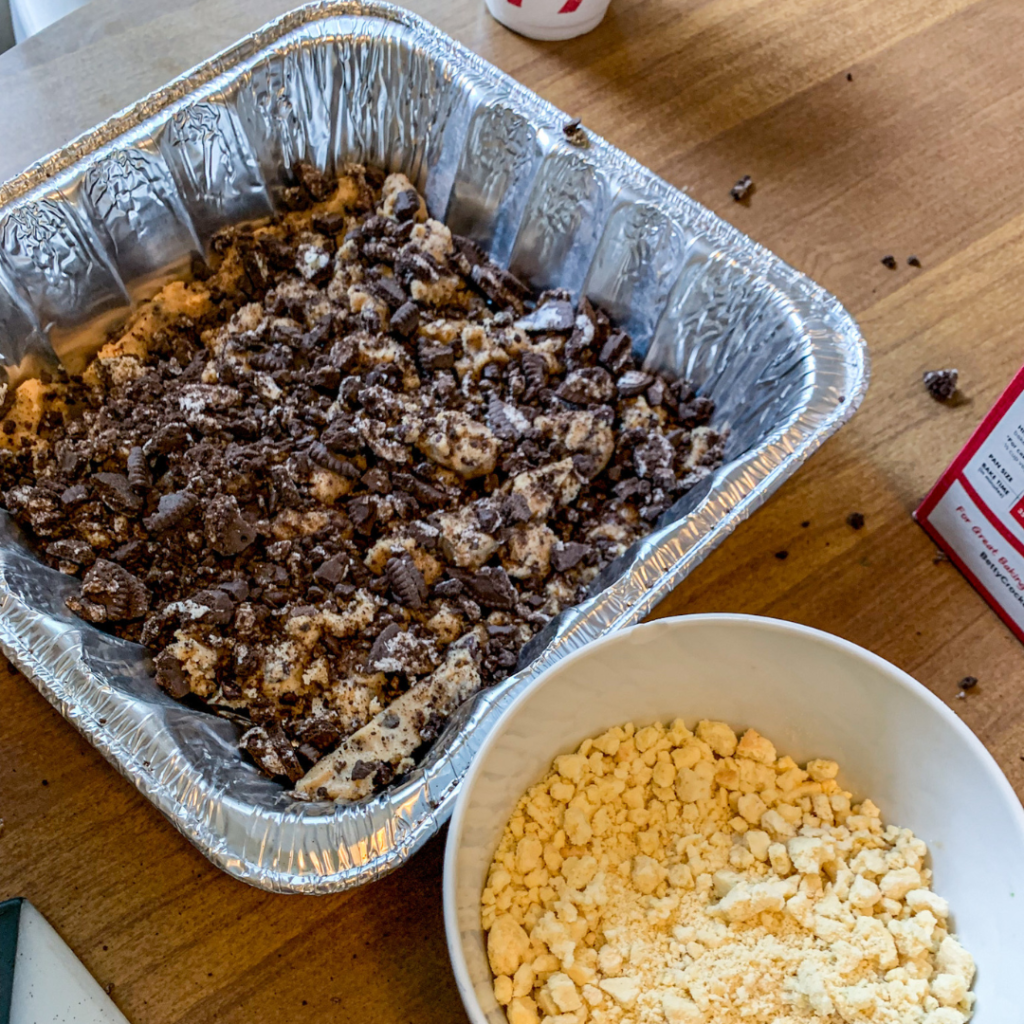
The next step in the road building process was laying smaller stones and sand on top of the larger stones. This would fill in gaps and create a solid foundation. We did a couple different cookie varieties for this.
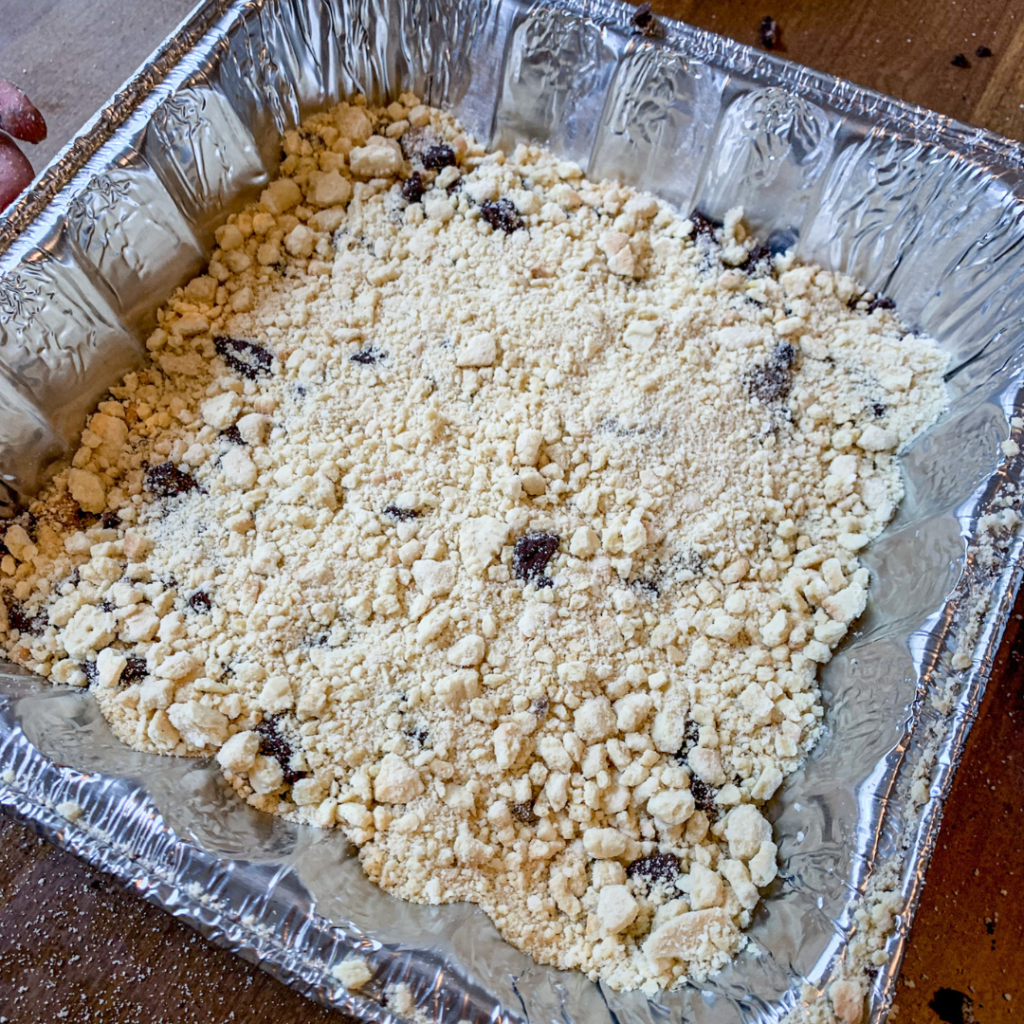
First, we put chocolate oreos in a bag and crushed them into chunks using a rolling pin. After sprinkling those on top, we filled a bag with vanilla oreos. The vanilla oreos were crushed into a sand-like powder.
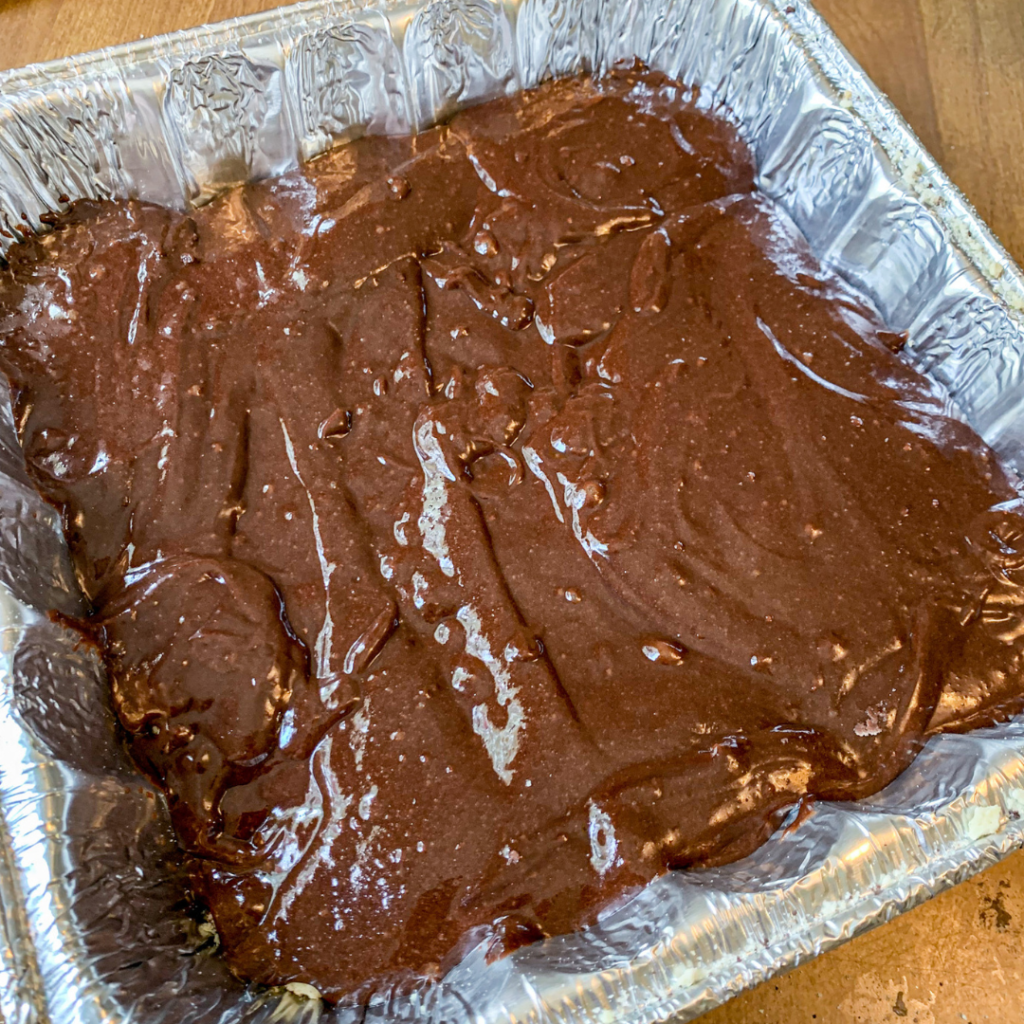
Finally to bind everything together, we mixed a box of brownies together and poured it all on top – YUM!
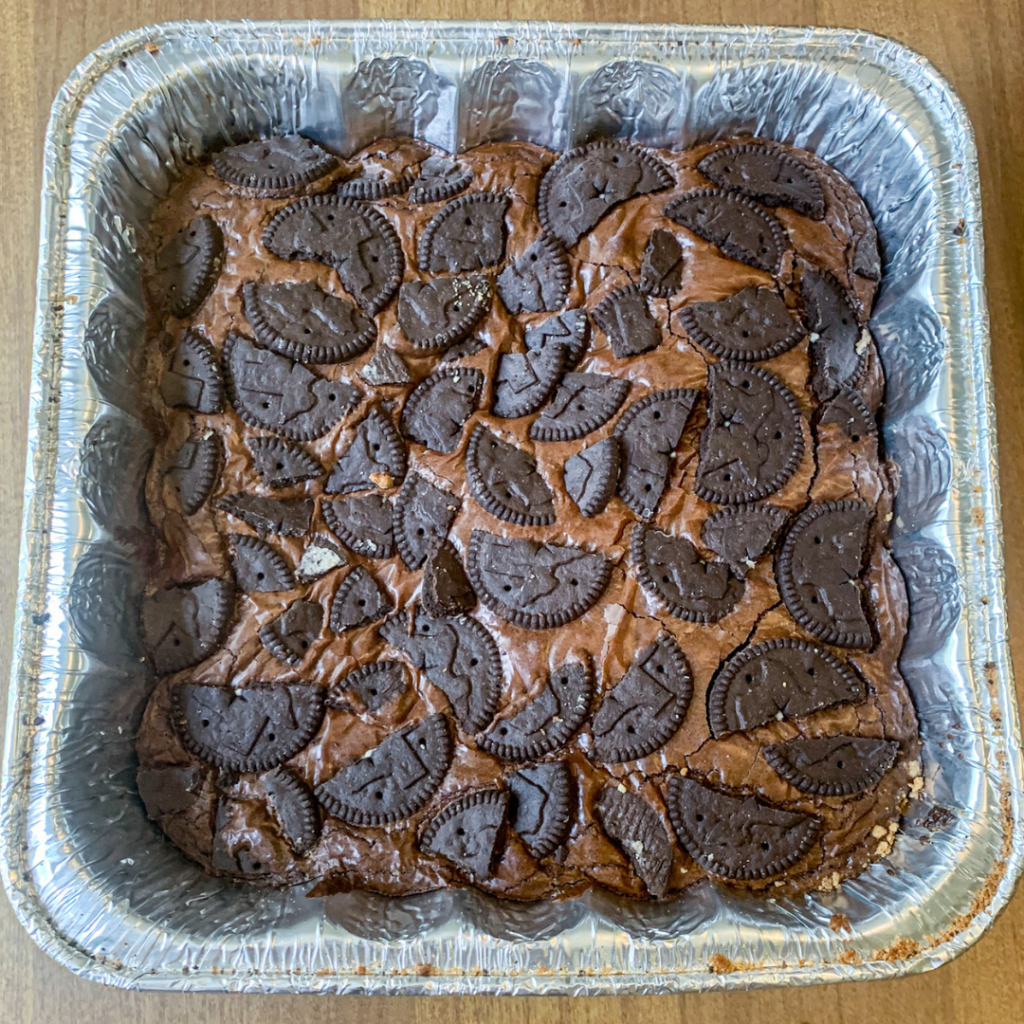
We had a few extra cookies left so we decided to take some of the cookie pieces and break them up. These were used to look like cobble stones on top of the road.
I pretty much followed the time on the brownie box to bake these. Be sure to let them cool all the way and then get ready to cut inside and see all the layers! What’s incredible is I was certain the brownie mix would mix all throughout the dessert, and it really didn’t.
But doesn’t that just prove the uniqueness and success of the actual Roman roads? Those things were solid! No wonder some of them are still around today.
This was such a fun little cooking experiment for us. It doesn’t hurt that they were absolutely delicious to eat, as well!
If you’re studying Ancient Rome, give this dessert a try! Snap a picture and tag me on Instagram @simply.learning.together I love to see other families learning together!
Check out all of the activities we did while studying Ancient Rome in my blog post.
We just wrapped up our Ancient China unit study, and it was a blast! I added in a Magic Tree House book to go along with our unit (#14: Day of the Dragon King), and it was a hit with my kids. We loved the story, it was easy to read, and it made learning the facts about China a lot of fun!
The following blog post is an extension to the FREE downloadable unit study guide I created for Ancient China. I created this unit study for my family with the help of library books, online websites and videos, a fictional novel, and a handful of fun activities and lessons across multiple subjects that we did together as a family.
It may sound complex, but it was actually really simple! If you’d like to learn more about how we put this together, please download the PDF at the end of this post for all the details which includes an actual schedule of how we completed our unit. (We spent 2 weeks studying Ancient China.)
Above all, I share this in hopes to inspire you as you prepare to teach your own children. I pray that these ideas provide fun, memorable experiences for your family to simply learn together.
This post contains affiliate links. If you follow one of my links I earn a small commission at no extra cost to you. Thank you for supporting my blog!
Bamboo Scrolls
I originally wanted to make these scrolls with popsicle sticks, but I could not find the sticks in my house anywhere. I ended up cutting strips of cardboard instead and it really turned out great! I was pleased with how thick I could make the cardboard, making it easier to write on.
I decided to have the girls practice writing some Chinese symbols on the cardboard strips so that we could do a little studying about the Chinese writing. I did a simple search and looked for symbols I knew would be easier for them to write. They loved it!
The secret to this activity was to work together to make one scroll instead of everyone making their own. It saved so much time and was a lot less stressful. I gave each of my older girls 1-2 strips of cardboard to write on and I wrote a few myself. Next, I tied the cardboard together with string following the same strategy I saw people using for popsicle sticks.
I’m so happy with how it turned out and it provided such a great visual for the kids of what a bamboo scroll was. We did watch a short video as well. I liked it more for seeing actual ancient Chinese scrolls than for what the content was. Check that video out here.
Paper Chain Dragon
As we were first introduced to the Dragon King in the story, I thought it would be fitting to read a picture book from the library called “D is for Dragon Dance”. It’s a beautiful book that uses every letter of the alphabet to talk about traditions for the Chinese new year.
After reading the book and discussing the symbolism of dragons for China, we made paper chain dragons. I came up with the idea by combining a couple similar crafts I saw on Pinterest. First, you’ll need a free printout from the Made With Happy Blog. This gives you a head and tail of a dragon to color.
Once we colored and cut those out, we used red and orange construction paper to make a paper chain for the dragons body. I was able to staple the head and tail to the two ends creating a long, colorful dragon. I needed popsicle sticks again! But cardboard to the rescue once more. I was able to cut a couple of strips to staple to the dragon on each end giving us something to hold on to.
It was fun to wave the dragon around and see it move. I’m so happy with how these turned out!
Silkworm Life Cycle
I honestly had no idea how silk was made and this process is just incredible to me. After reading all about silk weaving in our story and through our library books, we spent the afternoon studying the life cycle of a silkworm.
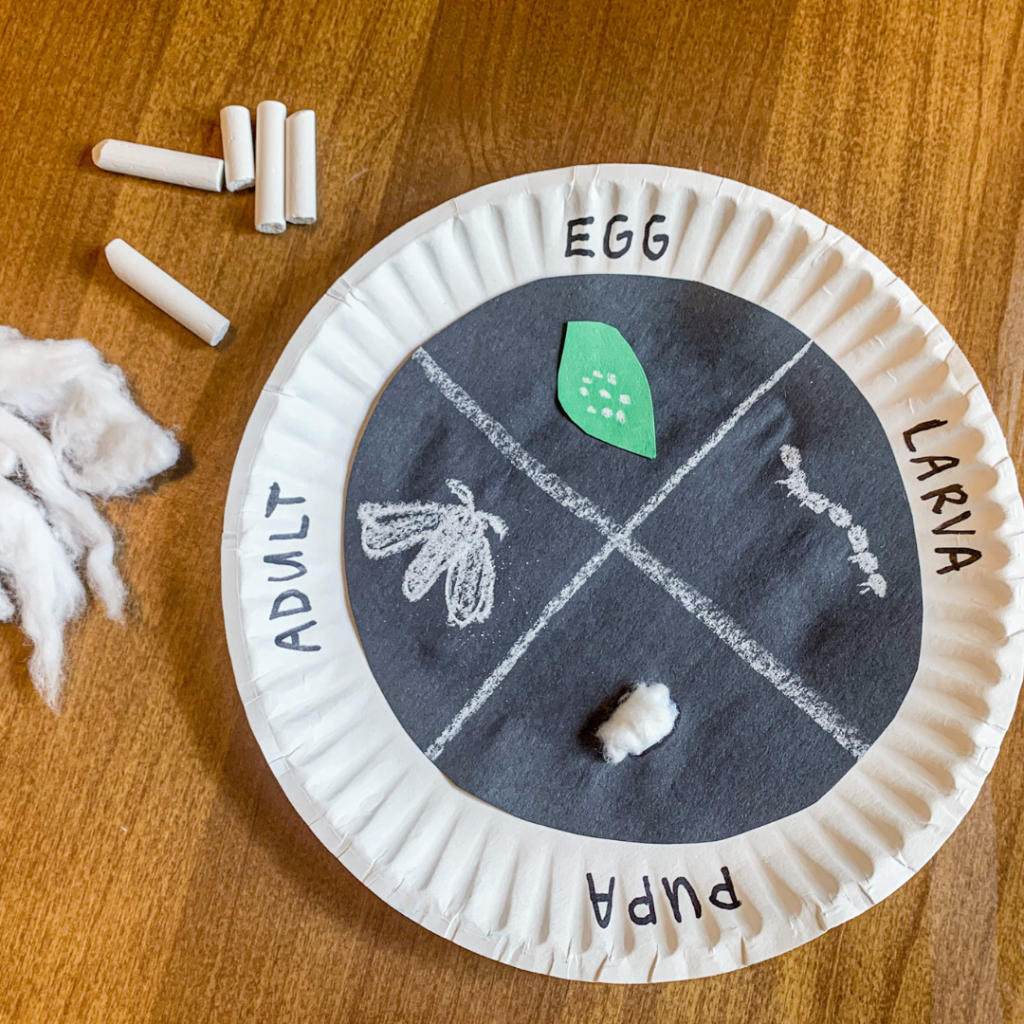
This was done with a simple internet search, teaching us that a silkworm goes through a metamorphosis – egg, larva, pupa, adult. I love using paper plates to make a life cycle diagram, but I thought it would be interesting to add a little twist.
Silkworms are a shade of white, so I cut out a black circle to tape to the paper plate, and we used white chalk for our diagram. It really turned out adorable. We used the pictures we found on the internet to copy our drawings. I broke apart and rolled up a cotton ball for the pupa stage, which looked awesome!
After labeling our diagram, we watched a couple videos teaching us even more about the process. It was neat to see some of the tools used to make silk but also to see how it’s made in factories today.
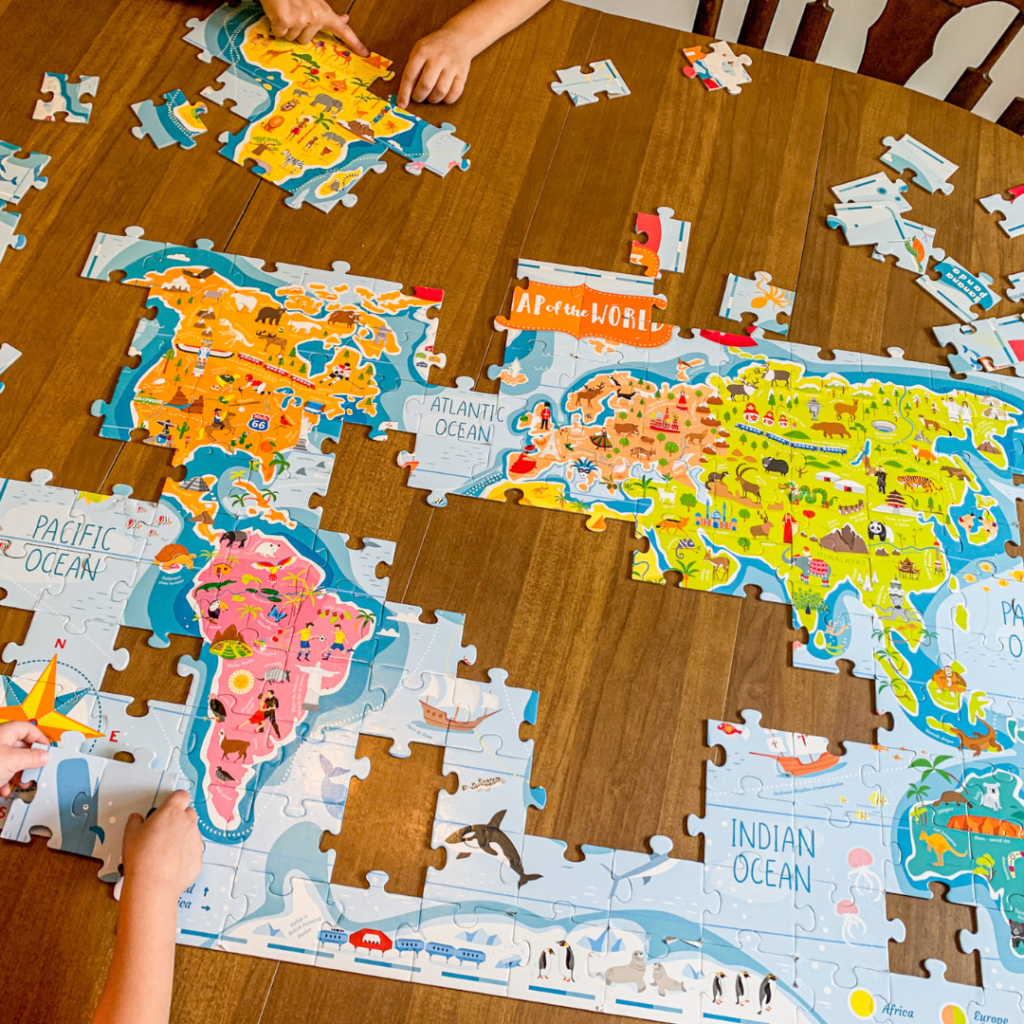
One day, we focused on the Great Wall of China. I wanted to look at a map for this so we found a few in our library books, but I also thought it would be great to look at China on a world map. We have a world map puzzle by Banana Panda that I absolutely love! We get it out all the time when we are studying other countries.
Once we put it all together we were able to look at where China was compared to where we were. We were also able to point out where the Great Wall of China is.
Next, we watched a great video sharing the history of the Great Wall. It was quick, engaging, and easy to follow. I highly recommend it if you are wanting to learn more. My kids actually requested to watch it more than once!
Ancient Chinese Clothing
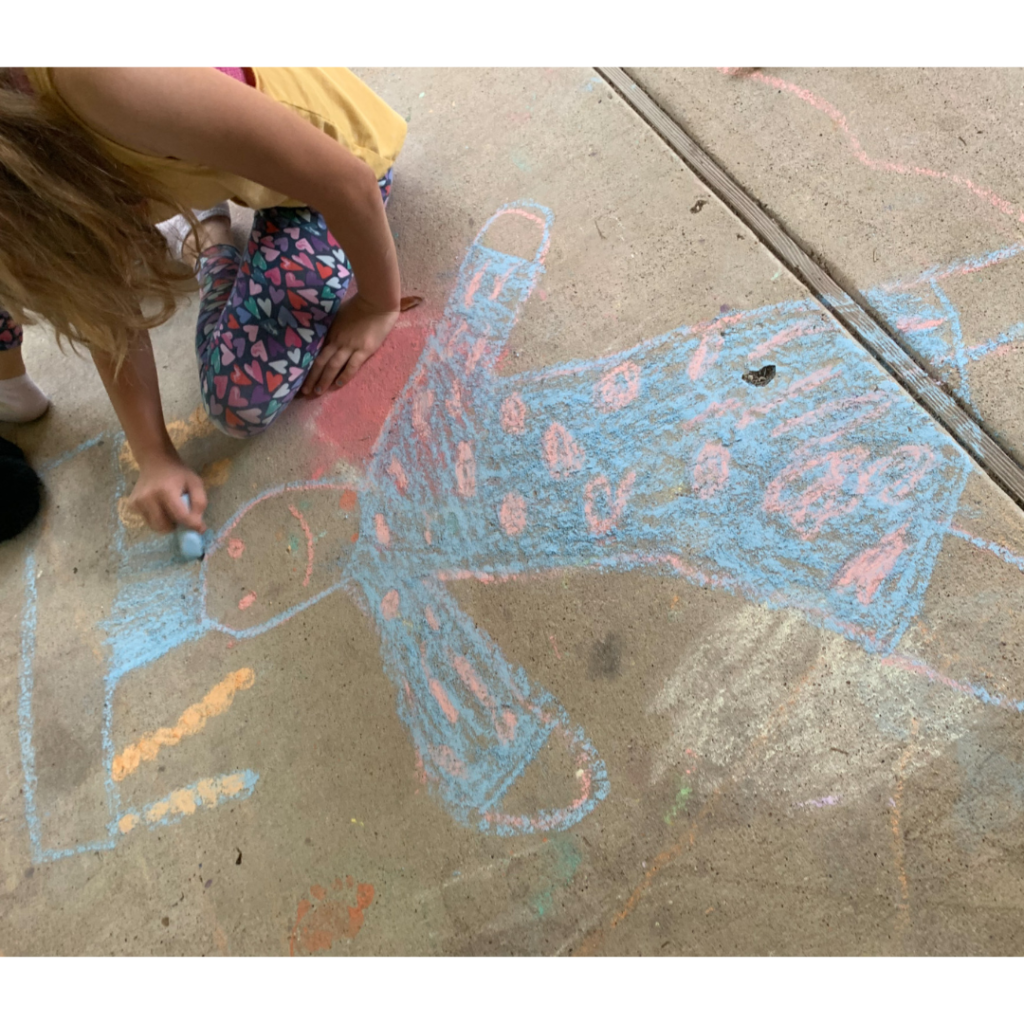
This is really such a simple thing that happened more through outside play than through a lesson led by me. My oldest daughter was tracing the outline of her siblings when she started thinking about how she would decorate the body. I encouraged her to draw a colorful robe like the Ancient Chinese would wear. We talked about the clothing and even remembered the beaded hat worn by the emperor that was mentioned in our story.
This led to even more conversation about what types of people in Ancient China wore what clothes. A few days later she went back and added another outline and dressed it like someone from China that did not have a high status. So although this was really playful, there was still so much learning that took place!
Making Paper
I almost didn’t do this one! It seemed like such a mess and hassle, but it really wasn’t bad at all. I followed the directions from this website and the results were a lot of fun.
I used paper scraps around the house and blended it with water, as she suggests on the blog. Then, I found an old window screen in our barn to use instead of making something new. Honestly, the activity really did no harm to the screen. I rinsed it off and put it back in storage.
We let it dry for about 24 hours and the next day we were able to write on it and cut it. It was really neat how it turned out. Something that was really helpful for us was to watch a couple videos of the process before we tried it ourselves. This gave us a better idea of what we were actually doing and why.
VIDEO: History of Paper Making (This was a little longer and we didn’t quite make it to the end, but it had great info!)
Terra Cotta Warriors
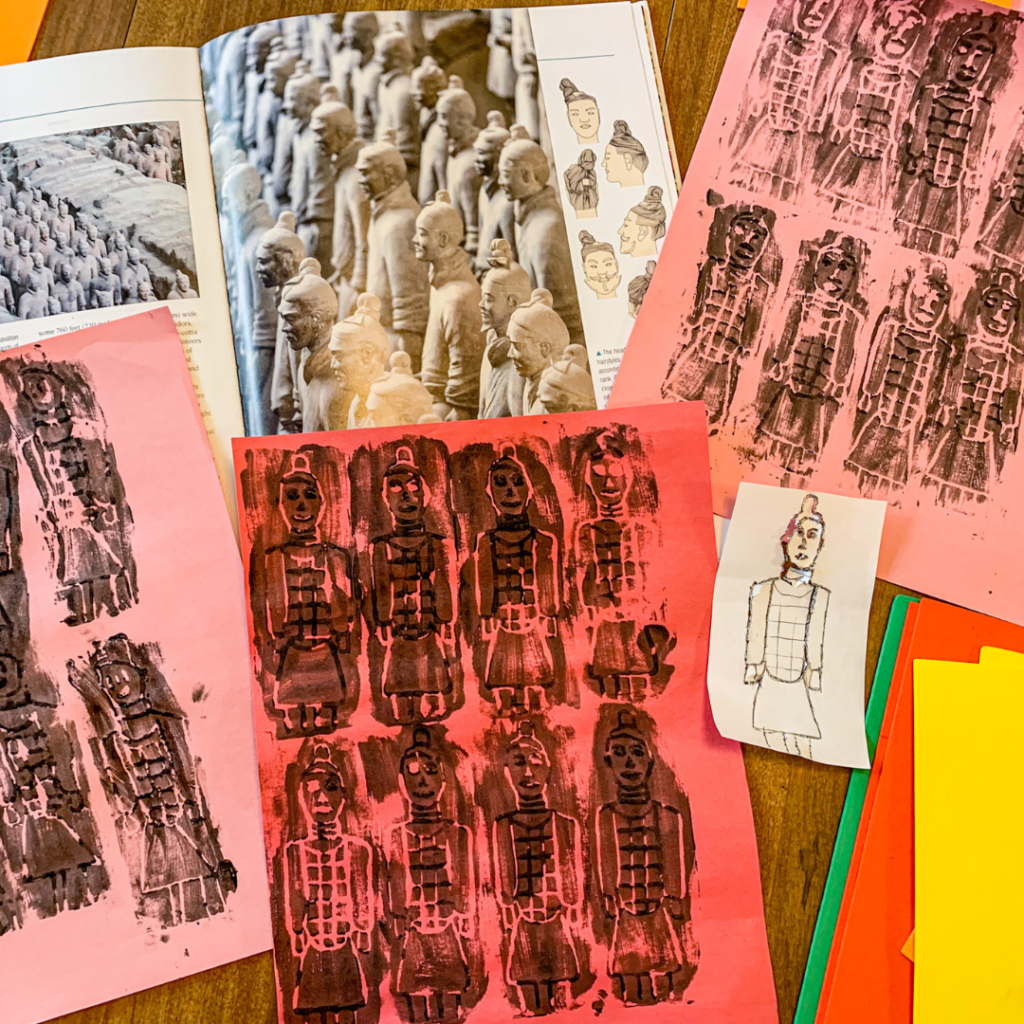
The inspiration for this simple craft came from an art website I came across on Pinterest. I modified mine a bit, but the supplies I used were craft foam, construction paper, and paint.
I sketched a simple outline of a terra cotta warrior onto a piece of paper. My kids used this to trace into the foam. To do this, you place the piece of paper on top of the foam and use your pencil to trace the lines while making an indention in the foam. This took a bit of patience and wasn’t as easy as I thought it would be.
Even still, the outline was helpful for my kids and then they were able to add their own special touch to their soldier’s design. Once we were done drawing on the foam, I helped them trace over the lines to make sure the indentations in the foam were big enough to create our stamp. Then, we trimmed around the soldier so we had one small rectangle.
Next, we used a paint brush to add a thin coat of painting to our image and stamped it onto a piece of construction paper. Each time we stamped it, we added a little more paint. I’m so happy with the way it turned out. Each stamp was unique, just like the soldiers in real life were. Plus, it really did look like rows of soldiers that might have been in the tomb.
Milky Way
Sometimes we don’t actually do a craft or activity, but we still learn quite a bit! An example of this is when we looked further into the legend of the silk weaver and farmer. The legend is brought up in the story we read and mentions the Milky Way. We watched an awesome video that really broke down the legend with images and explanations that were easy to understand.
After that, my kids found some of our space books and we looked for information about the Milky Way. For days, they were mentioning the milky way after we learned about it, so I know the discussion we had and the video we watched was very memorable for them.
Additional Activities and Links
If you haven’t already, you can download a free unit study guide for Ancient China. This guide will walk you through how I set up our unit studies and lists lessons and activities across multiple subjects. Some of these activities you read about above in this blog post, but there are so many more ideas that we didn’t get to in our family.
This is what I love about creating our own unique unit study. It really fits well with our family. We can go at a pace that brings us joy and not stress. We can do as much or as little as we need, and I hope this unit guide allows you to plan the same sort or study for your own family.
Below are additional links that go along with the guide. Download the guide for more details on the activity and to see how it goes along with our novel:
All of these books came from our library and none are required for this unit study. However, out of all of the books we checked out, these were the most helpful. I list them here to give you some ideas of what to look for at your own library.
This science unit study about weather was quick, simple, and easy to put together! We did multiple activities that took no time at all, and we continue to talk about the topics we learned throughout our daily discussions even after we finished.
I actually planned this unit very easily and I lay out the whole planning process in my YouTube video here. Be sure to check it out because it goes through a lot of my philosophies on simple planning!
This post contains affiliate links. If you follow one of my links I earn a small commission at no extra cost to you. Thank you for supporting my blog!
Unit Study Components
This unit study consisted of a daily devotion, library books, food, and hands on activities. I had a big, fun wish list for this one, but I didn’t get to check everything off. I think it’s important to let it go though and not stress about the checklists. I want my kids to be interested in what we are doing and I’m always going to make decisions based on what’s best for us.
In this post I’ll share all that we did, but I’ll also link you to the other simple activities I wished to do with my family. That’s not to say we’ll never do them, but we just didn’t get to it in our time span for the unit. I’ll save them for a rainy day!
Daily Devotion
This year we are reading from Louie Giglio’s “How Great is Our God”. We really enjoy these devotionals because they’re easy to read, fun to look at, and it has that learn-something-knew-every-day kind of feeling.
I love simplicity, but I did have to dig around for the right pages for this one. It wasn’t too hard. Using the index, I found all the weather-related devotions and wrote them down for me to follow each morning as I read them. (You can see how I did this in my planning video) I also added just a couple devotions from the “Indescribable” book in order to have 10 total devotions (for 10 school days)
The following is what I came up with from “How Great is Our God”:
Water Cycle p.62
Rain p. 56 and p. 146
Clouds p. 182
Storms p. 12
Thunder p. 176
Hurricanes p. 88
Seasons p. 42
The last two devotions are from “Indescribable”:
Rain p. 188
Lightning p.168
Library Books
I like to read at least one library book a day during our science units. When I pick library books I like to make sure they’re the kind of books that are read aloud friendly. If you have a routine of putting books on hold, you can do this. I usually just show up to the library and start quickly skimming through books in the non-fiction section to fill up my bag.
For a simple, stress free unit study, I do not think it is necessary to have a specific list of books. Whenever I have to follow a book list, it stresses me out. Can I find them at the library? Should I buy them? Can I afford to buy them?
Try to stay relaxed about your book selection. Whatever you read is going to be WONDERFUL. You’ll have great discussions with your kids and you’ll learn so much.
If you prefer to look for specific books, I will list the ones we really enjoyed from our selection:
I love to find snacks or meals that fit our theme when I can. To me, it’s an easy way to learn about a topic. We use multiple senses to experience something and its easy to plan into our day. We are already eating every day – now we are just changing the recipe!
Cloud Jello
I found this activity from the Totschool website. It was a great fit for our unit, and I knew my kids would love it. Unfortunately, it flopped for us! The directions are to use the quick set method for the jello. I don’t know what I did wrong, but my jello did not set at all!
I will say, they still look pretty! If I were to do it again, I’d probably keep it even simpler. Make the jello following the regular recipe the night before. Add the cloud topping (whipped cream) to the top when you’re ready to eat it.
It will look like the ones I have pictured. Although you can’t really tell….that blue stuff is liquid! oops! I’d definitely try it again. This one has some fun potential.
Check out the activities we didn’t get to for some more food ideas I thought would be simple and fun for studying weather!
Hands-On Activities
I usually try to make a wish list of activities I want to do with the kids. I have a mindset of if I get to them, awesome! If not, it’s ok! I personally feel like our reading and discussions is enough. However, these activities really do bring us joy, so I do try to fit them into our schedule when I can.
Now, this unit I approached a little differently (by accident) and it worked out so well, I may continue the pattern. We had a really odd week, and I had no extra time for the hands on things I typically enjoy. So, that Friday, I skipped the workbooks and we had a full science afternoon! It was so nice because we did one activity after another and it took all the pressure off of fitting it in during our regular school days.
Weather Wheel
This idea came from one of our library books! It was the perfect simple “craft” to kick off our unit. I used a marker to divide a paper plate into five sections. Then, we talked about the different kinds of weather we might see at our house.
I let my big girls draw their own pictures and write the type of weather. We used “rainy, sunny, partly cloudy, thunderstorm, cloudy”. (It was summer time, so there was really no reason to put something like snow.)
For the next few days I never really had to do anything with them. They were in a very visible location right by the window. As the girls passed by one, they’d change it all on their own. I love that observing the weather became so natural to them.
Cotton Ball Clouds
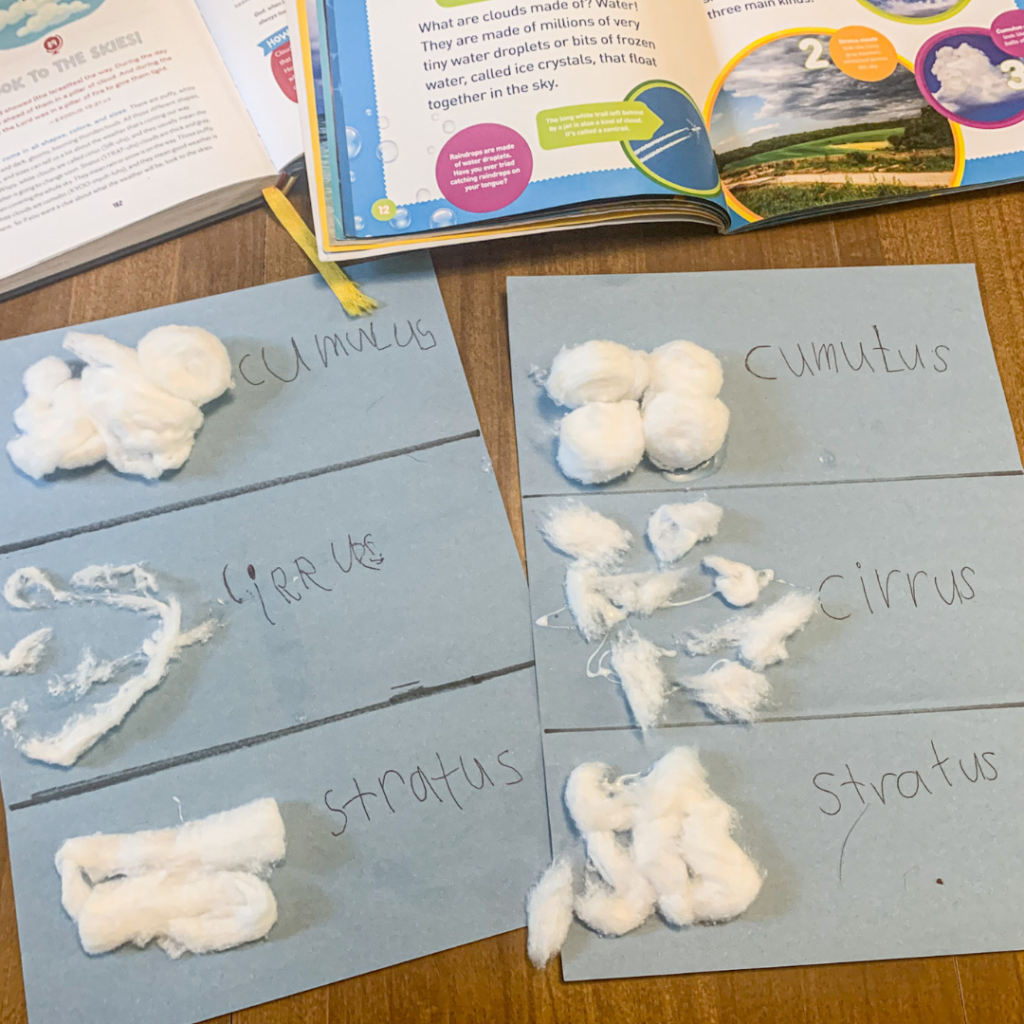
Almost all of our weather books talked about the different kinds of clouds and what they looked like. This made it easy for us to start recognizing clouds anytime we were outside or in the car.
For an easy way to review this, we used cotton balls to make the shapes of the clouds. I kept it simple by sticking to three: cumulus, stratus, and cirrus
Water Cycle in a Bag
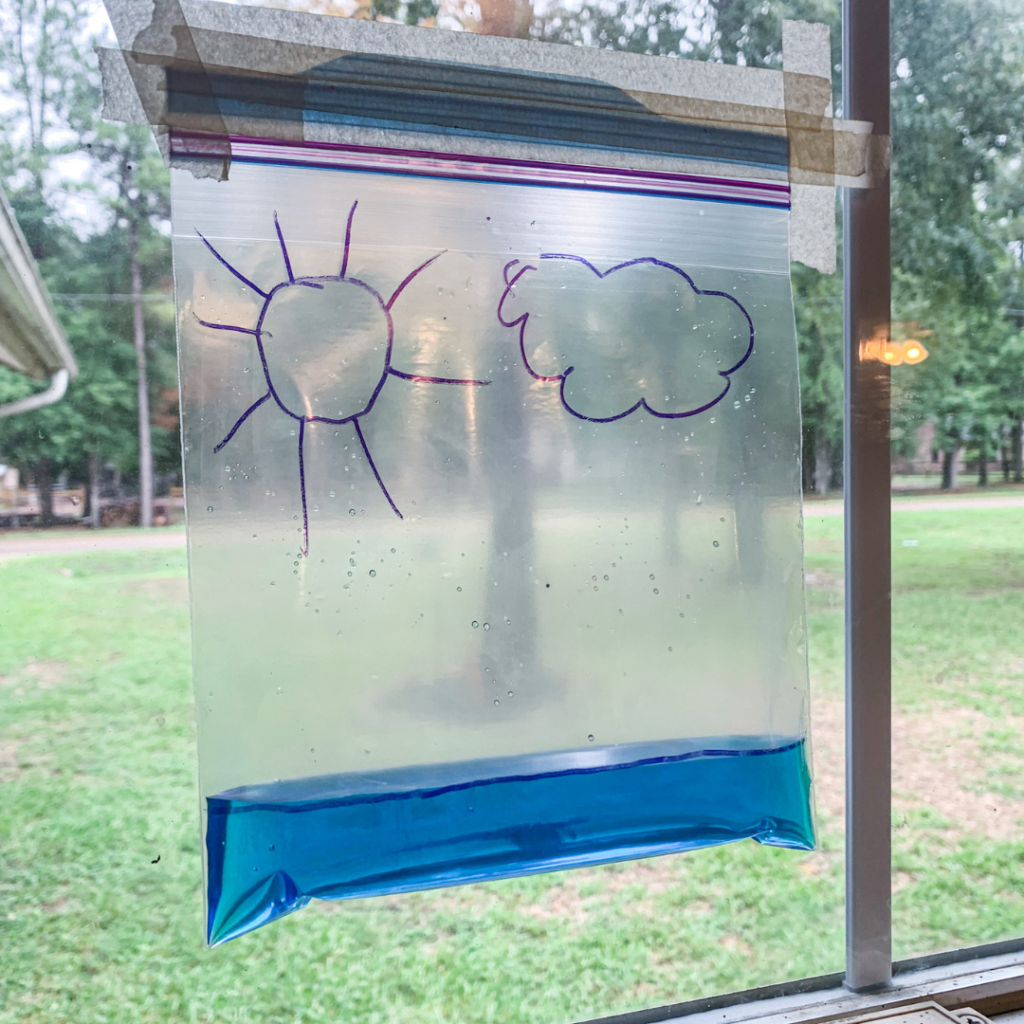
This is so simple to set up, and you leave it out for observation during your unit. I found the idea from Pinterest here. The supplies are simple – water and a ziplock bag. A marker and blue food coloring are optional to add a cute factor.
We put ours in a window right by our kitchen table. After a day or two we could see the drops of water starting to drip down the sides – the water cycle in action!
Cloud in a Jar
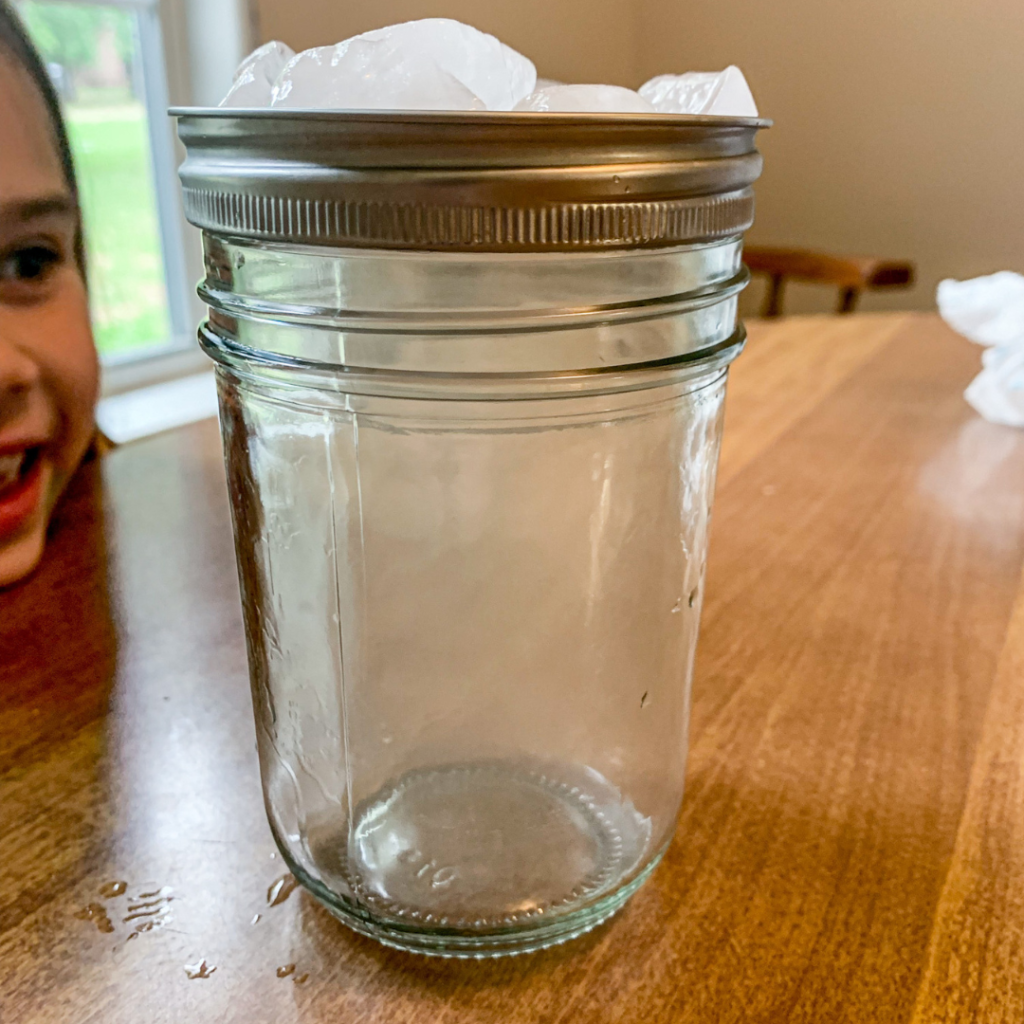
You can find the directions to this one here. The supplies you need are a jar (with a lid), ice, hot water, and hairspray. I love these types of science demonstrations because all the supplies are already at my house.
We did this one about 14 times! I’m serious! It was so neat to see. I read multiple blogs sharing this activity, but one suggested to actually lift the lid off the jar to “release” the cloud. I highly recommend doing that because it really makes the cloud stand out!
As it formed slowly in the jar, we really had to watch carefully to notice the cloud, but once we lifted the lid it was very obvious what had formed inside.
Rain in a Jar
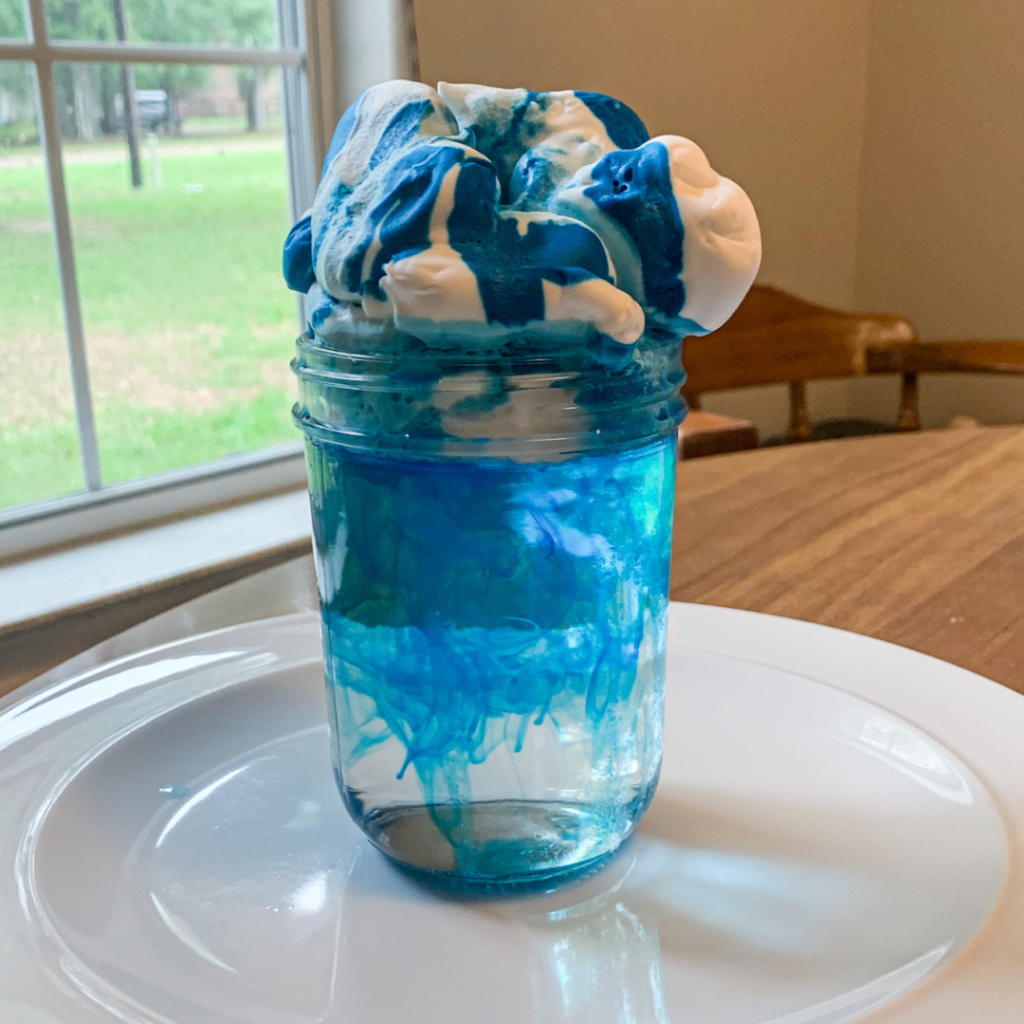
Another easy set of instructions and short supply list for this one. You need a jar, shaving cream, food coloring, water, and a dropper. I also suggest some sort of tray or plate to put the jar on. We got a little crazy with how big our cloud was and the food coloring started to drip down the sides of the jar onto the table.
Fill your jar with water and spray the shaving cream on the top as your cloud. The water represents air. I suggest mixing a little bit of water with food coloring (maybe just a spoonful of water! not much). The reason is because it took a LOT of drops of food coloring to make it through our cloud. Watering it down gave us better results.
The food coloring mixture represents the drops of rain forming in the clouds. As they get heavier and heavier, the drops fall as rain.
This is another easy one to do again and again as long as you don’t mind losing so much of your food coloring.
“Wish list” Items We Didn’t Get to
I highly recommend making this adorable cloud shaped sandwich! You could definitely just cut out a shape from your regular sandwich bread, but this recipe calls for a braided challah loaf that already takes the shape when cut! I love it!
Have you ever heard of tornado cake? I’ve never heard of it, and it has absolutely nothing to do with weather! (ha!) However, with a name like tornado you can’t go wrong! Apparently it was named that because you can throw it together quickly for unexpected guests! The recipe looks delicious! I really want to try it, but ultimately my picky eaters aren’t fans of coconut. I did share the recipe with my husband, and he’s asking to try it soon!
Can you tell I love food activities? Well, the last thing I wanted to share is a non-food related demonstration. This thunderstorm formation experiment has a short supply list and a neat outcome!
You can also follow me on Pinterest. I have all of our activities plus the ones we didn’t get to saved to a “weather” board.
Watching the Forecast
I don’t know if you’d qualify this as an “activity”, but one simple thing we did was watch the weather forecast! We spent a few minutes the first day pausing and discussing all the different facts presented to us. We really enjoyed it and our local news had an app we could download onto our tv so that we could see it at any time of the day.
We didn’t do this every day, but a few times throughout our unit we paused to watch and learn from our local forecast.
Future Unit Studies
Is this information helpful? Let me know in the comments or connect with me on my YouTube channel or Instagram to let me know. I really hope to do this in order to give families ideas on how to throw together a unit study that’s fun and simple and low-stress.
As I mentioned before, we plan to loop our science and history, but I love sharing them here with you when we finish.
Be sure to check out one of our history units as well.
Are you a fan of novel units?
If you’re a fan of adding some fun to your read alouds in a simple way, I want to encourage you to see the different Read Aloud Experiences I have created. Almost all of them are absolutely FREE! These are created on a chapter-by-chapter basis and create such a unique, hands-on read aloud unit to do together with your family!
I also have a few different blog posts I’ve published sharing how we celebrate the books we read by experiencing the story through different activities.
This is our second history unit study for the year, and we are having so much fun! We just wrapped up studying Ancient Egypt and I’m so excited to share with you what we did these last two weeks.
This post contains affiliate links. If you follow one of my links I earn a small commission at no extra cost to you. Thank you for supporting my blog!
Where are the Great Pyramids?
We are basing our history units off of the “Who Was…?” series. So, our daily reading came from “Where are the Great Pyramids?” by Dorothy Hoobler. I love these books because they are so easy to read aloud to kids. My children are eight years and younger, and they are able to stay engaged and keep up with the facts.
There are also lots of black and white pictures throughout the pages that make it easy to visualize what we are reading.
We read our chapter book during our morning time, and I aim to read just one chapter a day. This gives us plenty of time to finish in about two weeks. We have great discussions and we learn so much!
Library Books
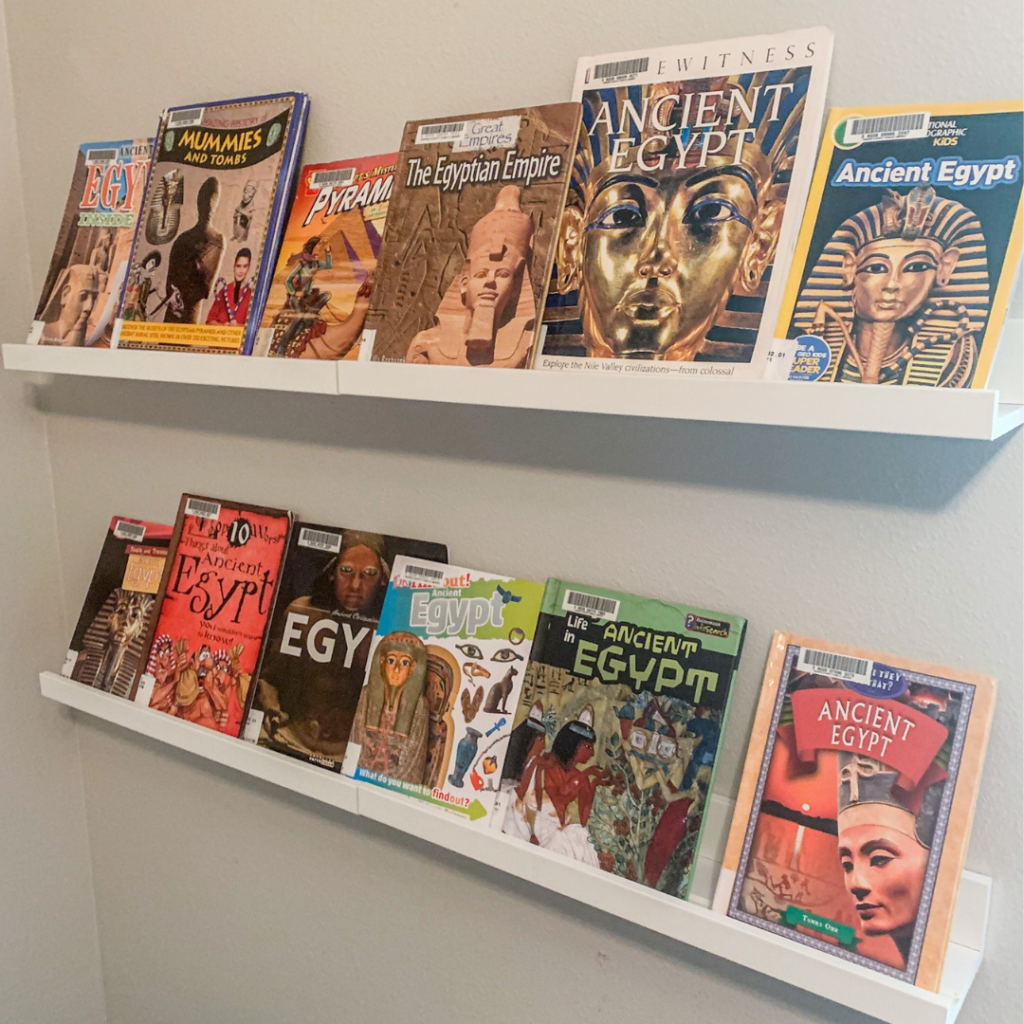
I try to keep the process of adding extra books for our units simple. The nonfiction section at our library had an entire shelf dedicated to Ancient Egypt, and this made it easy for me to just grab and go.
I like to look for books that will be easy to read aloud to my age group. I don’t want too many words or books I know won’t catch their interest. There’s almost always kid-friendly books in the nonfiction section and I grab as many as I can get!
Sometimes I’ll look through the children’s section to see if there’s anything related I might want to add. Even fictional books can be a great way to enhance a unit.
Once we have the books, I’ll display them so they stand out to my kids. This always catches their interest and drives them to want to read more!
Food/Snacks
I can’t deny a cute, themed snack. There’s something about them that makes the unit so memorable. I also love that you really don’t have to add extra time in your day for it. You already cook meals and provide snacks. Now, you’re just changing it up! Easy peasy.
Egypt Rice Krispies Treat
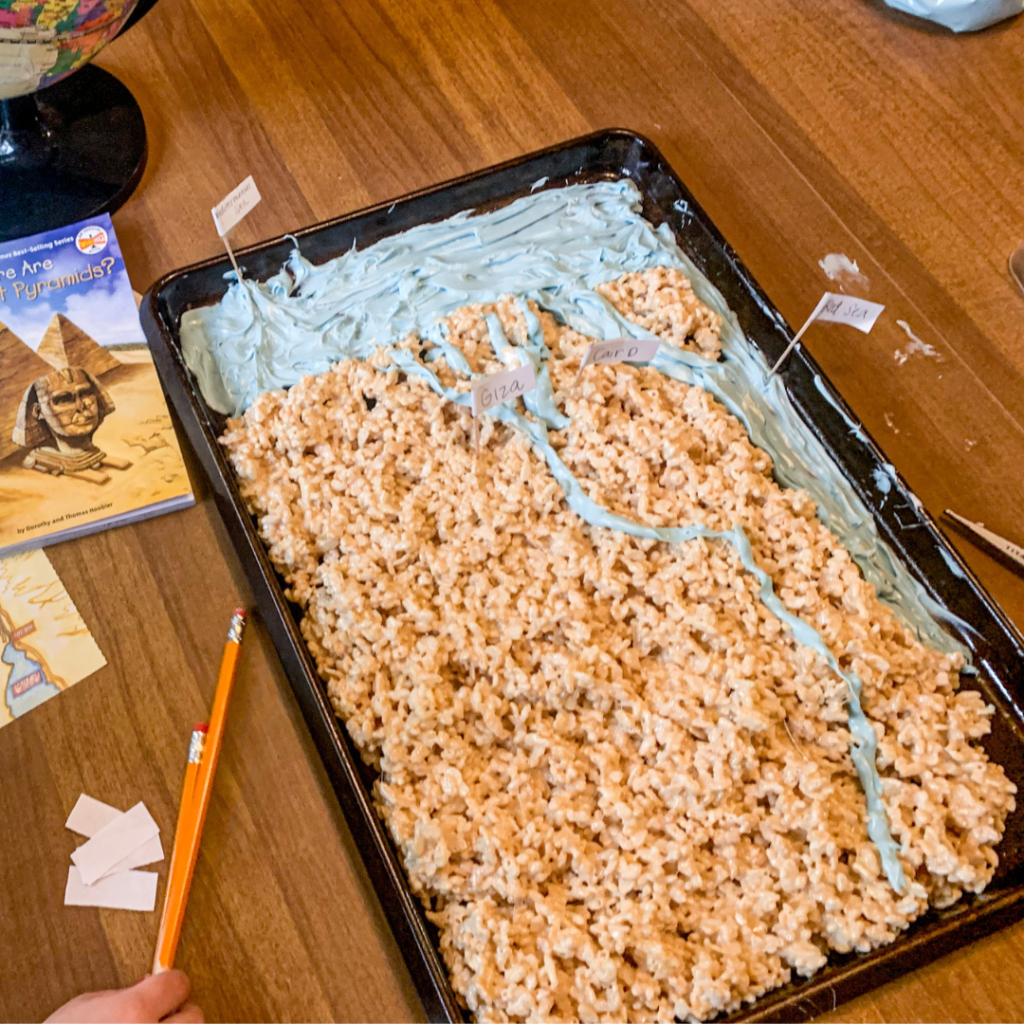
This geography lesson was so delicious. I made a batch of Rice Krispies treats and poured it onto a baking pan. Using a printout of a map of Egypt, I shaped the dessert to look just like the country! We used blue icing to add a Mediterranean Sea at the top, a Red Sea along the side, and a Nile River.
Next, I used a toothpick to label and to teach the kids about the different parts of Egypt. We labeled all the bodies of water as well as where the pyramids were located.
I kind of want to do this with every country we study. Yum!
Mummy Dogs
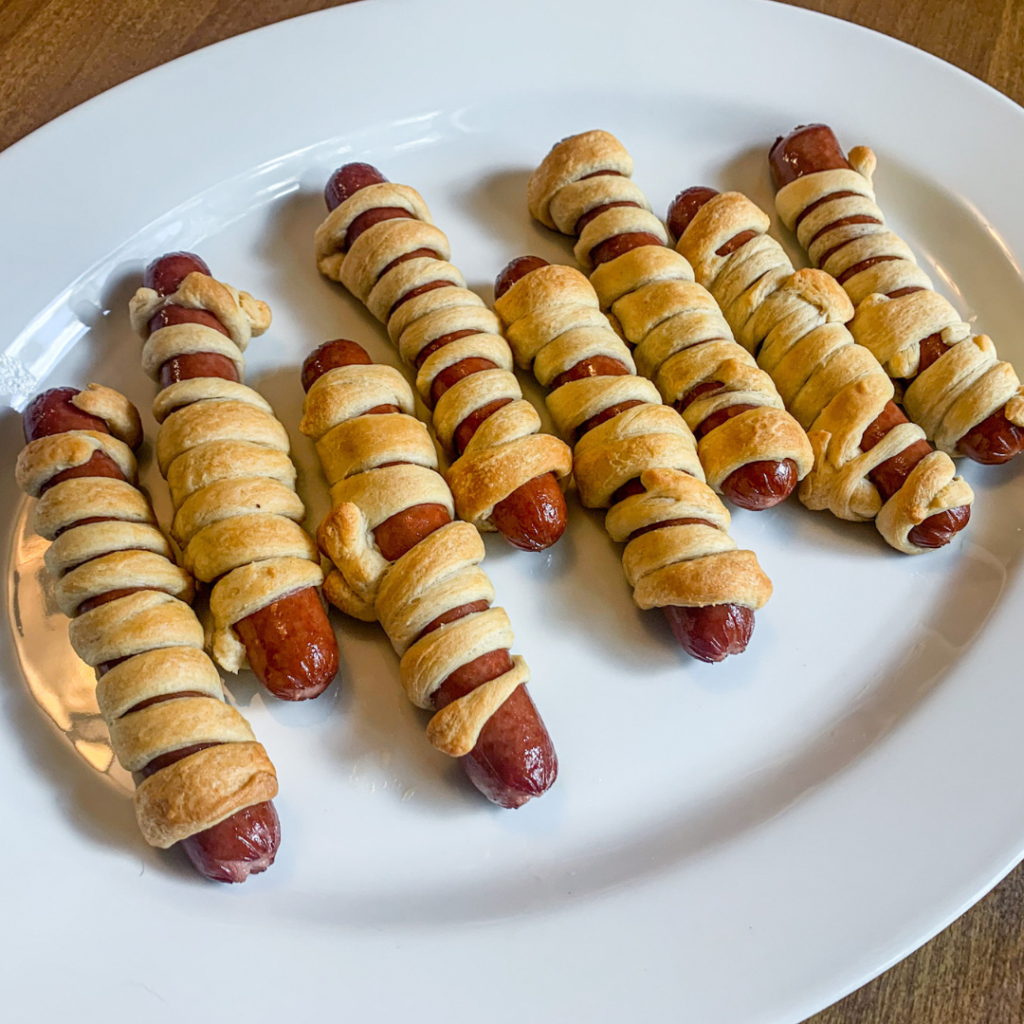
We made these one year for Halloween, and they were so perfect for this unit!. The best part is it’s just two ingredients – hot dogs and crescent rolls. Head to this website for detailed instructions. (We did ours without cheese)
My 3-year-old was even able to participate and wrap the hotdogs which made this all the more fun. It’s very easy for kids to do! If you’re a fan of hot dogs, you can’t go wrong with this. No extra time, no crazy prep. We just ate mummy dogs for lunch one day and it was a blast!
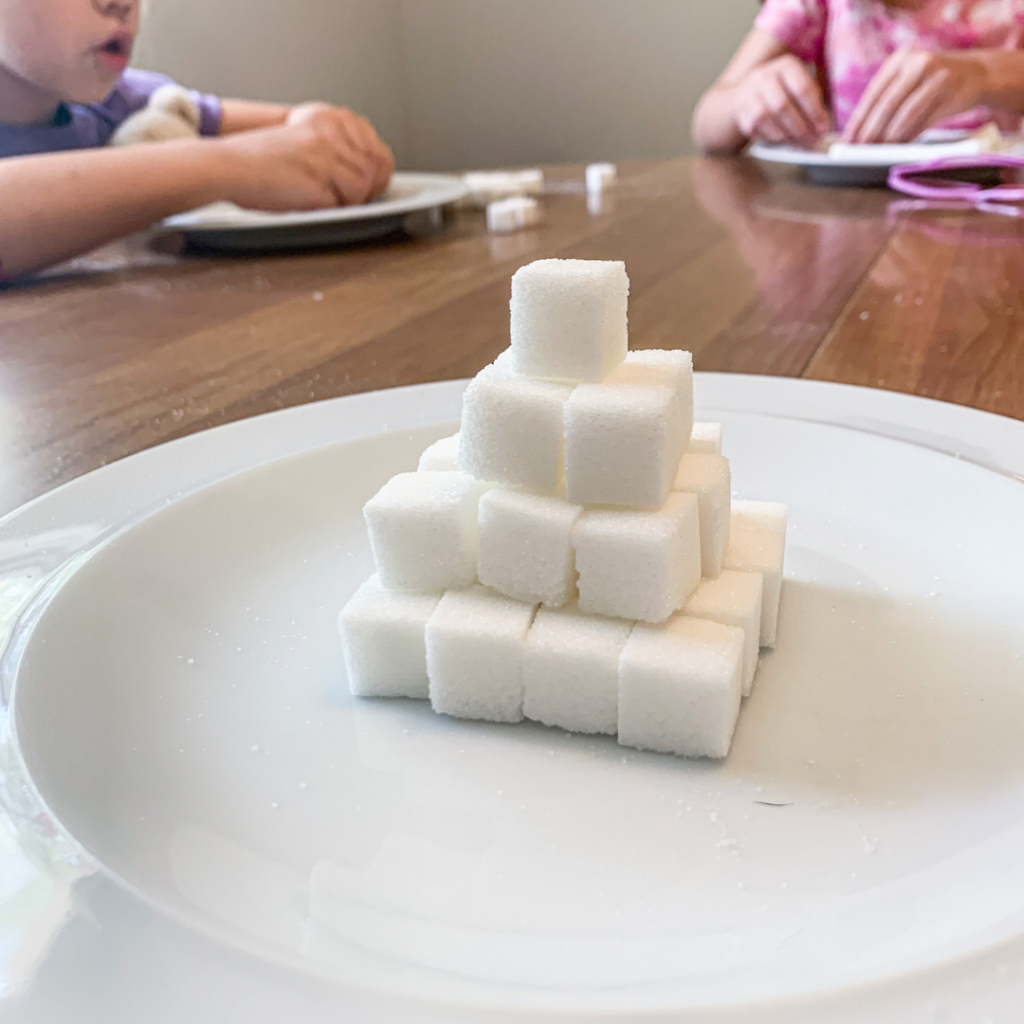
Sugar Cube Pyramids
Although this isn’t really something you want to eat, I’ll still put it with all of my food stuff. And you better believe they all begged to taste a sugar cube!
There was a chapter in our book that talked about the process of building the pyramids. The Egyptians would carry these big heavy stones, and it’s still a mystery how exactly they accomplished such a great task. As we started placing sugar cubes on the plate, we talked a little bit about this and shared our ideas.
I saw somewhere on Pinterest that a family did this and squirted their pyramids with water they dyed yellow. We did this too and the girls loved seeing the sugar cubes start to dissolve. If you have multiple kids, it would be fun to let each child try a different temperature of water to see how it would affect the pyramid dissolving. Make it into an experiment!
Mummifying Apples
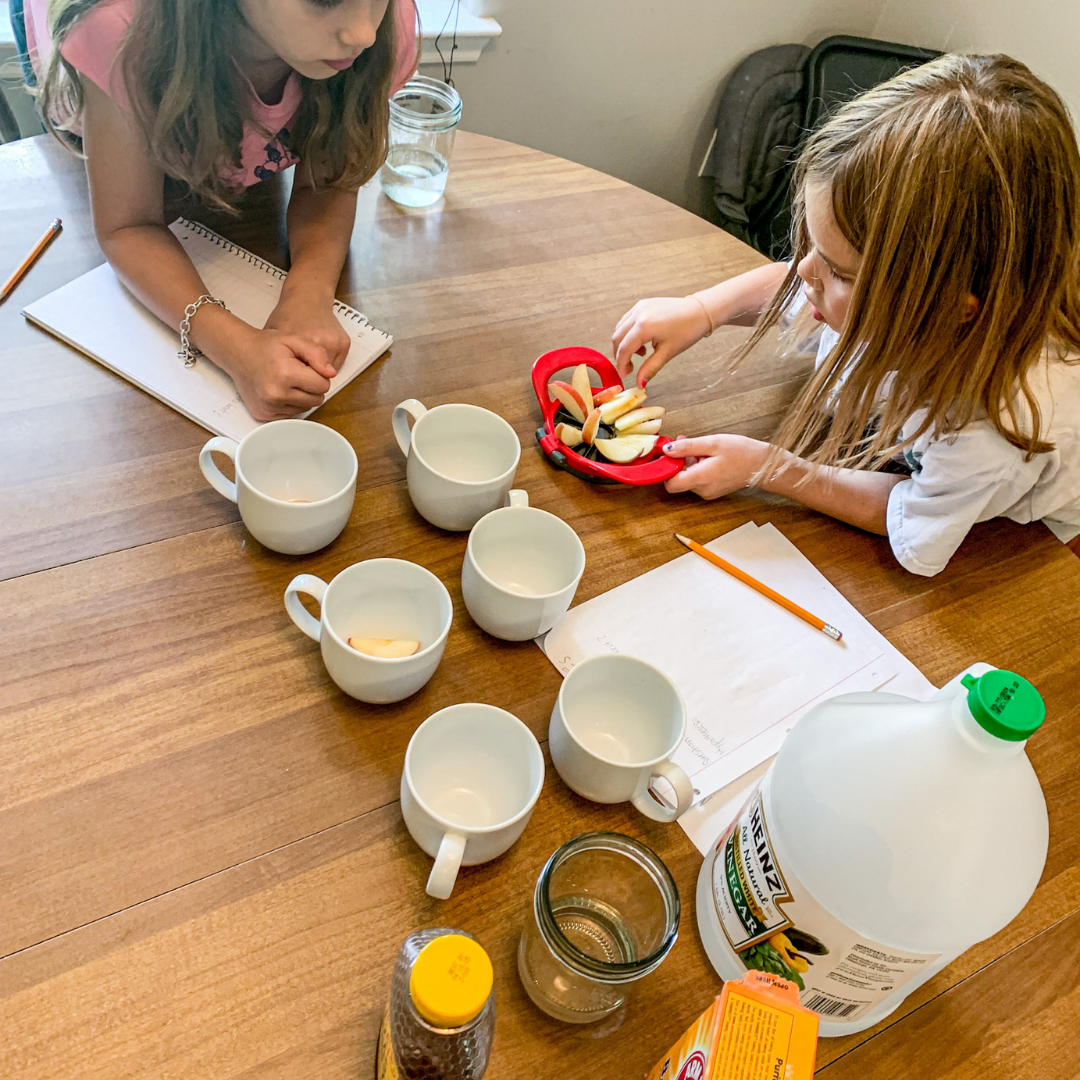
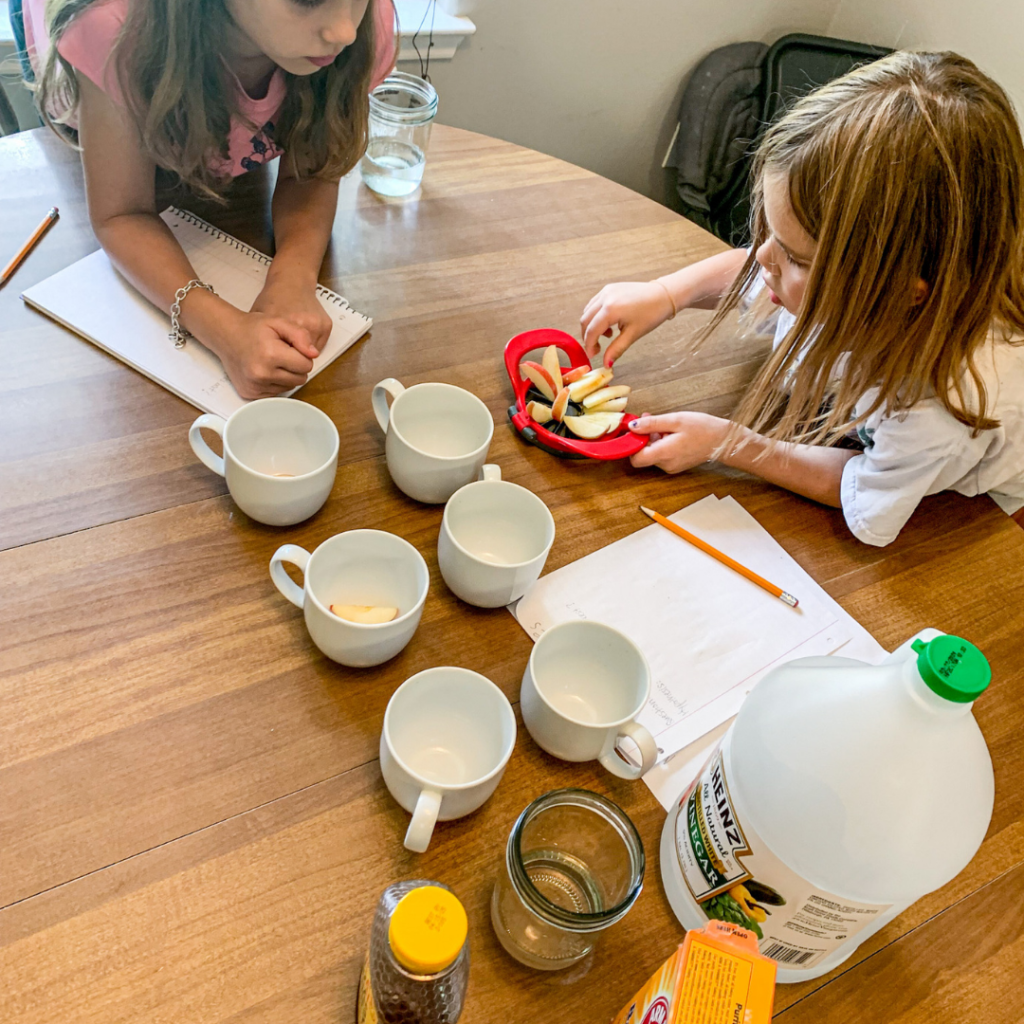
I always have apples at my house, so this one was easy to throw together last minute. The point of this experiment is to see what substance will preserve the apple the best.
I just used what was around our house and we were able to test six different substances:
Baking Soda
Salt
Honey
Vinegar
Water
Nothing-Apple Only (our control)
We left the apples alone for seven days and we were so surprised by our results! Not one apple looked the same! Did you know that scientists are still asking questions and trying to discover unknown facts about the mummification process?
Crafts/Activities
I love a good craft, but I don’t want to be stressed out. When I start a unit, I make a wishlist of things I want to do and fit them in our day as it feels right.
Unfortunately, we didn’t get to everything on our wishlist. However, that’s the benefit of making the crafts an option! Reading books alone is so wonderful for us to learn. Anything extra is a bonus. I’m sharing all that we actually accomplished but I’ll also share what we hoped to do, but didn’t quite get to at the end of this blog.
Toilet Paper Mummies
This happened on a total whim, but it was one of my favorite mornings learning about Egypt. We had just finished a chapter about how the Ancient Egyptians wrapped bodies in linen cloth. The book went into detail about what scientists know about the process. It was so interesting…weird…but interesting!
So when we finished I had one of my kids bring me a roll of toilet paper and we just took turns wrapping each other up. It was hilarious! The kids laid on this little bench we have in our home and acted like they were mummies. We loved it. Honestly, it really wasn’t a huge waste. I wrapped all four of my kids and it was only one roll of toilet paper.
King Tut Footprint Art
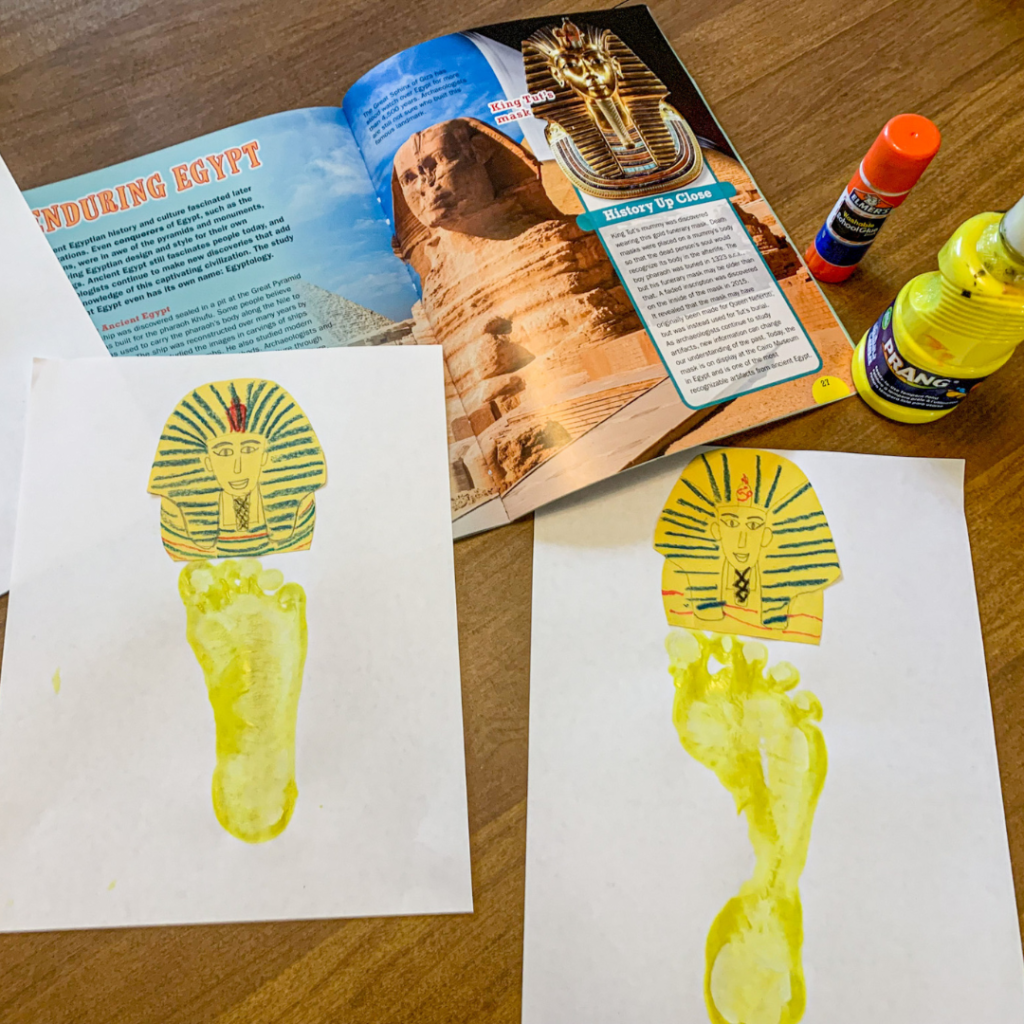
We have these books that my kids write notes to each other in at the beginning of the school year. My 6-year-old wrote to my 3-year-old that the best part about preschool was that you got to paint your hands and feet and make pictures. (ha!) Well, every since writing it, she begged me to do an activity like that for my preschooler. That’s how this crazy piece of art came to life.
Using a library book, I made an outline of the top of King Tut’s coffin (see below) and drew the face with a pencil. I let my kids color it on their own. Next we did some footprint art. I pasted the piece they colored on top of the footprint and it actually turned out pretty cute! It may be a stretch, but I love taking something they really want to do and add a little more meaning to what we are studying.
Notebooking/Narration
I’ve been trying to do this at the end of each unit we do, and so far I’m loving the results. I heard about it on a podcast and I loved the idea of being able to look back on all the things we learned over the year.
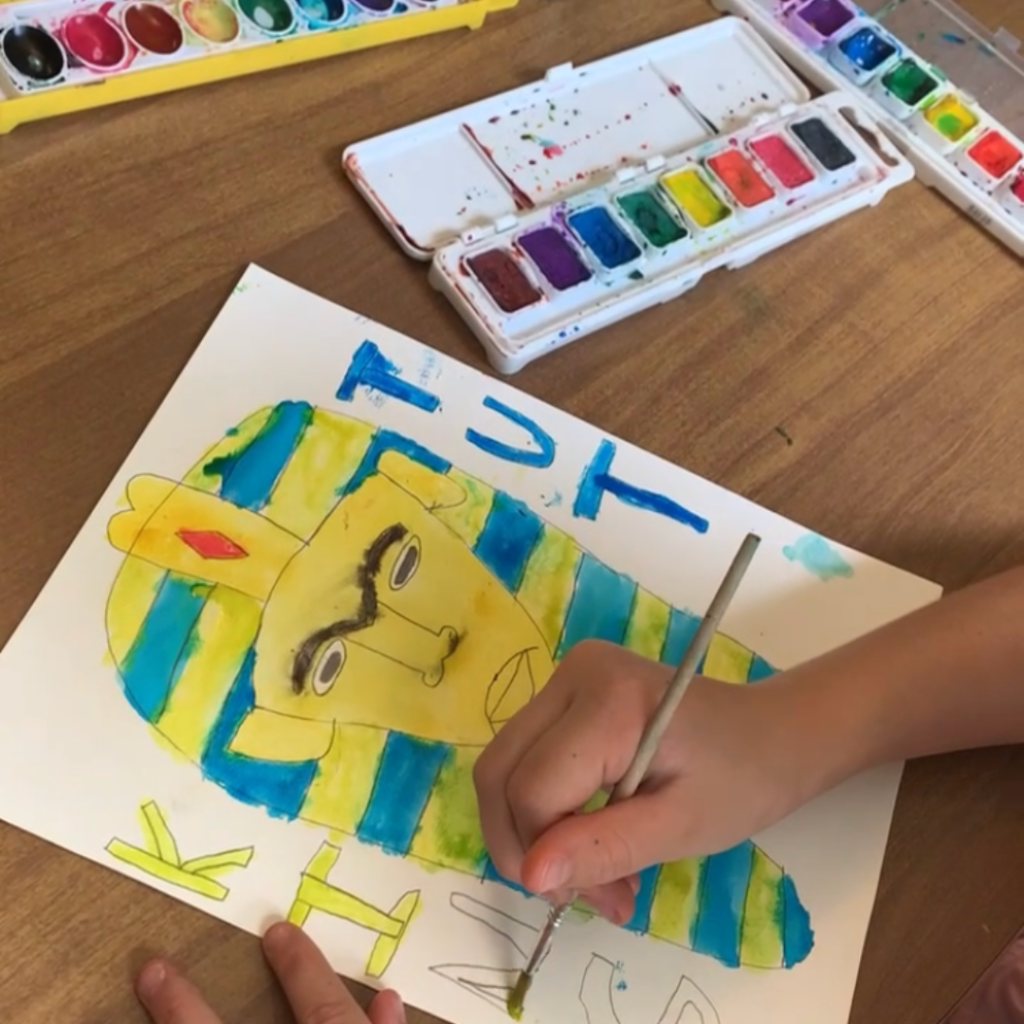
I usually let my kids watercolor. There’s something unique about watercolor, and if you use the right paper, it really turns out so nice! I let them color whatever they want about our unit.
Finally, they narrate to me some things that they remember about what we studied. Depending on the age, I write (or my child writes) the narration on the back of the paper when it dries. It has been so neat for me to see what they remember from our units.
More “Wishlist” Items We Didn’t Get to…
When we start a new unit, I usually have a list of ideas that I think would be really fun to do. I add them into our days as they fit, but sometimes I don’t always get to my whole list. It’s not worth the stress to try and shove them in at the end. I’d rather end the unit on a positive note.
I do love the activities though and wanted to share with you in case you’re looking for a variety of simple Ancient Egypt activities.
First, I would’ve loved to make paper as the Egyptians did. I saw a variety of ways to do this online, and I‘ll share it with you here. Ultimately, it was a little bit messy, and I had a hard time fitting it in when babies wouldn’t disturb. Maybe we can save it for a rainy day.
Next, was the simplest little construction paper craft. I thought this was so perfect because it was minimal supplies! However, when we had time to do something from my wishlist, there was always something else I’d rather do with the kids. So, this one didn’t get completed. It would be so simple to throw together though!
Movies/Videos/Shows
We do enjoy a good video or show about the topics in our unit. We saw a couple great YouTube videos, listed below:
We also enjoyed a couple family movies that weren’t focused on Ancient Egypt in particular but had some slight relation to it in a small way.
Night at the Museum
Prince of Egypt
Bonus Read Aloud
This next part of our unit actually happened when it was over, but how awesome that we can continue learning even past the unit study!
The idea came to me when I was trying to think of chapter books my daughter would enjoy. It turns out the Magic Treehouse series AND the Imagination Station Series have books specifically about Ancient Egypt.
Is this information helpful? Let me know in the comments or connect with me on my YouTube channel to let me know. I really hope to do this in order to give families ideas on how to throw together a unit study that’s fun and simple and low-stress.
As I mentioned before, we plan to loop our science and history, but I love sharing them here with you when we finish.
Be sure to check out one of our science units as well.
We just wrapped up our first science unit study of the year focusing on Space. Using a variety of books, food, and activities we learned so much together!
In this post, I’ll share with you how I plan a unit study like this and all the things we did for the study. This post will be more of an outline of our study. For a detailed description and a variety of pictures, head to my YouTube channel where I discuss it all in detail.
This post contains affiliate links. If you follow one of my links I earn a small commission at no extra cost to you. Thank you for supporting my blog!
Planning
This unit consisted of a daily science devotion, a variety of books from the library, food, shows, and different crafts or activities. I am looping our science and history subjects this year so my goal was to finish the unit in two weeks.
The way our days play out is important when it comes to planning a unit study. I plan our school days to have space in the afternoon (around 3-5pm). Check out my video about our daily routine to learn more about why I do this, but that space is so important to us.
It allows me to catch up on anything I need whether it’s school related or house related. We can run errands if we need to OR…we can throw in a fun, enriching activity for our unit studies! This space allows me to be flexible with our afternoons.
Once I choose what we are studying, I start to make a “wishlist” of activities that I think we could do at home. This is not a checklist by any means. I simply browse Pinterest and different blog posts related to the subject and collect ideas. I know the things I like to do so I only choose those types of activities.
For example, I’m not a fan of an activity that requires an odd supply. If it’s not something I can get at the grocery store or I don’t have it around my house, I look for other activities. If you aren’t a fan of paint, don’t pick paint! That’s the best part about these units. Make them work for you!
Now, keep in mind this is a wishlist. We are not trying to get all of these done by a certain time. Instead I have a goal of having a list of things I can choose from when time allows. This is so important when trying to keep this simple. If we do them all, great. If not, no big deal! Our reading and discussions will be enough.
All extra activities are considered enrichment. By reminding myself of this “motto”, I am able to approach the whole unit study with less pressure, less stress, and more excitement to learn!
Daily Devotion
This year we are using “How Great is Our God” by Louie Giglio. This is our second devotional book by this author and we love them! The devotions are short, engaging, and interesting. This book in particular has a page that gives the reader four different categories: Space, Earth, Animals, and People.
For our space unit, we will read all of the devotions listed in the space category. I try to read one devotion each school day during our morning time. To learn more about our morning time, click here.
Library Books
Before our unit begins, I make a trip to the library to gather more books for our study. I’m really bad about putting books on hold. I can never remember to do it on time, so I usually just show up and head to the nonfiction section.
I look for books that would be great for my kids’ age group and start filling my bag! I take as many as I can fit. They might not all get read, but they’ll be there if I need it.
There are times where I am able to browse the children’s section as well. If something pops out to me, I’ll grab those, but the non-fiction section is usually a great source for books!
I have some shelves in our school room at home that I use to display these books. For some reason, when they are on display, my children become much more interested! They are easy to access and inviting to read.
Books We Loved
Even though I don’t plan out my book choices at the library, we still came across some great books by chance! The following books were some of our favorites that we checked out at the library. If you see them at your local library, be sure to grab them!
Sometimes when I’m preparing lunch, I’ll let the kids watch an educational show or a YouTube video that relates to what we are learning. We didn’t do this every day, but we did see a couple of things that we enjoyed.
We also have a family movie night each week. We watched “Rocketman“, made in 1997, which is super silly and fun. Another one we watched was “Galaxy Quest“. I will warn you that it has quite a bit of bad language and was scary for a couple of my kids. It’s probably better for your older elementary.
Enrichment
As you read in my “planning” section, I come up with a wishlist of things I want to do with the kids for our unit studies. I try to keep it low key and less stress, and the following is what we were able to accomplish. For more details on the activities or how I fit these into our day, check out my channel where I explain it all.
Solar System Cupcakes
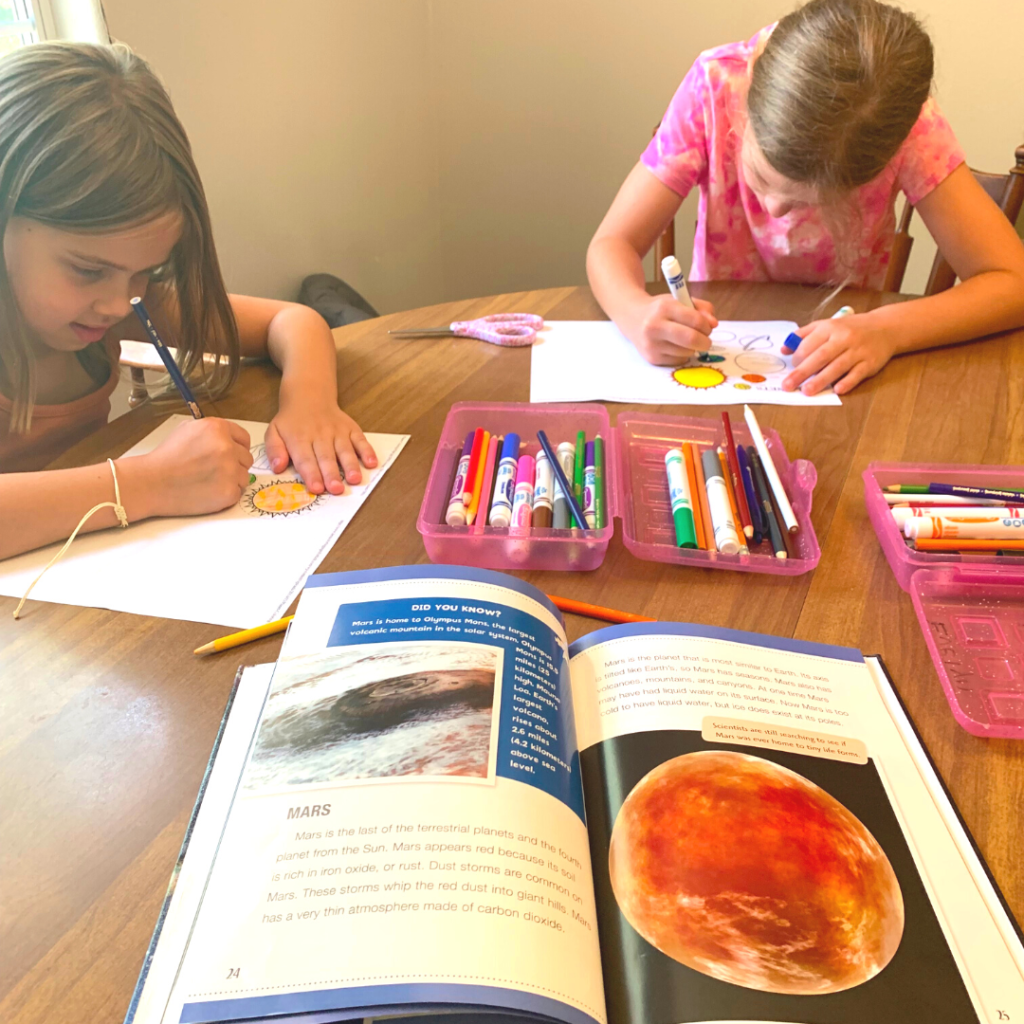
We were able to learn all about the characteristics of different planets with one library book and a box of cupcakes! As I read about the planets, the girls colored a free print out that had the sun and the planets. We learned so much!
We cut them out, taped them to a toothpick and let them become our cupcake decoration. Before we ate them, we even lined them up in the correct order! This was fun, simple, and delicious!
Moon Phase and Oreos
You’ve probably seen this activity before, but I can’t pass up a good snack lesson. I had a couple books about the moon from the library that we referred to. One had an excellent diagram of the different phases of the moon.
We used that diagram to create the different shapes of the moon using the Oreo cream.
Foil Painting of the Moon
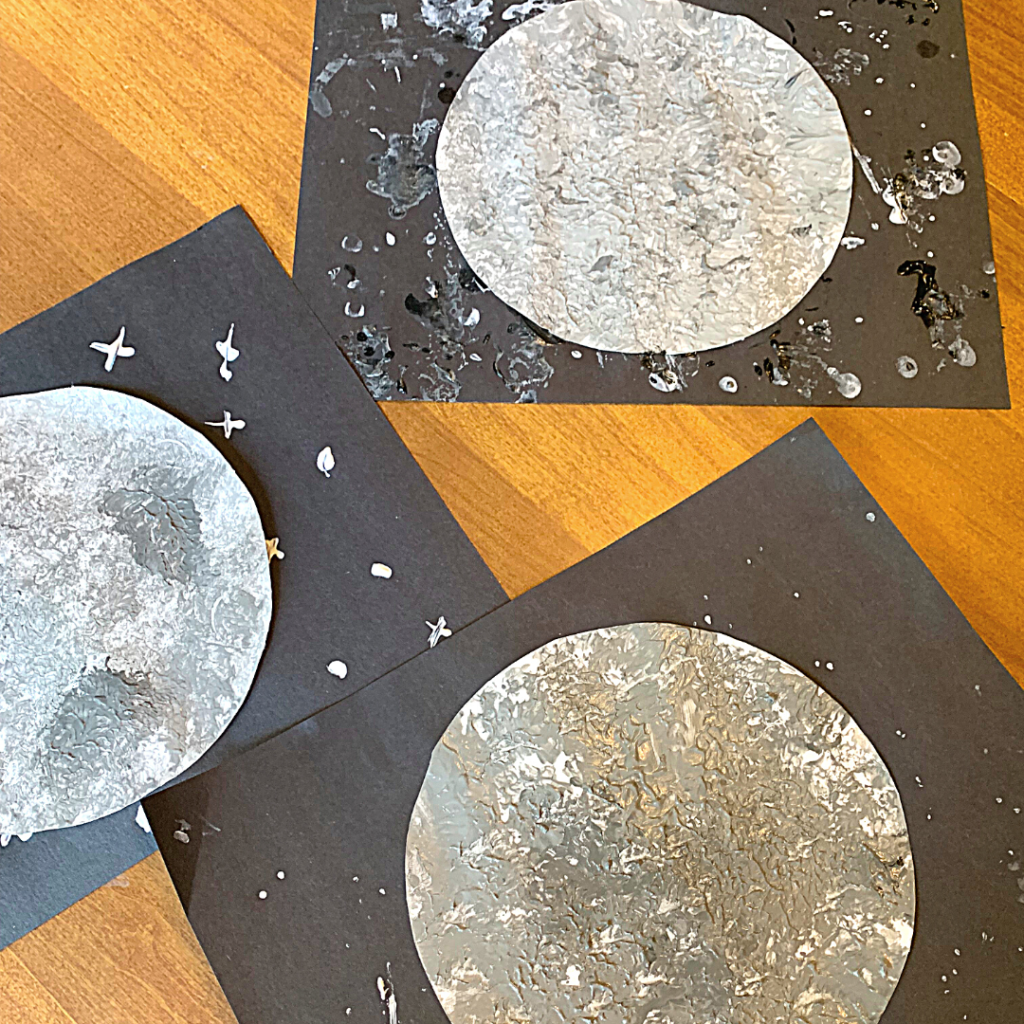
I know some people aren’t a huge fan of paint, but don’t let this one scare you away. It’s very simple and really only requires one or two colors. We mixed different shades of grey and used a crumbled up piece of foil to paint our moons. Each one turned out unique! My three year old was even able to participate and I love an activity that works for a variety of ages.
Field Trip
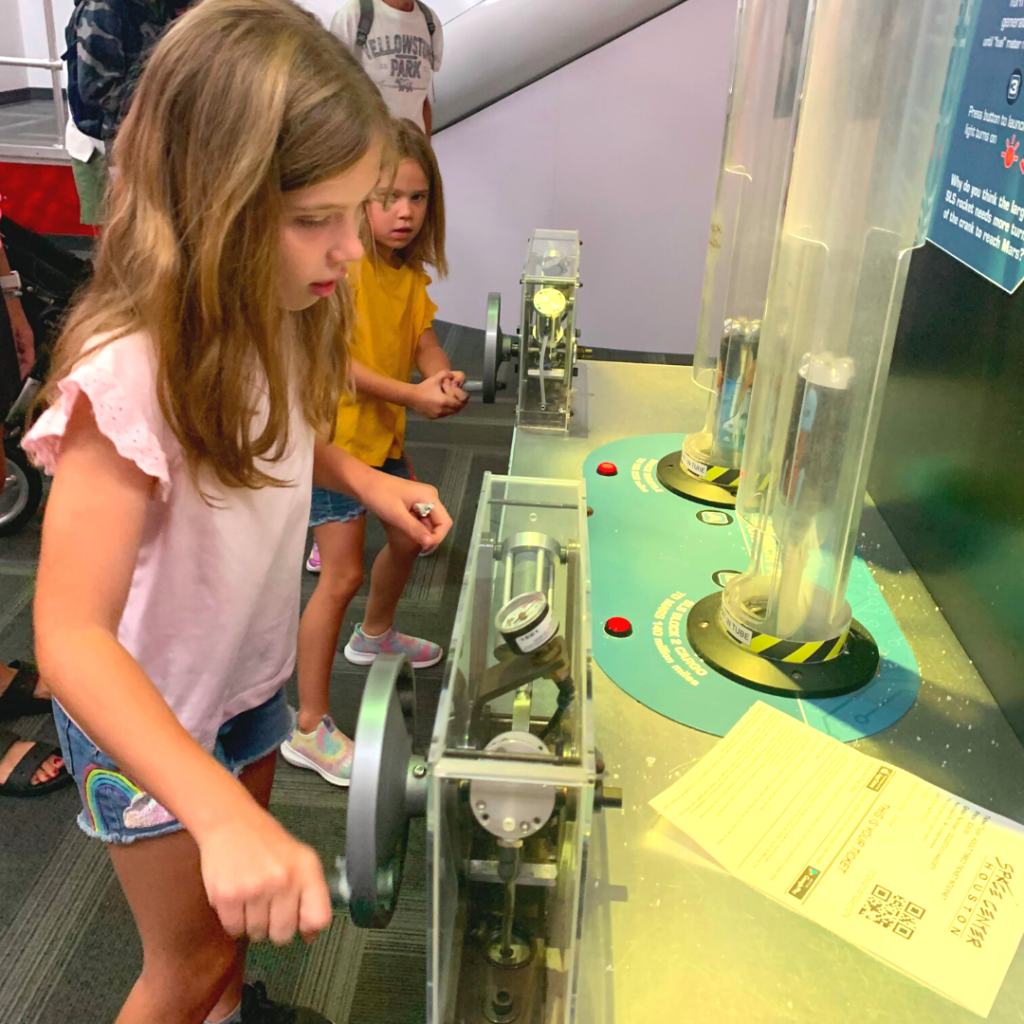
We aren’t too far from the Houston Space Center, so I couldn’t pass up on visiting after our unit. Our studies made the trip so meaningful. We even got to see an astronaut in training. What a cool experience!
Some other great ideas for a field trip could be an observatory, a planetarium at your local museum, or you can even check out the Imax showings at your local theatre.
Notebooking/Narration
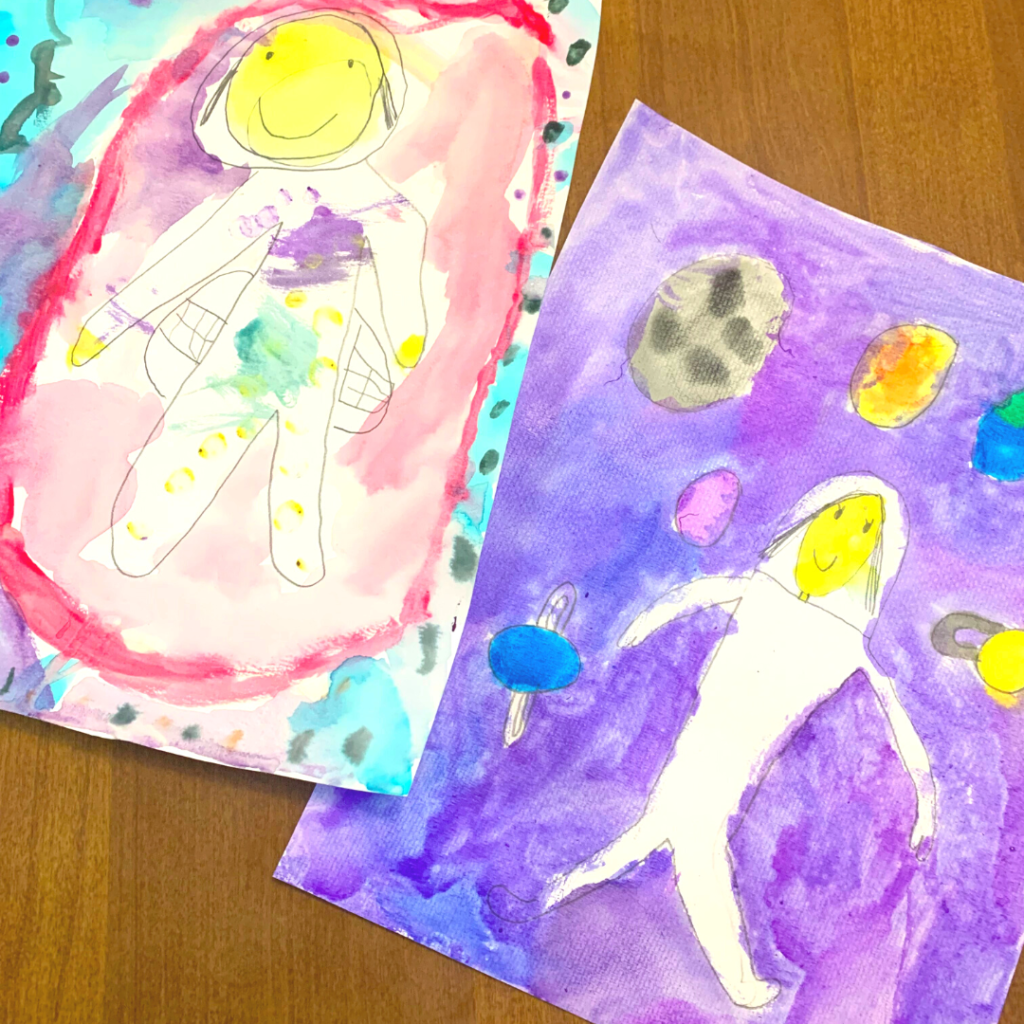
At the end of each unit study, I am trying to have the girls complete a notebook page for their portfolio. This is the first year we’ve done this, and so far I’m really happy with the results.
I’ve been letting the girls watercolor (use watercolor paper – it’s amazing!) but you could definitely just color any picture with crayons or colored pencils. Then, each girl tells me about what they’ve learned and I’ll write it on the back. My oldest will write her own.
This has been such a great way to close out our units and I can’t wait to look back on them all at the end of our year.
Future Unit Studies
Is this information helpful? Let me know in the comments or connect with me on my YouTube channel to let me know. I really hope to do this in order to give families ideas on how to throw together a unit study that’s fun and simple and low-stress.
As I mention before, we plan to loop our science and history, but I’m thinking a “Weather” unit is in our near future for science this year!
Caddie Woodlawn is a beautiful story about a young girl growing up in the mid to late 1800s. Based on the story of a real girl, she lives in Wisconsin with her family where she gets along better with her brothers than her sisters. Through her mishaps and adventures with her friends and siblings, she learns about her role as a young lady and how plays a part in her family.
The following read aloud activities were put together as a plan for our Homeschool Book Club. You can read more about how I host that HERE. However, these activities are also fun to do with your family at home. The activities are intended to be completed at the end of the book as a little book celebration. So please use this plan as it best suits you in the season that you are in.
This post contains affiliate links. If you follow one of my links I earn a small commission at no extra cost to you. Thank you for supporting my blog!
Discussion Questions
What is your favorite part?
Who is your favorite character and why?
Caddie and her family lived a long time ago. What are some differences in their way of life that stick out to you?
At the end of the story, Caddies family had to make a choice. What was that choice? And what would you have done?
On the Map
This is a great opportunity to understand where Caddie lived and locate it on a map. We used a US Puzzle and turned it into a scavenger hunt! I’ve had this puzzle for a few years and we put it together all the time! It’s the perfect way to review a map of the United States. It’s large, and the pieces make up the actual shape of the states.
Hide the pieces all around your house or outside (I always love going outside when we can.) As your children bring them to you, begin putting it together. Once it’s complete, point out that Caddie lives in Wisconsin. Show it on the map. You can also locate Boston, where her mother is from.
Ask questions about what it would be like to travel from Boston to WIsconsin? Could they fly or drive? These kinds of questions are always so fun to ask.
Be sure to point out where you live on the map. How far is it from Wisconsin?
Snack – Taste the time period!
One of the moms in our group made a list of a bunch of the different foods that were mentioned in the book. The list included hazelnuts, salt pork, turkey, cranberries, and molasses cookies.
Prepare as many or as little of these as you want! I actually didn’t even know what salt pork was until we made it for book club. It’s not very good at all. (ha!) But it was so fun to try it! I found an easy recipe online, but you have to prepare it 48 hours ahead of time. It’s not hard, and it’s worth the experience if you can.
We were able to talk about why salt pork was so popular during that time period and why it was necessary to prepare it in that way. You can read about salt pork here.
Someone else made the Molasses cookies for our group, but here is a simple recipe if you are on the hunt for one. Molasses is so odd to me, but in a cookie it’s oh-so-good.
All of the other items can come from the grocery store. We didn’t have them all at our group, but I love the fact that any time we do try it, we can still think back to our novel.
Read Aloud
I love when I can read a picture book that relates to our story. Unfortunately, the way our timing worked out during our get together, we didn’t have a chance to read something. I will share what I had hoped to read though.
I went hunting in my own home library for this one. I found a picture book called, “Summertime in the Big Woods”. This picture book is from a series about Laura Ingalls Wilder as a child. The books are precious and easy to read.
Did you know that Laura Ingalls Wilder was also living in Wisconsin during her stories in the “Big Woods”. How is her summer like Caddie’s? How is their summer different from ours? These are all questions I had hoped to chat about with the kids.
If you’d like an alternative for the story time, my other option was to find a book about Abraham Lincoln. There’s a chapter or two that discusses his presidency, and I thought it would be neat to read some history. I considered reading “My Little Golden Book About Abraham Lincoln”. It’s an easy read and very inexpensive.
Raft Challenge
There’s a chapter in the book that Caddie and her uncle ride on a raft. Caddie’s uncle plays a trick on Caddie making it difficult for her to successfully use the raft.
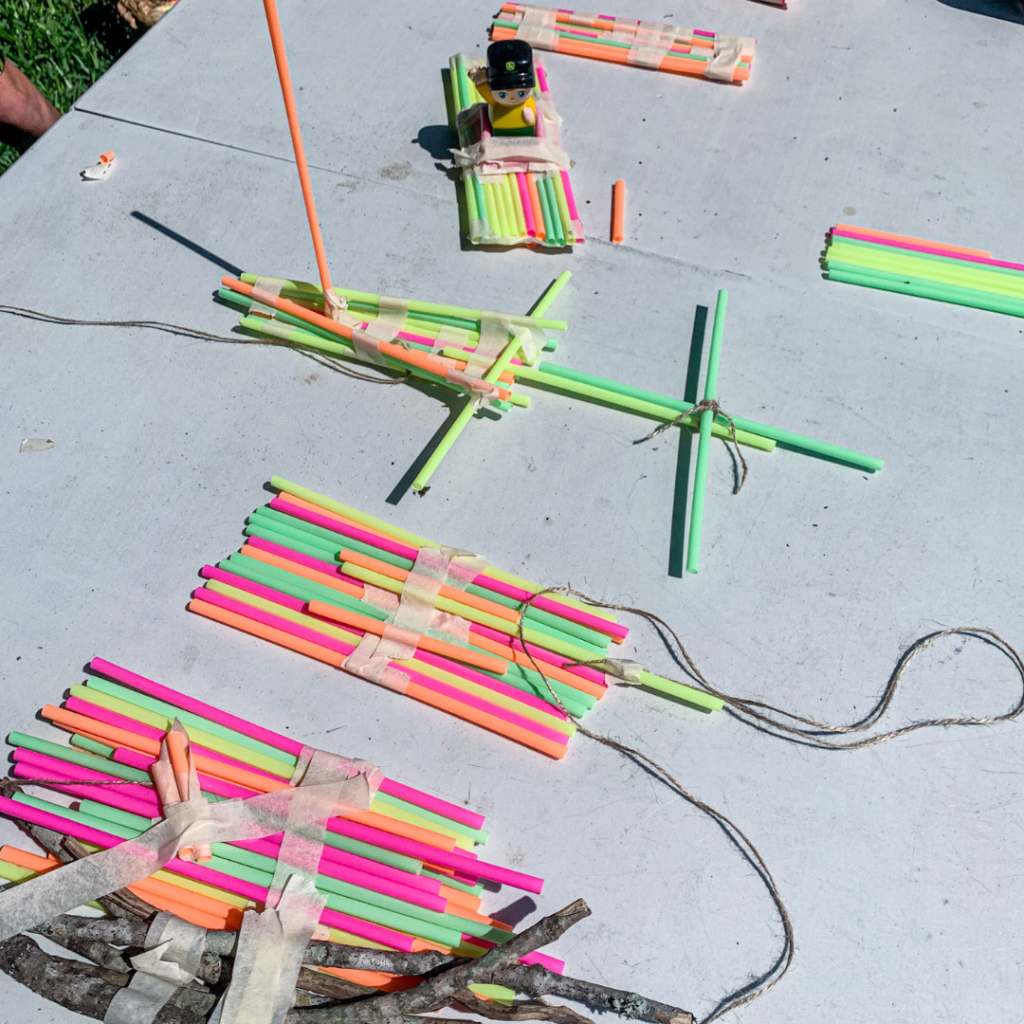
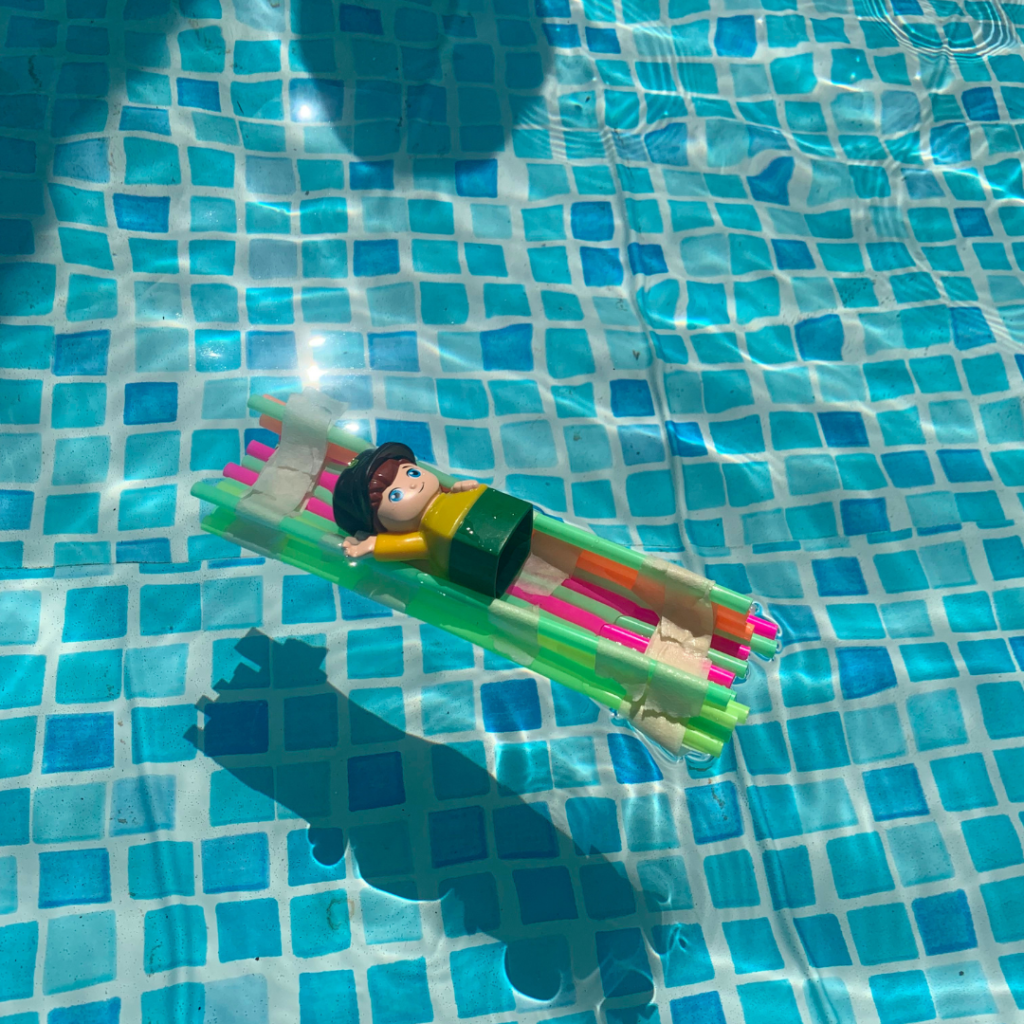
For this activity, I set up a STEM challenge, and it was such a hit! I provided the kids with a basket of supplies: straws, string, masking tape, and sticks from my yard. We talked about how rafts are made, and then I let the children have the freedom to make whatever they wanted. Their goal was to make a raft that a little lego man could float on successfully.
The results were so surprising to me! Every child created something completely different. As they were putting it together, I asked questions. What is your strategy to make this work? Why did you choose straws? What is the string for?
It was summer time when we did this and I set up a blow up pool in our yard filled with water. This is where we tested our rafts. You could use a big tub if you wanted. Want to know something crazy? The most outrageous looking raft was the one that worked the best! This activity went a little longer than I had planned, because the kids just couldn’t stop. They loved building their rafts.
I did stand nearby tearing masking tape for the kids to help them out and keep the building going.
Making Homemade Butter
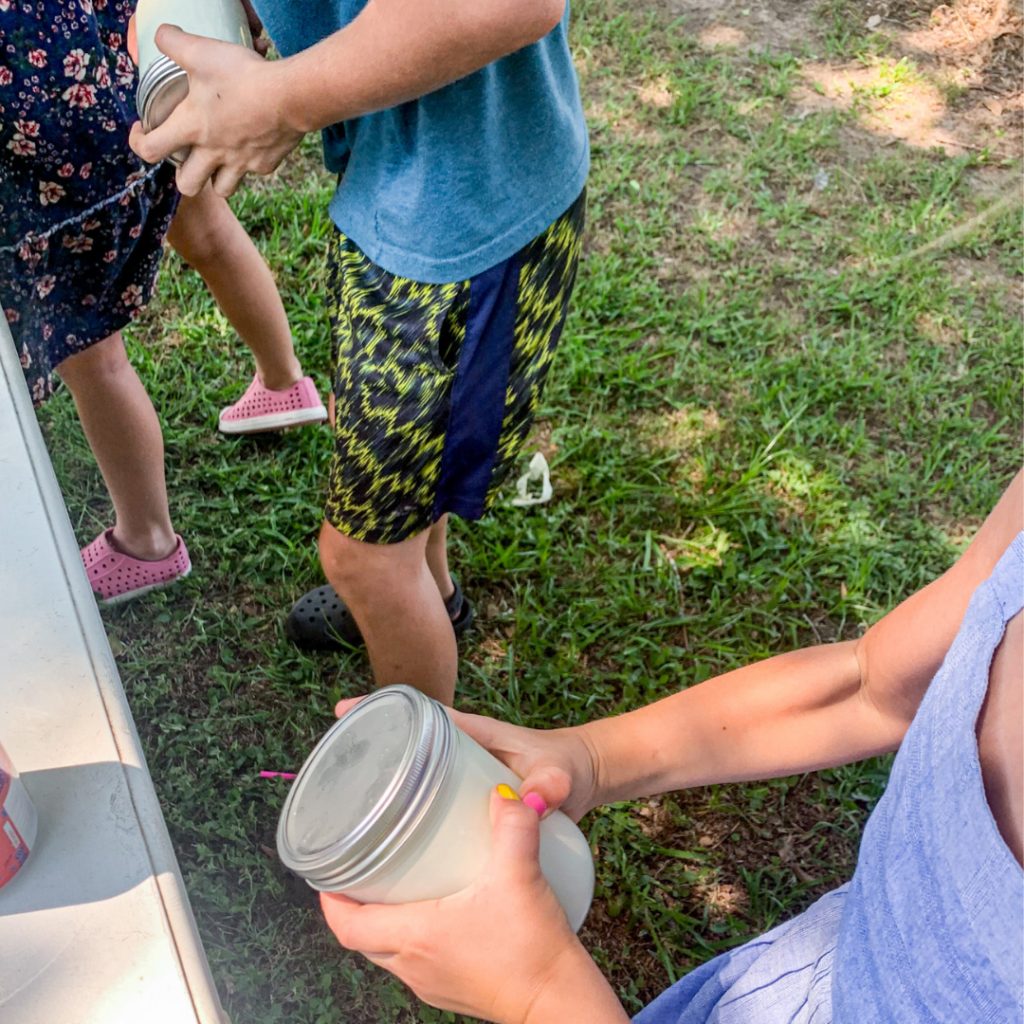
For the last activity, we made our own butter. Caddie and her siblings churned their own butter. If you have time or the resources, you could share what they might have used to do this. Then, try it yourself. If you’ve never done this – it’s so easy! You have to try it. You’ll need a mason jar and heavy cream. That’s it!
Fill the mason jar half way with cream. I made one for each family. It takes quite a bit of endurance, so sharing the job among the family members made it easier to complete. Put the lid on tight and start shaking the jar with all your might.
This takes a few minutes. When one person was tired, they passed it to someone else in their family. After a couple minutes, you will feel that the jar is not really moving liquid around. That’s because it has turned to whip cream! This is a fun opportunity to put a spoonful in a bowl and add some sugar. I had a bunch of plastic spoons and everyone got a taste. Yum!
Keep on shaking that jar! After a few more minutes, you will start to notice the butter surrounded by buttermilk. The butter actually provided us with a second snack. I added a little salt to the butter and was ready with some saltine crackers. Spread a little butter on the cracker and taste the homemade butter. The kids ate it up!
I labeled each jar with the family name so they could take it home to enjoy.
Want more Book FUN?
We were able to finish all of these activities in about an hour and a half.The kids had so much fun! They loved discussing the books together and the simple activities were engaging and exciting for them.
A small book celebration like this really brings a book to life and we love experiencing the novels we read together in this way. I plan to share all of our book club plans with you, so sign up for my email list below and be notified each time a new one is posted.
You can also check out the growing blog post containing each book we’ve completed already. If you’re a fan of adding to your read alouds in a simple way, I want to encourage you to see the different Read Aloud Experiences I have created. Almost all of them are absolutely FREE! These are created on a chapter-by-chapter basis and create such a unique, hands-on read aloud unit to do together with your family!
“The Adventures of Reddy Fox” by Thornton Burgess is a short, classic novel based on a young, mischievous fox. This quick read is great for children of all ages and it is the start to an entire series of different animals in the forest.
The following read aloud activities were put together as a plan for our Homeschool Book Club. You can read more about how I host that HERE. However, these activities are also fun to do with your family at home. The activities are intended to be completed at the end of the book as a little book celebration. So please use this plan as it best suits you in the season that you are in.
This post contains affiliate links. If you follow one of my links I earn a small commission at no extra cost to you. Thank you for supporting my blog!
Discussion Questions
What is your favorite part of this book?
Who is your favorite character?
Why does Reddy Fox live with his grandmother?
Who is Reddy Fox always running from?
What happened to Reddy Fox that caused him to get hurt?
What had to change for Reddy Fox and his grandmother at the end of the story?
All About Foxes – Scavenger Hunt
SUPPLIES: Fox Printout (FREE), Scissors, Tape, Bright Paper and glue stick (optional)
I printed the information for this scavenger hunt using this FREE printable. I had my children cut out the squares and paste them on to bright orange paper so that they would stand out.
Hide the cards all over. I prefer to do this outside, but it rained the day we met, so we hunted for cards indoors. Tape them or place them so that the bright orange is visible for the kids to see.
Once all the cards are found, sit in a circle and read each card together. Depending on the ages and abilities, you could read the cards to them or ask a child to read out loud to the group.
One of the cards talks about the sounds that foxes makes. There is a link to hear these sounds, and I highly recommend visiting it and sharing it with the kids. It’s just always so fun to use multiple senses while learning.
Snack – Fox Cupcake
SUPPLIES: Cupcakes, Icing, Food Coloring, Chocolate Chips, large Ziplock bags, multiple spreading knives (I use plastic silverware for easy clean up.)
For this activity you’ll need to bake the cupcakes in advance so that they are cool enough to frost and decorate. Use any flavored cupcake you’d like. We chose vanilla to keep it simple. It also helps if you make a finished cupcake in advance to use as an example.
You will need to prepare the icing. I purchased one white icing and separated about 1/2 of a cup into a bowl. To this I added red and yellow food coloring to make it a light orange color. Save the remaining white icing. Put the white icing into a plastic bag and snip the corner to use it as a piping bag for decorating.
I had plastic knives stored away, so I was able to give each child a knife for spreading. The first step is to spread the orange icing onto the cupcake. Next, use the white icing to pipe the two sides of the fox’s face. Then, gently spread the white colored icing to blend together.
Feel free to get creative with this next part – building the face. You could simply use chocolate chips for the nose and eyes and call it finished. We do a lot of baking at my house and I happened to have candy eyes and some long orange sprinkles. I showed the children that they could use two sprinkles to make ears and allowed them to add their own unique touch to it.
The final step is to eat it! This is a great time to read a story while mouths are quiet and filled with a yummy treat!
Read Aloud
SUPPLIES: Any picture book of your choosing – use your library or something you already have! See suggestions below.
My focus for this book club was foxes, but you could read a picture book about anything – forest animals, hunting, farming, etc. I did not want to purchase anything extra for this so I showed up to my library and checked out the nonfiction section first. I didn’t have any luck, but the computer system led me to a picture book that talks about the life cycle of a fox. It was so perfect!
The book is called “Fox” by Kate Banks and it follows the life of a newborn fox as it learns from its mother and father. The pictures are beautiful and the wording on each page is not too long for a sugared up group of kids eating fox cupcakes. (ha!)
Drawing A Fox
SUPPLIES: Paper, Colored Pencils, Pencil
I picked a very simple instruction video from Art for Kids Hub that I knew kids of all ages could do. It was a hit! Everyone enjoyed the drawing and it was so neat to see how each child added their own special touch. They all wanted to color it and make it their own, and it was something simple and sweet they could take home with them.
Want more Book FUN?
We were able to finish all of these activities in about an hour and a half.The kids had so much fun! They loved discussing the books together and the simple activities were engaging and exciting for them.
A small book celebration like this really brings a book to life and we love experiencing the novels we read together in this way. I plan to share all of our book club plans with you, so sign up for my email list below and be notified each time a new one is posted.
You can also check out the growing blog post containing each book we’ve completed already. If you’re a fan of adding to your read alouds in a simple way, I want to encourage you to see the different Read Aloud Experiences I have created. Almost all of them are absolutely FREE! These are created on a chapter-by-chapter basis and create such a unique, hands-on read aloud unit to do together with your family!
Homeschool book club is something I started in my home in order to connect with other homeschool families near me. It’s a homeschool group that focuses on literature by reading a novel at home and then meeting together to discuss it. On the day our book club meets we play, eat, read, chat, and do enriching activities to celebrate the novel.
Homeschool book club is not a new concept. I’ve seen some near me and have heard about some from others, but in this post I wanted to share about what it is and how ours came to be. I also want to provide you with ideas for activities in hopes that it might encourage or help others meet up together for the sake of good books! 🙂
And if you’re not into leading in a group setting, stick around! The activities can be done with your family alone, as well. Book activities are so much fun, and I’ve kept it very simple and low key.
This post contains affiliate links. If you follow one of my links I earn a small commission at no extra cost to you. Thank you for supporting my blog!
It starts small.
I mentioned the idea to one friend that was interested and she knew one more. That’s it! This group of families contains 11 kids, which was a great number to get us going.
We picked a SHORT novel that would be easy to finish. I didn’t want anyone to feel the pressure of reading a book in time. It also allowed us to finish reading quickly. I’ve read some pretty long chapter books with my kids and after a while it’s easy to forget things. Our first short and sweet book gave me as the planner a little wiggle room to play with ideas without feeling rushed.
The last “small” tip is don’t commit. Isn’t that so weird to say? It makes me laugh thinking about it, but it’s true. Sometimes the thought of a monthly/weekly commitment is overwhelming. We all agreed to one meet-up and than we would decide what to do next.
This worked out fantastic. We had so much fun and knew we wanted to continue. Instead of committing to once a month, we all picked a time in the near future that we were comfortable with…and that’s the only day we have planned for now. This laid back approach really takes a weight off.
Enrichment Activities
One of my passions is taking a book that I’m reading with my family and expanding upon it with games, crafts, food, or more books! We’ve done this many times in the past as a family. (Check out my Read Aloud Experience for The Secret Garden, Mrs. Piggle Wiggle, the Boxcar Children, or the Courage of Sarah Noble) So, I was so excited to share our love for literature with our friends.
Different enrichment activities might include themed snacks, crafts, scavenger hunts, drawing, reading, writing, dancing, videos…and more! I pick a couple of these to go along with our chapter book and it brings it to life!
Schedule
The schedule will change each time, depending on the activity, but I do have a goal for each time we meet. We plan for a two hour window and I hope to do the following
Welcome and Free Play
Book Discussions
Activity
Snack + Read Aloud (usually a picture book)
Activity
Every book will be different, but I can add or take away activities as I need to.
Planning
Planning can sometimes be the hardest part for some. There’s so many options and a ton of resources out there!
Don’t give up yet…I’m hoping to do the majority of the planning for you! It is my hope that each time we do a new book, I will write a blog post containing all of the activities we did. I’ll keep a running list on this page of the different books.
Make the Book Club work for you.
There’s no rules to this, but do have fun with it! Go as big or stay as small as you’d like. One thing you could always do is just try out the activities in your home with your family. There’s no rule saying you have to put together a group. Maybe you could read the book and meet with just one other friend. Instead of making a schedule of things, just choose one activity and voila! Simple, fun, and educational.
Whatever you decide, I’d love to hear how it’s going and if you enjoy the activities for the books. Leave a comment here, send me an email, or tag me on social media (@simply.learning.together)
Book List
This is a growing list. So, save this page for future reference!
We bought our first chicks this year, and it feels like we are diving into this huge unknown world of chickens. Neither my husband or myself has any experience with this, so it was a little scary to take it on, but we are in it to win it now!
It was a long road to get here. We did a lot of planning and learned along the way. In this post, I hope to share with you this process. It is not advice (ha!) I am not an expert by any means, but I am SURE that there is someone else out there who has an interest in this and feels completely clueless, just as I did a few months ago.
This post contains affiliate links. If you follow one of my links I earn a small commission at no extra cost to you. Thank you for supporting my blog!
Research
The research started quite a while ago. Doing this way in advance really helped me get over the hump of being too scared and it allowed me to gradually gain knowledge in caring for chickens at a slow pace.
I started by finding people I enjoyed watching on YouTube. Seeing these people take care of their chickens in-action was so helpful and provided a great visual for what I would possibly be doing in the future. Everyone has their own tastes in videos, but a couple accounts I found the most helpful were:
Oak Abode (She is super easy to listen to and has TONS of videos about chickens and gardening and more! She also has a blog)
Stoney Ridge Farmer is another great one. I only watched a couple, but he definitely seemed like he knew what he was doing.
Online research is always a plus, but it can be very overwhelming…so many different opinions and ideas – it’s hard to sort through. For this reason, I love a good book! This allows me to have all the information I need in one place. I have two AMAZING books that I refer to often:
The Beginner’s Guide to Raising Chickens by Anne Kuo – I loved reading about how chickens changed this woman’s life (seriously!) and it even has coop plans inside! This was super helpful as we designed our own coop (more on this later) and we could refer to her plans for guidance.
A Kid’s Guide to Keeping Chickens by Melissa Caughney – Well, it’s a guide for kids, but it’s been SUPER helpful for me as a grown woman. This book is fantastic. There are activities, crafts, and recipes throughout (using eggs, not chickens!). It’s fun to look at and easy to follow.
Plan for your coop – Buy or Build
We went back and forth about this. I was afraid to take on a big project and lumber prices were going up. I had my eyes set on this cute little coop at Tractor Supply and figured it would be perfect. For about $500, it felt like a good deal. Then, I saw it in a YouTube video and changed my mind.
It looked so tiny! I mean it obviously works otherwise they wouldn’t sell it and people wouldn’t buy it! However, it’s not what I wanted for my chickens. I knew I couldn’t let them free range all the time, so I wanted something roomy, and a pre-made coop in my budget did NOT fit this criteria.
This encouraged us to build our own. My husband designed it and built it himself. If you want to talk budget, it was a little more than what I hoped to spend on the Tractor Supply version. Our coop plus the run was a little over $700. With that being said, it is probably four times the size of the one I was going to buy and it will most definitely outlast it.
Now, I realize building your own coop might not be your cup of tea, so obviously do what’s best for you. I hope by laying out our thought process, you might be able to feel peace about what your decision is. Making the decision to build our own was a scary one, but I’m so glad we did.
Supplies Needed for Chicks: Container (Brooder)
You’ll need a few things before you actually bring the chicks home. First you need something to put them in. We bought a black container from Lowe’s, and it turned out to be too small. So I found a container in my house that was bigger and we threw that together last minute.
Be sure to make a plan for the lid. We used hard wire mesh and cut it the right size to fit over the top. This was the cheapest and easiest for us. It does not look fancy, but it works great!
Beware, it will scratch you. I cut my arm up quite a bit at the beginning until I learned how to fight back (ha! just kidding, but seriously, I had to move certain ways in order not to get scraped)
Bedding
Next, you need bedding. We started with pine shavings (turns out, I’m allergic!) then switched to chopped straw. Since we had to switch, I researched a bit about the different types of bedding. Honestly, there’s pros and cons for everything, so pick what your comfortable with. Some things to think about:
Do you have any allergies that affect your bedding? (Hello, me! This was a surprise)
What is your budget? Some are more pricey than others
Are you hoping to compost? (Sand can not be composted)
Do you have a bedding cleaning preference? (daily/deep-litter)
Knowing the answers to these questions can help you decide what you might want to use.
Heat Source
You will also need a heat source. I really wanted to use a radiant brooder. I got hooked on it, thanks to the YouTube videos I watched. It seemed safer and easier to control. We bought one from Tractor Supply and it is HUGE – so huge it took up the entire brooder. The chicks barely had any room to move, so we caved and bought a heat lamp. It’s worked out great. Lesson learned – size matters.
Be careful when using a heat lamp. Make sure it is far enough away from the bedding and that it is secured to something and won’t fall.
I will say that regulating the temperature was one of the hardest parts for me. It could be the placement of our lamp. We adjusted as we could, but there were times I could tell my chicks were avoiding the lamp, panting, or even huddling up together in a corner. My advice is to make sure you can measure the temperature and be checking on your chicks regularly.
Small Food and Water Containers
Keep in mind the size of your brooder when you purchase these. We made the mistake of picking up the ones we’d use when the chicks move outside, and it is obviously way to large. You can order a set from Amazon like this one, but they are usually cheaper at the feed store.
One thing I quickly realized is that the chicks will constantly kick bedding into the water as well as poop in it. It never fails, I clean it out and they immediately dirty it up. I mention this because as you set up your chick home, you will want to be near a place you can easily dump and refill water. You’ll have to do it all the time!
Chick Starter and Grit
Chick starter is the food for the chicks. I honestly wish I had done a little bit of research on this. When I got to the store, I was at a loss of what to do because there were two types – medicated and non-medicated. I chose non-medicated on a whim, trying to go the more natural route. Then, I got in the car and panic-seached Google if it was the right choice.
I ended up taking the bag back inside and exchanging it for the medicated kind. As with just about everything, there are multiple opinions out there, but you can avoid the confusion by preparing yourself and making your choice before you shop.
One other thing to note, these chicks eat a lot of food! We have 7 chicks and It took them one week to finish a bag. You might want to stock up.
You’ll also want to look into grit. Chick grit helps with digestion, but I hear that some people find it unnecessary. Do your research and make the best choice for your chickens. I am not a chick expert and do not really know the “best” use of this stuff. I’m only influenced by the books I read and the videos I watch.
We did purchase it and started sprinkling it on the food when the chicks were a couple weeks old.
Electrolytes
This is something you can buy to add to the chicks water. It’s supposed to give the chicks a little boost, almost like a Gatorade might for a human. After purchasing some for our chicks, I read the directions, and It turns out the electrolytes have to be mixed in a gallon of water. Well, the waterer is only about a liter, so I decided to mix it in a gallon-sized pitcher and poured from it throughout the day.
Now, I will also say that the directions are very clear that the chicks need access to both fresh water and electrolyte water. Well, we didn’t have two waterers so I alternated regular water and electrolyte water throughout the day. It seemed to work just fine.
Paper Towels
Paper towels have been very helpful for us since bringing the chicks home. An obvious reason would be that they’re great for clean-up purposes. You can also line slippery surfaces so the chicks are safe while walking around.
Gloves
The first time I cleaned bedding, I wished I had gloves. Consider getting some if you want to cover your hands while cleaning. My chicks are 6 weeks old as I get ready to publish this post, and I still haven’t ordered gloves! Yet, every time I clean up their bedding I wish I had them. Just something to think about … 😉
Plastic bags/small trash bag
These are nice to have when you are cleaning out the bedding. If you’re not right by the trashcan, putting the dirty bedding into a plastic bag makes the process a little easier. Don’t feel like you have to go and buy some – save your plastic grocery bags and use those. Depending on what you are using for the bedding, you can easily carry it and dump it into your compost.
We use these trash bags in our bathrooms and they’re a great size – just a little bit bigger than a plastic grocery bag.
Scoop
This is definitely optional, but I preferred having one. You could just scoop bedding out with your hands. (I did do it at the beginning) After a few times, I really wanted something else that I could scoop with. This scoop here is similar to the one I have.
Extra box/Small Kennel
Whenever I need to clean out the brooder, I put all of the chicks into a small kennel we have. I line it with paper towels so they don’t slip. This allows me to do the job quickly while keeping them safe. By two weeks old, they are already trying to fly out, so the fact that they are enclosed in a kennel really helps.
As I mentioned above, this helps me get the job done fast. I don’t leave them in there long. After about five to ten minutes, they are back in their home. You could probably do the same with a box. Just make sure you have a cover for it!
Hand soap and Lotion
Make sure you have plenty of hand soap. I feel like I’m constantly washing my hands – so much so that my knuckles started drying out. Hence, the lotion suggestion. I read a lot about keeping your hands clean and the fact that sometimes the chickens can carry yucky diseases. So the constant hand washing is my preventative. The lotion is more to help my skin!
Brooder Location
This is something you want to think about as you’re setting up. We had thought about keeping them in our shed outside, but we really wanted to be able to see them all the time.
We chose our utility room for the location of the brooder. We have large metal shelves that we adjusted to fit everything perfectly. It’s actually really nice where they are because we can check on them so easily. The biggest benefit is that they are up off the ground safe from toddlers and dogs.
I mentioned in a previous section that being near a water source is also helpful. We are not far from a sink where I can dispose of dirtied water and refill the bottle as much as I need to.
Death of a Chick
It’s sad to think about, but it happens. It happened to us. I really think we could’ve avoided it though so I want to share our story.
When we brought the chicks home and put them in the brooder, there was one that looked bad. It had a hard time getting up and it looked like it was breathing heavy. We gave it some electrolyte water and it perked up a bit. We observed it constantly and saw that it was eating and drinking, but it also isolated itself from the rest of the chicks. After about 4 days, the chick passed away.
It was hard on my kids, and honestly it was hard on me because I grew to love it! However, it was all part of the experience and we got through it.
My advice to you is that if you are picking out your chicks somewhere. Be sure to observe them and make sure they are moving about and acting healthy. For us, it was really hard to “catch” the chicks to purchase them, so we were kind of just grabbing as we could. We had all four kids with us, and by the time we had as many as we wanted, we headed out quickly.
Check your chicks. You might not catch everything, but at least you’ll know you did your best in picking.
Holding the chicks
From what I read, you really shouldn’t hold the chicks right away to prevent stressing them out. I’m not going to lie, we did hold one or two for a short period on that first day. We couldn’t help it!
Every day we try to hold each of them for a minute or two in order for them to get used to being held. This choice was based on a suggestion from one of the books I read. Definitely do your research on the best way to hold them so you don’t hurt them.
As they get older we hold them longer. My kids like to let them walk in their laps. It’s so much fun to sit with them, just be prepared to be pooped on!
Naming the chicks
We talked about this for weeks. All the kids wanted to name their own chick. They even had some names picked out before we even got them, but once we got home it didn’t really work out that way.
We started watching their personalities and naming them accordingly. It was super fun to see how different they were. A few were very difficult to tell apart until they got bigger, so they were nameless for a couple weeks.
Prepare to get nothing done that first day or two
I say this with joy and laughter. We literally stared at the chicks over and over and over the first couple days. It was so fun to watch them and see what they were doing. We had them in the house, so it was easy for us to just walk up and observe.
Make sure you have a day or two set aside to really soak in the cuteness of these chicks!
Now that my daughter was entering the second grade, I wanted to dig a little deeper. I also knew I wanted something that talked about character, and More Than Words does that and more!
I am going to tell you all about this book and the goodness it contains, but I’m also going to share things that I don’t like about it as well. (Everything has their pros and cons…and they’re probably different for every family!) However, I encourage you to read all the way through, because I’ll let you in on a little secret later on that I think may surprise you!
To get a detailed look inside this book, check out my video HERE for a look-through and review where I discuss some of the same points I make below.
This post contains affiliate links. If you follow one of my links I earn a small commission at no extra cost to you. Thank you for supporting my blog!
The book is written to follow a 4-day-per-week schedule.
I love this because we are usually gone one morning of the week. So, I never feel like I fall behind. On weeks where I need a fifth day, I usually just review the week’s material and read the prayer at the end.
Each week covers one specific bible passage, one key truth, a look into fine arts, and one character trait. The weekly lessons follow the same sort of pattern, which makes it super easy to follow as the parent (and child!).
Day 1: Journal Intro, Bible Verse, Key Truth, Copywork
Day 2: Art/Song/Poem
Day 3: Character Study, Coloring Page
Day 4: Drawing, Discussion Questions, and Prayer
Journal Intro
This is a short journal entry to start off the week, written by a character from the curriculum. These characters are based on the author’s daughter and son and some of the experiences they have had.
My children enjoy these very much because it makes the lesson extremely relatable for them. It’s a great way to start off the discussion and dive into what we will be learning for the week.
Bible Verse
After a few discussion questions about the journal introduction (provided in the workbook), the bible verse for the week is introduced. The book encourages you to read it from your bible, but it is also printed directly in the workbook.
Even though the verse is only listed for “Day 1”, we read and recite it each day of the week to work on memorization.
As a side note, I love finding songs that relate to the bible verses. There are so many great Christian groups on YouTube that write awesome children’s songs. So, it’s definitely something we like to add in as we learn the scripture.
Key Truth
Each week there is a Key Truth related to the bible verse. The book encourages you to memorize the different truths each week and has cute review cards to go with it.
We simply discuss the idea and repeat it throughout the week together. The sentences are short and easy to remember and, even better, I love teaching and talking about them with my kids.
Copy Work
A copy work page is provided for each week. This is usually a shortened version of the bible passage. It is also what the kids and I work on memorizing for the week. My kids are 7 and under, so it’s short and easy enough for all of us to say together, even my little ones.
Art/Song/Poem
This alternates each week. Our favorite is the art. We love looking at the different pieces and talking about them. Discussions and questions are provided in the workbook. This makes it easy for me because I’m not very familiar with art.
For the poems, I usually just read it out loud and discuss the questions provided. When a song comes along, I like to find it on YouTube and play it for my kids. We don’t try to memorize it or anything, but we do enjoy listening to what it’s supposed to sound like.
I really love the way this book alternates the three art studies (art/song/poem). It keeps it interesting and we never really tire of them.
Character Study and Coloring Page
This is one of the main reasons I bought this curriculum. Each week, I look forward to the new word based on a character trait. A short paragraph explains the meaning and why it is important. At the bottom of the page, their is usually a circling activity finding synonyms and antonyms of the word in order to help understand its meaning.
It’s been so helpful studying these words because I can use them in our day-to-day discussions and they have so much meaning to us. When I am speaking to a child about a bad choice or if I’m trying to help them make a good one, we can easily bring up these traits, and I love that.
The coloring page is a bonus to the character study. It’s a sweet picture with the character word in big letters. Honestly, my kids complete this when they want to. They aren’t really interested in coloring, but they have asked at times to do it.
Drawing, Discussion Questions, and Prayer
Each week, the lesson closes out with an opportunity to draw a picture about something related to what you’ve been studying. The last page contains a couple of questions to think about and a place for your child to write an answer.
Finally, a short prayer to read closes out your week.
The book is divided into 4 quarters that focus on specific topics.
The topics are, “Who is God?”, “Who Am I to God?”, “Walking the Walk”, and “The Great Relationship”. At the end of each quarter, there is an opportunity to discuss these questions and talk about it more in depth.
The book encourages you to review the “Key Truth” topics as well as the character traits discussed in that quarter. A few options are provided about how to do this.
There is also a hands-on art project that is a part of the review and all directions are provided for this.
Here’s my Confession…
We don’t actually WRITE in the book…AT ALL! Not one bit. I don’t feel that the book is wasted though because we use it to guide our morning discussions.
I originally purchased the book for my second grader to work on independently. However, it turned out to be a part of our morning routine and we all discuss it together instead. All four of my kids participate as we learn verses, sing songs, look at paintings, and talk about character.
The honest truth…I kind of feel like all the writing and coloring and drawing is busy-work. I know that’s harsh, but it felt true in my home. It was just another thing to have to get finished. So, instead I looked at it as another great workbook for our whole family to learn from.
There are times that my children request the coloring page. So, I rip it out and they color as they please, but it’s never my intention to assign them anything from this book. It is purely a guide for our discussions.
My Review
Even though we don’t actually use it properly, I really do love this book. I like the pattern that it follows each week. My kids and I know what to expect and look forward to certain pages. No teacher guide is needed. Everything is right there for you in one book, making it a cost-effective way to study together.
I love that it’s helping us remember different verses in the bible. My three year old even says them with us and it’s one of the main reasons I wanted all of us to use it. We can all learn together as a family.
I don’t really feel like all the writing and drawing is necessary. If you have a child that truly enjoys all of that extra work, then go for it. Otherwise, my suggestion would be to skip it.
I definitely recommend this book if you are thinking about using it. I have even considered using the second book they created as well.
We spend about five to ten minutes each day looking through the book, following the lesson, and practicing the weekly verse. Although it’s not a ton of time, our conversations are meaningful, memorable, and something I look forward to each morning.