Posted on 4 Comments

Teach Science through Picture Books in Your Homeschool

I love to teach science with picture books in our homeschool. The thing about picture books is they’re great for every age. From toddler, to teenager, to me – the adult! We can learn so much through one book.

Over the last couple of years I find myself moving further and further away from textbooks and workbooks in multiple subjects and focusing more on literature-based learning. It has been such an engaging and memorable way to learn.

There’s something about a science textbook where every time I open up to start the lesson, I dread reading it out loud. It’s like I already know it will be hard to keep their attention the whole time. This year I bought a science text for my older girls that they were taking in our co-op and thought we could just use it as a family study since it was made for elementary ages…I couldn’t do it!

The thought of reading it to my youngest ones (ages 5 and 6) was overwhelming. I’ve been thinking a lot about my youngest two and how fun these elementary years can be – so much wonder and curiosity and play through learning. I want to take advantage of these years and enjoy what we are reading. This is what led me to create my newest literature-based curriculum – Science Through Picture Books.

In this blog post I’ll share a little more about what it is and how it works. I’ll let you know my plans as I work on piecing units together over the next couple years to create it for my own family. Picture books have brought so much joy to our homeschool, and I hope it can do the same for you.

This post contains affiliate links. If you follow one of my links I earn a small commission at no extra cost to you. Thank you for supporting my blog!

An Overview of Science Through Picture Books

Science Through Picture Books was created as a family study for your children ages kindergarten through fifth grade. It will be made up of multiple units, and each unit will contain a list of twelve books.

These twelve books can be read at any pace you like. Read one per week and finish the unit in twelve weeks OR two per week and finish the unit in six weeks. Read three per week and finish in four weeks…and so on!

You have the choice to read as many as you’d like throughout your week, making the unit fit into your family schedule as you desire.

Each book is paired with an optional video. These are short videos to enrich the lesson from the stories and can provide more visuals and discussion opportunities with your children.

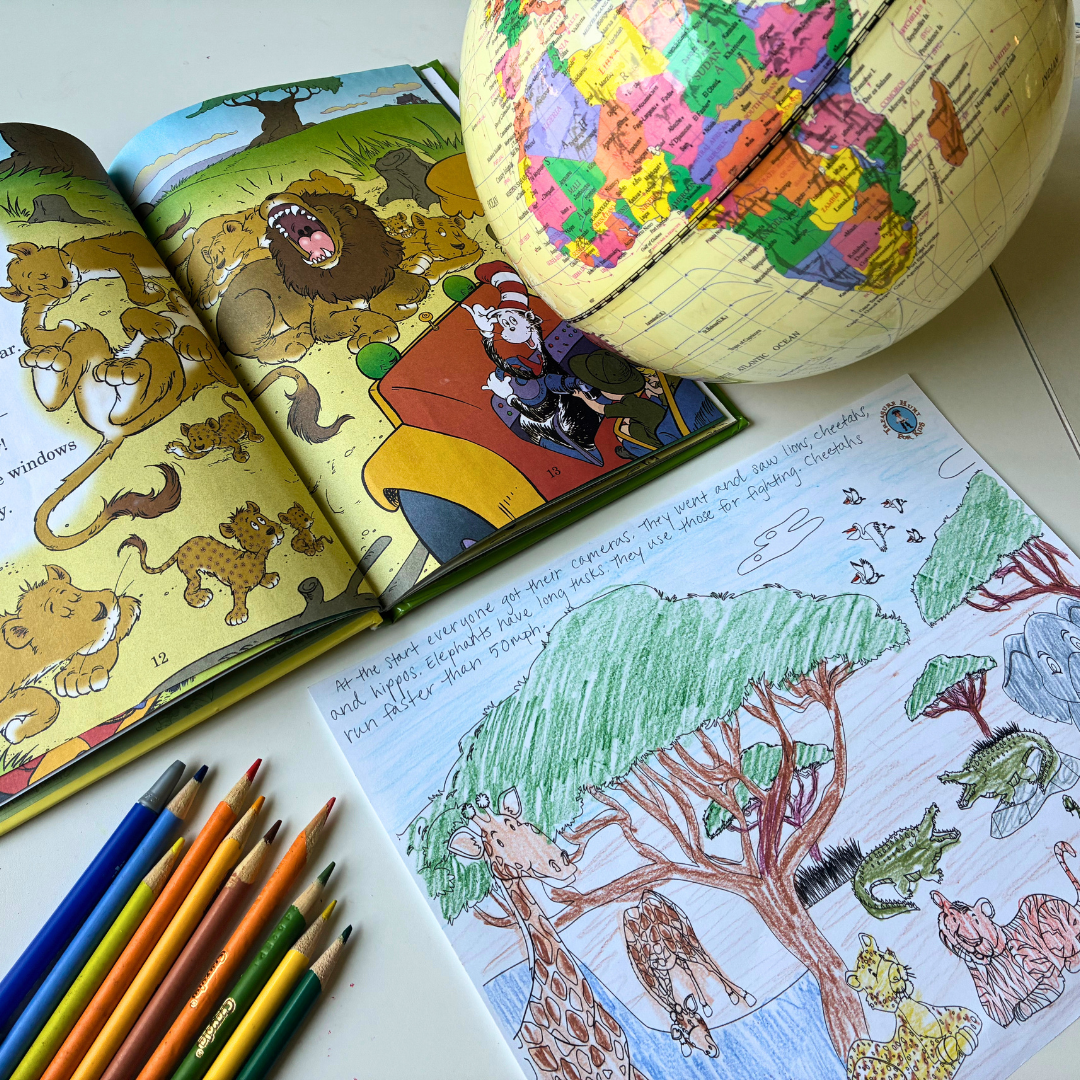
As you read these books, I will guide you in introducing and discussing the stories with your children. (See example in photo above) For each book, I give you notes on reading it aloud, a script for introducing it to your kids, and optional discussion questions and narration prompts.

Science note booking is also an option. I will teach and encourage you to practice narration as you read this books. The unit will list multiple ways to keep record of your science notebooks in order to differentiate your note booking for different ages and skill levels.

Finally, I provide you with a list of enrichment activities that you have the option to add to your studies. The activities range in prep and difficulty containing super simple ideas or more complex projects that take a little more time.

What is a Lesson Like in Science Through Picture Books?

Picture this: Gather at the table, snuggle up on your couch, or lay out a blanket in the grass. Read a book and have your children narrate to you. It’s that simple. If you’re not familiar with narration, I’ll guide you through all of that in this guide. 

Some of you may like to go a little further, and that’s encouraged if it brings you joy! You’ll see in the section above all of the additional videos and activities that are included in this unit. The point is, you can make this as simple or as complex as you’d like.

Unit Topics – Meeting the Standards

As a homeschooling mom, I try not to focus so much on the standards, but at the same time I know that some may feel peace of mind knowing they are following a certain standard as they teach their child. So, in this section, I hope to do my best to meet both sides in the middle.

As I researched science standards while developing this curriculum, I realized that they are not the same across the country. Common Core standards exist, focusing on literacy through science in grades K-5, which is great, because you’ll get plenty of that through these books!

Some states have their own unique science standards while others have adopted the Next Generation Science Standards, released in 2013. (NGSS)

My hope is to provide a variety of science units for families to choose from to help build a foundation of knowledge in the subject. These units will focus on three out of the four disciplinary core ideas listed in the NGSS: physical sciences, life sciences, and earth and space sciences.

These categories will guide me as I choose themes for the different units. The standards will not be stated in these units, because my intention is to make this a family study, which would be an extensive list covering multiple grade levels. However, if you’re curious about what these standards are, I encourage you to do your own research on their website which provides free, downloadable lists of the standards for each grade. 

One thing you may notice is the majority of the standards can be met through these books and your discussion. Reading the standards can feel very “official” or possibly overwhelming, but remember that the goal of these elementary years is to build a foundation – the NGSS will tell you the same thing! We aren’t trying to reach a mastery of topics. We are encouraging curiosity and igniting their desire to learn even more!

Look-Through the Curriculum

Want to see inside one of these units? I know sometimes that can help get a better idea of what a specific curriculum is all about. Head to my YouTube channel to learn more about this and see inside the unit guide.

Watch the Video Here.

Future Units

These units will be published as I complete them with my own children. I have a goal to complete four this year. We may or may not get to more than that. Here’s what you can expect this year:

Each unit will follow the same pattern as I mentioned above in the overview.

Choosing Books

I work really hard to research and read tons of books for these units. I enjoy it very much as I get to know authors and illustrators while increasing my knowledge on different topics.

There are hundreds of books on these topics. However, my goal is not to provide you with tons and tons of books. I hope to give you a simplified, streamlined list in order to help you build a foundation of science knowledge with your kids.

A beautiful, informative picture book always engages my children and me. Some people might refer to these as living books. These are the books that draw your attention and make you eager to listen and learn. It never fails when I read a great picture book with my kids, we are wanting to read more! It’s like it can spark a certain curiosity to dig deeper. 

That’s exactly what science should be in these elementary years. We want to spark our children’s curiosity to learn more about the world and increase their desire to explore and experiment and even question ideas. All of this will develop their knowledge of science topics as well as their critical thinking skills. 

When it comes to collecting these books for your family, the library is such a great way to do that. With the list of books in hand, you can easily put books on hold as you prepare for the unit! It’s such an inexpensive way to learn science with your kids.

How to Use these Units

In my own home, I use these units as our whole science curriculum. I don’t find it necessary to add anything else. Even as I research standards, I am confident that the content and the discussions provide my children with an excellent foundation in science knowledge.

You do have other options to consider:

  • As stated above, use this on its own for your homeschool science curriculum. More units coming soon!
  • Use the book list as a supplemental resource to enhance a science textbook you plan to work through.
  • Let the booklist be your guide as you create your own unit study stretching across multiple subject areas. 

However you decide to use it, I can promise you one thing – You’re going to love these books! 

Stay in-the-know About Releases

If you’re not on my email list already, you’ll want to join now, because that’s where I will announce new releases. Each time I publish a unit, I’ll send out an announcement with a link. I know joining email lists can be frustrating at times, but it’s the best way to communicate with you all.

Emails are sent to announce product releases, sales, and to share the videos I make on YouTube. I hope you’ll connect with me there!

Interested in more Literature-Based Studies??

American History through Picture Books – Work through the timeline of history, one picture book at a time.

DIY Language Arts Novel Guides – Make LA a family study with these novels! No more workbook.

DIY Language Arts Picture Book Studies (K-2nd) – Practice LA skills through books you know and love.

Posted on 2 Comments

Homeschool Novel Study – DIY Language Arts

Novel study has been the most fun and engaging way for us to learn language arts in our homeschool, and adding in a DIY outlook has been so freeing. Two and a half years ago we actually eliminated an all-in-one language arts curriculum workbook to solely focus on novel study, and it’s been the best decision for us.

We like to call this method DIY Language Arts because we are able to take any novel of our choosing and use it to learn all the parts of language arts including spelling, vocabulary, grammar, narration, handwriting, and more.

After a couple years of adjusting and finding good rhythms for this, I am now able to share these novel studies with you. Multiple studies are available, but sometimes it’s nice to see inside one, and that’s exactly what I want this blog post to be for you.

Included in this post is a download to receive an entire week free for one of the novel guides. In the text below, I’ll walk you through how it works, so you know exactly how to incorporate it into your homeschool. I can’t wait for you to try this!

This post contains affiliate links. If you follow one of my links I earn a small commission at no extra cost to you. Thank you for supporting my blog

Look-Through a Novel Study

If you would like to see a video of this particular novel study sample for “The Sign of the Beaver”, you can check out this link where I share more details. You can also see a complete look-through of one of the first studies I published. This will give you a better idea of all of the information and resources that come with the novel study. The novel studies have been updated since then and look much nicer now, but the content is still the same.

Language Arts Overview

Included in this sample is the “Language Arts Overview” page where I break down the subject explaining exactly what it is and how this novel guide meets the criteria for the subject. A clear and simple chart will show you this evidence.

Language arts can be so overcomplicated in our minds, but by breaking it down and understanding what it is, we can get a better idea of how a novel can truly allow us to study the subject in its entirety.

What age is this novel study for?

These novel studies were created to be for the whole family. I’ve used them in my own home with one of my six year olds all the way up to my eleven year old. All of your kids will enjoy these novels, and the activities and work that are included are made to be able to adjust for different levels. If you purchase a novel study, I include the steps to walk you through this entire process in detail.

Weekly Pattern

Each week follows a pattern. Your daily tasks will look very similar (reading, discussion, narrating, copy work), but we will rotate an additional activity each day. This makes scheduling easy, and it allows you to loop different language arts skills for better focus instead of cramming everything in to an all-in-one lesson. The looping looks something like this:

  • Day 1: Spelling and Vocabulary
  • Day 2: Grammar
  • Day 3: Enriching Literature and Writing
  • Day 4: Dictation and Bonus Activity

Let’s take a look at each day. As I describe each of these activities, you will have a better idea of how to use the free sample provided in this blog post.

Spelling

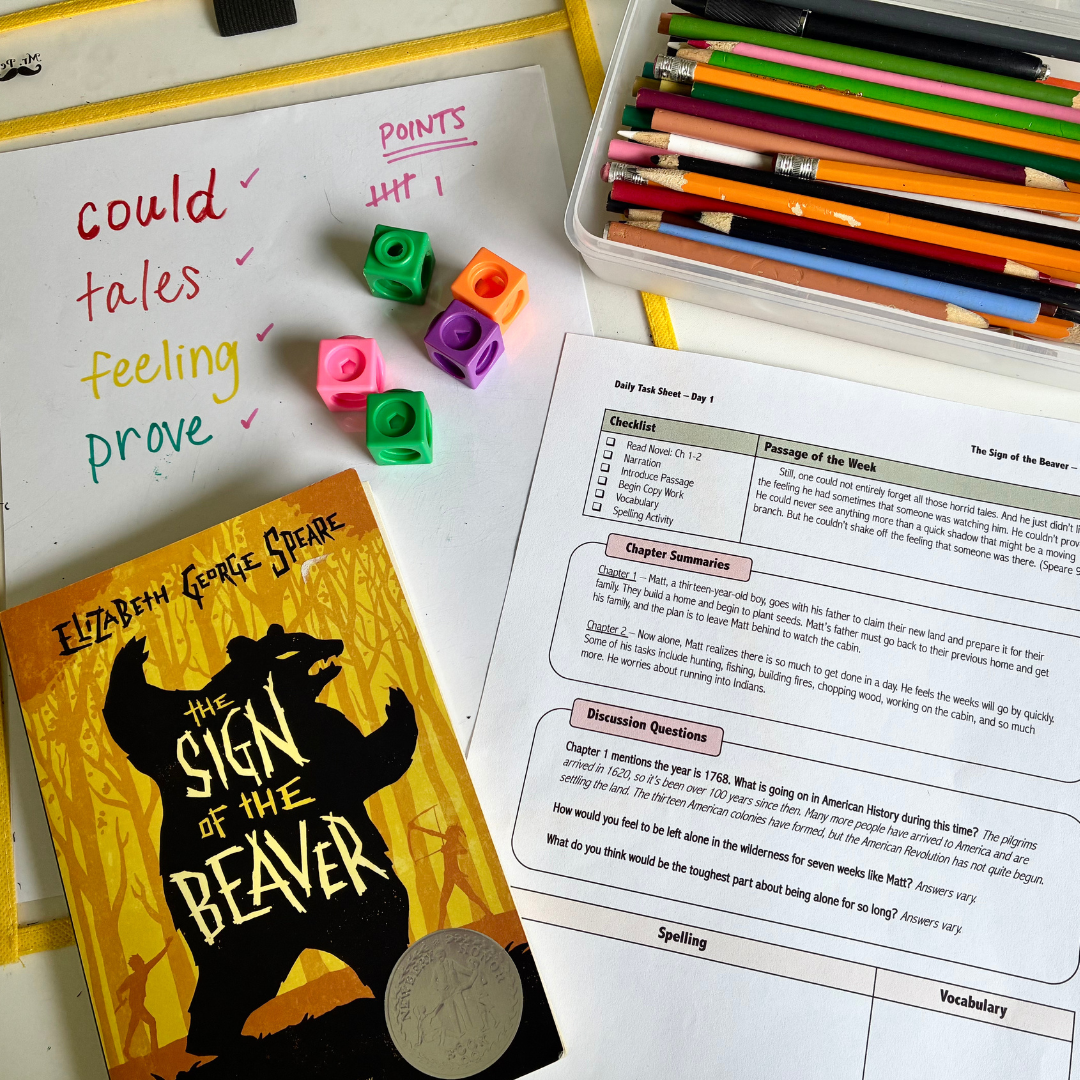
On the page labeled, “Spelling and Vocabulary Samples”, I have provided a couple of pre-made spelling lists. Multiple options are provided to help differentiate the words for the level of spellers you have. This is just an example to help you get started. You are encouraged to pick whatever words best suit your children. The words/list you choose can be recorded in the chart on the daily task sheet.

On the day one task sheet you’ll notice “Spelling Activity” is listed. I’ve got you covered with options for this. Practicing the words can be as simple or as hands-on as you’d like. In this sample, I have provided you with multiple spelling activities to try with your family. Some are extremely simple. Others are a little more involved. The great thing about this is you can do what feels right for your week.

As you practice the words, make a note of the ones your kids know well and the ones they don’t quite have memorized yet. This could be a simple checkmark next to the word in your spelling chart. Then, each day after that, remind them of these words. Have your child practice the missed words throughout the week. Spend about a minute or two each day reviewing the words that are needed. The final spelling assessment will be in their dictation.

Vocabulary

Optional vocabulary words are chosen for you in the “Spelling and Vocabulary Samples” list. Once again, you have the option to choose the best words for your family. We aren’t doing matching worksheets or flash cards. Instead we will focus on meaningful discussion the whole family can participate in. When you read the weekly passage aloud to your children, this discussion will come pretty naturally. A discussion might look something like this:

  1. Ask your child, “What do you think ____ means?” It doesn’t have to be a formal definition. Sometimes my child will describe to me with motions or sounds and then try to explain herself. Let this be casual. If she knows it well enough, move on to the next word. If not, move to step two.
  2. Next say, “Let’s look at the sentence and see if it can give us some clues to make a guess on what ____ means.” Read the sentence again that includes the vocabulary word. Then, encourage your child to make a guess.
  3. If the child is still not able to come up with a definition that is close to the real thing, look it up in the dictionary. This is a great way to practice dictionary skills. Sometimes you can even practice the process of looking it up on a phone or computer.

Grammar

There are many, many grammar lessons that can be taken from a passage. Throughout the guide I will provide you with one grammar focus on day two of each week. You have the option and are encouraged to practice more grammar, if you desire. In the full novel guide, I provide you with detailed information about grammar studies and how to engage in meaningful grammar lessons while practicing passage study.

In my home, we also enjoy using a grammar review workbook alongside these novel guides. We have used Fix it Grammar in the past and now we use Easy Grammar. (See this video for details) The novel passages give us more opportunity to review what we have learned in those workbooks and see it in a more meaningful way.

Enriching Literature and Writing

On day three of the week, a picture book is chosen for you to read aloud to your children. This particular book will teach a little science as we learn about the life cycle of bees.

I encourage you to check your library for this, but I will mention that it’s also read aloud on YouTube HERE. This picture book is an enriching option that provides your children with an exciting story related to the novel, and it will allow you to stretch your novel study across multiple subjects.

I also use these picture books to practice written narration with my older children. Written narration has been such a beneficial practice in our homeschool (watch this video to hear more). Once I read the story, my oldest child will write a narration about the book.

Dictation

Dictation happens on the fourth day of the week, and I have provided you an option to help your younger writers in this process. Not all of your children will be ready for dictation yet, but those that are can complete dictation in two different ways.

The first option is for your beginning writers. I have provided you with a fill-in-the blank dictation option that uses a shortened passage and contains the spelling words from one of the spelling lists.

The other option is a full dictation where your child will write down the passage as you read it out loud. Feel free to dictate just one or two sentences, especially if you’ve never practiced dictation before. If you have a strong writer, you could try dictating the entire passage.

For more information about dictation and how to do it, check out this article.

Copy Work

The copy work will match the weekly passage. You have multiple options when assigning copy work in order to best meet the needs of each of your children. In this sample, I have included the shortened copy work as well as the full passage.

The goal of the copy work is to finish it by the end of the week. It may not take that long, but I challenge you to encourage your child to go slower with their best effort. I like to give short and sweet daily copy work assignments with the reminder that it has to be their best writing. In my experience, these short bits of copy work assigned over the week turn out much better than long, daily assignments.

Download the Novel Study

You can access the free sample to this novel study at the end of this post.

If you enjoy this first week and you’d like to complete the novel study as a whole, you can find the entire guide here. This guide will include much more information about the DIY method and will even teach you how to take any novel that you choose and use these same patterns! The how-to guide is GOLD! You’ll learn so much about language arts and the simplicity of a good novel study.

There are multiple novel studies available and more coming soon. To see more novel options, click here.

Picture Book Studies for Grades K-2

If you like the idea of book studies in your homeschool, check out my new picture book studies for your younger ones. These one-week units focus on one beautiful picture book and provide you with a passage for the week. This passage will allow you to practice copy work, spelling, vocabulary, and grammar.

Each week also includes an outdoor activity as well as an optional bonus activity at the end of the week. These book studies are so much fun! Use them for one week or grab a themed bundle for the month!

See all of the picture book studies available HERE.

Download Free Sample

Join my email list and receive a free one-week sample of the novel study for “The Sign of the Beaver”. This is such a great way to get an up-close look at what this DIY Language Arts learning style is all about.

    We won’t send you spam. Unsubscribe at any time.
    Posted on Leave a comment

    No-Sweat, Simple Composer Study – Beethoven

    One afternoon, my girls and I were enjoying a snack around the table when I decided to play classical music. This is not something I normally do. With four young children, the day fills quickly, and subjects like music tend to be pushed aside. (I’m sad to admit it.) However, I decided to try it, because I had just finished listening to a book that really encouraged me. (Modern Miss Mason by Leah Boden)

    Turns out the music quit playing and I didn’t even realize. (oops!) No one could hear it. When I finally remembered it was on, I quickly grabbed my phone to figure out what was going on. I turned it up and saw the name of the song. It was a song by Beethoven.

    My oldest daughter has an ear for music so I decided to “quiz” her on the spot, just for fun. “Do you know who this is?” I asked her. She looked at me like the answer was obvious and responded, “Yeah…it’s Beethoven!”

    I couldn’t believe it! I didn’t even know that, but how cool! I asked her how she knew, and she just said that it just “sounded like him”. Well, this got us thinking…what does he sound like?

    A quick YouTube search, and we were immersed in the world of Beethoven!

    At the end of this afternoon snack, I had this boost of confidence – I can do this! I can add this in without sweat. It was so easy to sit back and chit chat about a song over a snack. Of course, in homeschool mama fashion, I laid out a plan in my head to figure out how to make this work with consistency. The following is what I came up with and some tips on how to make it work.

    This post contains affiliate links. If you follow one of my links I earn a small commission at no extra cost to you. Thank you for supporting my blog!

    Choose your Composer

    This sort of fell in our lap, but there’s a couple ways you could do this. If you’re studying a specific time period, you could look to see if a composer lived during that time. It would be a great way to link your subjects.

    The other option would be to just pick something you’re familiar with or something that sounds interesting to you. For our first one, Beethoven was such a great fit, because it’s a well-known composer and I also knew the name well. So, it was fun to learn so much about it!

    Lastly, you could pick at random from a good list of composers! Check out this website from Simply Charlotte Mason for a list of suggested composers to study.

    Snack and Drink

    Little ones always seem to listen better when they’re eating. So, you may want to pick a time of day where a snack fits in.

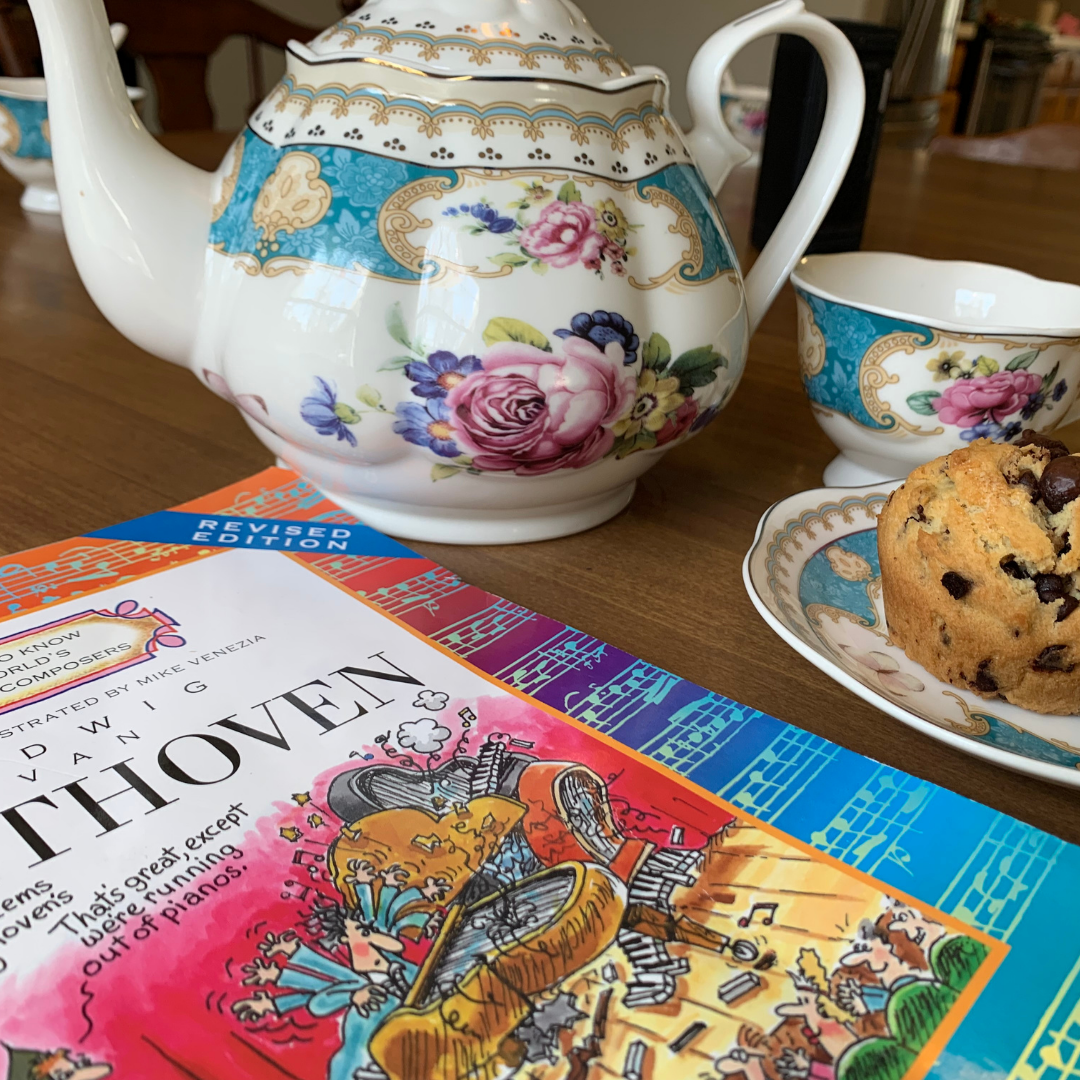
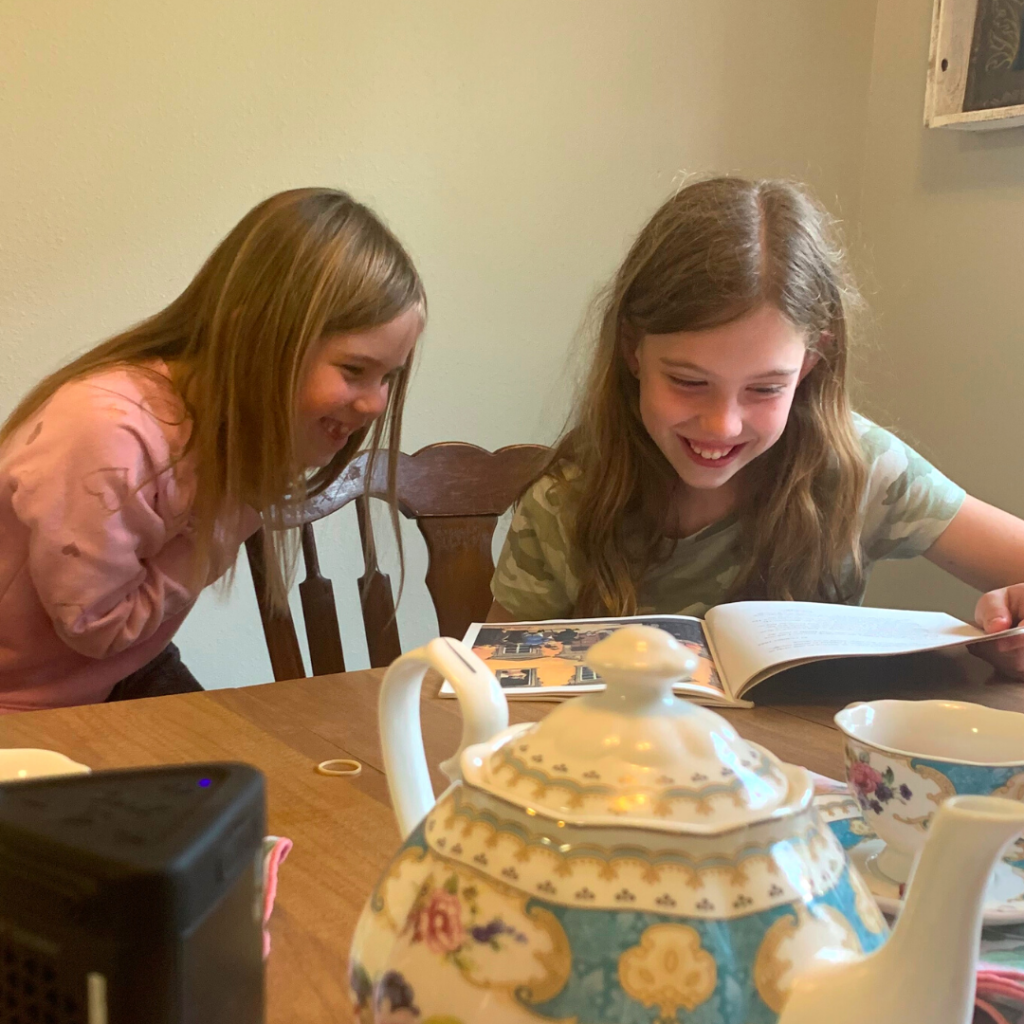
    I chose the afternoon after our quiet time, but I have heard of people that do studies like this at breakfast or during a mid-morning snack. Now, a drink is not necessary, but my girls love a tea party. So, it’s turned into a little routine.

    We have a cute tea set that one of the girls got for Christmas one year, but other than that our “tea party” is not fancy! Our snack has been as simple as apple slices to something more intense, like homemade muffins. Always pick what feels easy for you.

    You want this time to be relaxing and enjoyable. Nobody has fun when they’re running around like crazy. Choose simplicity!

    I’ll be honest, the first week we did it, I did kind of feel like a crazy person. Balancing everyone’s tea, and the honey, and the mixing, and the temperature adjusting – it was a little nuts. However, the more we’ve done it, the easier it gets.

    I wonder if I should share some of my tricks with you?? If you’re interested in tea, I’ll let you know what we do to make it flow better. First, I prepare while my kids are still in quiet time. I boil the water and steep the tea.

    Next, I get the snack ready and at the table (usually I just put it on a paper towel!) I set out enough tea cups for everyone, and I actually put two ice cubes in each cup. This helps cool the tea quickly so no one burns their mouth.

    I also give each girl a little spoon (that came with the set). When it’s time to add the honey, the kids know the rule – fill the spoon and mix. No more 😉

    Just as a side note – I treat myself to a snack and drink too. I could drink tea with the kids, and sometimes I do, but I usually like to make myself a yummy iced coffee! It’s such an afternoon treat.

    beethoven books

    Books

    To keep it simple, I decided to look for books I could find at my library/local used bookstore. I put books on hold, and picked them up as they were ready. Since this study took about 7 weeks, I wasn’t in a rush to get them all at once.

    My goal was to try to read one book a week. Sometimes we did this in just one sitting. Some books, we split up into two different times. I basically just read until I feel like I’ve lost their attention. (This is usually around 15-20 minutes, sometimes even shorter if my two-year-old is awake)

    The books we got were great, and we learned so much! I’m going to list them here for you and I’ll put them in order of how much we enjoyed them. The first is the one we enjoyed the most!

    You’ll notice I didn’t have a book for every week. There was a week or two when I was waiting on a book so we just looked up some information about a song on the internet. It was a quick way to learn a little bit about the song/musician, even without a book.

    Music

    If you do a Google search for “Ludwig Van Beethoven Compositions” you’ll get a big list. I chose a small handful to look at over a 7 week period. I will list those below.

    I really don’t think it matters what order you listen to the songs. You could do it chronologically, but that would take a little research. I chose the songs based on the ones I recognized first. Then, I chose ones that were brought up in a book we read or that came up on an internet search.

    For each song, I used a YouTube video to play the music. There are a couple different ways I would integrate the music into our homeschool.

    First, I would try to play it while I prepared our afternoon tea. When we started reading, I would turn it down. When we finished our book, I’d play the music again and this time we would listen very closely. We might point out if it’s soft or loud. I might ask what instrument they could hear.

    Sometimes we would even pretend we were playing and move our body according to the feel of the music. It sounds silly, but Beethoven’s music is very up and down. One minute it’s quiet and playful and the next it’s loud and aggressive. We had fun acting this out on a pretend instrument.

    Lastly, I would try to play it a little bit throughout the week. I wasn’t always good about this, but I did try. Sometimes I could just play it in the house or I might play it while we were picking up.

    Playing the Music on the Piano

    Every once in a while my kids will do a piano lesson on Hoffman Academy. One afternoon, my oldest realized that there was a teaching video for “Fur Elise”, one of Beethoven’s compositions.

    So, instead of doing the normal Hoffman Academy lessons, she has been working on “Fur Elise” for a couple weeks. I thought it would be such a great way to experience the music, and it now had so much more meaning.

    Easy Break-Down

    Let’s break this down to visualize an easy-to-do checklist. Sometimes seeing it like this really shows off the simplicity, and that’s my hope here. A composer study can be this simple and still be so beneficial!

    • Prepare Snack and Drink
    • Gather around the table
    • Read a book about the composer aloud
    • Listen to a song by the composer
    • Discuss the book, the music, the instruments

    That’s it! No worksheets, no extra activities, just fun conversation and good food around the table. Doesn’t that sound wonderful?

    Simple, Fun, and Memorable

    “Hey, Mom, what’s Beethoven’s favorite fruit?” This was a joke my daughter read in a magazine and shared with me one night. Of course, after listening and learning about him for so long I was determined to get this joke. “Moonlight Banana,” I said. “SO CLOSE!” She responded. And then she sang the answer, “Ba-na-na-naaaaaa”

    Did you hear it? It’s from his Fifth Symphony. How cool that we can recognize that together. A silly joke suddenly has so much meaning.

    It’s such a beautiful part of homeschool. I knew very little about Beethoven, and now my children and I can all share in our learning together. I used to think that a composer study was just one-more-thing to add to our day. How in the world was I supposed to get it done?

    However, with this approach, not only was it simple, but it became one of the most relaxing parts of our day. I so much enjoyed pausing are afternoon to connect over music, food, and a good book about a GREAT musician.

    Posted on 4 Comments

    Knights and Castles – Middle Ages Mini Unit

    coat of arms

    We are beginning to study the middle ages in our homeschool, and I’ve decided to make it into a bunch of different mini-units. Our first one will focus on knights and castles.

    Read further for all the books we read as well as the activities we did, but come back soon and check out our other middle ages units as well. I will be posting them on the blog as we complete them!

    This post contains affiliate links. If you follow one of my links I earn a small commission at no extra cost to you. Thank you for supporting my blog!

    the door in the wall

    Read Aloud Novel

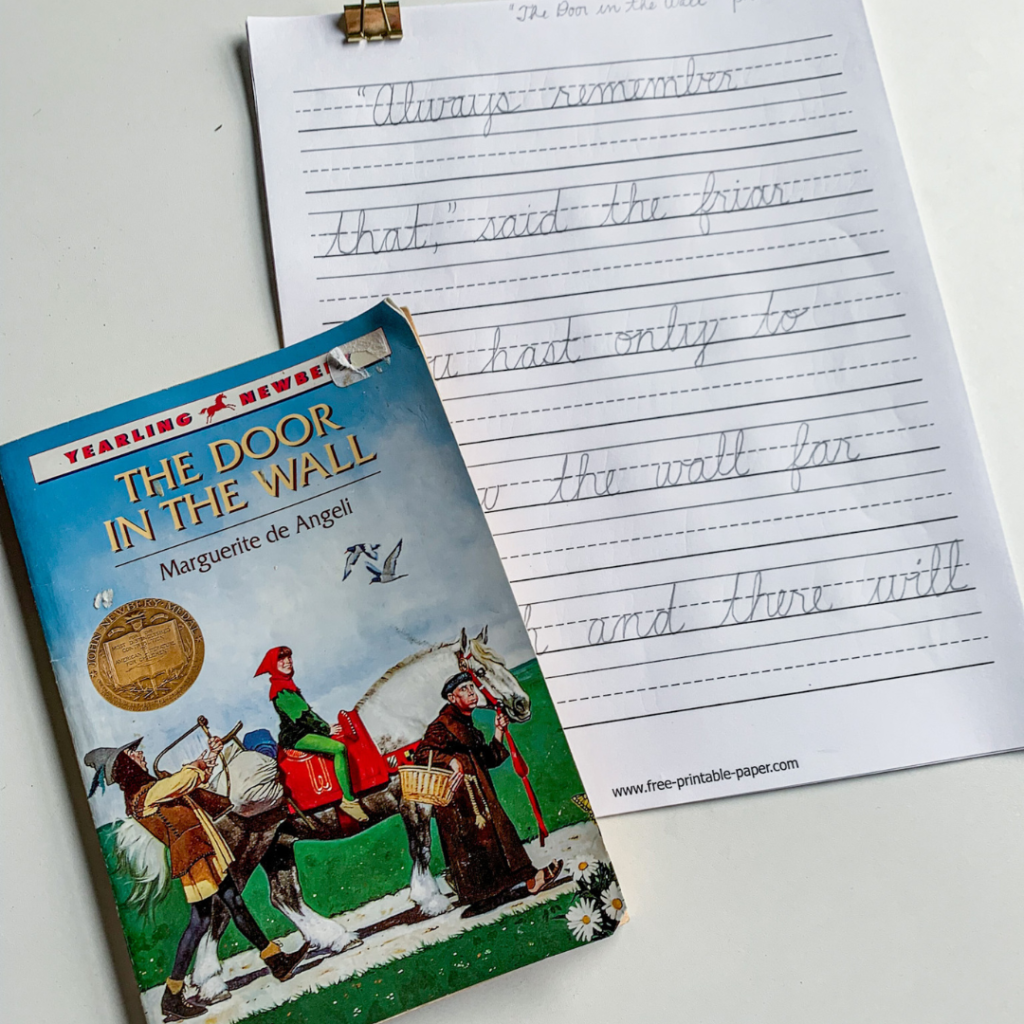
    “The Door in the Wall” by Marguerite de Angeli takes place in the middle ages. It follows the story of a young boy who is destined to become a page but is suddenly ill and unable to fulfill his duty. A monk comes to his aid and encourages him to learn new things and work on becoming stronger. His hard work will soon pay off as he will play an important role in protecting the castle.

    This book came highly recommended (from many other homeschool mamas online) as a historical fiction novel to read while studying the middle ages. The language can be tricky to understand, and by reading it aloud, I was able to explain what many different things meant. (I also learned some things myself!)

    The book is 121 pages and contains 10 chapters, most of which we were able to read in one sitting. The last two chapters were much longer and took us a couple of days to get through.

    I also love the message and theme that surrounded the story. Hard work and perseverance can really pay off. When one opportunity ends, another one might come along. You may think about a modern day phrase, “When one door closes, another opens”. All of these ideas brought on great discussion with my kids.

    We all enjoyed this book so much. Although we used it to study history, we also used it for my oldest daughter’s language arts lessons. (Read about that here)

    More Books

    I love using the library as our main source for books, and for this unit, I even visited a local used bookstore. That may get dangerous in the future. I could’ve bought so much! I found tons of good reads and I’ll share the best ones here. You can also check out my YouTube video where I share a peak inside of the books as well.

    coat of arms

    Coat of Arms

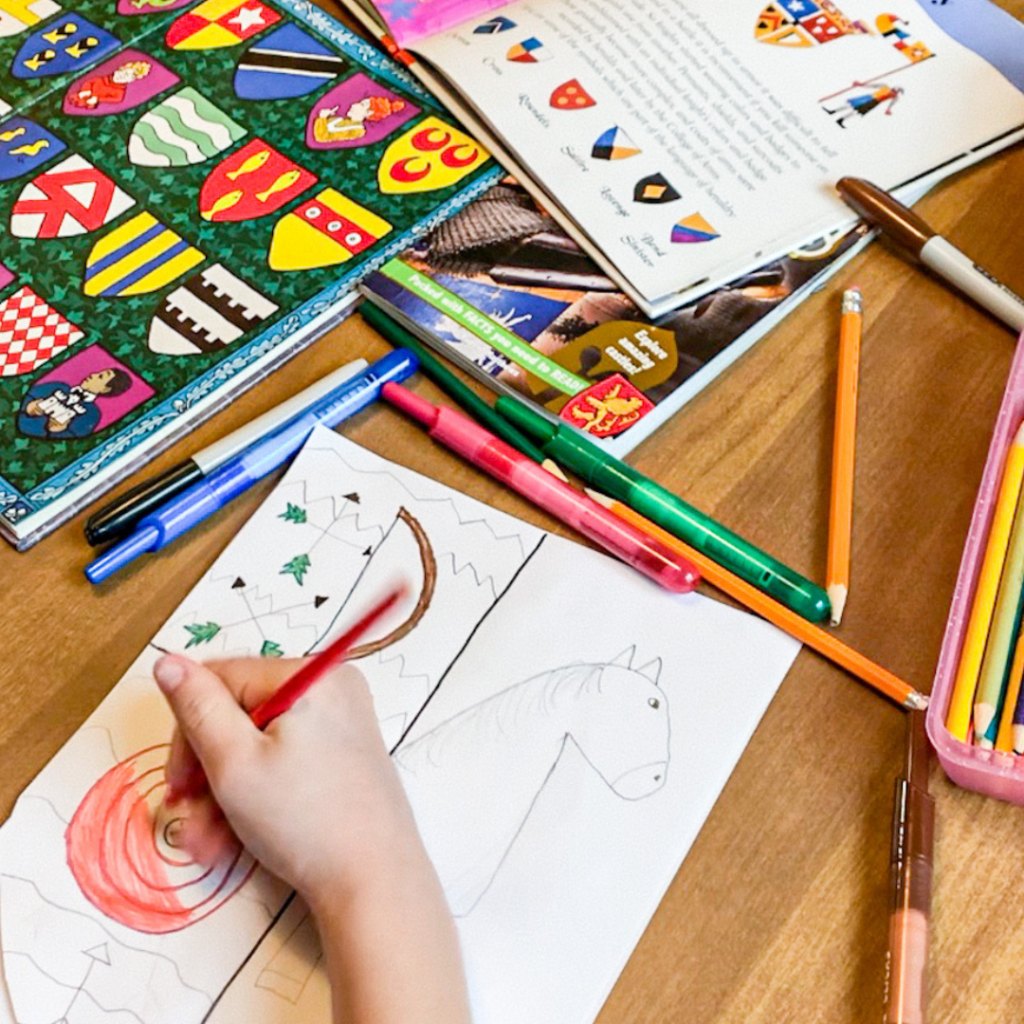
    Almost every book we read about knights talked about a coat of arms. Knights would decorate their shields in a way to represent who they were. This was a fun activity to express who we are and decorate our own pretend shields.

    You could definitely cut cardboard and paint if you wanted to go all out. We just used white paper! I cut the papers into a shape of a shield and I offered a couple of options. Decorate the whole shield or divide it into 2-4 pieces and add different designs to each piece. They each did something different, but I loved seeing what they chose to add to their shield.

    I had them tell me about their designs and what it meant to them so I could write it on the back. It’s a great piece of art for their portfolios.

    cardboard castles

    Create Castle and Drawbridge

    This activity and the two following activities were completed after reading portions of “Castle” by David Macaulay. This book seemed a little intimidating to me because it’s quite long, but it was highly recommended. It turned out to be absolutely wonderful and we learned so much! It did take about 3 days to get through it all.

    We created a castle using a cardboard box from our pantry. This blog post breaks down the entire process. Since I have younger ones, I did a little bit of prep to help the activity run smoother. By the time we were ready to start, I already had the boxes shaped.

    I had my two oldest each decorate their own castle. I will admit that once it was time to create the drawbridge, I could only help one at a time. If you had older kids, it may be fun to hand them the supplies and say – how can you make this work?

    With my two (ages 6 and 8), we talked about it as we went, and I had to do a lot of the work so that the drawbridge would do what it was supposed to. Even still, they loved the finished product and immediately got their Barbies out to start acting out a castle attack. It was pretty cute to watch, and such a fun way to assess what they’ve been learning – through play! I love it!

    Castle Drawing and Narration

    Before we read our Castle story one morning, I found a video that taught my girls how to draw a castle. Now, we love Art for Kids Hub, but their castle drawing could only be watched if you pay for a subscription on their website.

    So, we did something crazy and decided to just draw the Ice Castle from their YouTube channel. I encouraged my girls to decorate it like the castles we have been reading about. My oldest did just that and kept the snow. My other two girls just went full blown Frozen and kept the ice castle.

    Either way, it was still fun and I decided to use their pictures as a visual for their narration of what we read that morning. I wrote something for my two oldest girls and kept it in our yearly portfolio. I love how it turned out.

    Build-A-Castle Rotation

    Just one more day of reading this book (“Castle”), and I wanted something fun to finish it off. We have a few open-ended toys at our house, so I chose four different bins full of blocks to get us started.

    I set out four blankets for our morning time and put a bin on each blanket. We had Magnatiles, Mega Blocks , Duplo Legos, and wooden blocks. I told each of my kids that I would set a timer for five minutes and they’d have to build a castle out of that specific toy.

    At the end of the timer, no matter if they finished or not, they would rotate to the next blanket and build another castle. They thought this was the coolest. It really broke up the time well! They made all kinds of castles and it was the perfect way to finish off the book while keeping hands busy and ears listening. It was also neat to see their creativity and became a beautiful way to assess their understanding!

    Still on My Wishlist

    I always like to have a few ideas in my head of what I want to do for our unit studies. I’ll usually make a board on Pinterest (See my middle ages board). The thing is, I don’t always get to every single one. That’s because they are mostly enrichment! And if it adds more stress to complete it, then I put it off for another time.

    I love homeschooling with this philosophy because I don’t feel pressured to check a bunch of things off. We still learn so much through our readings! The next couple of activities are ones I wanted to do but didn’t quite get to during our unit. However, they’re too cute not to share! I’ll be saving them for a rainy day, but I hope they might inspire you if you’re studying the middle ages!

    Sir Cumference

    The Sir Cumference series is so much fun. They are picture books based in the medieval times that teach math concepts through stories.

    We found ours at the library. I checked out four of them and we simply read them together before bedtime for a few nights in a row. My kids loved them!

    Although we didn’t do an activity to go along with it. I kept thinking how fun it would be to do a simple graphing idea with some candy or cookies, just like in the “Roundabout Battle” story. Check out this candy bar graph for an idea of what I mean. You can also see this photo of an M&M pie chart for another type of graph the book used.

    These are such simple ways to bring the book to life and experience the graph in our own hands instead of just the story.

    Armor of God

    One of the books that we read had a Christian message, and it was called “The Brave Young Knight”. The book was great alone, but I had this idea to do a little armor of God study to go along with it.

    You can find the armor of God in the bible in Ephesians 6:10-20. Once we read about it in scripture, I wanted to create a fun, easy knight using aluminum foil shapes. This link will give you a better idea of what I’m talking about.

    As we review the armor of God, I hoped to cut the different pieces of the armor out of the foil, glue it on construction paper and label it. I just feel like this could be such a fun way to link our study of knights to what we learn in scripture. It’s also a great visual to help us memorize the verses.

    Movies/Shows

    We have a family movie night on the weekends, and I love when I can match it up to what we are learning. During this unit, we watched a couple of movies that were related to knights and castles.

    First, was The Sword in the Stone. This is an old Disney film that follows the adventures of a young boy who wants to be a knight. It is very magical, but it does take place in the time period. Since I have kids ages 2-8, it was a great one that we could all enjoy.

    Another weekend, we let the bigger kids watch A Knight’s Tale. Now, this one is rated PG-13 and it took a little editing on our part.

    First, we had to talk with the kids about the language. We also had to be prepared to skip a love scene in the film. The only other thing was one of the first scenes. You see a man’s butt and there’s also a visual of someone hanging in the background. Beyond those few parts, the rest of the film was fantastic!

    I highly suggest you read through the Common Sense Media page, and as always, choose what you think is best for your family. Everyone has a preference for movies, and as parents we get the privilege to choose what is shown in our home. In my opinion, it was worth the watch, even though we skipped a small bit. The film portrays that time period so well. You can really see the different classes of people as well as things like jousting and coats of arms, all of which we discussed together the weeks before.

    More Unit Studies

    Come back soon for more unit studies related to the middle ages. If you liked looking through these ideas or if you try one at home, I’d love to hear about it in the comments!

    We’ve been doing unit studies like this all year and I have most of them on the blog. I’ll link some of them below if you’d like check them out!

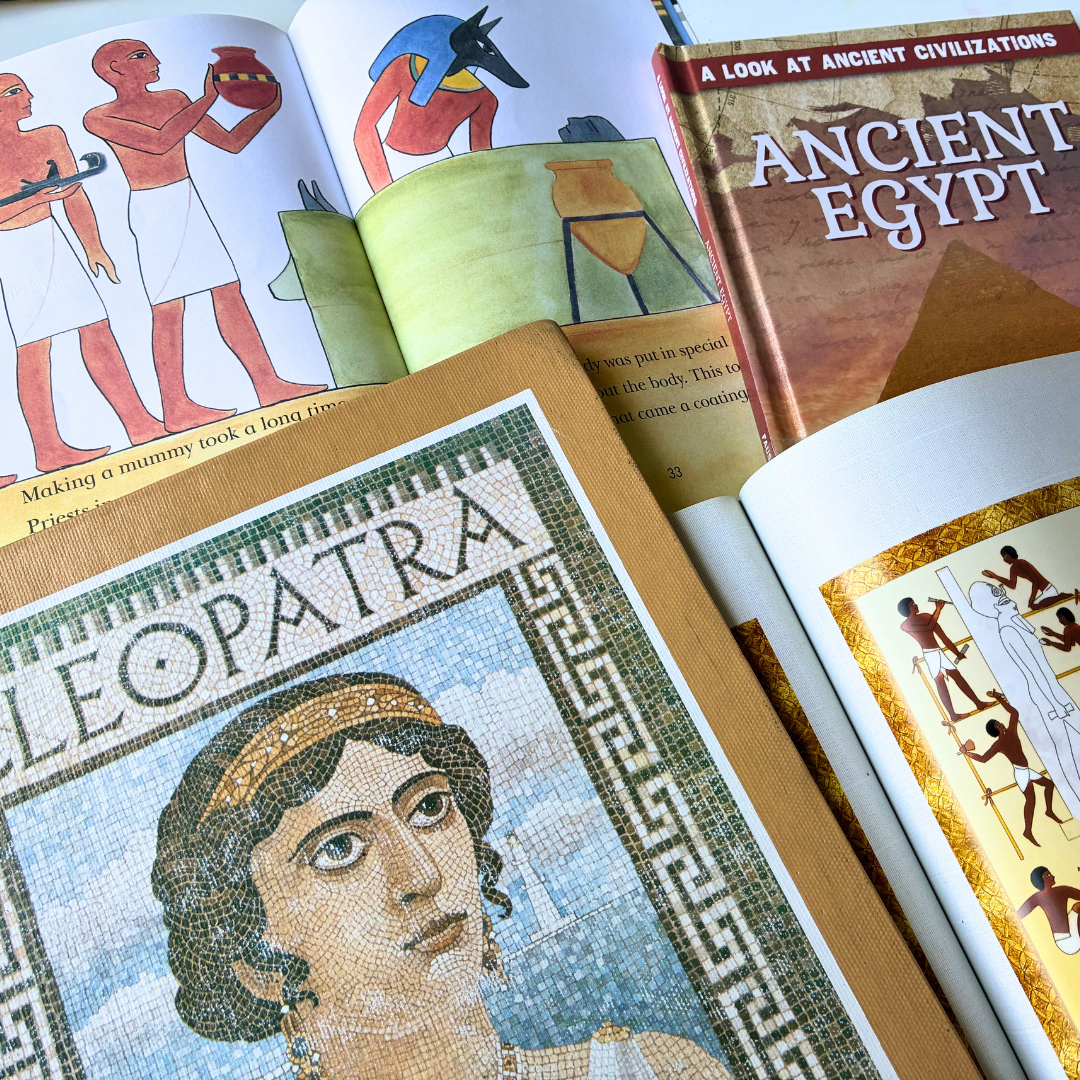
    Ancient Egypt

    Weather

    Space

    Ancient China

    Vikings

    Thanksgiving

    Posted on 3 Comments

    NEW (Mostly) Workbook Free Language Arts Method

    winnie the pooh

    (Mostly) Workbook Free! Did that reel you in? 😉 Well, this whole method was inspired by my research but also a desire to get rid of the workbooks! They were making me crazy…and bored! However, I have found it important to continue daily grammar practice. That’s where the workbook comes in. Even still, this new method has been such a breath of fresh air for us! I’m so excited to share. Let me tell you a bit about how we got here.

    After Christmas, we kicked off the year with a fantastic history unit on the Vikings. We were having so much fun learning, but it would come time to sit down for language arts, and I dreaded it! I finally said to my husband – I can’t stand language arts workbooks. I’ve tried multiple workbooks over the years, and it never fits our family quite right. I just want to study language arts through what we are already learning in history or science.

    Well, it wasn’t long after that, I was led (by prayer I’m sure of it!) to a post or a quote that mentioned Charlotte Mason, which I was pretty unfamiliar with at the time. Well, one thing led to another and suddenly I was listening to every Charlotte Mason podcast I could and reading all the info I could find online. I was fascinated by the methods, but nervous to commit.

    Then, I came across a brand new book called “Modern Miss Mason” by Leah Boden, and it inspired me in the most beautiful way – WOW! I can’t recommend it enough. Her book encouraged me to learn the philosophies of Charlotte Mason but then to apply it to our homeschool in a way that suits are family well.

    My point in all of this intro is to let you know that this novel unit is inspired by what I learned from studying Charlotte Mason’s methods. (I still have so much to learn!) It may not follow her philosophy exactly, but the whole process has brought my family (especially me) such a sense of joy, and I am certain that is what matters most. This unit has given me a freedom that makes language arts interesting for us again, and I hope if you try it that it may do the same for you.

    Now, before I continue, I should mention that you could probably adapt this unit a little bit to use for any grade you’d like. My child (that I created this for) is in third grade, but I planned all of the lessons according to what she has already learned and what she is learning in her grammar book (More on that later). You can do this too, and I hope my breakdown of this method helps you see the simplicity that I see in that. I encourage you to continue reading no matter the grade level.

    This post breaks down the actual process of putting this unit together. Definitely look through the detailed descriptions of each piece below first, but if you want to see a unit in action, check out our first novel unit like this, “Winnie the Pooh” (the book is so adorable!)

    This post contains affiliate links. If you follow one of my links I earn a small commission at no extra cost to you. Thank you for supporting my blog!

    Language Arts

    From all of my research, I came up with the following list of what I wanted to include on a regular basis for my daughter’s language arts.

    • Good (living) book
    • Narration
    • Daily Grammar
    • Copy work (to practice Handwriting, Grammar, Spelling, and Vocabulary)
    • Written Narration
    • Dictation

    As I go through this unit, you will see these pieces incorporated throughout. If you’re interested on where I’m learning about all this, I’ll leave a couple links for you here. (I listened and read so much! But these two sources stick out to me the most) Simply Charlotte Mason, and the Charlotte Mason Show Podcast.

    Novel Unit Schedule

    I’m going to outline the schedule of this unit, because I want you to see the simplicity of it – at least, I think it’s simple, and I hope you do too! Think of the lists you see as a checklist for the day. Each day of language arts requires about 5-10 minutes of independent work from your child and a 20 minute lesson with you, the parent. You’ll also be reading aloud at some point in your homeschool day, but I don’t really count that. Reading great books together as a family doesn’t feel like school for us. (We’ve read at bedtime and/or our morning time for the last couple years, and it’s been wonderful)

    It probably won’t make any sense at first, but if you read further, I explain each piece of this schedule in my post.

    I will put in the schedule to read each day. You can time it as you please. We read every day, whether it’s a school night or not. Our normal homeschool schedule is four days a week, but on the occasion that we are home on Fridays, I will mention my plan for that day as well.

    DAY 1

    • Read novel and narrate [whole family]
    • Grammar Workbook [independent work]
    • Copy work – complete 2-3 lines of selected passage from novel [independent work]
    • Study passage – focus on grammar [language arts lesson with parent]

    DAY 2

    • Read novel and narrate [whole family]
    • Grammar Workbook [independent work]
    • Copy work – complete 2-3 lines of selected passage from novel [independent work]
    • Study passage – focus on spelling and vocabulary [language arts lesson with parent]

    DAY 3

    • Read novel and narrate [whole family]
    • Grammar Workbook [independent work]
    • Copy work – complete 2-3 lines of selected passage from novel [independent work]
    • Written Narration [language arts lesson with parent]
    • **Option – review passage/spelling words if necessary

    DAY 4

    • Read novel and narrate [whole family.]
    • Grammar Workbook [independent work]
    • Copy work – finish copying selected passage from novel [independent work]
    • Dictation [language arts lesson with parent]

    DAY 5 (OPTION)

    • Read novel and narrate [whole family]
    • Silent Reading (15-20 minutes) [independent work]
    • Narration [language arts lesson with parent, about 5 minutes]

    Read Novel – A Good (Living) Book

    Give me all the books! I love reading to my kids, and I especially love coming home with a bag full of books devoted to a unit study. This whole year, we have done all of our science and history using books from the library, and it has been the most wonderful time.

    I tend to just get what the library has available, which I think is fine! Lately, I’ve been trying to be a little bit better about thinking ahead and finding good, quality literature. I might put a few books on hold or visit my local used bookstore. The effort has been worth it. Having good literature makes our studies come alive and become more enjoyable.

    What is a living book? Well, that’s a good question. It’s a hot term in the Charlotte Mason world, and it honestly intimidates me a bit! So, here’s the method I use when choosing a book. Do I enjoy reading it? Is it helpful to our studies? Does it add something positive to what we are learning? Will my kids find it fun/interesting?

    These are just a few questions I’m thinking about. This article breaks down the definition of a living book in an easy-to-read list. I find it very helpful, but I’ll be honest, my kids and I enjoy a good Magic Treehouse book here and there…is that “twaddle”? Maybe…but remember…my hope here is to do what’s best for my family, and we like it sometimes! So I encourage you to find books that your family enjoys too!

    I mentioned this earlier, but we read our novels at bed time usually. We also have a time to read aloud during our morning time. When we read, it’s with all my kids, and it’s not part of our lesson time. What’s great about this is each child is benefiting from the literature, and my little ones are even practicing narrating as we do it. Whole family learning is my favorite!

    Narration

    I am new to narration, and I don’t know if I do it the “right” way, but I do it in a way that feels right for my family. (Are you catching a pattern here? Every family is so different, but what a blessing it is to have the freedom to adjust as needed, according to our family interests) Every time we read something we talk about the book together. Sometimes it’s in the middle of a chapter, sometimes it’s at the beginning, sometimes it’s at the end of our reading.

    For this new language arts method, I made sure to encourage my children to talk more than we usually do. I wanted to be intentional about our book conversations. If I just say “tell me back what happened”, they look at me confused. So I usually start them off with a question or two to get them going.

    So, what happened at the beginning of the chapter? What was your favorite part? What problem did they run into? How did they solve it? How do you feel about that character’s choices? I don’t ask every question every time, but this is just an example of what gets us started talking. Both of my school age girls participate in this daily book discussion.

    There’s a lot more to narration than this, so if this is new for you as well, I encourage you to look into it further. (Check out this site)

    Daily Grammar

    We recently added Fix it Grammar to our homeschool day for my third grader, and I love it. I will link the product for you (not affiliated) if you want to learn more about it. It takes my daughter about 5 minutes a day to do this, and she can complete most of it independently.

    She does this work daily, which gives me a boost of confidence knowing she is getting consistent practice. If you are looking into doing a unit like this, any grammar workbook can be used! Earlier this year, we used an Evan-Moor fundamentals workbook, and I feel like that could’ve been used just as well. The point is regular practice and connecting it with what you’re reading.

    One of the days of the week, I like to do an alternate grammar activity instead of the grammar workbook. This usually happens on Day 2, because it doesn’t take us the whole 20 minutes to do spelling and vocabulary. We basically apply the rules of her Fix it Grammar sentences to our passage. Let me give you a concrete example.

    Currently, in the Fix it Grammar books, she is labeling captalization, end marks, nouns, articles, and pronouns. She knows how to do this because it’s practiced daily. Well, one of the days during the week, we look at the novel passage and label it in the same way. This has been a great way to apply the same steps to a relevant passage from our novel. I love linking the two (grammar and novel) together.

    You can see an example of this in our Winnie-the-Pooh unit.

    copy work

    Copy Work – Handwriting

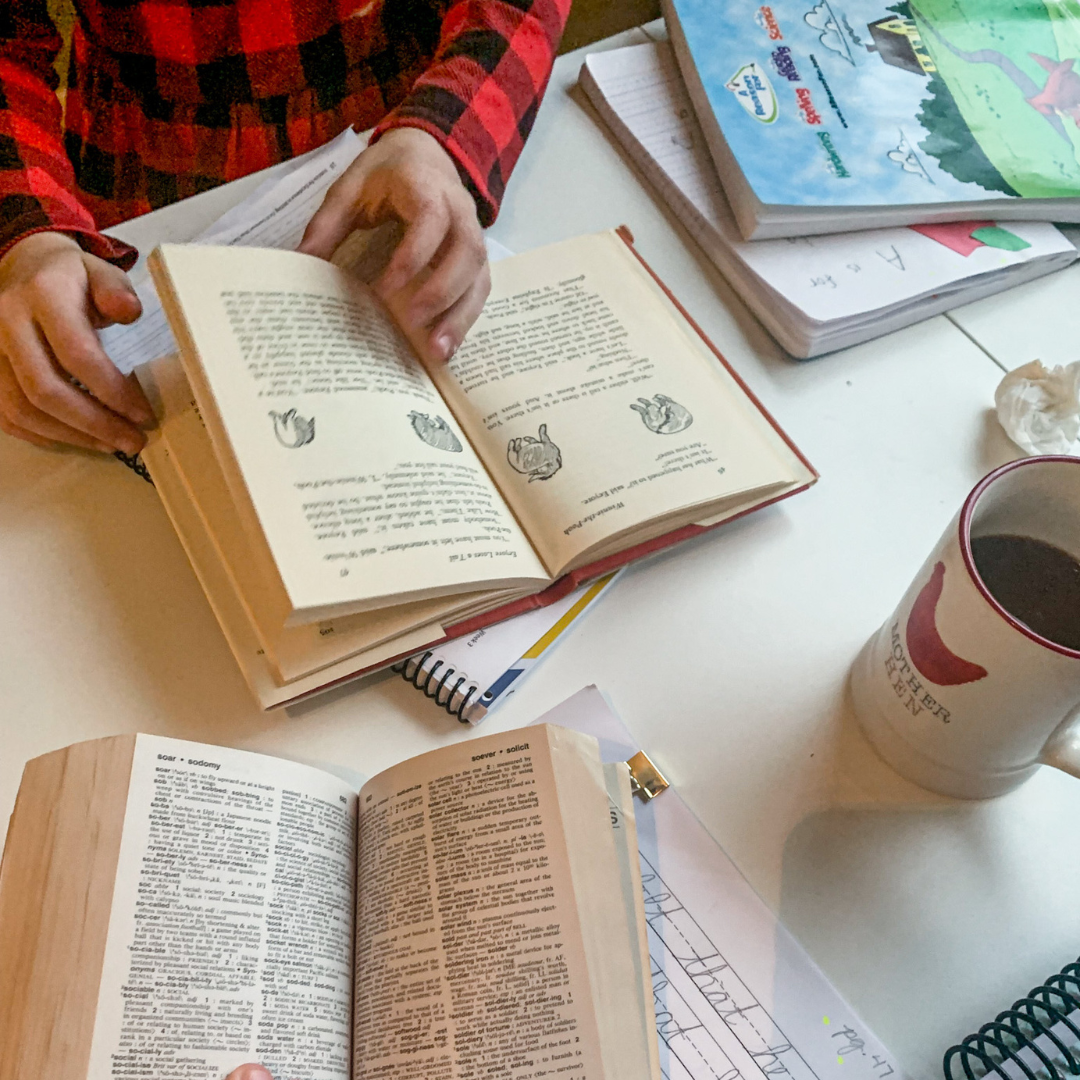
    The copy work is chosen by me using passages from our novel. My goal is to study one passage a week. This copy work will allow my child to practice handwriting, but we will also be working together to study grammar, spelling, and vocabulary through this passage.

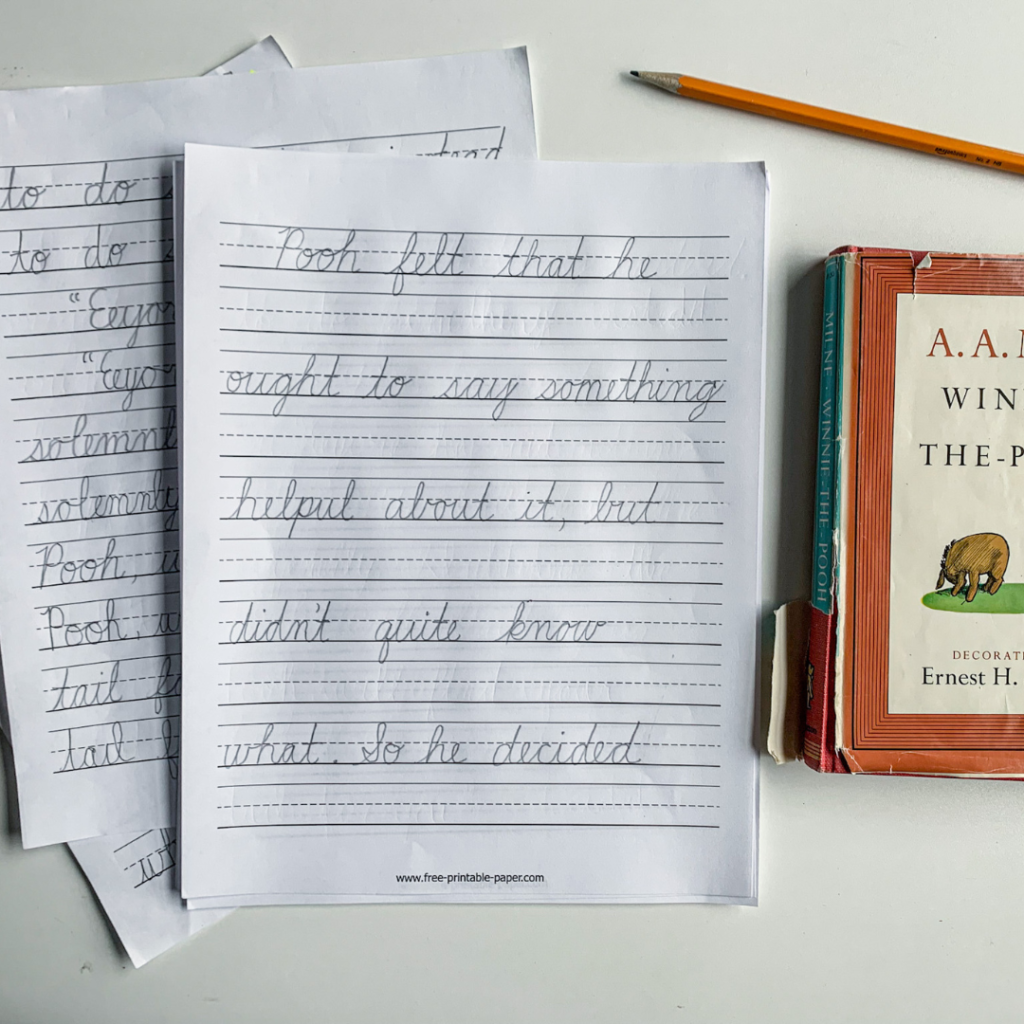
    Each week, I wrote the passage out onto lined paper, skipping every other line. (See photo) This gave her an example to follow. Each morning, during her independent work time, she would copy 2-3 lines. The goal is not to do a ton of copy work in one sitting. What does get finished must be done well, if that makes sense. This is another philosophy I am learning about from the Charlotte Mason method. Shorter lessons, better quality work. I’m finding it to be very true!

    Copywork – Grammar, Spelling, and Vocabulary

    This part of our lesson will vary depending on the passage, but you can see it in action by checking out one of our units.

    On the first day we look at the grammar and punctuation. We go through each sentence and figure out together – Why is something capitalized? What is the punctuation at the end? Why is that comma there? When do we add quotes or indent? And so on…

    I am very intentional about the passage I choose for this reason. I’m not going to pick something that has incorrect/odd grammar. I’m choosing passages I know will enhance what she’s already learning in her grammar book.

    I also spend a day focusing on spelling and vocabulary. (See outline) If there are any words she is unfamiliar with, I try to have her guess the definition using the context. Then, we look the word up in the dictionary.

    Next, for spelling, I quiz her on a variety of words in the passage. If she gets it right, we move on. If it’s wrong, we focus on that word for a bit and I try to remember to quiz her on that word a time or two during the rest of the week. There is no spelling test as she will be writing the words by memory during the dictation portion of our week.

    Written Narration

    Depending on the child’s age, your lessons may or may not include written narration. Based on my daughter’s abilities, I felt she was ready to start with my help.

    One day a week, I require written narration from her. My goal here is for her to write about what we are reading. I like to help her brainstorm and figure out how to write a good narration. Eventually, I hope she will use these brainstorming techniques to write on her own.

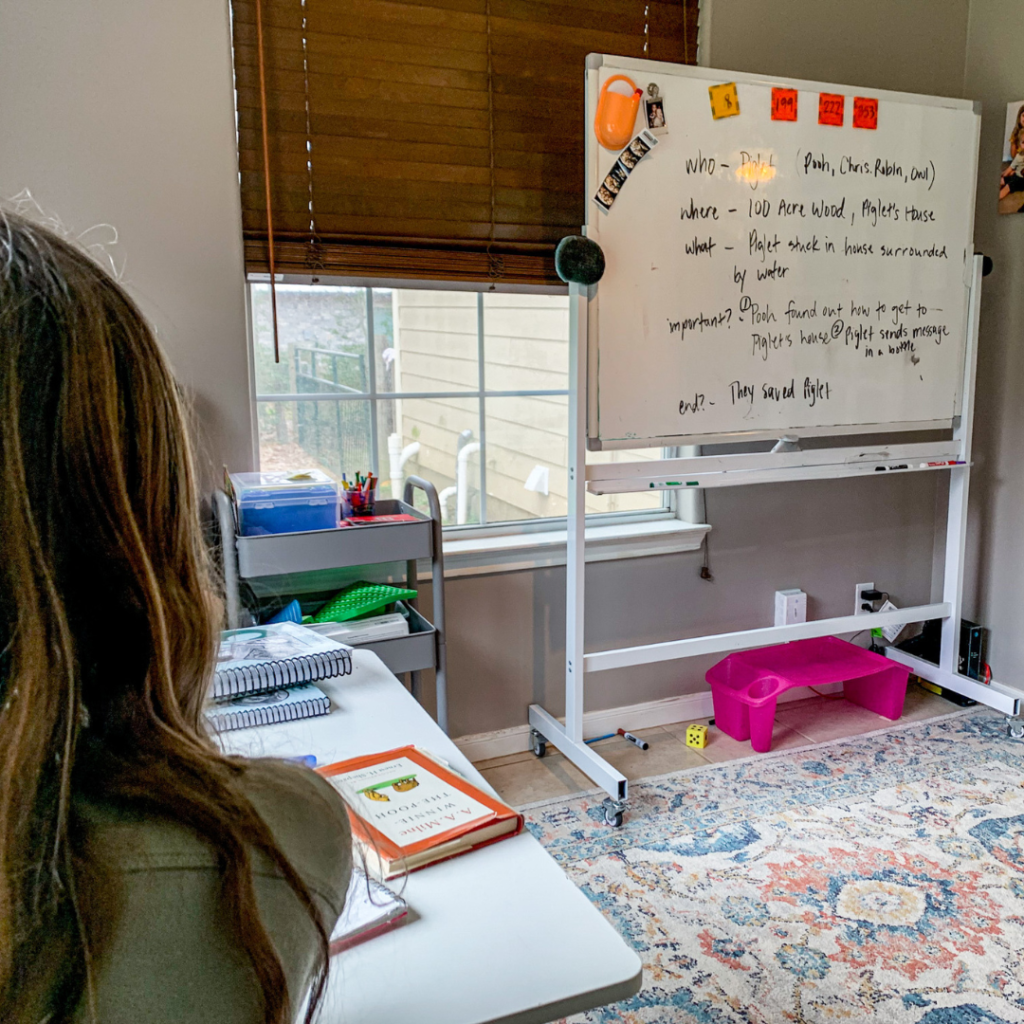
    I ask her the following questions and we jot down quick notes as our answers (see photo):

    • Who is involved?
    • Where did it take place?
    • What happened?
    • Any other important pieces to mention?
    • How did it end?

    I just made these questions up. This is not an official strategy, but we used it for both passages, and it went really well.

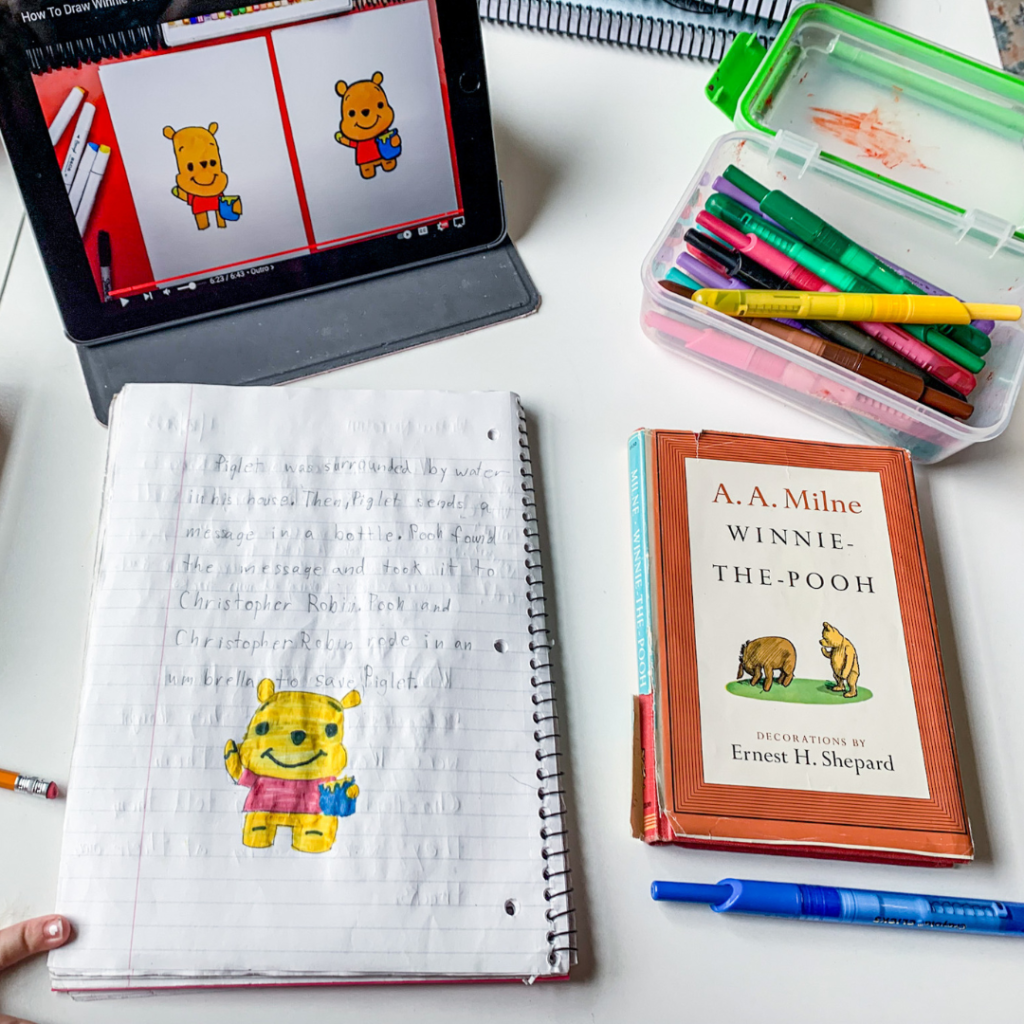
    Once she has short notes, she begins making sentences to form a paragraph about what we read that day. The first couple times I asked her to do written narration, it was rough. However, with consistency and my help, she is starting to get the hang of it. I was so proud of the last one she did! She’s made awesome improvement.

    If you check out the picture below, you’ll see something else we add in for fun. As a reward for her hard work in writing, she likes to draw with Art for Kids Hub. We add it to her notebook, and it’s a cute addition to her work. (You’ll also get a peek at how she took my notes from the board in the last picture to her completed paragraph.)

    I’ll admit, the hardest part of this lesson in written narration is for me to just be quiet. I always want to say things like, “Wouldn’t it sound better if…” Or, “Well, don’t you want to add…” I have to bite my tongue – a lot! It’s worth it though. I just LOVE hearing her voice in her writing.

    written narration

    Dictation

    We’ve had practice with dictation from a couple different places. I first learned about it when we completed a Dart Guide from Brave Writer. We were also already doing it at the beginning of this year through the language arts program I chose, Learning Language Arts through Literature. I love it because it’s an easy way to assess that doesn’t feel like a test. Plus, it’s meaningful because it comes from what you are reading.

    This article gives fantastic instruction, including a video, on how to do dictation. Like some of the other pieces of this unit, dictation gets easier with practice. The way we set all of this up, we study the passage Monday-Wednesday and dictation is on Thursday. By working on the passage a little bit each day, I feel like it’s a great way to set her up for success during dictation.

    I was explaining to my daughter today during her dictation what a wonderful skill it was. Being able to write something and know how to add punctuation and edit it is a life skill that will be necessary her whole life – writing emails and letters, for example.

    After I finish dictating the passage to her, we correct it together.

    Freedom and Fun

    I feel like that’s what it really boils down to here. By doing this method in our language arts, we’ve had more freedom to apply books we are already using to learn, making it more fun and interesting to actually work with.

    A lot of things have inspired me to get here, as you may have read throughout this post, but I’m so thankful for what I’ve learned and how we can now find a way to do something that works so well for our family.

    Have you tried something similar to this? Are you interested in seeing more units like this in the future? Let me know in the comments and be sure to sign up for my email list where I send all our updates, posts, and resources that we are using in our homeschool.

    You can also catch me on Instagram @simply.learning.together If you try this out, take a photo and tag me. I love seeing your families enjoy learning together!

    NEW Novel Guide Available!

    For the last few years, my children and I have used this novel-based language arts program that is family-style and enriched with great literature each week. I’m so excited to share a NEW guide with you on how we do this in our home. If you’re tired of an all-in-one language arts workbook or if you’re itching for a great novel to read aloud to your kids, you’ve got to try this method! Below are two of the newest guides available now:

    James and the Giant Peach

    The Secret Garden

    You can watch multiple videos about this method of Language Arts on my YouTube Channel HERE