Posted on 1 Comment

5 Steps to Start Homeschooling

science experiment at home

I never planned to homeschool, so when I started to think about doing it, I was starting from scratch. It was unfamiliar to me, and I didn’t know anyone personally that homeschooled their children. I did a lot of research and a lot of planning. I’ll admit, we definitely hit some bumps along the way, but overall a simple start up was key.

In this post, I plan to outline how I started homeschooling in hopes of helping someone start their own planning process. I am no expert, and what works for me may not work as well for you. Keep that in mind as you read through. Most importantly, I hope to encourage you as you begin these first exciting steps of planning.

We are going to start from the VERY beginning stages, because I think they are important. I started thinking about homeschool months in advance to when I actually wanted to start. When I began my own homeschool journey my children were 2 and 4. One would be heading into kindergarten the following year.

This post contains affiliate links. If you follow one of my links, I earn a small commission at no extra cost to you. Thank you for supporting my blog!

1. Research and Read

As you begin thinking about and praying about starting to homeschool, one of the easiest things you can do is research and read about it. You can do this through novels or even different blog posts online.

I used to just scan Pinterest and read post after post from homeschool families. This allowed me to become familiar with names of curricula, the lifestyle, different terminology, homeschool styles, and the daily routines. I slowly began to gain confidence in what I was doing.

The following are a few book suggestions. Don’t feel like you need to read them all.

These are only suggestions. The first one is very short and an easy, quick read. It would be a great start.

Sometimes you can even scan through them. For example, I’ve read most of “Wild and Free”, but a lot of it I flipped through and read what I was interested in or had questions about.

“Teaching From Rest: A Homeschooler’s Guide to Unshakeable Peace” by Sarah Mackenzie

“The Call of the Wild and Free: Reclaiming Wonder in Your Child’s Education” by Ainsley Arment

“Homeschool Bravely: How to Squash Doubt, Trust God, and Teach Your Child with Confidence” by Jamie Erickson

There are hundreds of books about homeschooling. These are just a few to get started. As I mentioned before, you can also read through blog posts. Try searching daily routines or different homeschool styles. Look for a day in the life post to get a feel of the rhythm of homeschool.

Yours will be your own and not like anyone else’s, but I always find it helpful to hear about another experience.

You don’t need to choose a homeschool style before you begin.

You will read so much about different styles: classical, Charlotte Mason, eclectic, wild and free….don’t label yourself. How do you know your style if you’ve never even tried it?

You can definitely experiment with one that you find interesting, but don’t let it stress you out. I’m not even sure I know my own style. It’s probably a mix of everything! Why does everything have to be labeled?

2. Learn about the laws in your state.

In the United States, every state has different laws of things that you need to do in order to homeschool your child. I am in Texas, and it is a more relaxed state, giving me a lot of freedom in my homeschool, for which I am very grateful.

Other states require much more. Some have to take attendance everyday, keep records and grades, record hours, and give yearly assessments. You need to look at your state laws and decide if you can commit to the requirements.

One place to look is the Home School Legal Defense Association (HSDLA). This website is very informative and allows you to choose your specific state and read about the requirements.

Be thorough – read as much as you can and watch the videos. Make sure you know what you are getting into, so that it doesn’t become overwhelming in the middle of your year.

Click here to go directly to the home school laws by state.

3. Plan a budget

Not all parts of homeschooling are absolutely free. Decide what kind of budget you have. Don’t get me wrong, you can keep it very inexpensive. However, if you don’t have a plan, the costs will definitely add up.

Now, a confession: I am not the best budget maker. I did not make any sort of list or chart. If that’s your personality type, go for it. My point in telling you to plan a budget is to just make sure you are aware of the costs that will come up.

There are many different costs to consider.

First is obviously curriculum. I’ll talk more about this later in the post, but you need to decide how much you want to spend. Curriculum can be…addicting – seriously! Don’t get carried away. Set a plan and stick to it. I suggest to start small. We will talk more about this in bit.

You’re going to need school supplies at your house.

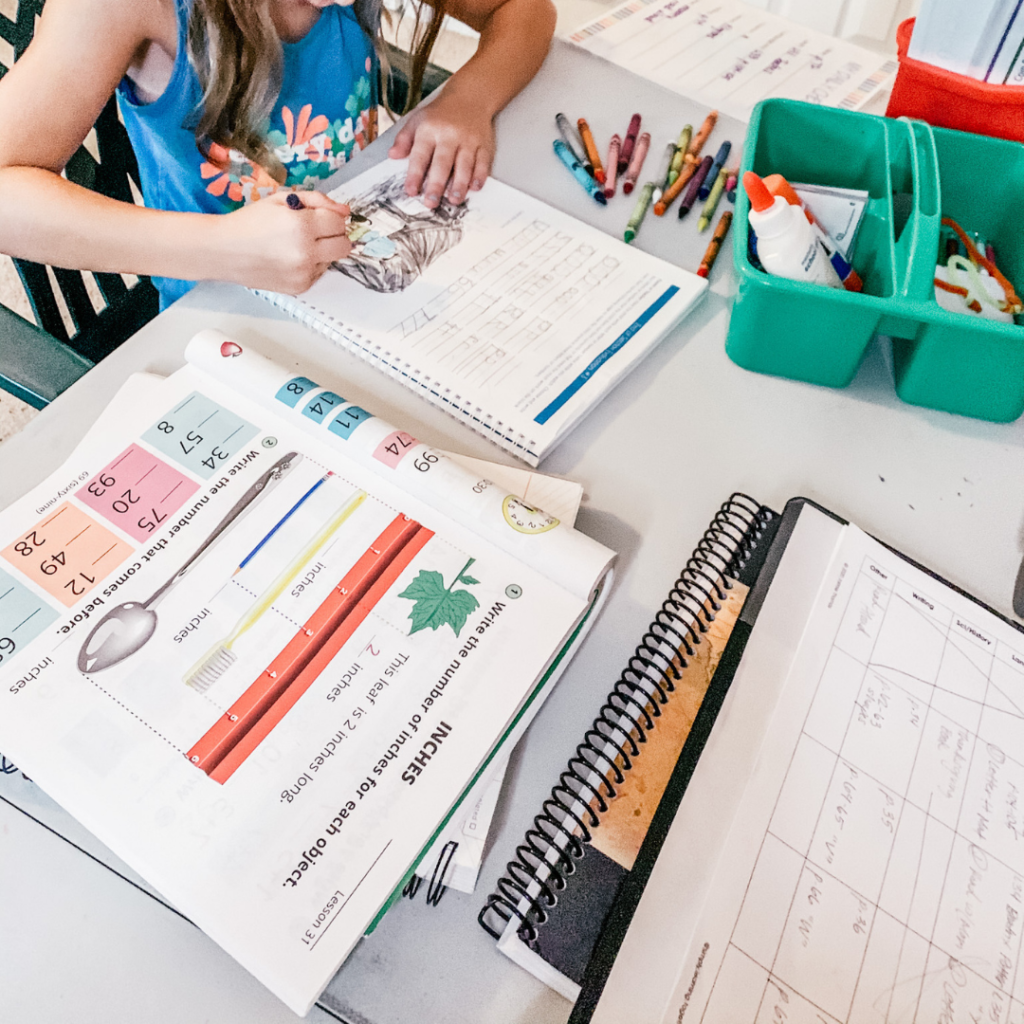
This is as simple as pencils, pens, crayons, construction paper, printer paper, etc… It may seem obvious, but these are all costs! Ordering these can be a bit overwhelming for me each year. Stick to a minimum list at first. Get your basic needs to get through the first few weeks. You can always add more as you plan.

Do not feel like you need to set up an entire room to homeschool – fully decorated and beautiful. Although it’s nice, it’s not necessary. My suggestion would be to start with a basic cart or tub that carries your supplies. As you begin learning together, you will slowly become comfortable in one area of your home. Then, you can decide to make it into a homeschool space, if you wish.

Are you planning to sign your child up for any extra curricular activities?

These activities get expensive. Right now, we only let our children pick one activity each, because that’s what works for our budget. Obviously, you don’t HAVE to do any of these extra activities, but if you are planning to, be prepared to pay.

The next thing to think about for budgeting is co-ops or groups.

This can get tricky to explain, because there are so many kinds of homeschool groups/co-ops you can be a part of. I will talk about this more below, but I’m mentioning it here because it does become a part of the cost.

Don’t forget about field trips or outings.

I remember dreaming about so many outings with my children, but when it came time to it, I couldn’t always afford it! You have to be careful. Plan free outings! Public parks sometimes have amazing free activities. A trip to a zoo or museum gets very expensive, especially if you have multiple children. Make a plan for field trip costs!

It’s important to know your budget before you start making purchases and signing up for things. It can easily get exciting and out of control. Set your financial goals FIRST.

homeschool supplies

4. Curriculum Choices

I love learning about curriculum. If I had it my way, I’d order it all, and have my own little curriculum read-through party. That would be super fun and amazing but very unrealistic. There’s a way to break it down a bit to make the decision process a little easier.

First, decide if you want an all-inclusive curriculum or if you want to pick and choose different texts.

An all-inclusive curriculum is one that usually comes with plans and all of the subjects wrapped in one big set. This would be great for someone that prefers a lot of guidance.

If you feel completely lost on what to teach, think about a set like this to help you start. Just because you pick an all-inclusive your first year of homeschool, doesn’t mean you have to do it the next year.

There are many different options to pick from, but an all-inclusive curriculum is going to be a big ticket item. It costs a lot of money up front – I’m talking hundreds of dollars, sometimes even a thousand. So, that’s something you need to think about if you decide on using it.

I have never used an all-inclusive program, but I know people that have and enjoy it. I couldn’t tell you the best one based on experience, but I can guide you to a few that I’ve researched or heard of people using in their own home.

My Father’s World

Sonlight

Timberdoodle

Veritas Press

The other option is to pick and choose curriculum for each subject.

This really isn’t a super hard task, but there are just a lot of options to choose from. You can easily fall into a trap of constantly questioning – is this the best one? Do your research.

Talk to people that have used that specific curriculum before. Read blog posts and visit the websites. Download samples – the samples are always the most helpful to me.

Look into social media. There are people on Facebook and Instagram (like me!) that will show you the inside of a textbook and tell you how it works for their family. Use a hashtag and search different curriculum titles. Look through highlights.

Come visit me on Instagram! Send me a DM and say hello! I love connecting with other homeschool families, and I can try to help you find more info.

Most importantly, once you pick something. Pray for peace and confidence and and go with it. It’s easy to question yourself, but if you’ve done your research, rest in knowing you’re doing what you think is best for your family.

So, what subjects do you choose?

First, look at your state laws and see what subjects are required. For your first year, I suggest sticking with just that! Don’t spend a lot of money on a bunch of different things just yet. Give it a couple of months. Start your year with the basic requirements and add to it as you adjust.

Now, if something is really important to you, like Bible, go ahead and make that a priority. Maybe you are a musician, and it’s important your child studies music – go for it. Just don’t think you need to add on everything right this minute.

Fine arts, a second language, typing, art study, hymns…these are things that can be added in to your routine in a few months as you are ready, and IF you even want to do them. Don’t overwhelm yourself. I’ve definitely fallen into the trap of buying text I thought would be so great and then never even using it – waste of money!

If you are interested, check out my blog plosts to see some of our curriculum choices. You can read about my most recent picks for first grade and preschool HERE and HERE.

5. Homeschool Groups, Co-Ops, and Communities

You can definitely start without finding a group. So, technically it could be 4 steps to start homeschooling 😉

However, I do think it’s important to connect with other homeschool families, so I want to add it in here. Having the support and community is encouraging and helpful. I’ll be honest, I struggled with this my first year. Unless you know a giant group of homeschoolers, it can be hard to connect.

Make an effort to find a group/community/or just a friend if you can. You can really benefit from the relationships and learn so much from others.

If you are struggling with this, pray about it. It’s OK if you don’t find a group or a friend right when you start your year, but don’t give up.

A few months into homeschooling, I met a friend at the library of all places. We were sitting together in a preschool music class. She is a huge blessing to me and my family and I cherish our friendship. I feel like as soon as I started questioning what I was doing, God placed her in my life to encourage me and keep me going. I’m forever grateful for that.

My suggestion would be to find a group in your area through your church or social media and ask around.

This will give you a better idea of what’s near you. My first year, I joined a few local, free homeschool groups on Facebook. People post all the time about events/activities in the area. There are also park meetups where I can meet other families and learn more from others.

We also tried a couple groups that required a small fee ($25-$50…I can’t really remember). They didn’t stick. My point in telling you this is don’t be discouraged. Don’t feel like if you can’t find a group, you can’t start. Pray, have patience, and don’t give up.

Our second year we joined Classical Conversations, and we love it so much. You can read more about that in this post.
You’re ready to start homeschooling!

It’s as simple as that! Now, all you have to do is dive in and start. Sometimes, this can be the hardest part. You may be worried about the planning process or your daily schedule, but you will never figure out a good routine until you just jump in.

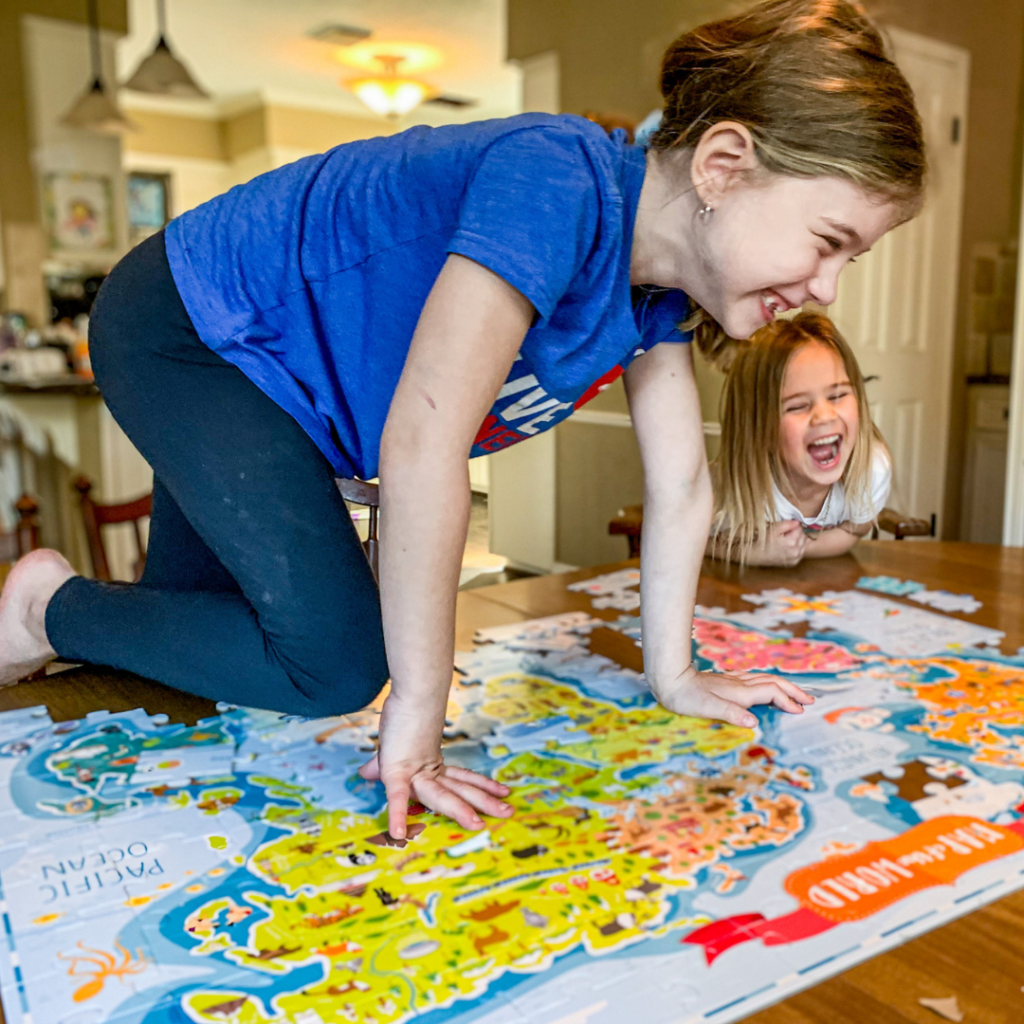
I will share more in a planning blog post about getting ready for your year. However, one thing that worked for me was to start little mini lessons in the summer. This could be as simple as a craft, board game, puzzle, or reading a few books from the library. Maybe it’s a science experiment.

I would try little things during our summer day to see when it was easiest to work with my kids. Morning? Afternoon? Where was it easiest to work in my house? How long could they sit there? These are all questions I was trying to answer to better plan my year.

By doing this, I also realized that the more time my kids spent outside, the better our days went. So, that became a priority – get outdoors!

You will learn things like this too by just jumping in and trying it! If you have a summer or a break, use that to start experimenting. The last thing I want to say is this…

Your homeschool will not look like anyone else’s.

Stay away from comparison. It can be extremely hurtful to your heart and mind. Just because someone is teaching 4 fine arts classes to their children, that doesn’t mean you have to. Just because someone has beautiful wooden toys for every themed lesson doesn’t mean you have to.

And just because it doesn’t turn out EXACTLY like you pictured it, doesn’t mean it’s wrong. It’s all a trial and error process. You will adjust all the time in a way that best suits your family. Put God first. Put your faith in Him, and pray for wisdom in all that you do. Don’t depend on others to lead you.

Final words for this … start small. Homeschooling is a building game. Start simple, jump in, and gradually add to it as you wish. It doesn’t have to be complicated. You got this.
Posted on 2 Comments

First Grade Homeschool Curriculum Review

homeschool curriculum

Curriculum can sometimes feel overwhelming. As a parent, you want to do what’s best for your child. There are so many wonderful options out there, so what do you choose?

The answer to that question will always depend on your child. Even within a home, curriculum needs can be different. For example, my two oldest children do not always use the same books.

In this post, I’ll be sharing what we used for my oldest daughter for first grade and how it worked for us.

Every family is going to be different, but sometimes it helps to hear how something works for someone else. That’s what I hope to do here.

Keep in mind, this is all based on my opinion. What works for me may not work for you, and vice versa. I’ll be sharing the good and the bad experiences we have had this year.

This post contains affiliate links. If you follow one of my links, I earn a small commission at no extra cost to you. Thank you for supporting my blog!

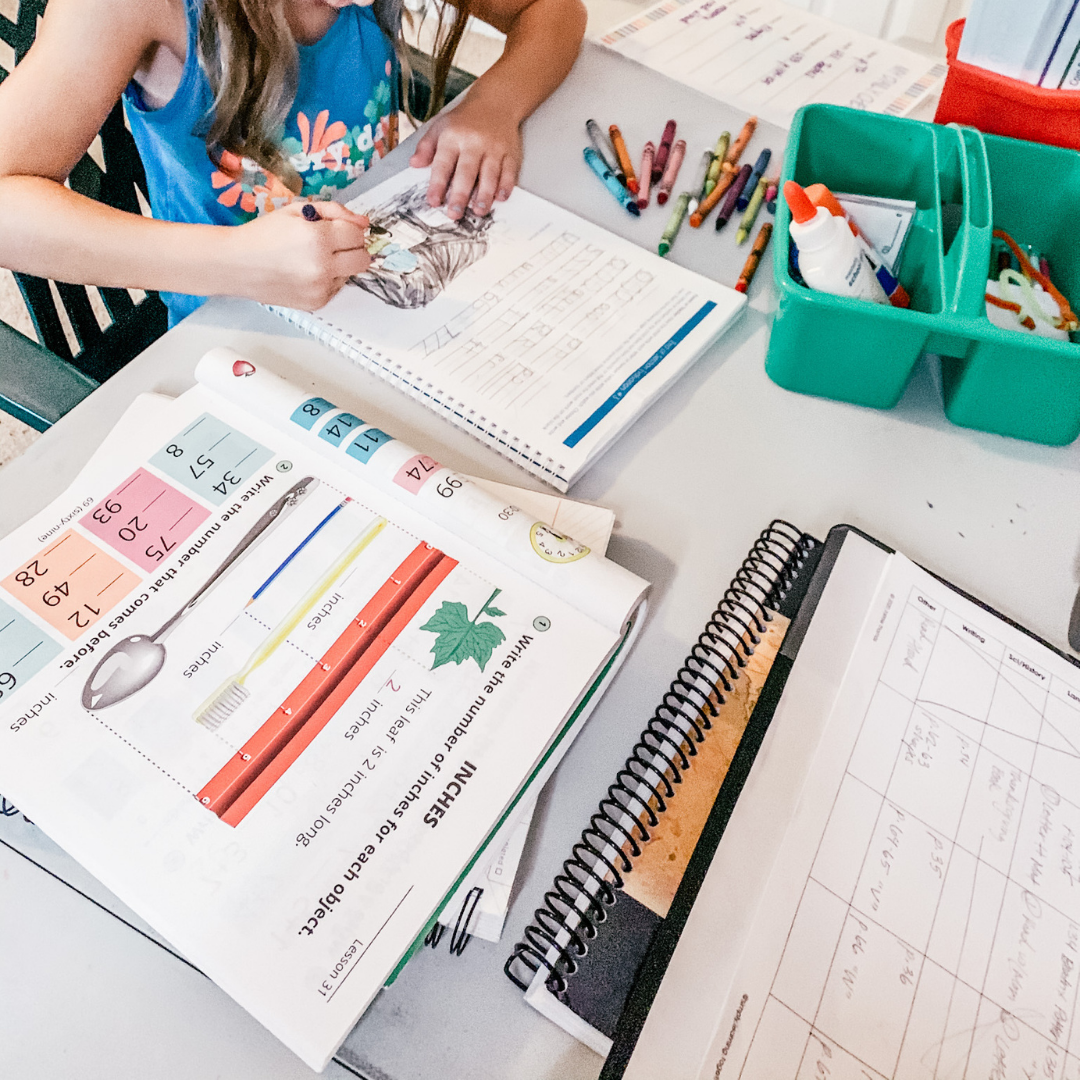
homeschool math

Horizons Math

I chose to stick with Horizons Math for first grade. We used it in Kindergarten, and I really enjoyed it. (Click here for some super fun math activities to go along with Horizons K)

We purchased Book 1 and Book 2, and that’s it. We did not purchase any sort of curriculum set from the company or the teacher guide this year. (I had the guide for Kindergarten and never used it.)

After my experience with kindergarten, I knew I wanted to have a few manipulatives on hand to use with the lessons. I purchased a small set of base ten blocks and uni-fix cubes. Both are used almost every week. I highly recommend having these to go along with the workbooks.

Horizons uses a spiral method to teach math skills.

This means topics are introduced and practiced throughout the entire book. The alternative to that is to introduce a topic, master it, and move on. Horizons is not set up that way. Each lesson reviews multiple concepts – old and new.

The student workbook is colorful and easy to follow. Lessons are usually front and back, and there are tests throughout. The tests look just like the lessons, so there is nothing surprising there. For the student, it may just feel like another lesson.

I would not describe Horizons as “open and go”, because at times there is a small bit of prep involved.

Once you get used to the book, the prep only takes a minute or two. Many curricula include a script for parents. In the Horizons student workbook, there are only directions for the student. You could definitely just have your child complete it, but I’ll tell you right now – that will get really boring really quick.

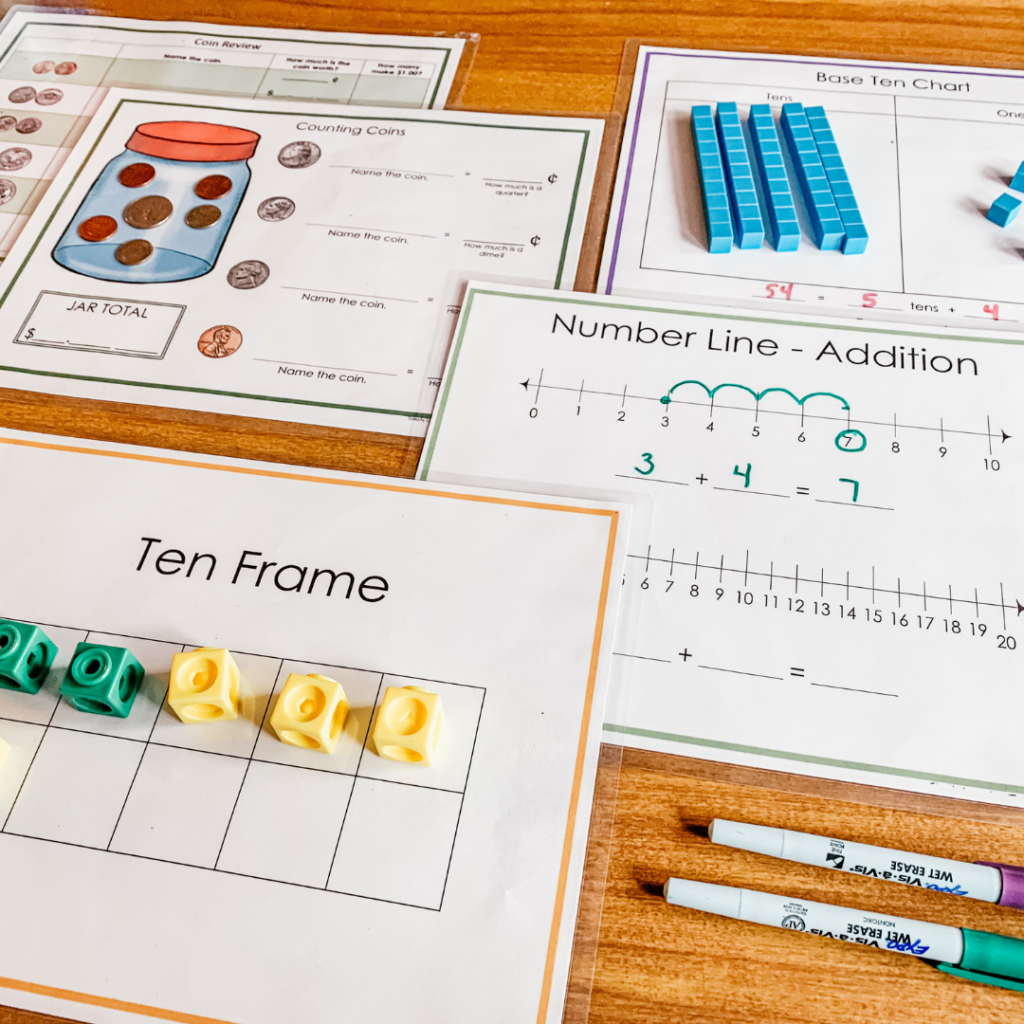
I’ve learned a little creativity is necessary, so I created math mats to make the planning and prep super easy! Having a go-to set allows me to just grab and go as I am getting the lesson ready. They are easy to store, easy to use, and fun to do!

math mats

Before we begin a lesson, I quickly look through the page and grab a math math that will go with it. I briefly look at the content to see if there’s any new skill to introduce. If so, I introduce that skill and help her practice. The rest of the lesson she completes independently. This works great for us because it puts less pressure on me. It only takes a minute or two for me to get it ready for her.

The teacher’s guide does include the steps to introducing the lesson and practicing the skill. It also gives an idea or two for an activity to do along with the lesson, but the guide is a separate purchase from the workbooks. Think of it as directions and not a script. (This was my experience with the Kindergarten guide since I did not purchase it for first.)

I personally love this curriculum because I can get creative at my own pace.

I can easily add manipulatives (base ten blocks, uni-fix cubes, coins) with simple math mats so that any lesson can be hands on. I can play basic flash card games or math games to practice a skill. This is always fun, because we are not glued to the workbook. We can move around and review. (Check out this flash card blog post.)

Or, if we want to just stick to the workbook page, we can. Some days it’s nice to just get it done! I don’t ever feel pressure to complete a planned out script.

I have four children and sometimes following a script gets tricky.

I love that the Horizons curriculum allows me to do as much or as little as I like, without feeling guilty. I can be creative and add simple activities. On the flip side to that, if I need to tend to other children or we need to work quickly, my daughter can work on her own without much help at all. For now, this is what feels good for our family, so we plan to stick with Horizons next year.

For More Horizons tips, check out this video on how we shorten a lesson.

the good and the beautiful

Language Arts: The Good and the Beautiful

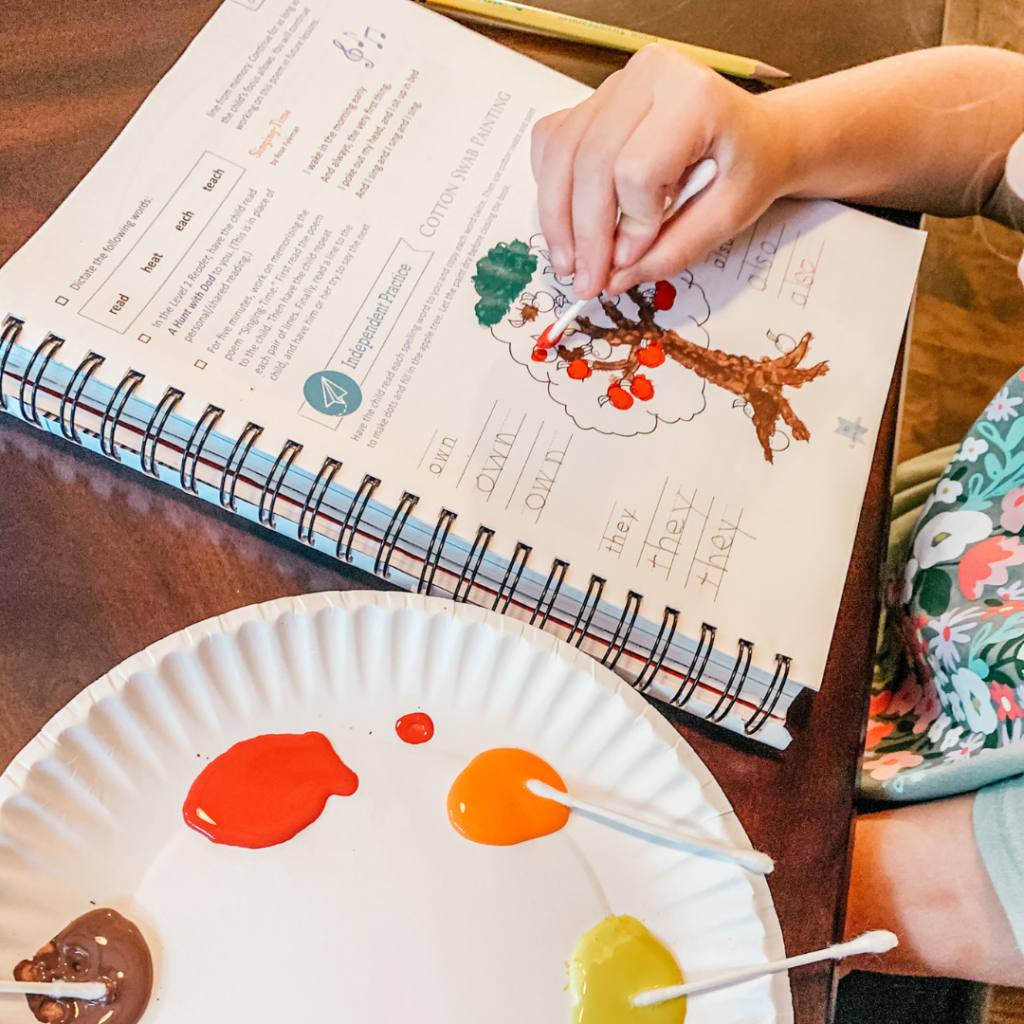
We started the first grade year with The Good and The Beautiful Level 1. When I first received the curriculum, it was exactly as it says – good and beautiful!

I loved all of the art and stories. It had activities and games within the workbook that we could play during the lesson. Everything was easy to follow and scripted. I always felt prepared when I taught the lesson, and I thought this would be perfect for us.

The Good and the Beautiful comes with a few different pieces.

There is the workbook, phonics cards, and a leveled reader with multiple stories.

I loved the reader because it was at my daughter’s level and the stories were really cute. The student is expected to read every day, but it’s not always from the reader. The reader was assigned in the lesson 4-5 times a month.

The included phonics cards are to be practiced a couple times a week. The lesson will specifically say when to practice the cards.  Honestly, I used them maybe 2-3 times and then quit. There is no guidance on which ones to practice or whether or not to practice them in a certain order. There are over 100 cards in the set. It can feel overwhelming to practice them and, to be frank, it’s quite boring.

We started the curriculum in August and by the time we made it to Christmas, I made the decision to switch to something else. We did not switch because the curriculum was bad. We switched because it wasn’t the right fit for our family.

The lesson itself takes anywhere from 30-45 minutes to complete.

Add on phonics cards and shared reading time, and it gets to feel quite time consuming. This is another reason why I skipped the phonics cards. I wish I could sit and do school with my daughter one on one all day. But, let’s be honest, I can’t! With a new baby in tow, it became really hard for me to set aside so much time each day for just one subject.

Eventually, the lessons felt like too much.

We both became bored and started skipping things…I just knew we needed something fresh and different. We needed something that could be more flexible.

We decided to switch to Christian Light Education Language Arts.

I picked this program because it is sold in small booklets. You can buy an individual booklet or the whole set. I bought one booklet for less than $5.00, and I thought this would be a great way to try it out.

The Christian Light Education Language Arts is set up very similar to the Horizons math program I mentioned above. This could be why I ended up liking it so much. The program covers phonics, grammar, punctuation, writing, and spelling.

It introduces new topics and reviews previous skills throughout. It’s easy for me to teach my daughter the new skill, practice it, and then let her work independently. There are no stories to read, no games to play, it is straight to the point.

Now, this doesn’t mean we can’t have fun with it. I can easily create or search for some sort of practice game or activity If I want to. I do not own the teacher guide, so I am unaware if there are ideas for activities to add along with the lesson.

When we switched to Christian Light, I decided to use classic novels to read aloud and practice reading skills. I’ll share those later in this post.

I loved that we finally had time do read alouds because our workbook didn’t take as much time to complete.

I love reading novels with my kids, and I was having the hardest time fitting it in until we switched to Christian Light. I plan to stick with this program for second grade (See second grade curriculum review here), and I will purchase the guide. There are many days I wish I had it.

If you look on their website, there are many other helpful resources you can use to enhance your language arts. Phonics cards, information sheets, and a handwriting workbook are all options I can consider next year. Their reading curriculum also correlates with the language arts. (I plan to stick with classic novels.)

Once again (just like math), I like that I can be as creative as I want with this program. If I want to search for a game to practice, I can. If I want to just let her work, I can do that too. It’s flexible for us.

I don’t feel stuck to a script, so it works for this phase of our life.

If you enjoy a script, I would definitely recommend The Good and the Beautiful. It really is well thought out and thorough. When it comes down to it, I just needed more flexibility.

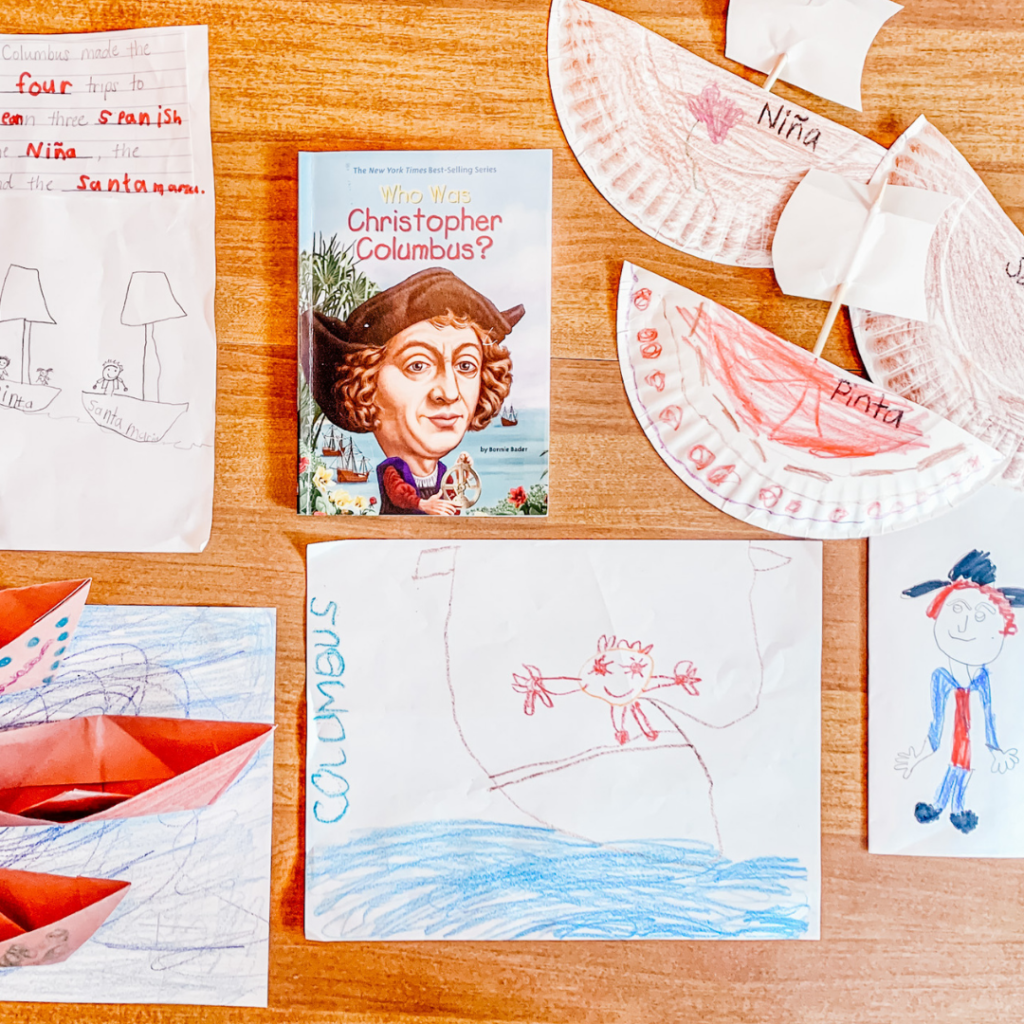
who was christopher columbus

Science/History

We are part of a Classical Conversations Community, so we do not purchase a separate science or history curriculum. However, we have loved reading the “Who Was…?” series this year. We read a couple in the first semester, and I’d like to read more! They are such a fun and easy read.

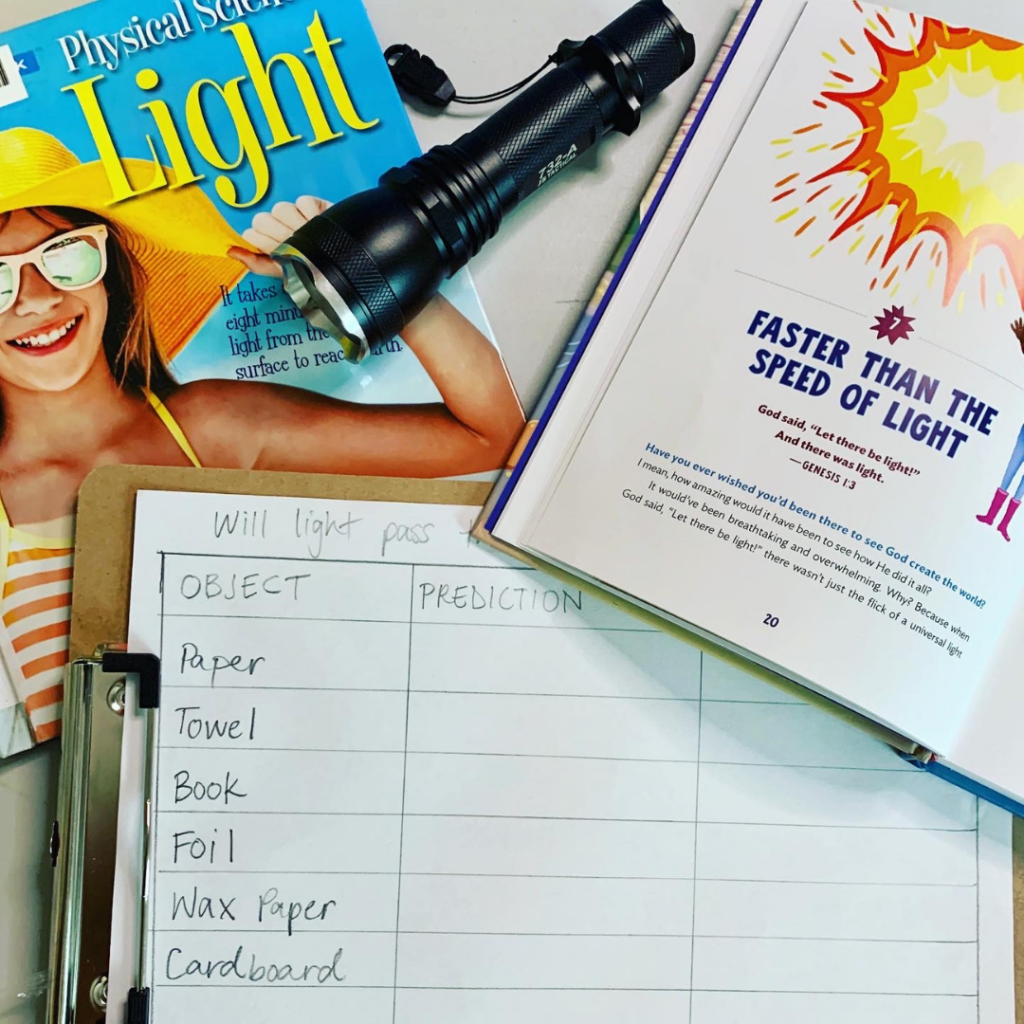
Before I had my baby, we were using a devotional book to determine our science lesson. I’ll talk more about this book below, but we had a lot of fun with it. Whatever the devotion was about, I would check out specific books related to that topic from the library. It was easy to read and so easy to do! However, it did require planning in advance (to check out books in time).

We are not consistent with either of these two science or history supplements, but we do love adding it in when we need something new and fresh in our routine.

family devotion

Bible/Devotional

This year we have been reading “Indescribable: 100 Devotions About God and Science”. This devotional is awesome! They are short and so interesting, even for me as the parent. Every day is a different science lesson related to a bible verse. We never get bored with it.

This book would be great for all ages. I used to teach 5th grade, and they would have loved this book!

If you have younger kids, you could definitely get creative and use this to help plan your science.

As I mentioned earlier, we did this at the beginning of the year, and it was a lot of fun. The only reason we stopped was because I had a hard time planning in time to get books from the library.

You know, this book would also be great for a summer read! If you take a break from your school books, you could still do mini science lessons along with the devotionals. Simply, look through the devotions for the week and check out library books on those topics.

Whether you use it to supplement your science or not, this was a great purchase! We will work through the rest of it this year, and I look forward to pulling it out again in a few years.

first grade curriculum

Handwriting

I chose The Good and the Beautiful for handwriting for two reasons. It was inexpensive and my daughter requested a program with three lines (with a dashed mid-line).

The workbook is put together well and can be completed independently. I love how there are lessons of good character and basic life skills like first and last name, phone number, and home address.

Each lesson has some sort of drawing or coloring activity at the bottom of the page. Eventually, we started skipping those, because my daughter was not interested. Overall, we were happy with it.

I think handwriting can be a tricky thing because it does get a little boring and tedious for the child.

However, I do think it’s good practice. I don’t know if we will purchase this one again only because I feel like it will be a waste to have all of the extra drawing and coloring that won’t get used. Most likely I will look for something without that.

We did change it up half way through the year. For a while we used the copy work from The Secret Garden Read Aloud Experience. We also use Draw Right Now to add some fun.

secret garden read aloud

Read Aloud Novels

I wish I would’ve read more this year, but with the new baby, this is one of the things that got skipped for a bit. We did read a few great ones that I will share with you.

I mentioned before that we have used the “Who Was…?” series to supplement history. We read “Who Was Christopher Columbus?” and “Who Was Davy Crockett?” I love how these books are short, interesting, and easy to read.

Once I switched to Christian Light Language Arts, I really wanted to focus on a novel since the workbook did not have any reading portions (it’s a separate curriculum).

We started with The Secret Garden. We followed the free Read Aloud Experience that allowed us to have new copy work for handwriting and a simple craft/activity to do every day. It was super easy and it gave us something to look forward to every day.

The Secret Garden has 27 chapters, so it’s a definitely a time commitment. Even still, we thought the book was so wonderful and even enjoyed the movies afterwards.

I wanted our next book to be much lighter, so we chose Mrs. Piggle Wiggle. Once again we followed the free Read Aloud Experience. There is no copy work with this one, but we did add it into our devotion time, as each chapter is assigned a scripture verse.

We had a ton of fun with Mrs. Piggle Wiggle. Every chapter brought great discussion, and we continue to refer to the lessons we learned even after finishing. It’s great for all ages and it’s so silly!

It’s hard to believe we are headed towards the end of our first grade year.

Maybe you’ve thought about using something in your homeschool that I mentioned above. It’s even possible that you did use something and loved it, even though I didn’t. Whatever the reason is, remember that every child is different. You are the parent. You are obviously doing your research! (That’s why you’re here.) Be confident with what you pick, and jump in. You’ve got this!