A Simple Way to Teach Shakespeare in Your Homeschool
I used to be intimidated by Shakespeare.
I knew I wanted to introduce it to my kids, but it felt overwhelming, because I honestly just didn’t know much about it at all.
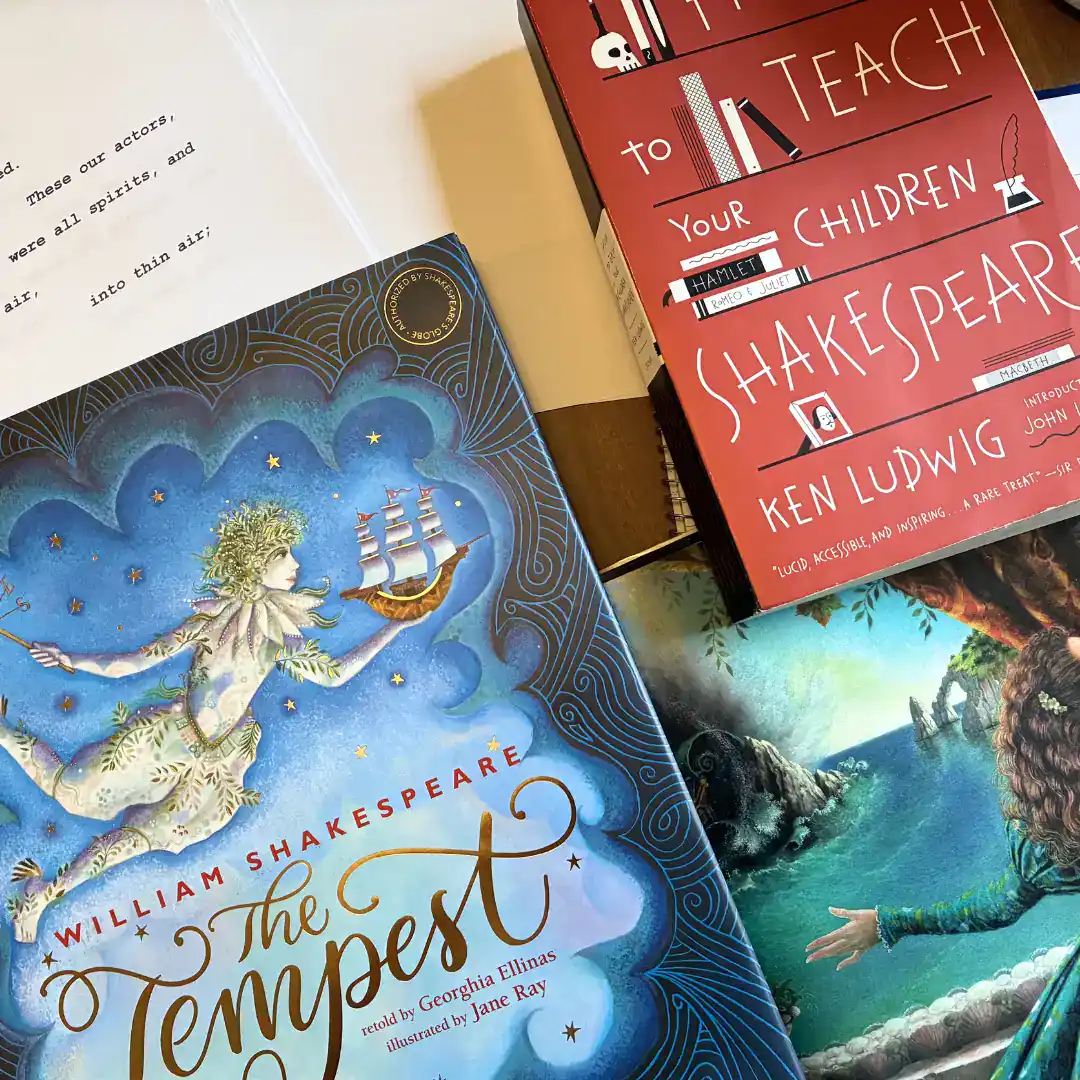
Sarah Mackenzie from Read-Aloud Revival was always encouraging me in this area through her podcast, and she’s the one who first introduced me to an incredible resource: How to Teach Your Children Shakespeare by Ken Ludwig.
However, I think you’ll be surprised by what finally made me take the leap.
What really pushed me to try it was a novel I read with my daughter—The Wednesday Wars by Gary D. Schmidt. In the story, a middle school boy has private lessons with his teacher, and she makes him listen to Shakespeare plays. Reading about his personal growth through those experiences made it an unforgettable read! (I highly recommend!)
That book made me think: We have to try this.
What We’ve Done (And Why It Works)
For the past two years, we’ve chosen one Shakespeare play each year. And we’ve kept it so simple that it no longer feels intimidating.
It’s something we all look forward to.
In this post, I want to show you exactly what we do—step by step—so you can try it in your own home without overthinking it.
Start with This Resource
Before I walk you through our routine, I want to quickly mention How to Teach Your Children Shakespeare again.
This book is incredibly helpful—but don’t feel like you need to read it all at once.
- Start with the introduction and the first chapter or two for a little inspiration
- Then come back to it when you’re ready to begin a specific play
Each chapter walks you through the plays, and the author also provides passages for memorization. On his website, you can find printable versions of these passages and audio recordings (so helpful!), which makes it easy to plan.
We use these passages for copy work and recitation.
Choosing a Play
If you’re not sure where to start, Ludwig’s book will help with that too.
- Our first year: A Midsummer Night’s Dream
- This year: The Tempest
The plan I’m about to share is based on The Tempest, but you can easily adapt it to any play.
Our Simple Shakespeare Plan (Step-by-Step)
The easiest way to explain this is to show you exactly what we do—almost like a checklist.
Planning
Before you begin:
- It will help you to read the chapter in Ludwig’s book on your own for your chosen play. This will build your knowledge about the play as you get ready to share it with your children
- Print any passages you want to use for copy work or memorization
- Check your library/amazon for picture book retellings
These steps will help you feel a little more confident before starting.
Day 1: Gentle Introduction
Read and discuss a picture book version of the play.
We used William Shakespeare’s The Tempest by Georghia Ellinas. This is such an easy, gentle way to introduce the storyline without overwhelming your kids.
Day 2: Get to Know the Characters
Create a simple character chart together. Write down each character and a few basic details. You don’t need to know this in advance. Learn as you read. Here’s an example:
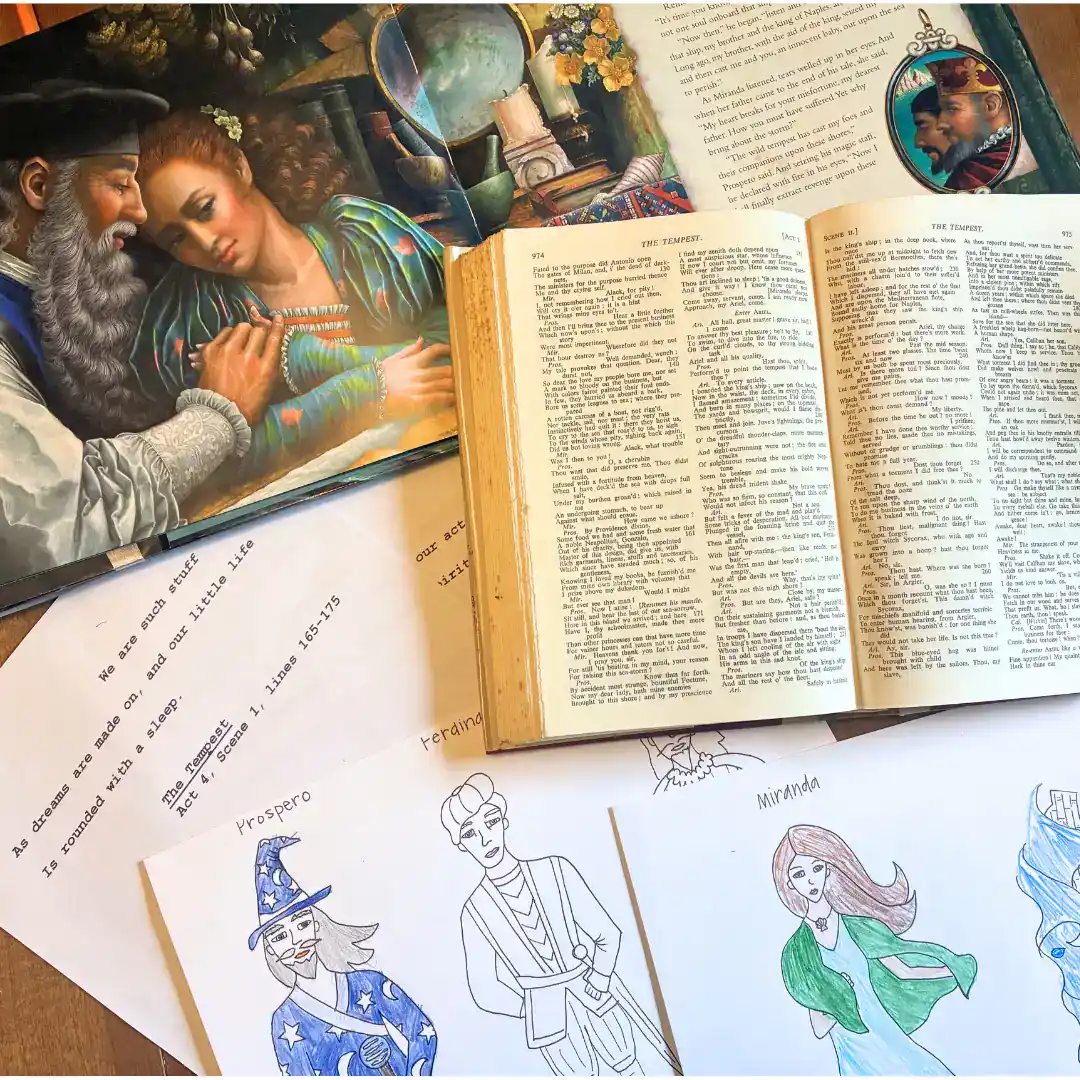
- Prospero: magician, Miranda’s father, Duke of Milan
We do this in notebooks and use colorful pens or pencils—it adds a little fun and makes it feel special.
Day 3: Begin the Passage
- Play the audio of your chosen passage
- Read a short section from Ludwig’s book aloud to your children to give background on the play (For this play, I read pgs. 310-312)
- Begin copy work
This is a very light day, but it starts building familiarity.
Day 4: Practice Recitation
- Practice saying the passage together
- Let each child try on their own
- Continue copywork
This repetition helps, but it doesn’t feel like too much.
Day 5: Deepen Understanding
Read another version of the story.
We read a longer picture book version (The Tempest by Marianna Mayer) for more detail, but you could definitely read the first picture book again.
After reading:
- My older kids write a narration
- My younger child draws a picture
Then we continue:
- Copy work
- Passage recitation practice
Day 6: Listen to the Play
This is where it all comes together—and it’s honestly the most fun.
We listen to a full-cast audio version of the play (we found one on Audible) for about 20 minutes at a time.
Because they already know the story and characters, they actually enjoy it.
A few things we add:
- I follow along in a book so I can pause and ask simple questions. This isn’t necessary, but I enjoy it and find it helpful. (The book I own was a gift to me and isn’t in print anymore. This one may be similar: Complete Works of Shakespeare.)
- The kids color paper puppets while they listen – it’s worth the few dollars. My kids love this! Later, they turn them into puppets and act out scenes
We also:
- Finish any remaining copy work
- Keep practicing the passage
Day 7 (and Beyond): Keep It Going
At this point, we’re nearing the end.
We simply:
- Continue listening to the play in short chunks (about 20 mins at a time)
- Practice recitation daily
- Finish puppets and enjoy re-enacting
Sometimes it takes more than seven days—and that’s completely fine.
Sometimes we don’t even finish the whole play.
And I’m okay with that.
The Goal (This Matters Most)
My goal isn’t perfection or completion.
It’s exposure.
I want my young children to experience great stories, rich language, and beautiful ideas. And this simple approach allows us to do that without pressure.
You Can Do This
So what do you think?
Does it feel a little more doable?
It doesn’t have to be complicated. You don’t need a perfect plan. All it takes is a simple starting point—and a willingness to try.
You really can do this!
Looking for More Simple, Literature-Based Learning?
We love learning through literature in our homeschool. It simplifies our lessons and makes learning meaningful and truly enjoyable. Here are some of the units we have loved over the years:
American History through Picture Books - work through the timeline of history, one picture book at a time. This curriculum built such a solid foundation of history knowledge. I can see this now as my oldest kids work in more challenging text - they recall these stories as they read!
Science through Picture Books - Through simple unit study, teach your children science topics through a curated book list. These units will guide you in discussion and narration while also providing optional videos and enrichment. This is science we actually want to do.
Novel Study - My favorite way to teach language arts. Learn spelling, vocabulary, grammar, figurative language, and more through the simple method of passage study.
Picture Book Study - If you're a sucker for a good theme like me, this takes themed learning to the next level, providing you with the fun but also the intentional. You also have the option and guidance to use these units to teach spelling, vocabulary, grammar, and figurative language as well.
Previous Post
Next Post
This post contains affiliate links. If you follow one of my links I earn a small commission at no extra cost to you. Thank you for supporting my blog.