Posted on 5 Comments

Adding Classical Conversations to our Homeschool

I think when some people begin to consider adding Classical Conversations to their homeschool, they think it might be too much. It may feel overwhelming and hard to grasp what the planning will be like each day/week.

I think this because I did it two years ago when I began homeschooling. It wasn’t until my second year that I decided to take the leap and become a part of a Community. You can learn more about that in my previous post.

I’m so thankful for God’s guidance in choosing Classical Conversations, because we have been so blessed by the Community and the program itself.

This post contains affiliate links. If you follow one of my links, I earn a small commission at no extra cost to you. Thank you for supporting my blog!

So, how do we add Classical Conversations to our day?

Before explaining this, it’s important to know the ages of my children. I have two in Foundations that are 4 years old and 6 years old. I also have a 2 year old and a new baby that is 5 months old. All of these ages play a part in our day to day rhythm.

The easiest day to plan is Community Day, because it doesn’t change, and we have to be there. We meet once a week for half a day, and we really don’t do any other school work on that day once we are home.

Sometimes I may read from our read aloud or I might take some time to catch up on a subject, if needed. Most weeks, our Community Day is it. They do a lot of learning just in that half day, and you’ll see that as you continue reading.

Students in Foundations meet once a week for half a day.

Every community will have some differences, but the content should be mostly the same. We meet one day a week, and we begin at 9:15 for an opening, family presentation (like an introduction), and prayer.

At 9:30, students go to their classes and begin working on the new grammar for the week. Each part of the day is broken up into 30 minutes. The segments include new grammar, science, fine arts, presentation and review.

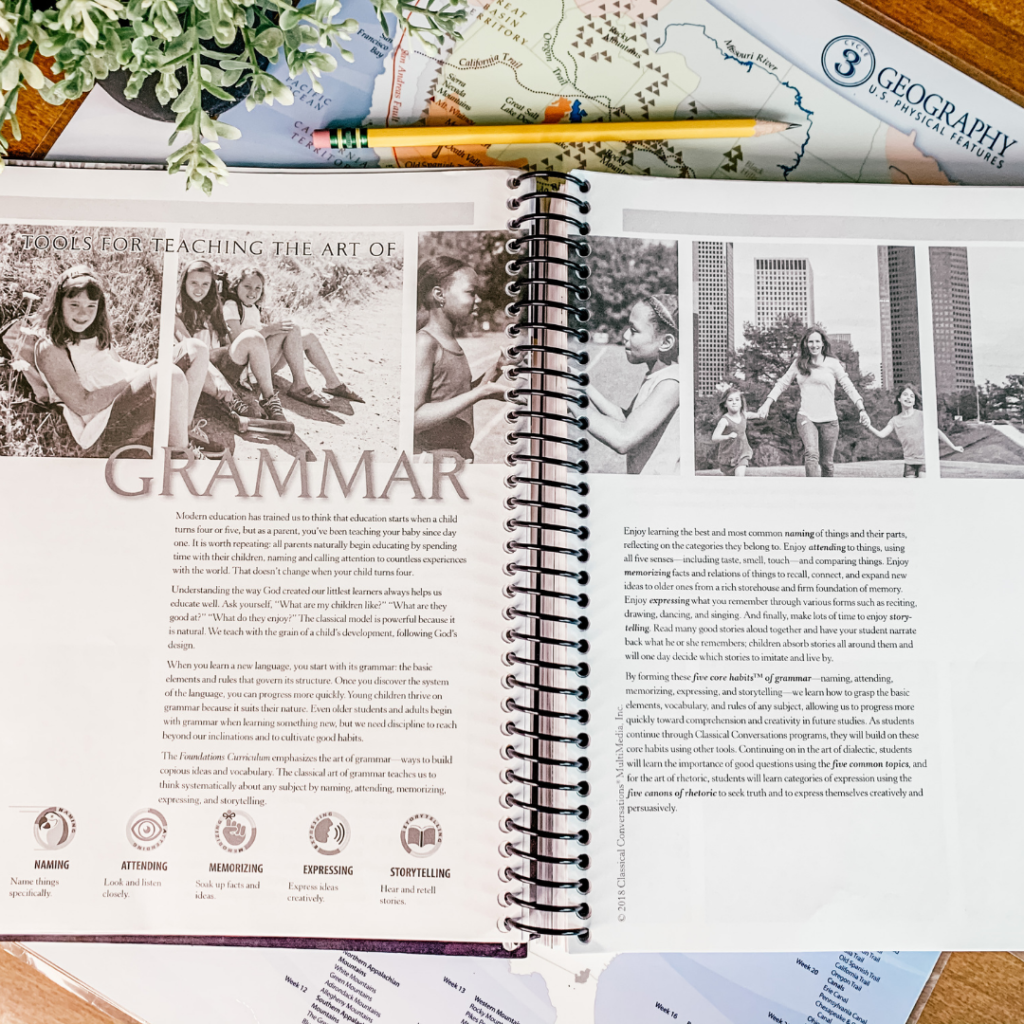
classical conversations grammar
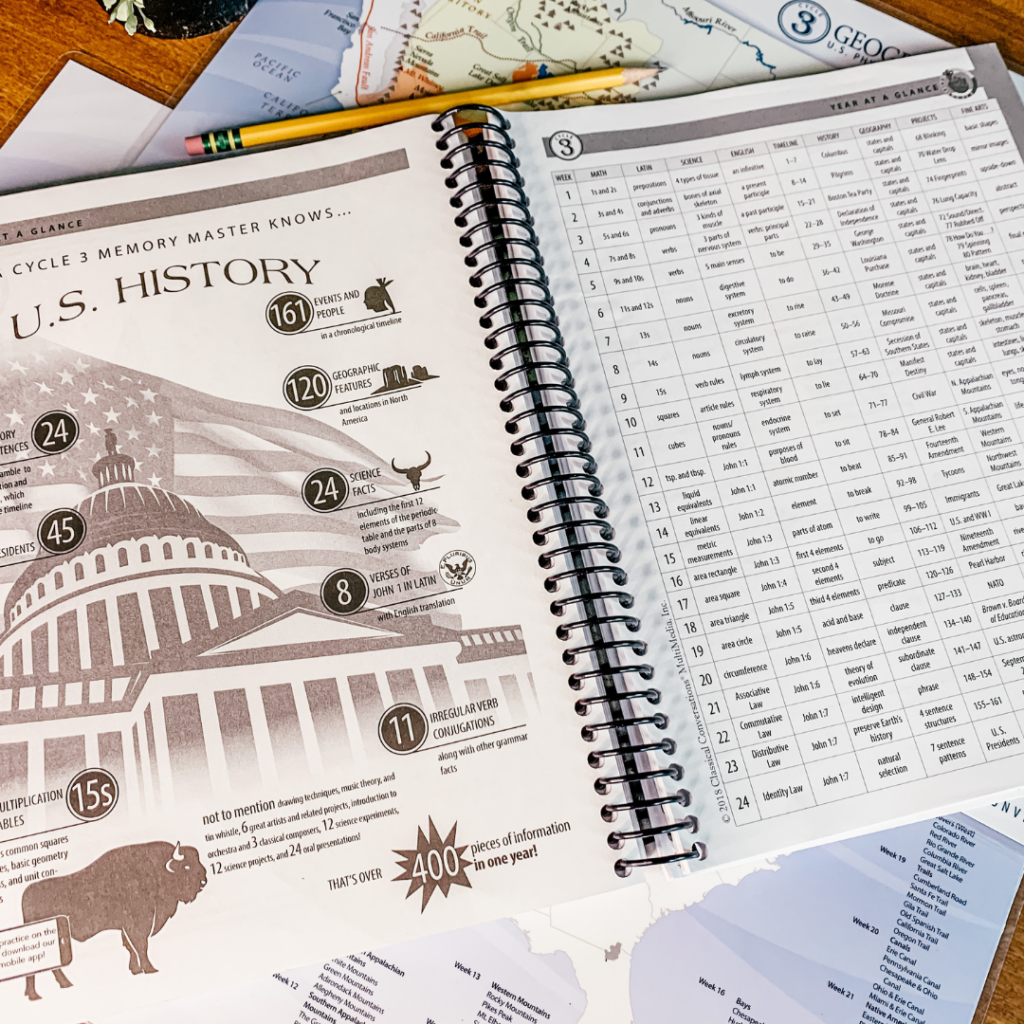
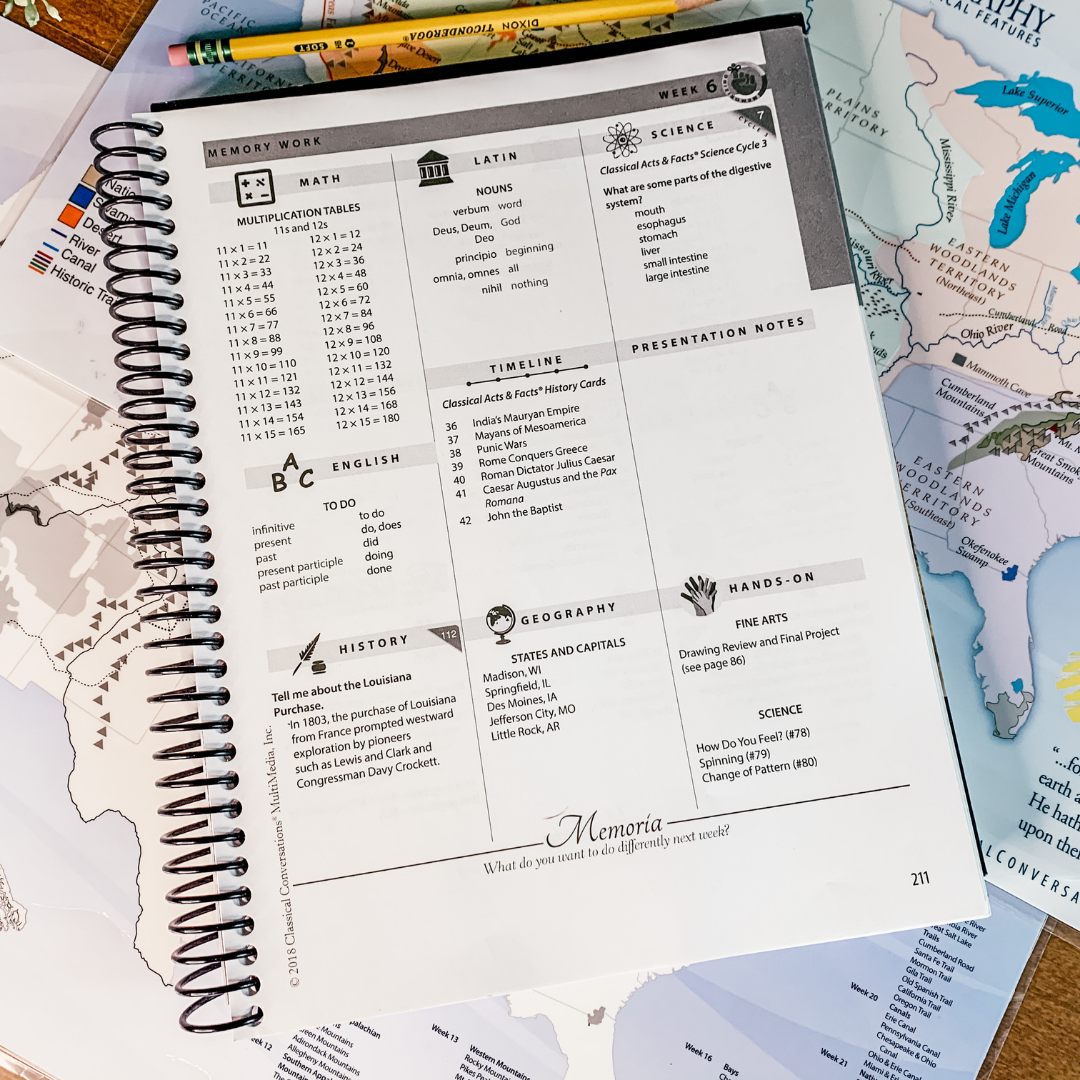
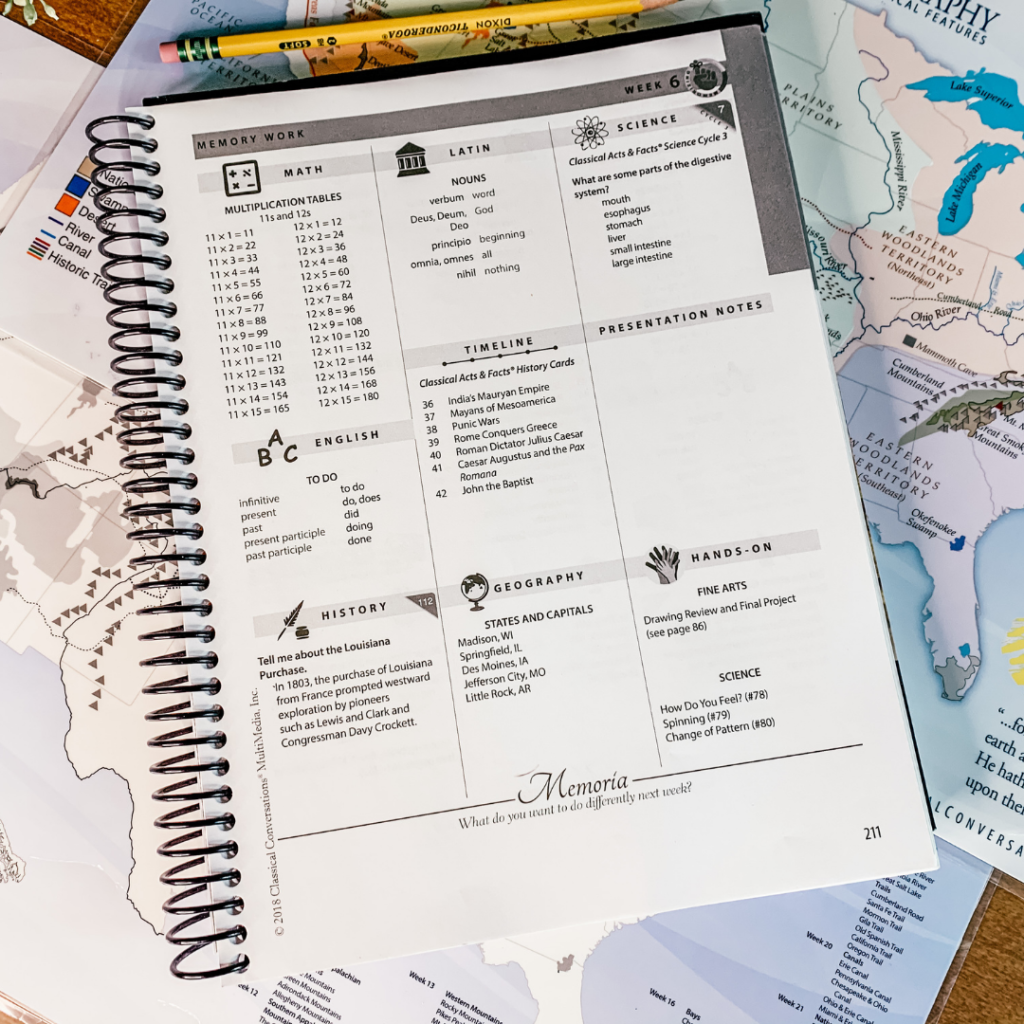
Pictured is one week of new grammar. If it seems like a lot, don’t stress! There can be a song for almost everything to make it so easy to remember and practice!

For new grammar, the tutor goes through each subject demonstrating the new material we will practice throughout the week at home.

It is repetitive and quick, but it’s easy to catch on and helpful to me as the parent. We memorize material for English, Latin, History, Geography, Math, Science, and Timeline. The topics we memorize will depend on the Cycle we are in. For more information on the way the cycles are set up, visit the website here. The cycles are explained toward the bottom of the web page.
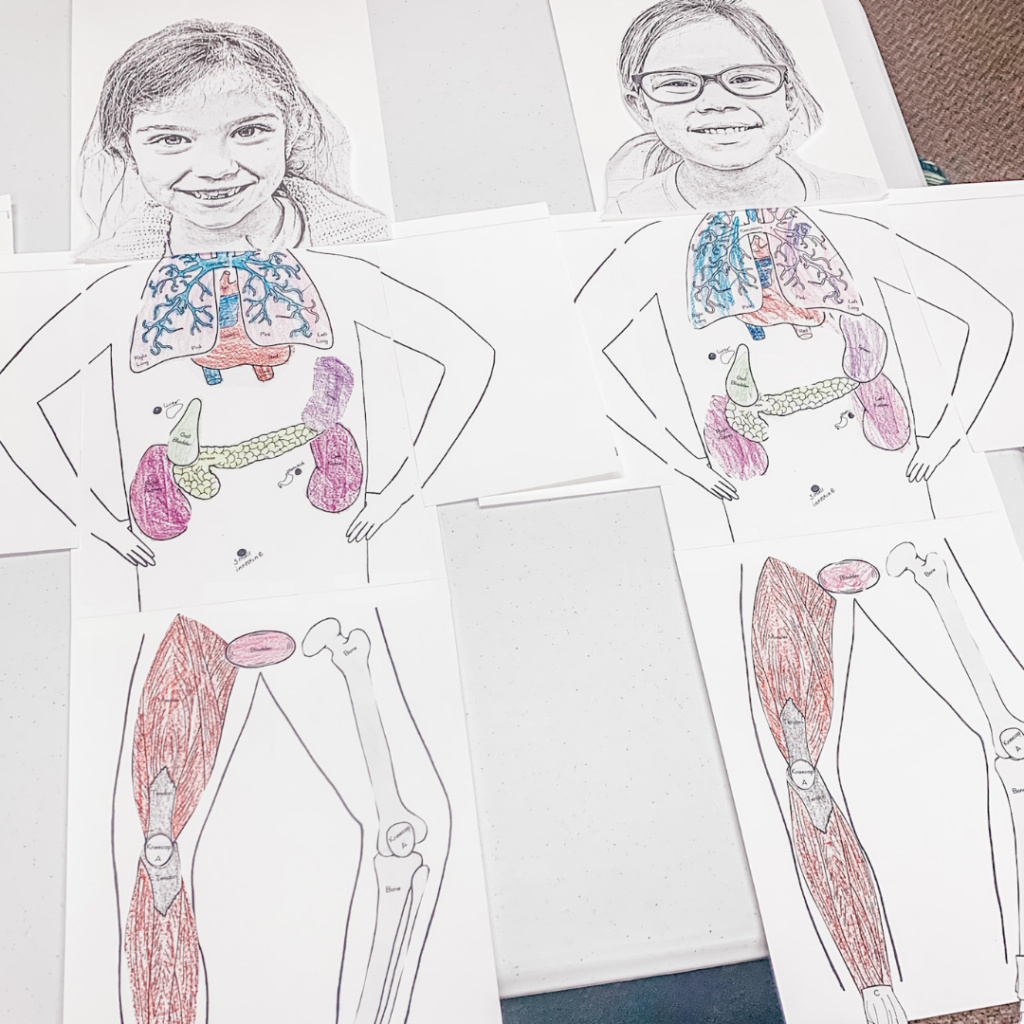
classical conversations science

Science consists of experiments and projects that encourage students to ask questions, make predictions, and reflect on an outcome.

Once again, this will look different for each cycle, but I love that every week is something new. Our tutor does a great job helping the kids get involved with their project and talk about what they are doing or observing. It’s also neat to see a group of 4-5 year olds reciting and singing the scientific method.

classical conversations art

The Fine Arts portion is broken up into drawing, music, and great artists.

The drawing portion definitely challenges my four year old, but it’s in a good way. I’m right there to help her or if I step out, another parent jumps in. I like how it’s all planned out and structured with a goal in mind.

The music portion is learning how to play the tin whistle. If you don’t know what that is, just think about when you were in elementary school and had to learn the recorder. It looks just like that but smaller. To be clear, my four year old was not able to learn a song, but she was exposed to music notes and an instrument, and I love that. There was no pressure for her to master it.

Studying great artists has been the most fun for me, probably because I know the least about it. Currently in Cycle 3, we are studying the artists, and the children are practicing their drawing/painting styles. Most weeks, I want to jump in and try it too!

Presentation is a lot like a Show and Tell

I think the word “presentation” intimidates people, but that’s exactly why this is so important. By teaching the children to show up and speak in front of others, it is helping them gain confidence in public speaking. Some love it more than others. A few may need help or to be encouraged. The tutors are providing strategies and tips to overcome the fears and learn to be in front of others.

When I first started, I thought my child was going to have to make this big speech about something they learned. I imagined it super serious. It’s not that way at all from my experience in Foundations. I’m sure as they grow older, the challenge will be there, but for now it’s just about learning to present.

Everyone in our community is very supportive and encouraging when it comes to helping the kids present. I’ve stood up at the front with one of my children before. Sometimes, I’ve had to jump in and help my child remember what to say.

My 4 year old loves to look at me during her presentation and say, “What is it…?” I answer, and she’ll repeat. It’s a learning process for these littles. If you’re concerned about it, talk with a director in your local community.

The last part of Community Day is review (and lunch!).

During review time, the tutor will lead review games to practice memory work from the weeks before. It’s fun to see what the children still remember! Through songs, motions, and games, the group is led by the tutor to practice. It is not a test or assessment by any means. It is a time to practice together.

That’s it for Foundations! We have lunch with the Community and our campus even allows us to play outside!

After lunch, my crew heads home.

classical conversations foundations

The rest of the week, my goal is to practice memory work each school day.

This usually takes us 20-30 minutes. It has looked different as our family changes and babies grow…and nap…or don’t nap. The reason I say this is because you don’t have to fit it in so perfectly and scheduled.

Sometimes you just have to make it work as best as you can. So, if you are considering CC, know that you can give yourself grace. It’s OK if you don’t know exactly how to do it. There’s time to grow. If you are already in CC, and you feel like you’re not doing enough with your little ones – well here’s me telling you – it’s OK! We have had weeks that we completely flop on practicing, and we still survive.

We’ve practiced in the car, during lunch, after quiet time, outside, while exercising, on a walk….when I had a new baby, I just had to fit it in as I could.

Now, the baby is starting to follow somewhat of a sleeping schedule, and we are enjoying some routine and rhythm in our own homeschool schedule.

Currently, we’ve been practicing our memory work in the mornings after our devotion time.

Some people call this “morning basket” or “morning meeting”…I don’t call it anything. It’s not quiet, and sometimes it can be a little chaotic. (Real talk!) I take my children into our play area and we listen to the memory work together.

I choose the play area to keep little hands busy. I allow them to play as long as they’re attempting to participate. I expect my 6 year old to say the memory with me at least once. I encourage my 4 year old to join us. (Note the difference in verb there.) During this time my babies are either playing or in my lap. Most days, my 2 year old sings along with us!

My role in practicing memory work is important.

I am the example for my children. My mood sets their mood. If we are all together in a room practicing, I am right there practicing along with them. (And I have learned so much!) I usually just sit on the floor and start reciting along with the app.

classical conversations grammar
Here we are practicing the Timeline Song in our messy play room. The quality of this photo isn’t the best, but we sure are having fun!

We mix it up by how we choose the subjects or how we say the subjects.

Take turns choosing. Write the subjects on the board and point to one. Roll a dice, choose popsicle sticks, make a spinner…change up how you pick your subjects to practice. It will keep things fresh and interesting. I hope to do a blog post soon compiling all these ideas and more!

It’s also fun to change HOW you are practicing. For example, sometimes we assign an exercise to a subject and do that exercise each time we recite the memory. (I participate and count it as a workout!)

We’ve used puppets before, as well. When the subject changes, change the puppet. It’s fun to change your voice for this as well. Get silly and have fun!

Sometimes just a simple voice level change can help add fun to memory practice. Talk with a deep voice. Say it in a whisper. Squeal like a mouse. Pick an accent.

These are all just great ways to keep learning fun! If my children want to play with something quietly while we practice, that’s great. Many days they cartwheel back and forth while reciting. I guess gymnastics and memory work is a great combination for them!

I tell you all of this to hopefully get out of your head that it doesn’t have to be this sit-at-the-table-and-recite-over-and-over kind of drill. Get crazy and have fun with it. Join in with your little ones. You’ll learn a ton and you’ll be making beautiful memories.

We practice the memory work. That’s all!

My goal for the week is to practice memory work each school day. If we’ve done that, we are golden. That’s it, and that’s enough. At these ages, we are just laying a foundation. It doesn’t need to be extreme.

If my children have an interest in a topic we will surely look into it by watching a video or checking out a book. My girls especially love the history sentences, so usually that’s what we dig into.

We’ve read a couple of “Who Was….” books. (Literally a couple – two! Don’t get crazy here.) I believe it was one on Columbus and another on Davy Crockett. They were fantastic!! If you have older children, these would be great to add on for personal reading time. I’ll be honest, I’d love to add more of them into our day. For now though, we stick with simplicity.

I just love how we can follow the lead of what interests our children as we learn about all of these wonderful topics. I am so looking forward to digging a little deeper each year.

I encourage you to pray about Classical Conversations if you feel interested in it.

Don’t let fear or worry stand in the way of doing something new. Talk to someone you know that is involved in a Community. Call a director near you just to get a feel for what it’s like. Ask questions. Leave a comment here or email me!

Planning your homeschool day is important, and it always feels better once a plan is in place. I pray this blog post allows you to feel more comfortable with a decision-whether that means a “yes” or “no”.
Posted on 2 Comments

Classical Conversations: Overcoming My Fears and Jumping In

classical conversations

We joined Classical Conversations for our second year of homeschooling. I had looked into it my first year, but I was intimidated and nervous to commit. Although it felt like a big leap to say yes this year, we have been so blessed by the program and our community.

In this post I’d like to take you through my fears before starting. There were a few things that caused me to hesitate, and I hope to share them with you in case you have the same thoughts. In a separate post, I will share what a Community Day looks like and how we add it into our homeschool day each week.

It’s important to note the age of my children. Right now I have two children in Foundations that are 6 and 4 years old. I also have a 2 year old and a 5 month old. If you are not sure what the Foundations program is, check out the Classical Conversations website here for a brief outline.

The Classical Conversation Blog has a great article on the joys of the Foundations program. You can find that here.

This post contains affiliate links. If you follow one of my links I earn a small commission at no extra cost to you. Thank you for supporting my blog!

At first glance, Classical Conversations can be intimidating.

The program is jam-packed full of INCREDIBLE information. When I first looked into Classical Conversations, I was scared to have to teach all of the information to my children. What if we couldn’t keep up? What if I was unfamiliar with the topic? What if my children do not enjoy the material? Can we even afford it?

Well, I was wrong to question it on all parts. Once we started, I realized my fears were unnecessary. God has provided us with a lovely community, a beautiful curriculum, and a confidence I didn’t know I needed.

This post is based on my opinion and my experience with Classical Conversations. Please note that every community is a little bit different. So some experiences may differ from mine. For some questions, it is important to contact your local community director for a specific answer.

The Tutor guides us each week on Community Day.

Every Monday we show up for Community Day and there is a Tutor there to help my children (and especially me!) learn the memory for the week. There are songs and motions for the majority of the subjects. We practice all of the new grammar together in class.

The name is “tutor” because YOU, sweet mama (or dad!), are the teacher 🙂 The tutor is there to help lead you into your week.

As my child learns, I am also in the room learning as well. My children are in separate classes, and I go back and forth between the classrooms throughout the day.

Even though they are in a different room, they are all learning the same thing. It’s one of my favorite parts of the program. Our whole family is participating in this together.

Classical Conversations has a guide, an app, and a CD to make practicing memory work so easy.

If I don’t have something memorized, it’s not a big deal. I’ll be honest, there are many weeks where I know absolutely nothing about the topic! It’s nothing to be scared of because I know I’ll learn it with them.

When I used to teach, I’d get asked questions all the time about things I didn’t know. That’s when you say something like, “Wow! That’s a great question. Let me show you how to look up your answer.” My point is…You do not have to be all-knowing!

There are three ways I can provide the memory work to my children. First, is the Foundations guide that breaks down every subject week by week. Follow the previous link and you can actually download the first five weeks for a preview!

Second, is the app that has all of the memorization organized by week. Pick your subject and the week you are studying and the app recites it for you. This is mainly what we use to study each day. I can even connect it to a blue tooth speaker and play it for the whole room to hear.

Last, is the CD. We listen in the car on the way to and from Community Day. Sometimes, we even practice on the go during the week. The CD has more than the app and is set up differently. It comes with three discs. One is songs for the semester. Another is weekly memory, and the third is separated by subject.

I enjoy having both the CD and the app. If you can’t afford both, I’d recommend purchasing the CD on your phone. That’s really what I should’ve done at first, but sometimes I just make spontaneous purchases and then realize later I could’ve saved a little money in the beginning!

All of these tools make it easy for me to provide memory practice for my family.

My children love learning the material.

There is so much to learn, and I’ve loved seeing my children developing interest in certain topics. Our favorite right now is the history songs. Learning about history was never a strength of mine growing up. Honestly, I had no interest in history. I was a math girl… but lately we just want to know more!

We love talking about all of the people and events mentioned in the songs. Everything has a catchy tune. Many nights I wake up singing the timeline song or something from history, but I don’t mind it!

My 2 year old has been singing the timeline song since she was 18 months old! It’s just such a blessing to be able to sit down together with my children while we sing and learn all together.

It’s not about “keeping up” in Foundations.

At this age, they are really just soaking up information and being exposed to so many different topics and subjects.

It sounds odd to some, but once you get to know the classical model, it makes more sense. If you are unfamiliar with the classical model, check out the following books:

“The Core: Teaching Your Child the Foundations of Classical Education” by Leigh A. Bortins

“The Well Trained Mind: A Guide to Classical Education at Home” by Susan Wise Baur

These books are constantly recommended to me as a new member to CC, especially the first one.

So, back to the topic of keeping up with the memorization…One of our history sentences this year was about the Boston Tea Party. We sang the song, made up some fun motions and memorized it during the week. That’s all. At this age, we don’t go in to detail about what every little thing is and why it happened. We are just laying the foundation (get it?) for a deeper learning in the future.

Do my children ask questions? Of course! I answer them the best I can. Sometimes I’ll find a YouTube video or a library book if they are interested in the topic, which is a great way to practice interest-led learning. In Foundations, there’s nothing to “keep up” with. It’s just opening their eyes to a world full of knowledge!

When my children are older, I will want to challenge them more, but right now, at ages 4 and 6, we are happy dancing and singing and learning bits of knowledge throughout the year.

Everything is laid out week by week.

I was nervous about teaching all of the material, but there is a Classical Conversations guide that has everything laid out week by week. It’s so organized and helpful! I encourage you to look at the preview of the guide so you can see for yourself how it’s broken down. It makes planning so easy!

Plus, if I do get confused, there is a huge community of Classical Conversations members that are supportive and helpful.

Our own community is like a family, ready to help me as we need it. There’s even bigger communities on Facebook and the Classical Conversations website. At no point do I feel alone in this journey. I know there are so many people out there studying the same things, and it’s comforting to know I can get help if needed.

The cost may seem like a lot at first, but as a big picture, I don’t mind it.

The website sums up the cost as $14 a week for the Foundations program. (I believe it changes once you move beyond Foundations.) That cost is per child, and there’s a couple of reasons I don’t mind it.

First, I had plans originally to put my children in a Christian school. The cost of that is substantially more than $14 a week. So, I feel like I’m saving quite a bit of money…but my children are still receiving the Christian education I desired.

Second, I have 2 children in Foundations, so technically that’s $28/week. That’s less than what it costs for me to feed Chic-Fil-A to my family in one sitting. So….educate my kids or eat chicken? (ha!) I don’t really think that each week, but it definitely puts it into perspective.

I’ve heard if you tutor, you can receive a discount, so that’s definitely something to keep in mind as you consider costs.

I will warn you that at the beginning of the year, especially the first year, the costs do add up and come at you fast.

It’s kind of like a hit-you-at-once sort of thing. It would be helpful to prepare mentally or financially for that.

There is a registration fee, a supply fee, and usually a campus fee. Check with your local community to know for sure what these are. There are also books/supplies you will need to begin.

At the Foundations level, I bought four things, and I’ll explain what they were and how we used them.

First, is the guide which was $99. I won’t have to buy it again and will use it for all of my children. So, it’s a one-time big ticket.

I also bought the CD, which is not necessary, but it has helped us. The CD is $35 and it is specifically for Cycle 3. We will get to use it each time we are in that cycle…as long as my children haven’t scratched it to death by then. (Also another reason I should’ve just downloaded it to my phone…learn from me!)

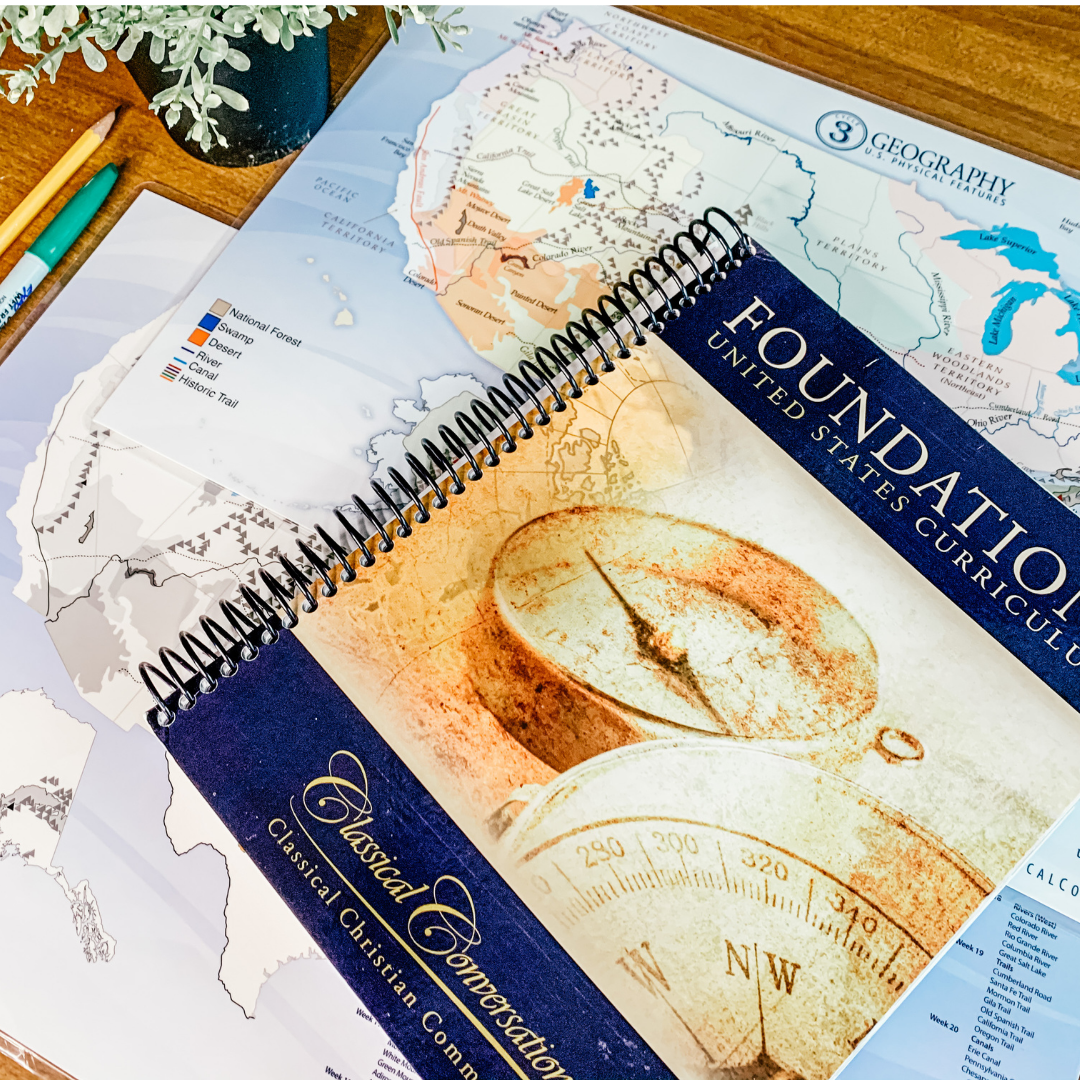
I purchased the Cycle 3 Trivium at the Table Placemat Maps ($12). This will also be a one time purchase for this cycle. I do not pull these out every week, but we do use them. They are really nice and match the maps we use on Community Day. As my girls get older, I am positive they will be used very often.

The app should be included in this list of costs. It seems pricey, but we use it EVERY DAY. I believe it was around $15. It is specific to Cycle 3.

Finally, each girl needed a tin whistle. I bought them from Amazon for about $12 each. The tin whistles can be reused, as well.

I did not buy anything else, although it was tempting! You will be tempted too! Just remember you don’t need it all at first!! Slow down and stick with the basics. Hopefully this gives you an idea of book costs. If I do my math right, I think that totals books around $85 for two children in Foundations.

I will say that I do wish I had the timeline cards, but we’ve done fine without them. My plan is to start purchasing them a little at a time when I can. That way we will eventually have the whole set.

One more thing about saving costs. Since we cover science and history in our memory each week, I do NOT purchase a separate science or history curriculum. We use library books or videos to learn more about the topics we cover, but I do not feel it is necessary to add anything else at their age or even a bit older.

Making a big decision for your family is a difficult task.

Ultimately, you have to decide what is best for your family. Some of my opinions may differ from yours, our financial situations may be different, and our goals of homeschool may not look the same. You know what’s best for your family.

I encourage you to pray about Classical Conversations if it’s on your mind. I didn’t join my first year, and I couldn’t stop thinking about it. As we got closer to the second year, I knew I was going to have to make a decision. Sometimes, I feel like God uses those thoughts of “Why can’t I stop thinking about this…” to push us to new things.

After a lot of prayer, we felt led to go for it. We took the leap and became a part of a Classical Conversations Community, and I am so thankful we did!

What’s holding you back? Is there something you’re thinking about that’s not mentioned above? Leave a comment and let me know! I’d love to talk to you more about it.

Find a Classical Conversations Community near you.