

Island of the Blue Dolphins – Novel Review from a Homeschool Mom
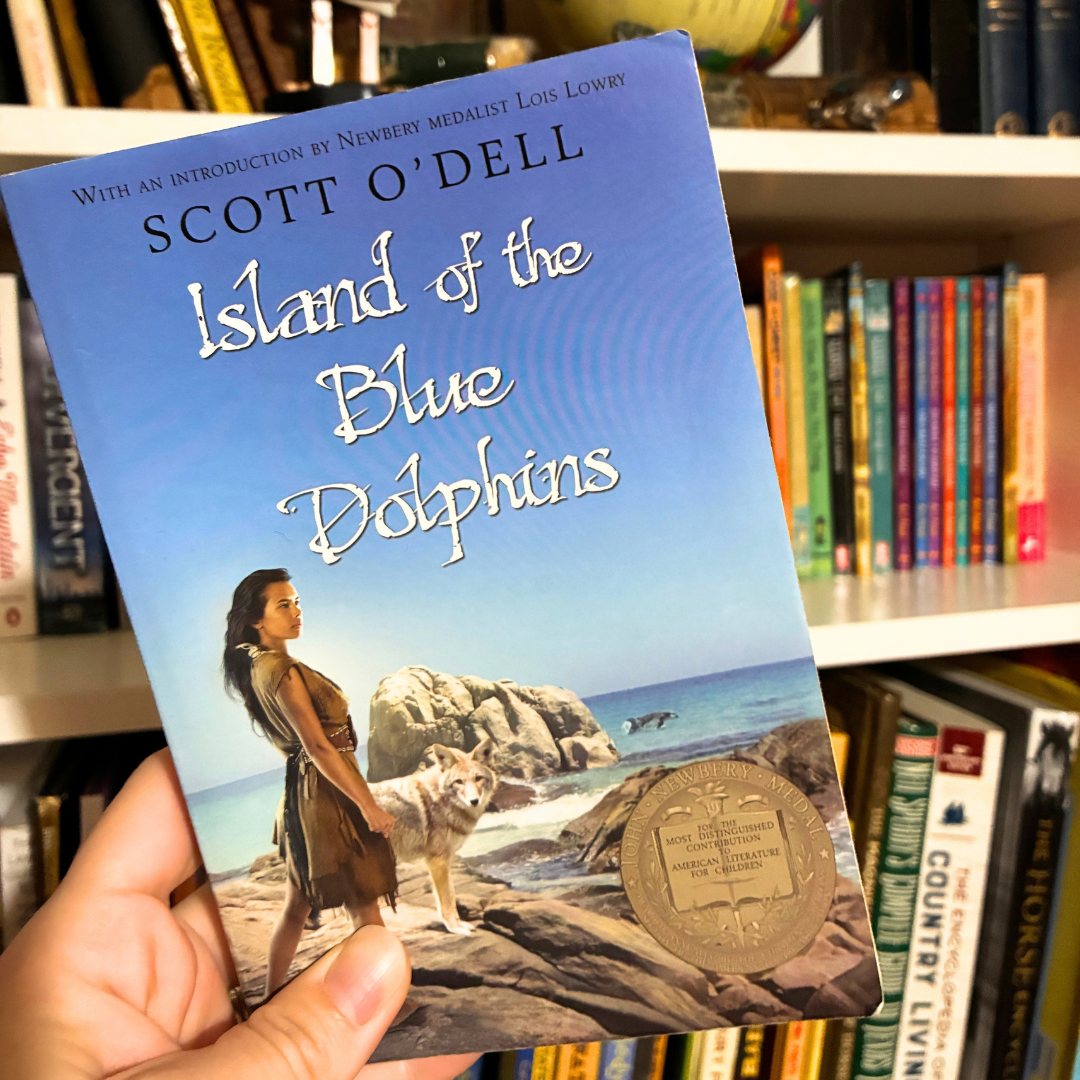
I just finished Island of the Blue Dolphins, and I'm looking forward to sharing about it with you in this post. It's been an enjoyable experience catching up on literature I missed out on as a kid as I read it alongside my oldest daughter.
This all started to help nurture conversation about literature with my children. I have learned that many life lessons and language arts skills can be taught by simply talking about books. I usually listen to the book while my oldest reads it independently for her lessons. The conversation naturally follows.
Below you will find more about the book, my thoughts, discussion questions, and enrichment ideas if you are interested in doing a little more with this novel in your homeschool.
I hope this information is helpful to you as you choose books for the readers in your home, or if you are hoping to enjoy it together as a family read aloud.
Island of the Blue Dolphins
by Scott O'Dell
Originally Published: 1960; Pages: 174; Genre: Adventure/Historical Fiction; Newberry Medal Winner
Rating: ⭐️⭐️ /5
Quick Take
I expected more from this one. You can find it on every recommended book list, but I honestly couldn't wait to be done with it.
What It's About
This book takes place in the late 1800's on an island off the coast of California. A young girl, Karana, is born and raised on this island among her native people, the Nicolena. She ends up alone and must survive on her own until someone comes back for her.
She experiences many ups and downs including loss, hunger, injuries, and especially loneliness. Every season brings on new challenges that she must overcome. Her personal growth is evident as she learns to provide for herself and build a life all on her own.
My Thoughts
I had a hard time connecting with this one. It moved a bit slow to start and never really grabbed my attention as I made my way through it. I know this book is highly recommended on booklists, but it's not one I'm adding to my favorites. It's not my goal to steer you away from it but maybe encourage you to lower your expectations.
Some classify this as adventure, but my personal definition of adventure seems to be a little more intense than lone survival. As I reflect, I feel the overall lessons from this story should be learned through Karana's experiences and choices when it comes to living on her own.
I enjoyed learning about the Nicolena tribe and their ways of life. Karana was very smart and had many survival skills - catching food, making clothes, building fires, taming wild animals, and more. These were all admirable qualities, and, frankly, I couldn't do most of it.
It's possible I was missing more character interaction. With the majority of the book revolving around one character, there wasn't a variety of personalities to uncover while reading. However, a major theme in this story is loneliness and isolation, so I feel this is probably just my own personal preference.
Someone reminded me that the novel was based on a true story and that looking into the real events create a deeper meaning to the story. When I finished the novel, I dug into this, and I would agree - it helped tremendously to add interest for me.
As a heads up, if you look into the true story, it will spoil the end of the book.
Recommended Age
Independent Reading: 10+
Read Aloud: 8+
If your child is an animal lover or one that really connects with nature, this might be an enjoyable read. I do feel like girls would enjoy it more than boys just because the main character is a girl.
Independent reading age is a bit higher based on the vocabulary and the reading level of the text.
Content Guide
The island is attacked by another group of people and Karana does experience loss multiple times. The descriptions of these events and the grief that goes along with that may be tricky for very sensitive readers, but it is brief and not over-the-top.
As you get to know Karana and her tribe, you will learn more about their beliefs and way of life. This includes stories about their gods as well as what they believe about the roles of men and women and the roles of nature.
Thoughts from a Middle Schooler
My daughter was not a fan of this one either. When I asked if there was something she enjoyed from it she mentioned she liked reading about how the main character made her clothing and jewelry.
I would agree with her that these descriptions in the story are fascinating to read about. Karana had so many skills and her process of creating was truly incredible.
Discussion Questions
Below are questions to carry on meaningful discussion related to this book. Use these to check in at the end of the book, talk over a meal, or enjoy conversation as you ride in the car.
- How does the setting of this story affect Karana and the choices that she makes?
- Karana's people have strict beliefs about the roles of men and women. How does this affect her survival?
- What does Karana do to create community and relationships as she lives in isolation?
- How did Karana change from the beginning of the story to the end?
Picture Books
If you love adding picture books to your lessons, here are a few related to this story:
North American Indians - This book won't discuss the tribe mentioned in this book, but it may be helpful to dig a bit deeper into native people and how they lived and survived in different parts of the world.
The following list is made up of topics related to this novel. These do not include specific picture book titles (OK - I can't help but suggest a few), but you may enjoy searching for some at your library to connect other lessons to the reading of this book.
- dolphins
- otters
- octopus (devilfish) - Try "Behold the Octopus" by Suzanne Slade
- wolves
- islands - Try "The Little Island" by Margaret Wise Brown
- tsunamis - "The Tsunami Quilt: Grandfather's Story" describes a tsunami in Hawaii. It may be scary for little ones, but if you have older children interested in learning more about what a tsunami is, this is an engaging story.
- survival skills
Enrichment
- Learn more about the true story of the Lone Woman of San Nicolas.
- Karana survives on lots of fish in her diet. Enjoy your favorite seafood for dinner - bonus points if you catch it first!
- Have you ever started a fire? Look into different ways of doing this. Depending on where you live, you may be able to make a small campfire to try it out yourself. Think about what other survival skills you could discuss or even try out at home.
- As I listened to this book, I kept thinking of the movie "Moana". It's definitely not the same tribe. Moana is based on a Polynesian tribe, but it is still about island people, and I think with a little imagination you could compare the two.
- There is a movie that was made in 1964 about this book titled "Island of the Blue Dolphins." I have not seen this myself yet, so you'll want to preview it before watching with your kids, but letting you know it exists.
- Writing Assignment - Research the true story and write a comparison paper. How does the true story compare to the novel? Your older children can practice citing evidence from the novel and their research. The novel we purchased included an excerpt about the true story as well, which could also be a part of your child's research.
More Novel Reviews
If you find these novel reviews helpful, be sure to join my email list. I will send out an email letting you know when we read and review more novels. I know how tricky it can be to monitor books and find a good fit for your family, so I hope sharing my reviews about these books can inspire you and help you as you plan in your own homeschool.
If you love a simple book list, check out some of our lists on my Amazon storefront - our favorite read alouds, early chapter books, middle school reads, and more.
Previous Post
Next Post
This post contains affiliate links. If you follow one of my links I earn a small commission at no extra cost to you. Thank you for supporting my blog.