How I Put Together Language Arts for Second Grade (No All-in-One Workbook)
We do not use an all-in-one language arts workbook in our homeschool, but it’s still important to me that we are practicing the appropriate language arts skills through our homeschool lessons.
This is why I wrote Language Arts Simplified. I would describe myself as a rule-follower, and it’s important to me that if I’m going to toss the all-inclusive approach, I still need a plan and structure to follow.
Language Arts Simplified was the tool to help me do this. Using national standards as my guide, I created an easy-to-use free, digital resource to help plan language arts and feel confident about covering the multiple components that the subject includes.
What is Language Arts?
Earlier this summer, I shared my language arts plans for each of my children. If you are interested in seeing how this is planned out, check out this video.
Language Arts is made up of four parts: Reading, Writing, Speaking and Listening, and Language. These four parts are what led me in my planning.
In this post, I want to show you how I put this together for my second grader. As a follow up to the planning videos I shared previously, I thought I’d share a closer look to see it all in action.
Reading
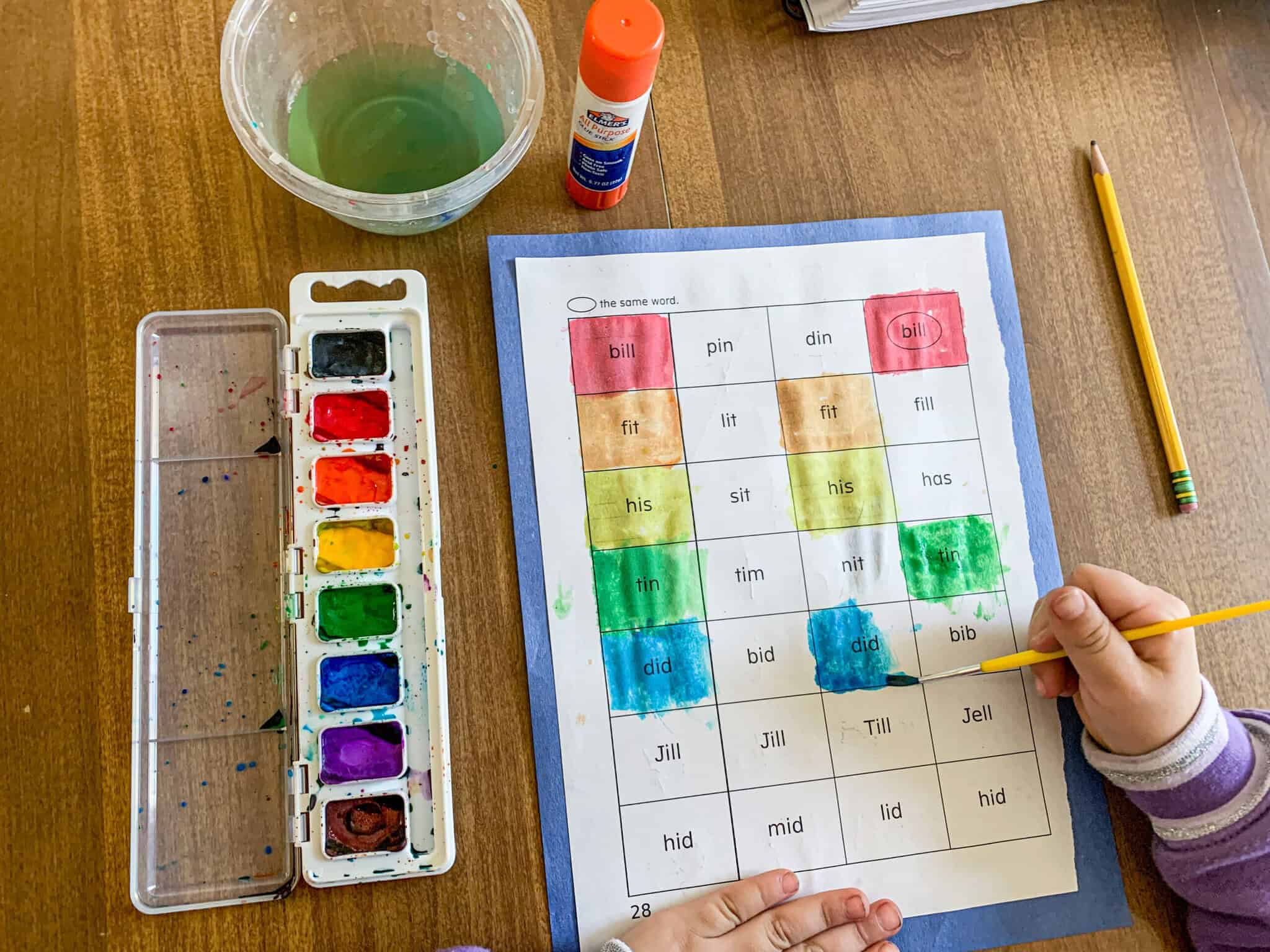
Since my 7-year-old is a fluent reader, we are not working on any curriculum that covers learning to read. Instead, I assign her one page a day in an Explode the Code workbook where she can consistently review phonics skills. I chose the level based on her abilities.
Explode the Code can feel a little monotonous at time, so I do like to try and mix it up some days when we have the time. Check out this video I made a while back where I share lots of unique ideas to add some fun to this workbook.
I have assigned 15 minutes of independent reading during our school day. I have a list of chapter books I made this summer that I felt would be a good fit for her. (See list below.) She chooses a book from the list and loves reading aloud to me, but some days she reads silently to herself. She also will read her own personal choice books before bed some days.
This independent reading is not only building her fluency, but it’s also growing her comprehension skills. She has enjoyed the books and loves coming to tell me about the chapters (narration). I also feel confident that this consistent routine of reading is building her grammar and vocabulary skills through exposure to the text as well.
Writing
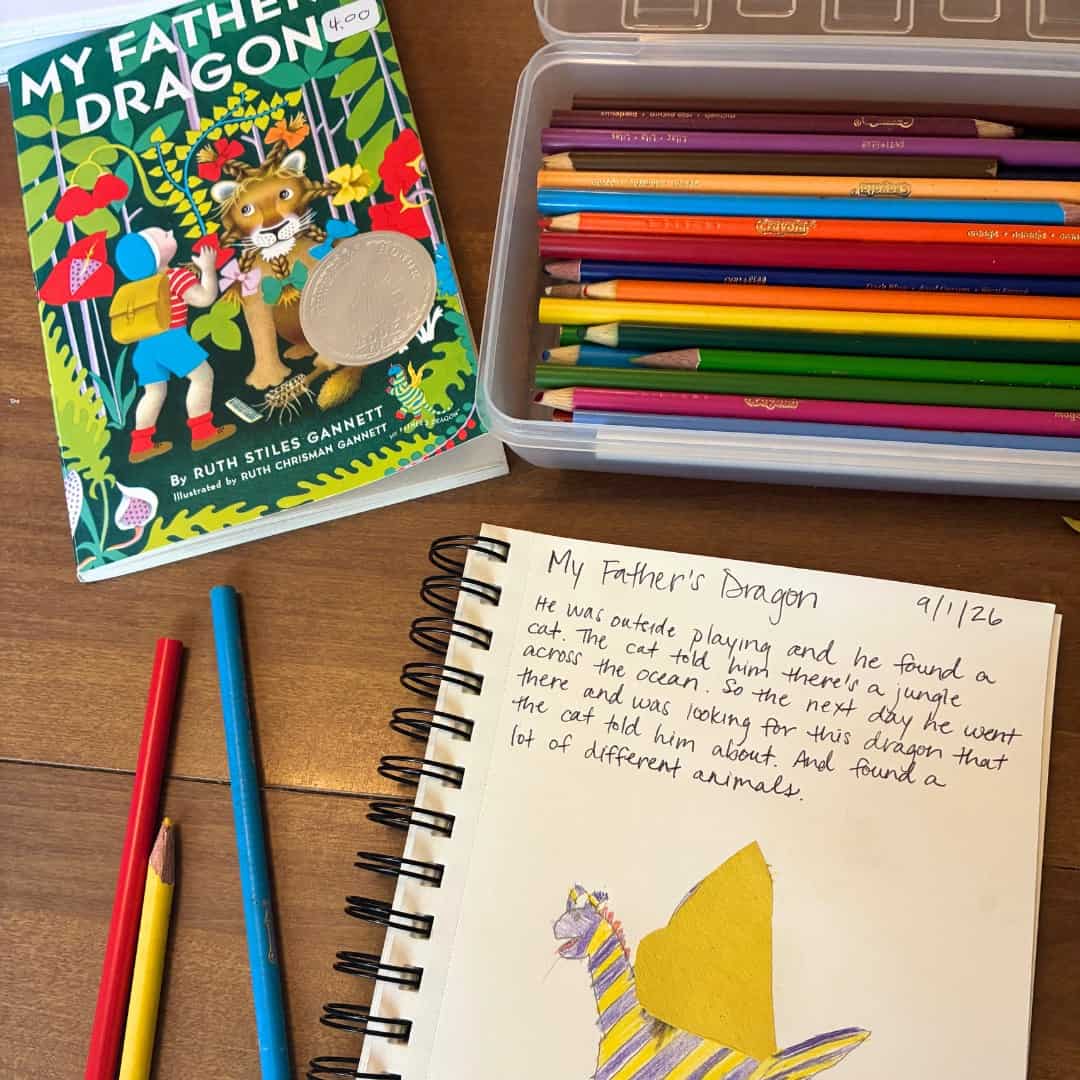
We are in the early stages of writing. In my house, I do not use a writing curriculum. Instead, I build writing skills through narration. Starting with oral narration around age six, my children learn to tell me about what they’ve read on a regular basis.
At around age 9-10, this transitions into written narration. If you want to hear more about our experience with this, check out my latest narration video sharing the progress I’ve seen with my children using this process.
Even though we aren’t doing formal writing lessons, we are still working on writing skills in a variety of ways.
She completes a handwriting page daily and is occasionally assigned copy work. She also loves writing letters to friends and writing in her diary.
For our history lessons, she sees her older sisters writing narrations and wants to do the same. She isn’t quite ready to jump into this on her own. I have helped her write 1-2 sentences in a notebook about the lesson, teaching her about word spacing, capitalization, and punctuation in the process.
Speaking and Listening
This category is very easy to meet, especially while practicing narration. The point of this skill in language arts is to be able to communicate with others about literature. We do this all the time in our home through natural conversation.
Through narration, she tells me about her independent books. We also have discussions about our family read aloud. A few evenings each week, I’ve been reading the Little House Series to the whole family. We have such fun and meaningful discussions about the characters and the time period.
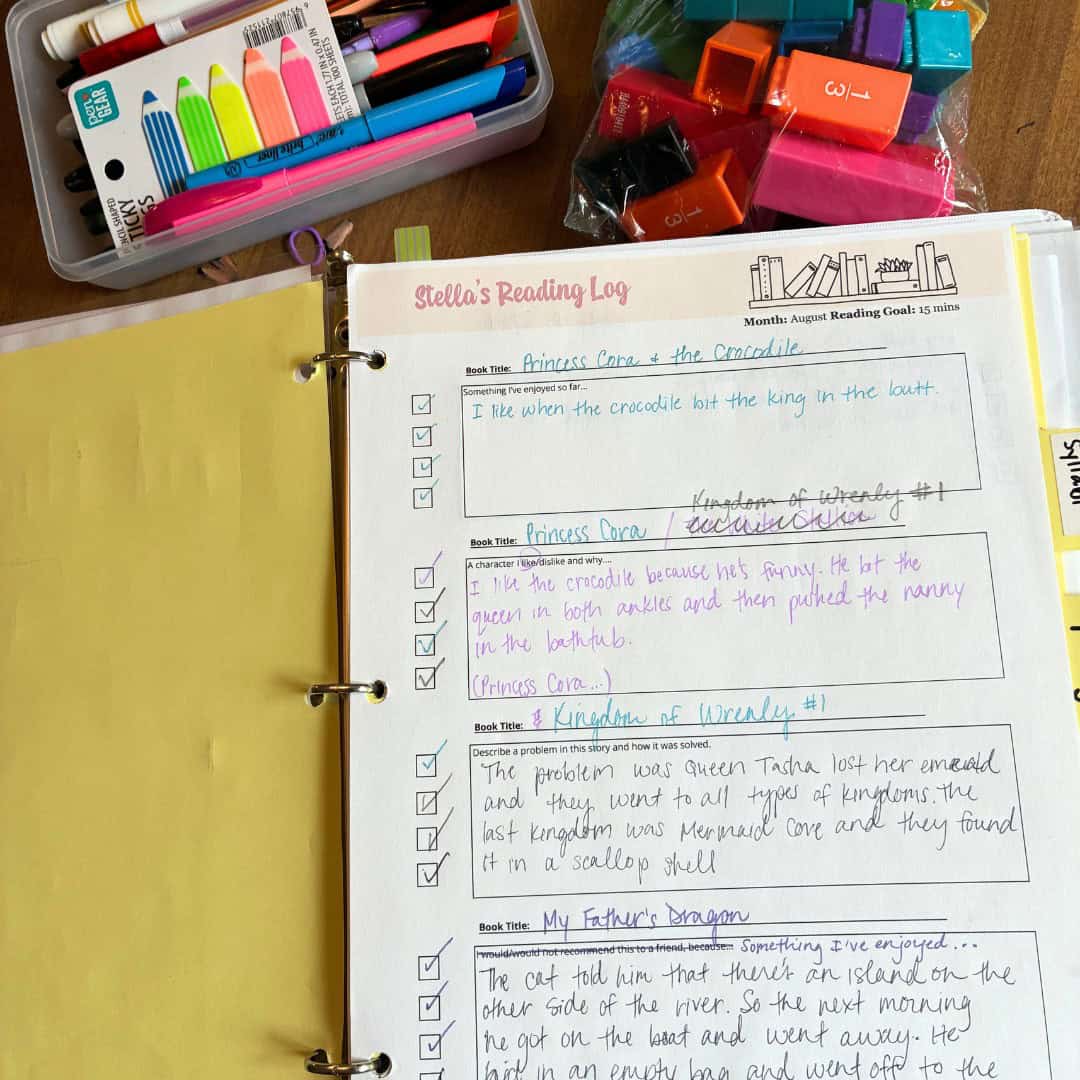
Each week we fill out a reading log. This log (pictured below) not only tracks her daily reading, but it also encourages discussion about books. At the end of the week, we are able to sit down and chat about specific about related to what she's reading.
Language
The language portion of language arts is made up of a variety of subtopics including grammar, vocabulary, and spelling. For vocabulary and grammar, I take more of a natural approach in these early elementary years. For spelling this year we are using a simple daily practice workbook.
Vocabulary development happens through our book discussions. I have found that my own curiousity about words rubs off on my kids. As I begin to ask questions related to vocabulary, so do they.
As I mentioned earlier, some days she reads aloud to me and we simply talk about the words she's reading. She may ask me about a specific word or I might point one out. Sometimes I will just tell her the definition or we might practice guessing the definition based on the context of the sentence.
Our grammar lessons feel simple and natural as well. I have enjoyed a later start to grammar with my kids. Usually around 9-10 I add in a formal curriculum. Until then we practice grammar through exposure to good literature and simple discussions through copy work or writing sentences.
So many foundational concepts can be taught with simple sentences - like capitalizing the first letter and adding end punctuation. We also point out other punctuation and how it affects the sentence. These simple, natural discussions are preparing her for formal lessons in a couple years.
I’ve never really used a spelling curriculum in my homeschool. For my oldest child, dictation has been enough to develop her spelling skills. This year, however, one of my kiddos needed a little extra practice. So, I decided to pair two of mine together to practice spelling skills.
My second grader is a part of this and we are using something called Daily Spelling Practice. You can see inside this workbook in my flip-through video. It’s not one I see shared by other homeschoolers, but I was drawn to it because of the short lessons.
The spelling workbook also includes language concepts like commonly confused words (example: then, than). One of the days, the child is required to write two sentences which is also great writing and grammar practice.
The variety of the daily work is what really interested me in this program, and it’s been a great fit so far.
Scheduling
It may seem like a lot of pieces, but once it plays out in our day, it really feels simple, natural, and enjoyable.
In the mornings, she completes her handwriting and Explode the Code workbook independently. This usually takes 5 minutes.
After she’s had a wiggle break, she completes her 15 minutes of reading. Narration and discussion naturally follow.
Usually before lunch, we sit down to complete spelling with her sister. This takes about 5-10 minutes, depending on the day.
That’s it! The other skills I mentioned above are practiced naturally through other subjects and family routines. This is my favorite part about setting up our language arts like this. It truly feels meaningful and doable.
It’s hard enough for me to teach math to all four of my kiddos, I can’t imagine having to work through a language arts workbook with each one as well. This simple break up of skills for my kids has been such a great fit for us.
Book List
Below is a list of books I have made for my second grader to choose from. It is flexible, and I am always willing to add or take away more as I discover new literature. I love having a list like this and then allowing the child to choose what she wants to read next. Setting up a list also helps us stay consistent and remain on track for our daily reading goals.
- The Boxcar Children (simple novel study linked here)
- Sophie Mouse Series
- My Father’s Dragon
- The Courage of Sarah Noble (Discussion Questions and Activities posted here)
- The Hundred Dress
- Princess Cora and the Crocodile
- Magic Tree House Series (These are great paired with our history/science lessons! - check out this Ancient China unit study we did a few years ago)
- Imagination Station Series (similar to Magic Tree House)
- Zoey and Sassafras Series
- Secret of the Hidden Scrolls Series
- The Mouse and the Motorcycle
- Calpurnia Tate, Girl Vet Series
Previous Post
Next Post
This post contains affiliate links. If you follow one of my links I earn a small commission at no extra cost to you. Thank you for supporting my blog.